Ten core exercises that aren't crunches: anti-extension, anti-rotation and stability moves with step-by-step form, difficulty ratings, and rep ranges.
10 Core-Strengthening Exercises That Aren't Crunches
Crunches are not evil — but they are overrated, and they often cause neck strain without building much strength. Your core's real job is not to fold your torso repeatedly; it is to stabilize your spine while the rest of you moves, resists, and carries. The ten exercises below train exactly that: anti-extension, anti-rotation, and stability strength for lifting, walking, posture, and back health.
Each exercise includes a difficulty rating so you can build a sensible progression.
This guide contains affiliate links. If you buy through them, VÉLORA may earn a commission at no extra cost to you.
What You Need
Warm-up (3 minutes): March in place for a minute, do 10 slow cat-cows on all fours, then 10 bodyweight squats.
The 10 Exercises
1. Dead Bug
Purpose: The anti-extension foundation — teaches your deep core to brace while your limbs move.
Difficulty: Beginner
How to do it: Lie on your back, arms toward the ceiling, knees bent at 90 degrees with shins parallel to the floor. Press your lower back into the mat. Slowly extend your right arm overhead and your left leg toward the floor, keeping your back pinned down. Return and switch sides.
Breathing and reps: Exhale as you extend, inhale as you return. 2–3 sets of 6–10 slow reps per side.
Common mistakes: Letting the back arch as the limbs extend — shorten the range before your back lifts.
2. Bird Dog
Purpose: Full-torso stability — core, back, and glutes work as one unit while you balance on two points.
Difficulty: Beginner
How to do it: On all fours, brace your stomach, then slowly extend your right arm forward and left leg back until both are level with your body, hips square to the floor. Pause one to two seconds, return slowly, switch sides.
Breathing and reps: Exhale as you extend, inhale as you return. 2–3 sets of 6–10 reps per side.
Common mistakes: Rotating the hips open and lifting the leg too high. Level, not high.
3. Forearm Plank
Purpose: The classic anti-extension hold — your entire front core braces to keep your spine neutral against gravity.
Difficulty: Beginner–Intermediate
How to do it: On your forearms and toes (or knees), elbows under shoulders, body in one straight line from head to heels. Squeeze your glutes, brace your stomach as if expecting a gentle poke, and breathe steadily. Your lower back should stay flat — not sagging, not piked up.
Breathing and reps: Breathe steadily throughout; never hold your breath. 2–4 holds of 15–45 seconds.
Common mistakes: Sagging hips (shorten the hold — a straight 20 seconds beats a saggy 60) and holding your breath.
4. Side Plank (Knees or Toes)
Purpose: The obliques and deep stabilizers keep your spine from collapsing sideways — superb for posture.
Difficulty: Beginner–Intermediate
How to do it: Lie on your side, elbow under your shoulder. From the knees (easier) or toes (harder), lift your hips until your body forms a straight line. Hold, breathing steadily, then switch sides.
Breathing and reps: Steady breathing throughout. 2–3 holds of 15–40 seconds per side.
Common mistakes: The top shoulder rolling forward and hips sagging. Keep your chest open and your body in one line.
5. Pallof Press
Purpose: The gold standard of anti-rotation — your core resists a sideways pull, protecting your spine under uneven loads.
Difficulty: Beginner–Intermediate
Equipment: A resistance band anchored at chest height.
How to do it: Stand sideways to the anchor, holding the band at your chest. Brace hard, press your hands straight out in front of you, and resist the band's pull for one to two seconds. Return and repeat, then switch sides.
Breathing and reps: Exhale as you press out, inhale as you return. 2–3 sets of 8–12 presses per side.
Common mistakes: Letting the torso rotate toward the anchor — resisting that rotation is the entire exercise.
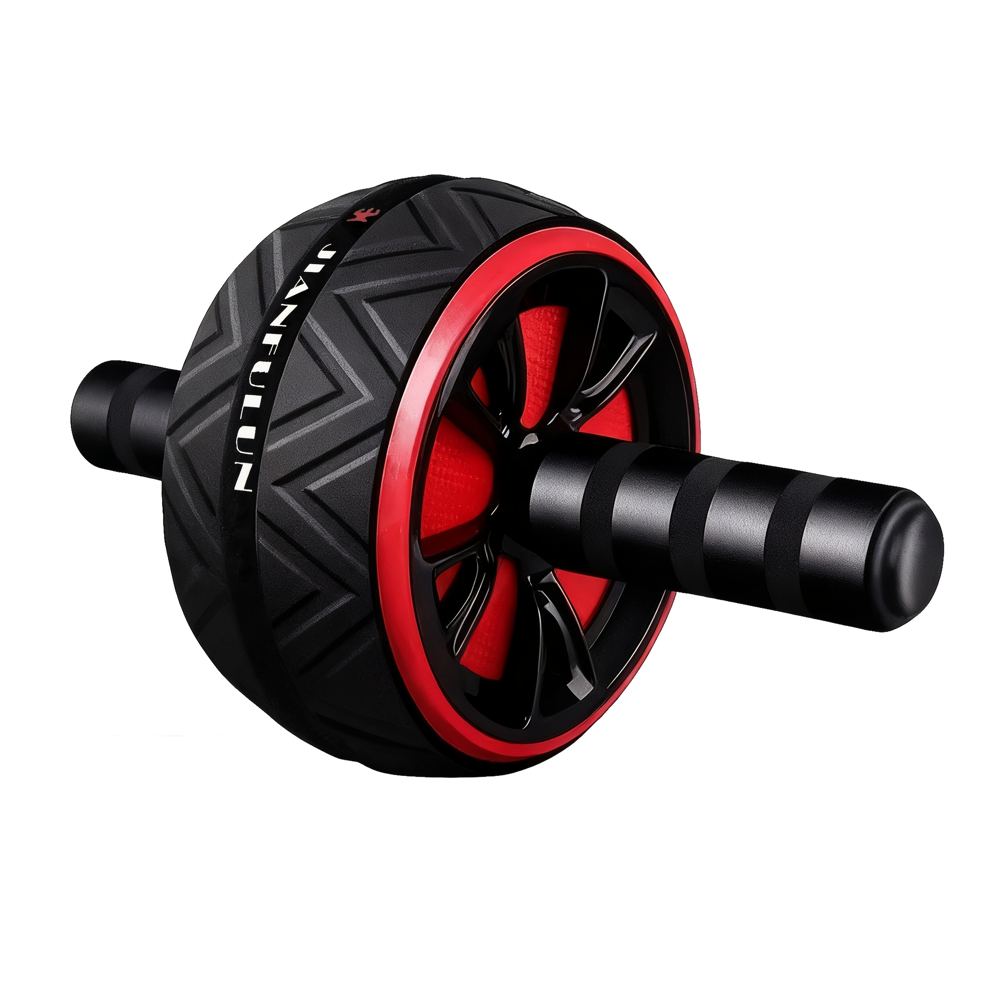
6. Ab Wheel Rollout (From Knees)
Purpose: The most demanding anti-extension move here — your core must prevent spinal collapse as you extend. Earn it; do not rush.
Difficulty: Intermediate–Advanced
How to do it: Kneel on a pad, gripping the ab wheel under your shoulders. Brace hard, tuck your pelvis slightly, and roll forward slowly — only as far as you can go with a flat back and ribs down. Pause, then pull back using your abs, not your arms.
Breathing and reps: Exhale as you roll out, inhale as you return. 2–3 sets of 5–10 reps.
Common mistakes: Rolling too far too soon (the classic ab-wheel back injury) and letting the lower back sag at full extension. If your back arches, your range was too big.
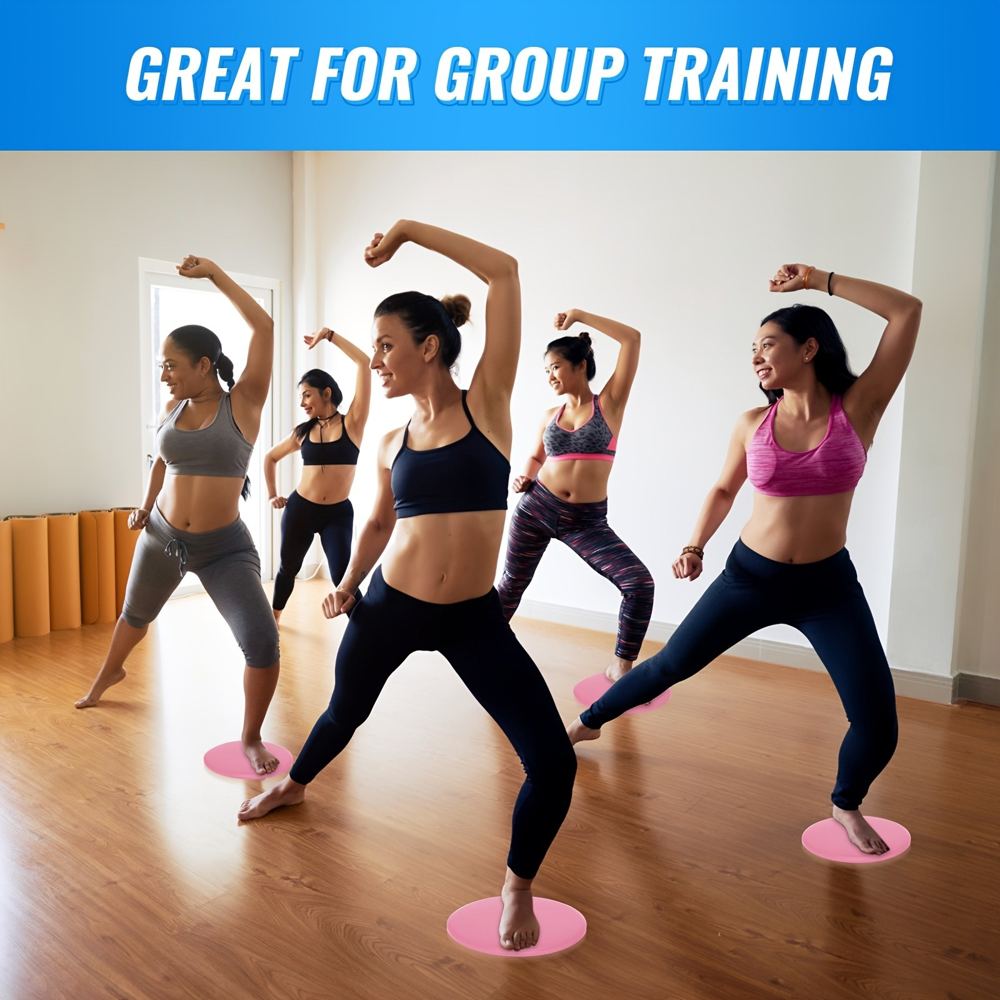
7. Core Slider Body Saw
Purpose: A moving plank — your core stabilizes while your body glides, adding dynamic challenge to the static hold.
Difficulty: Intermediate
How to do it: In a forearm plank with sliders under your toes (socks on a smooth floor work too), brace tight and push your body backward a few inches by extending through your shoulders, then pull forward past the start position. Small, controlled sawing — your hips stay level throughout.
Breathing and reps: Breathe steadily. 2–3 sets of 8–12 saws.
Common mistakes: Letting the hips sag as you fatigue and making the glide so big that form collapses. Small saws, flat back.
8. Band Woodchop
Purpose: Trains the obliques through resisted rotation — the movement your waist is built for, loaded safely and progressively.
Difficulty: Intermediate
Equipment: A resistance band anchored high.
How to do it: Stand sideways to the anchor, feet shoulder-width apart. Grip the band with both hands toward the anchor at shoulder height. Brace and pull the band down and across your body in a diagonal chop, rotating through your torso while your hips stay mostly still. Control it back. Finish one side, then switch.
Breathing and reps: Exhale as you chop, inhale as you return. 2–3 sets of 8–14 reps per side.
Common mistakes: Arm-dominant chopping (the trunk rotates; the arms just hold on) and leaning instead of rotating.
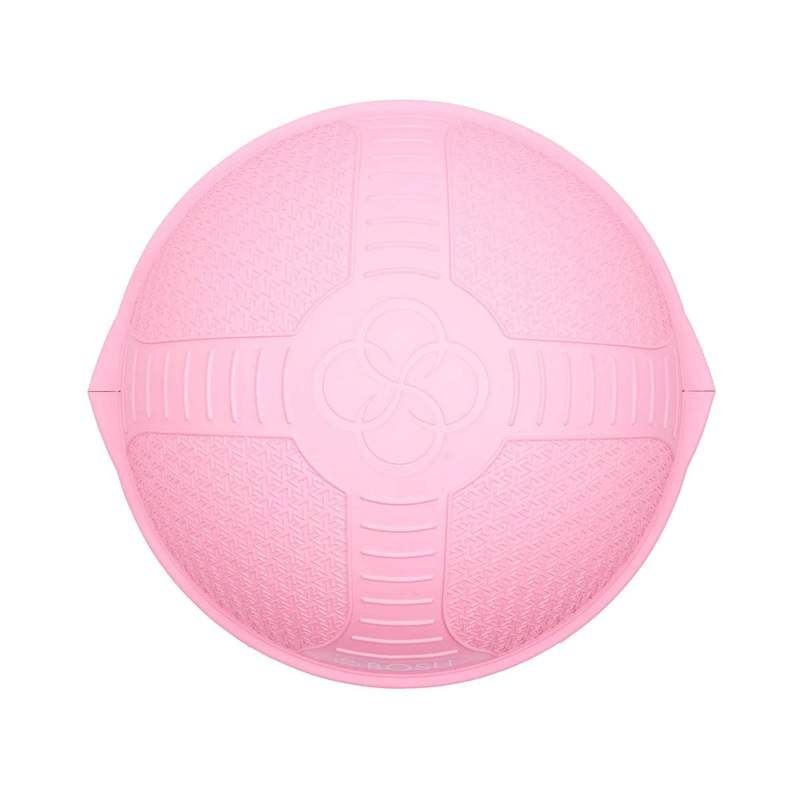
9. Dead Bug on Balance Trainer
Purpose: The dead bug with instability added — your deep stabilizers work noticeably harder on a moving surface.
Difficulty: Intermediate–Advanced
How to do it: Lie with your upper back on the dome of the balance trainer, feet flat on the floor, hips bridged so your body forms a tabletop from shoulders to knees. Hold a light weight or just your arms toward the ceiling, then perform the dead bug pattern — extending opposite arm and leg — while keeping your hips perfectly level.
Breathing and reps: Exhale as you extend, inhale as you return. 2–3 sets of 6–10 reps per side.
Common mistakes: Letting the hips drop or tilt as limbs move — the hips staying level is the whole point of the unstable surface.
10. Suitcase Carry
Purpose: Walking while resisting a one-sided pull — few exercises build real-world core strength faster.
Difficulty: Intermediate
Equipment: One heavy dumbbell, kettlebell, or loaded bag.
How to do it: Pick up the weight in one hand, stand tall, and walk slowly for 20–40 meters. Stay perfectly upright — no leaning away from the weight, no hiking the shoulder. Switch hands and repeat.
Breathing and reps: Breathe normally while walking. 2–4 carries of 20–40 meters per side.
Common mistakes: Leaning away from the weight (the failure you are training against) and walking too fast. Slow, tall, and controlled.
Difficulty Comparison
| Exercise | Difficulty | Primary Challenge | Equipment | |---|---|---|---| | Dead Bug | Beginner | Anti-extension, coordination | Mat | | Bird Dog | Beginner | Stability, balance | Mat | | Forearm Plank | Beginner–Intermediate | Anti-extension endurance | Mat | | Side Plank | Beginner–Intermediate | Anti-lateral-flexion | Mat | | Pallof Press | Beginner–Intermediate | Anti-rotation | Band + anchor | | Ab Wheel Rollout | Intermediate–Advanced | Anti-extension under load | Ab wheel | | Slider Body Saw | Intermediate | Dynamic plank stability | Sliders | | Band Woodchop | Intermediate | Resisted rotation | Band + anchor | | Dead Bug on Balance Trainer | Intermediate–Advanced | Instability + coordination | Balance trainer | | Suitcase Carry | Intermediate | Loaded anti-lateral-flexion | One heavy weight |
How to progress through the list: Master the beginner moves (clean form, top of rep ranges, steady breathing) before touching the intermediate ones. A sensible path: dead bug → plank → side plank → Pallof press → woodchop → body saw → rollout. If you want a pure beginner track first, our beginner core workout for women is the on-ramp.
Safety Notes
- Anti-extension exercises (rollouts, body saws, planks) load the lower back if form fails. The rule is absolute: if your back arches or sags, end the set — shorten the range or the hold next time.
- Progress the ab wheel patiently. Most people need weeks of planks and dead bugs before kneeling rollouts are safe; standing rollouts are an advanced goal, not a milestone to chase.
- If you are pregnant, avoid lying on your back for long after the first trimester and skip maximal bracing — see our exercise during pregnancy safety guide. Postpartum, get clearance for intense core work — see our postpartum exercise guide.
- Stop any exercise that causes sharp pain. Effort and muscle fatigue are normal; joint or spinal pain is a stop signal.
FAQ
Q: Why are crunches considered less effective than these exercises?
Crunches train one small function — spinal flexion — through a short range, often with neck strain and momentum. The exercises here train your core's main real-world jobs: resisting extension, rotation, and sideways collapse under load. That stability protects your back and transfers to lifting and carrying far better than crunch endurance.
Q: Can I build a strong core without ever doing crunches?
Absolutely. Planks, dead bugs, Pallof presses, carries, and rollouts build comprehensive core strength with zero crunches .
Q: How often should I do these core exercises?
Two to three dedicated core sessions per week, or 2–3 of these movements at the end of strength workouts. Your core also works during squats, rows, and carries — it does not need daily isolation.
Q: Which of these is best for lower back pain?
The dead bug and bird dog are the most commonly recommended starting points — many physiotherapists use exactly these in rehab because they train stability without loading the spine. Start gently, keep everything pain-free, and see a professional if back pain is persistent, severe, or radiates down a leg. Our back exercises guide has complementary movements.
Q: Will these exercises give me visible abs?
They build genuinely stronger, more functional core muscles. Visible definition depends mostly on overall body-fat levels — diet, total activity, and genetics — not on exercise selection. For the honest full picture, read our guide on what exercise can and cannot do for belly fat.
The Bottom Line
Your core is a stabilizer, not a crunching machine — train it like one. Start with the dead bug and bird dog, earn your way to planks and Pallof presses, and let the ab wheel wait until your form is bulletproof. Ten exercises, zero crunches, one stronger midsection for real life.
