Train your core without a single floor rep: 7 standing ab exercises with bands and bodyweight, full form cues, rep ranges, modifications, and safety notes.
Standing Ab Exercises: Core Training Without Getting on the Floor
Floor exercises are not the only way to train your core — and for many women, they are not the best way. If getting down to the floor (and back up) is difficult, if your knees or wrists dislike planks, or if you simply want core training that fits into a busy day, standing ab exercises are a genuine alternative, not a compromise.
Standing core work trains your abs the way they actually function in daily life: keeping you upright and stable while your arms and legs move. A resistance band adds challenge cheaply, but every exercise below includes a bodyweight version.
This guide contains affiliate links. If you buy through them, VÉLORA may earn a commission at no extra cost to you.
What You Need
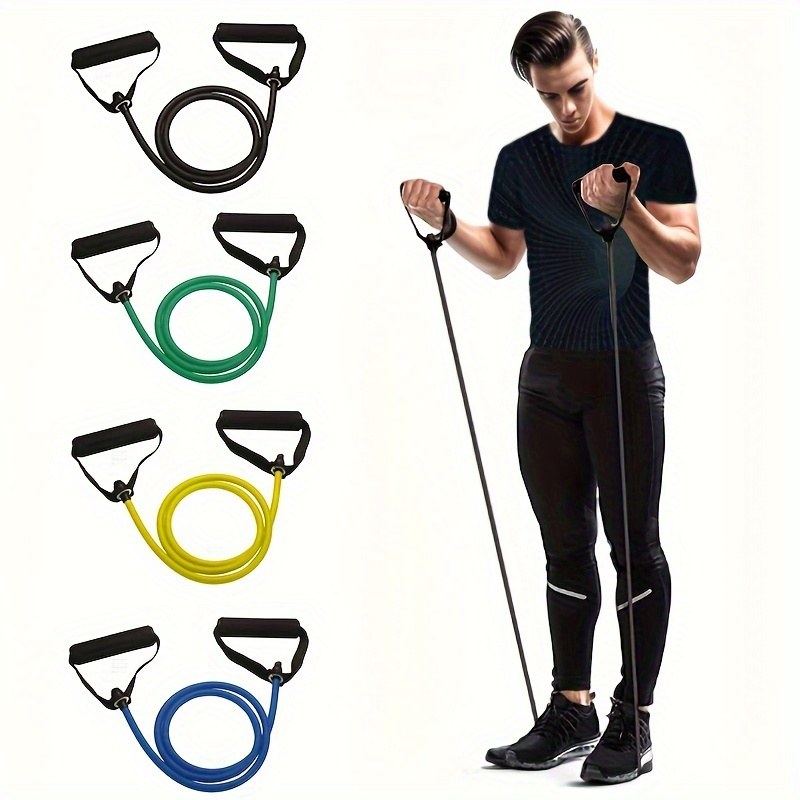
- A resistance band with handles for the anti-rotation and woodchop movements — a 5-level resistance band set gives you light to heavy options as you progress. See our best resistance bands for women.
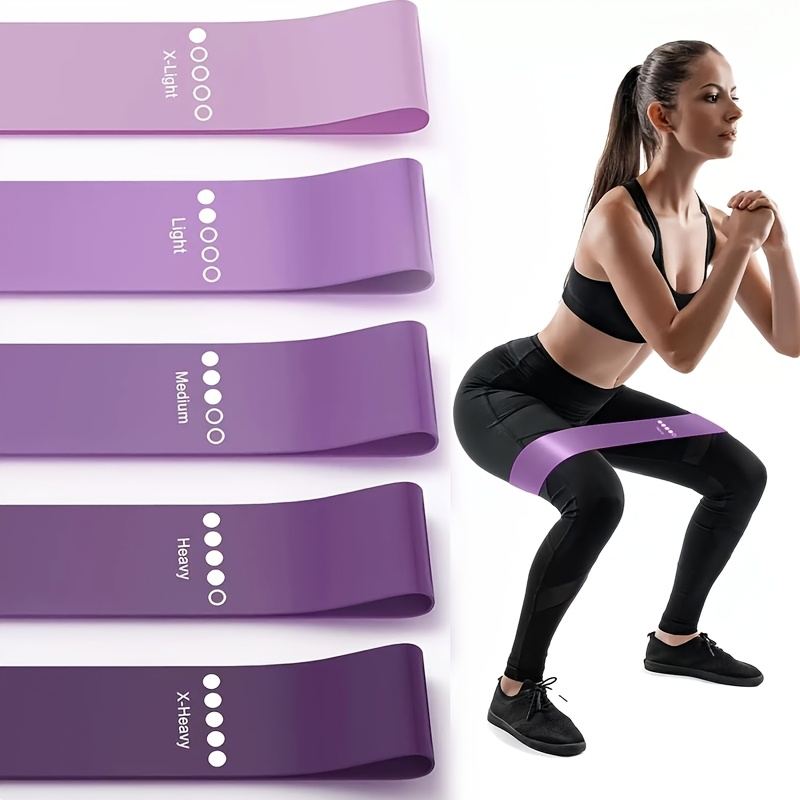
- A loop band (optional) for standing marches and hip work — circular resistance loops sit above the knees without rolling.
- A sturdy anchor for the band: a closed door with a door anchor, a heavy table leg, or a railing. Test it before you lean into it.
- Support nearby — a wall or chair back — if your balance is uncertain. Using support is smart training, not cheating.
Warm-up (2 minutes): March in place for 30 seconds, do 10 gentle torso twists each way, and 10 slow bodyweight squats to wake up the hips.
The 7 Exercises
1. Standing Knee Raise
Purpose: Trains the lower abs and hip flexors while challenging your balance — the standing equivalent of a knee tuck, minus the floor.
How to do it: Stand tall, feet hip-width apart, core braced, holding a wall or chair back with one hand if needed. Slowly drive your right knee up toward your chest — not past hip height — while keeping your torso upright and your standing leg soft. Lower with control and switch sides, alternating.
Breathing and reps: Exhale as the knee lifts, inhale as it lowers. Aim for 2–3 sets of 10–16 reps per side.
Beginner modification: Keep the lift low — even a few inches engages the core — and keep both hands on support.
Common mistakes: Leaning back to make the lift easier (keep your ribs stacked over your hips) and swinging the leg up with momentum instead of lifting it.
2. Standing Bicycle
Purpose: A standing oblique trainer — your waist muscles work to rotate and stabilize while you stay upright.
How to do it: Stand with feet hip-width apart, fingertips lightly touching your temples, elbows open. Lift your right knee and rotate your torso to bring your left elbow toward it — you do not need them to touch. Return to center and alternate sides in a slow, controlled rhythm.
Breathing and reps: Exhale on each rotation, inhale as you return to center. Aim for 2–3 sets of 10–16 reps per side.
Beginner modification: Keep your arms crossed over your chest instead of at your temples, and make the rotation smaller.
Common mistakes: Yanking the elbow across with the arms (the rotation should come from your waist, not your shoulders) and rushing through reps.
3. Standing Oblique Crunch
Purpose: Direct side-waist work without lying on your side — gentle on the neck and back.
How to do it: Stand tall, feet a little wider than hip-width, hands behind your head with elbows open. Brace your core and bend your torso directly to the right, bringing your right elbow toward your right hip, then return to upright. The movement is purely sideways — no forward lean. Repeat on the left.
Breathing and reps: Exhale as you bend, inhale as you straighten. Aim for 2–3 sets of 12–20 reps per side.
Beginner modification: Slide your hand down your thigh toward your knee instead of using the behind-the-head position — the range is naturally smaller and safer.
Common mistakes: Bending forward instead of sideways, and using a bouncing motion at the bottom. Slow and lateral is the whole point.
4. Band Woodchop (High to Low)
Purpose: Trains the obliques through rotation against resistance — the standing core exercise with the most real-world carryover, from lifting groceries to swinging a bag into a car.
Equipment: A handled resistance band anchored high (top of a door or above shoulder height).
How to do it: Stand sideways to the anchor, feet shoulder-width apart, knees soft. Grip the band with both hands, arms extended toward the anchor at shoulder height. Brace your core and pull the band down and across your body in a diagonal chopping motion, rotating through your torso while your hips stay mostly still. Control the band back to the start. Finish one side, then turn around and repeat.
Breathing and reps: Exhale as you chop down, inhale as you return. Aim for 2–3 sets of 8–14 reps per side.
Beginner modification: Use the lightest band and shorten the range — a small, braced chop beats a big, loose one. Our resistance band workout guide has more band-based ideas.
Common mistakes: Letting the arms do all the work (the power comes from rotating your trunk), and squatting or leaning instead of rotating.
5. Pallof Press
Purpose: The gold standard of anti-rotation training — your core learns to resist being pulled sideways, which is exactly what protects your spine when you carry a child on one hip or haul a heavy bag.
Equipment: A handled resistance band anchored at chest height.
How to do it: Stand sideways to the anchor, feet shoulder-width apart. Hold the band with both hands at your chest, arms bent. Brace your core hard, then press your hands straight out in front of you until your arms are extended. The band will try to rotate you toward the anchor — resist it. Hold the extended position for one to two seconds, then draw your hands back to your chest. Finish one side, turn around, and repeat.
Breathing and reps: Breathe steadily — exhale as you press out, inhale as you return. Aim for 2–3 sets of 8–12 presses per side.
Beginner modification: Stand closer to the anchor to reduce the pull, or press out only halfway.
Common mistakes: Letting the torso rotate (that is the failure you are training against) and holding your breath during the hold.
6. Standing March With Overhead Reach
Purpose: Combines balance, coordination, and core bracing — your abs stabilize you while opposite limbs move, much like walking with purpose.
How to do it: Stand tall, arms at your sides, holding light dumbbells or water bottles if you like (optional). Lift your right knee to hip height while reaching your left arm overhead, as if climbing an invisible ladder. Lower with control and switch sides, alternating in a marching rhythm.
Breathing and reps: Breathe steadily, exhaling on each lift. Aim for 2–3 sets of 10–16 marches per side.
Beginner modification: Keep the arms at your sides and skip the weights — the balance challenge alone is real work.
Common mistakes: Arching the lower back when the arm goes overhead (keep your ribs down) and marching too fast to stay stable.
7. Standing Torso Twist With Band
Purpose: Controlled rotational strength for the obliques — the movement your waist is designed for, loaded safely.
Equipment: A handled resistance band anchored at chest height.
How to do it: Stand sideways to the anchor in an athletic stance, knees soft. Hold the band with both hands at chest height, arms extended in front of you. Keeping your hips facing forward, rotate your torso away from the anchor as far as comfortable, then slowly rotate back. That is one rep.
Breathing and reps: Exhale as you rotate away, inhale as you return. Aim for 2–3 sets of 10–15 reps per side.
Beginner modification: Do it without the band first, arms crossed over your chest, to learn the rotation pattern.
Common mistakes: Rotating from the hips instead of the waist (your belt line should stay mostly still) and using a band so heavy that your shoulders take over.
Putting It Together: A 15-Minute Standing Session
| Exercise | Sets × Reps | Equipment | |---|---|---| | Standing Knee Raise | 2–3 × 10–16 per side | None (wall optional) | | Standing Bicycle | 2–3 × 10–16 per side | None | | Standing Oblique Crunch | 2–3 × 12–20 per side | None | | Band Woodchop | 2–3 × 8–14 per side | Band, high anchor | | Pallof Press | 2–3 × 8–12 per side | Band, chest anchor | | Standing March + Reach | 2–3 × 10–16 per side | Optional light weights | | Band Torso Twist | 2–3 × 10–15 per side | Band, chest anchor |
Do the bodyweight moves first, then the band moves. Two sessions per week is plenty to start; add a third when the top of the rep ranges feels easy with clean form. If you want floor-based foundations too, our beginner core workout for women pairs well with this routine.
Safety Notes
- Keep a wall or chair within reach for balance moves until you are confident. There is no prize for wobbling.
- Check your band anchor before every session — a slipping door anchor mid-rep is entirely preventable.
- Bands wear out. Inspect yours for nicks, cracks, or thinning, especially near the handles, and replace a damaged band rather than risking a snap.
- If you are pregnant, skip resisted rotation and deep twisting; walking and gentle bracing are safer choices — see our exercise during pregnancy safety guide.
- Stop if you feel sharp pain, dizziness, or pain radiating down a leg.
FAQ
Q: Are standing ab exercises as effective as floor exercises?
For most goals, yes — sometimes more so. Standing exercises train the core as a stabilizer, which is its main real-world job, and they recruit the hips and legs too. Floor exercises allow more isolation. A mix of both across the week is ideal, but standing-only training is legitimate core training.
Q: Can standing ab exercises reduce belly fat?
No exercise selectively burns belly fat — that is a myth (see our honest breakdown of what exercise can and cannot do for belly fat). Standing core work strengthens your abdominal muscles and burns some calories, but fat loss comes from overall calorie balance.
Q: I have bad knees — are these exercises safe?
Mostly yes, since nothing here requires kneeling or deep bends. Keep the standing knee soft (never locked), keep movements slow, and skip anything that causes knee pain. Low-impact options are covered further in our low-impact workouts guide.
Q: How heavy should my resistance band be for core work?
Start lighter than you think. Core exercises are about control, not force — a band that lets you complete full, clean reps with no shoulder or back takeover is the right one. When the top of the rep range feels easy for two sessions running, step up one band level.
Q: Can I do standing ab exercises every day?
Two to three sessions per week with rest days between is the sweet spot. Daily gentle movement is fine — daily hard core training is not better.
The Bottom Line
Your core does not care whether you are lying down — it cares whether it is being challenged to stabilize, rotate, and resist. Seven standing movements, a band, and a wall for balance: that is a complete core program for anyone who would rather stay on their feet. Start light, brace on every rep, and let consistency do the heavy lifting.
