A foam roller buying guide that covers density, size and texture — learn how to choose the right roller for your body, your recovery needs and your budget.
Foam Roller Buying Guide: Density, Size and Texture
Walk into any gym, physical therapy clinic, or home workout corner and you will find one: the humble cylinder that promises to iron out stiff muscles after a tough session. A foam roller is a simple self-massage tool — you rest part of your body weight on it and slowly roll, working through tight areas the way a massage therapist's hands would. Used well, it is one of the cheapest recovery tools you can own.
Buy wrong, though, and the roller ends up gathering dust: too firm and painful, too soft to do anything, the wrong length, or a texture that feels like gravel. This guide covers the three decisions that matter — density, size, and texture — so you buy once and buy right.
This guide contains affiliate links. If you buy through them, VÉLORA may earn a commission at no extra cost to you.
What a Foam Roller Actually Does (and Does Not Do)
Before spending money, it helps to have honest expectations. Rolling works on the soft tissue around muscles — the connective tissue (fascia) and muscle fibers themselves — through sustained pressure and slow movement. Most people use it to ease post-workout soreness, loosen stiff hips and backs after long desk days, and as part of a warm-up routine.
What it will not do: it will not melt fat from a specific area (no tool does — spot reduction is a myth), it will not fix an injury on its own, and it will not replace professional care for persistent pain. It is a maintenance and comfort tool, not a medical treatment. Results vary from person to person; some people feel markedly looser after a session, others notice only a subtle difference, and both experiences are normal.
If you want the technique side too, our best foam rollers shortlist collects top picks, and a gentle morning stretching routine pairs naturally with rolling.
Density: The Single Most Important Choice
Density is how firm the roller feels under your body — and it is the choice that decides whether rolling becomes a habit or a punishment.
- Soft (low density). Feels cushioned, with noticeable give when you press a thumb into it. Best for true beginners, older adults, anyone easing back into movement after time off, and people with a low tolerance for pressure. Tradeoff: it may feel too gentle within a few months as your tissue adapts, and it compresses faster over time.
- Medium density. The sweet spot for most people. Firm enough to actually work on tissue, forgiving enough to roll daily without dread. If you are buying your first roller and are reasonably active, start here.
- Firm (high density). Hard, with almost no give. Delivers strong pressure that experienced users prefer, but it can be genuinely painful for beginners — and pain makes people quit. Firm rollers also last longer, since they resist compressing.
The golden rule: buy softer than your ego wants. A medium-density roller you use three times a week beats a concrete-hard one you touch once. You can always press deeper with your own body weight as you get comfortable; you cannot make a painful roller softer.
Size: Length and Diameter
Foam rollers come in a few standard sizes, and the differences are practical, not cosmetic.
- Standard full-size (about 18 inches / 45 cm long). The classic. Long enough to roll both legs at once (calves, hamstrings) and wide enough to lie across your upper back. The best first roller for most people.
- Long rollers (24–36 inches / 60–90 cm). Used in some Pilates and rehab settings, especially for lying lengthwise along the spine. More stable for balance-challenging positions, but bulky to store and transport. Overkill for most home recovery routines.
- Half rollers / short rollers (about 12 inches / 30 cm). Handy for targeted work — one calf, one hamstring, feet — and great for travel or small spaces. A good second roller, not usually the best first one.
- Mini / travel rollers (6–9 inches). Pocket-sized tools for specific spots like the plantar fascia (the sole of the foot) or the forearms. Complementary, not a replacement for a full-size roller.
Diameter matters less, but know that most standard rollers run about 6 inches (15 cm) across. Thinner rollers (around 4 inches) fit smaller bodies and children better and deliver slightly more focused pressure; they can feel unstable for full back-rolling in larger users.
For most buyers: a standard 18-inch, medium-density roller. It covers everything a beginner routine needs, stores in a closet or behind a door, and costs little.
Texture: Smooth vs. Textured
Pick up two rollers and they may look completely different on the surface:
- Smooth. A uniform, plain surface. Delivers even, predictable pressure. The best choice for beginners and for anyone who finds textured rollers uncomfortable. If you have never rolled before, start smooth.
- Textured (ridges, nubs, or grid patterns). Raised sections are meant to mimic a therapist's thumbs and fingers, digging deeper into tissue with less of your body weight. More intense, and the feel varies wildly between brands — some are pleasant, some feel like rolling on Lego bricks.
Here is the honest take: texture is largely a matter of taste, not effectiveness. A smooth roller used slowly and deliberately accomplishes the same recovery work as a textured one. Do not pay a premium for aggressive texture thinking it works "better" — and never let texture substitute for the density decision. A soft textured roller is still a soft roller; a firm smooth roller is still intense.
The Full Comparison
| Feature | Option | Best for | Watch out for | | --- | --- | --- | --- | | Density | Soft | True beginners, older adults, low pain tolerance | Compresses faster; may feel too gentle within months | | Density | Medium | Most first-time buyers; daily home routines | — | | Density | Firm | Experienced users who want strong pressure | Painful for beginners; can cause bruising if overused | | Size | Standard 18" | First roller; full-body routines | — | | Size | Long 24–36" | Pilates-style work, balance training | Bulky to store | | Size | Half/short 12" | Targeted spots, travel | Not a full routine on its own | | Size | Mini 6–9" | Feet, forearms, on-the-go | Very specialized | | Texture | Smooth | Beginners; predictable, even pressure | — | | Texture | Ridges/nubs | Users who want deeper, varied pressure | Feel varies by brand; can irritate sensitive tissue |
Matching a Roller to Your Goals
A few common buyer profiles, answered honestly:
- "I am a complete beginner and mostly sit at a desk." Medium-density, standard 18-inch, smooth. Your back, hips, and hamstrings will thank you. Pair it with our stretches for desk workers for a genuinely effective daily routine.
- "I work out regularly and want post-workout recovery." Medium to firm, standard length, smooth or lightly textured. You already know your pain tolerance; err toward medium if you are new to rolling.
- "I am over 50 or easing back into exercise." Soft to medium density, standard length, smooth. Comfort builds consistency. See our exercises for women over 50 for safe full-body context.
- "I travel constantly." A half roller or mini roller that fits in a bag, paired with the routine knowledge from our full-body stretching routine.
- "I want something for my feet after long days standing." A small roller or ball is genuinely the right tool — see below.
Roller-Style Tools Beyond the Classic Cylinder
The classic foam roller is not the only self-massage roller tool, and some alternatives fit specific needs better:
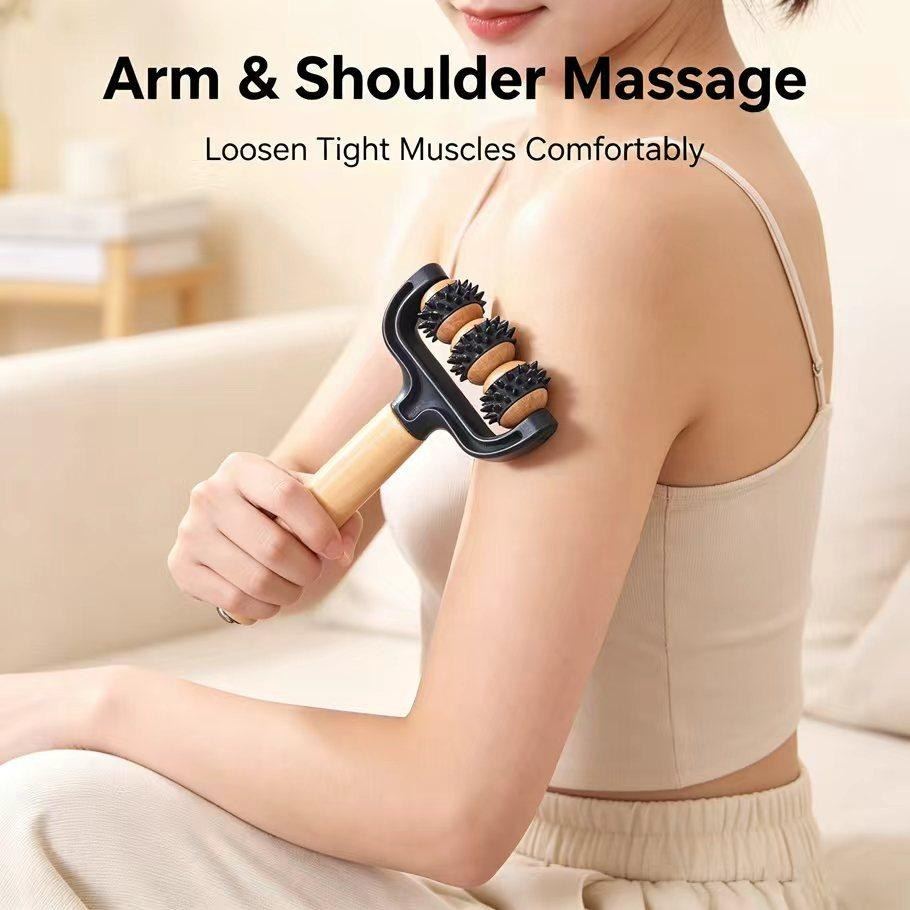
Handheld roller sticks and massagers. A wooden roller massager, for example, lets you roll your arms, calves, and back with your hands rather than your body weight — useful if getting on and off the floor is difficult, or if you want lighter, more controlled pressure. The Wooden Roller Massager for Feet, Arms and Back is this category: independent wooden rollers you work over the muscle with your hands, giving you complete control of the pressure.
Small rollers and balls for feet. A compact foot roller paired with a massage ball targets the soles of the feet and other small areas a full-size roller cannot reach. If you spend all day standing — nursing, retail, teaching, parenting — a 2-Piece Plantar Fascia Set with Foot Roller and Fascia Ball covers exactly this job, and it fits in a desk drawer.
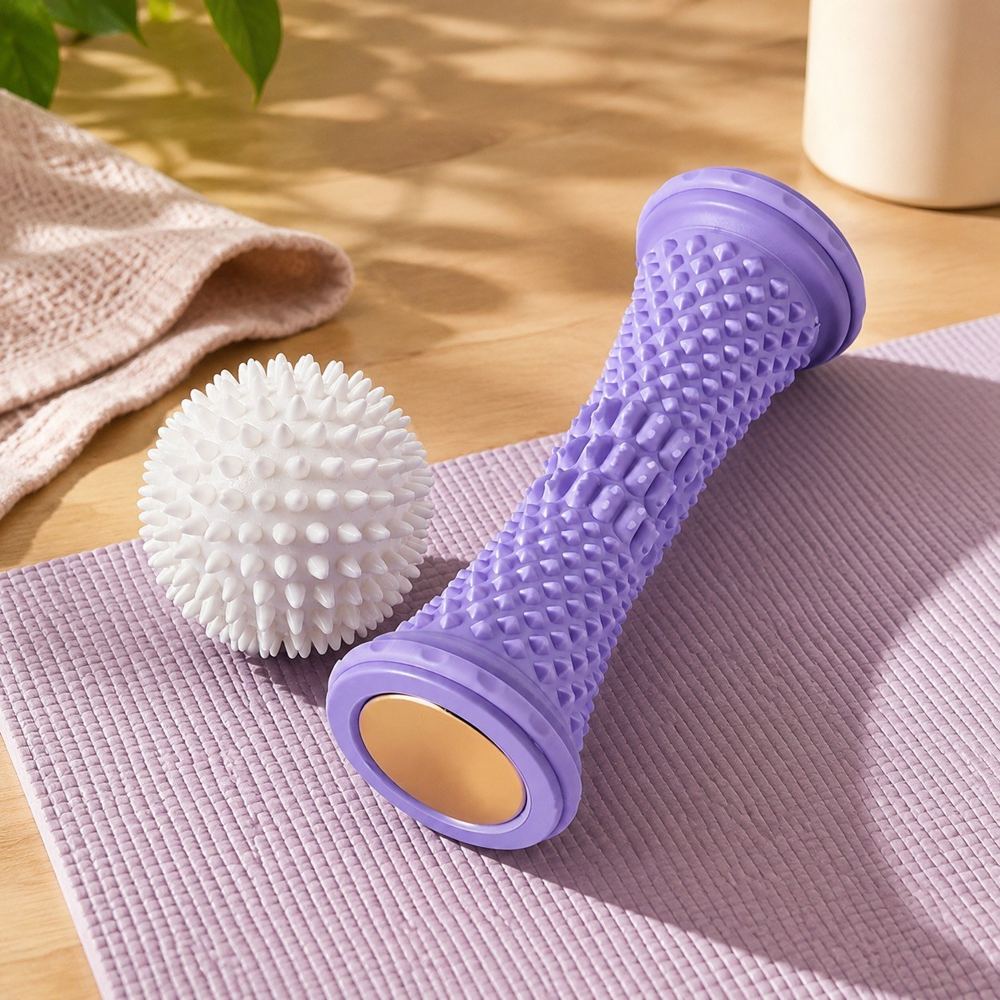
These are companions to a full-size roller, not always replacements. Start with the standard roller for full-body work; add targeted tools where you actually have targeted problems.
What to Avoid When Buying
- Buying the firmest roller "for maximum results." Firm rollers reward experience; they punish beginners. This is the most common regret.
- Paying a premium for texture gimmicks. Texture does not make a roller fundamentally more effective — technique matters far more.
- Cheap rollers that collapse. If a roller compresses permanently under a thumb press, it will be a flattened log within weeks. High-density EVA or molded polypropylene holds up; the cheapest foam does not.
- Rolling directly on bones, joints, or the spine. No purchase fixes bad technique — learn the basics before you buy, not after.
Care and Lifespan
Wipe it down with a damp cloth and mild soap when grimy, keep it out of direct sunlight and extreme heat, and store it somewhere it will not get crushed. Replace it when it permanently loses its shape or cracks. Most quality rollers last 2–5 years of regular home use.
FAQ
Q: How firm should my first foam roller be?
Medium density. Soft rollers compress too quickly for regular use by active people, and firm rollers are painful enough to make beginners quit. Medium gives you real pressure with room to adapt — and you can always increase pressure with more body weight as you get comfortable.
Q: What size foam roller should a beginner buy?
A standard 18-inch roller. It is long enough for both legs and wide enough for upper-back work, stores easily, and is the size nearly every beginner routine (including ours) is designed around.
Q: Smooth or textured — which is better?
For beginners, smooth. Textured rollers deliver more intense, varied pressure that some experienced users enjoy, but texture does not make rolling more effective — slow, deliberate technique matters far more than the surface pattern.
Q: Can I use a foam roller every day?
Most people can, at low to moderate pressure, for a few minutes per muscle group. Ease in: start with every other day for the first two weeks, and back off if you notice bruising or lingering soreness. Gentle daily rolling on soft or medium density is a reasonable maintenance habit.
Q: How long does a foam roller last?
A quality high-density roller typically lasts 2–5 years of regular home use. Replace it when it permanently loses its round shape, cracks, or compresses to the point of being ineffective.
Conclusion
Choosing a foam roller comes down to three honest decisions: density you will actually use (medium for most beginners), a standard 18-inch size, and a smooth texture to start. Skip the gimmicks, buy softer than your ego suggests, and put the money you save toward actually rolling — because the best roller in the world is the one that becomes a habit.
