Searching for the best foam roller for sore muscles? We break down length, density and texture — from a Rs 2,129 classic to a full 3-in-1 recovery set.
Best Foam Roller for Sore Muscles: Your Recovery, Sorted
There's a special kind of regret that arrives the morning after leg day, when the stairs suddenly look like a personal insult. That's exactly the moment the best foam roller for sore muscles earns its keep. Rolling is the closest thing to a self-massage most of us can get daily — it eases tight quads, wakes up a stiff back, and makes tomorrow's workout feel possible again.
The problem is choice. Short or long? Smooth or textured? Soft EVA or the firm kind that makes you question your life choices? Honestly, most people buy the wrong first roller — usually one that's too aggressive — use it twice, and abandon it in a corner. This guide walks through how to pick correctly, then compares five solid options from a Rs 2,129 classic to a complete 3-in-1 set, using specs and buyer feedback rather than marketing claims.
This guide contains affiliate links. If you buy through them, VÉLORA may earn a commission at no extra cost to you.
What to Look for in a Foam Roller
Four things decide whether a roller works for you: length, density, texture and what you actually plan to roll. Get these right and almost any well-made roller will do the job.
- Length. A 33cm roller is the versatile standard — long enough for your back, short enough for calves, glutes and travel. Extended rollers (around 60cm / 24in) shine for back work and lying-on exercises where both shoulder blades need support. Shorter mini rollers suit feet and forearms.
- Density. Soft rollers are kind to sore, sensitive muscles and beginners. Medium density is the sweet spot for most people. High-density rollers dig deep — great for experienced users and tight IT bands, brutal if you're new.
- Texture. Smooth rollers give even, predictable pressure. Textured or "tooth" surfaces mimic thumbs and target knots, but they are significantly more intense. Start smooth if you're unsure.
- Material. EVA foam is lightweight, slightly forgiving, and holds its shape well for home use. Cheaper foam can oval out over time; solid-core designs resist that.
- Your main use. Mostly back and posture work? Go longer. Mostly legs after runs? A firm 33cm. A bit of everything, plus stretching tools? A set makes sense.
How to Actually Use One (So It Works)
Technique matters more than the roller. Roll slowly — about an inch per second — and when you find a tender spot, stop and rest on it for 20-30 seconds instead of sawing back and forth. Support your weight with your arms and free leg so you control the pressure; if you're gritting your teeth, you're pressing too hard. Avoid rolling directly on joints, your lower spine, or anywhere that produces sharp or nerve-like pain. Two to five minutes after a workout, a few times a week, beats one heroic monthly session every time.
Our Top Picks
33cm Deep Tissue Massage Foam Roller, High-Density — Rs 2,129
The straightforward classic, and our default recommendation for most people. At 33cm it's the do-everything size: back, quads, calves, glutes. The high-density build means real pressure on genuinely tight muscles — this is the "deep tissue" experience, so beginners should start with body weight partially supported. At the lowest price in this guide, it's also the easiest to justify.
Pros:
- Best value in this guide
- High-density foam delivers serious deep-tissue pressure
- 33cm size handles back and legs equally well
Cons:
- Too intense for very sore or sensitive users at first
- No texture variety — one firmness, one job
- Deep-tissue style isn't ideal for gentle mobility work
View on VÉLORA
Massage Yoga Foam Roller, Large — Rs 2,199
For just Rs 70 more, the "large" framing here is about a friendlier all-round experience aimed at yoga and general massage use. If your plan mixes rolling with stretching, mobility flows and gentler recovery work — rather than hunting knots like they owe you money — this style of roller is the more pleasant daily companion. It's the pick we'd suggest for anyone whose main goal is unwinding after workouts, not deep-tissue warfare.
Pros:
- Beginner-friendly, yoga-oriented feel
- Barely more expensive than the basic pick
- Good all-rounder for stretching plus rolling
Cons:
- Less aggressive on stubborn knots
- Heavy users may eventually want a firmer second roller
- Large size is less travel-friendly
View on VÉLORA
Yoga Foam Roller 3-in-1 Set — Rs 8,499
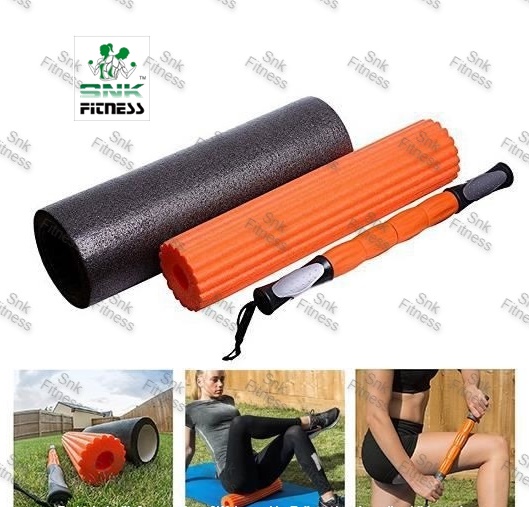
The set pick, for people who'd rather buy the whole recovery corner at once. A 3-in-1 set typically combines a full roller with smaller targeted tools (such as a mini roller or massage ball), which matters because a standard roller is genuinely bad at some jobs — the arch of your foot, between the shoulder blades, deep in the glute. If you train often and recover like you mean it, the set ends up cheaper than assembling the pieces one by one.
Pros:
- Multiple tools cover spots a single roller can't reach
- Better total value than buying pieces separately
- Suits frequent trainers with varied soreness
Cons:
- Highest price in this guide
- More gear to store
- Casual users may never touch the extra pieces
View on VÉLORA
EVA Solid Foam Roller — $17.39
The simple, well-made middle option. EVA foam gives a smooth, slightly forgiving surface that suits daily use, and the solid construction resists the flattening that plagues hollow budget rollers. It's marketed for indoor and outdoor fitness use, which really translates to: it's durable enough to live in a gym bag and get tossed around. A safe, unglamorous, does-the-job pick.
Pros:
- Solid core resists warping and flattening
- Smooth EVA surface — even, controllable pressure
- Durable enough for gym-bag duty
Cons:
- Smooth surface only; no targeted texture
- Mid-density may feel soft to deep-tissue devotees
- Less specialized than the set or the long roller
View on VÉLORA
Extended 23.62in Foam Roller, Textured "Wolf Tooth" — $27.84
The specialist. At 23.62 inches, this extended roller is the best here for back work — you can lie along it for chest-opening stretches, or roll your whole thoracic spine without repositioning every few inches. The textured wolf-tooth surface digs in like fingertips, which experienced users love on calves, quads and glutes. Fair warning: this is the most intense roller in the guide, and first-timers should approach it with respect.
Pros:
- Extended length is superb for back and full-spine work
- Textured surface targets stubborn knots effectively
- Great for experienced users who find smooth rollers too gentle
Cons:
- Texture is too much for beginners or very sore muscles
- Longest roller here — needs the most storage space
- Highest single-roller price in the guide
View on VÉLORA
Foam Rolling vs Massage Guns
Both tools chase the same goal — muscles that feel looser and recover faster — in different ways. A roller uses your body weight, costs very little, and covers big areas like quads and back efficiently. A massage gun delivers targeted percussion, reaches awkward spots without floor gymnastics, and is easier on days you're truly wiped. Many people end up with both; if you're choosing one first, start with the roller for value, then read our comparison in the best massage guns guide. You can browse more recovery tools in our muscle recovery collection.
Frequently Asked Questions
How long should I foam roll sore muscles?
Two to five minutes per muscle group is plenty for most people. Roll slowly, pause on tender spots for 20-30 seconds, and stop if pain feels sharp rather than "good sore." A short session after each workout beats a marathon session once a week.
Should foam rolling hurt?
Mild discomfort on tight spots is normal; real pain is a stop signal. If you're holding your breath and bracing, ease off by supporting more weight with your arms. Soreness the day after rolling usually means you pressed too hard — reduce pressure next time, don't quit entirely.
Which density is best for beginners?
Medium or soft-medium. High-density rollers (like our 33cm pick) are effective but intense; beginners often do better starting gentler and progressing. If you buy the firm one first, use it on larger muscles and keep sessions short while you adapt.
Can a foam roller help with back pain from sitting?
For the stiffness and tightness that build up from desk work, yes — gentle thoracic (upper/mid-back) rolling and chest-opening stretches on a long roller help many people feel noticeably looser. Skip rolling directly on the lower spine, and see a professional for persistent or radiating pain.
How do I clean and store a foam roller?
Wipe it down with a damp cloth and mild soap, let it dry fully, and store it out of direct sunlight, which degrades foam over time. A corner, closet or under-bed spot works; long rollers often live happily behind a sofa.
The Bottom Line
For most people, the 33cm high-density roller at Rs 2,129 is the right first buy — cheap, effective, and sized for everything. Choose the large yoga roller if you want a gentler daily unwind, the 3-in-1 set if recovery is a serious habit, and the extended textured roller when smooth rollers stop making a dent. Whichever you pick, use it little and often — that's the entire secret.