The dead bug is the best core exercise most beginners skip: learn proper form, breathing, sets and reps, beginner modifications, and 5 dead bug variations.
Dead Bug Exercise: The Beginner Core Move You're Probably Missing

If your core routine starts with crunches, you are missing the exercise that physical therapists reach for first. The dead bug — named for the charming way you end up on your back with limbs in the air — trains your deep core to do its actual job: keeping your spine stable while your arms and legs move. That is what your core does when you carry groceries, lift a child, or reach for a top shelf.
Unlike sit-ups, the dead bug keeps your spine in a safe neutral position, making it one of the friendliest serious core exercises for beginners, for people returning to training, and for anyone with a cranky lower back. Here is how to do it right, how to know you are ready for harder versions, and the variations that keep it challenging for months.
This guide contains affiliate links. If you buy through them, VÉLORA may earn a commission at no extra cost to you.
Why the Dead Bug Beats Crunches
Crunches flex the spine repeatedly under your bodyweight — a movement pattern that does little for real-world strength and can aggravate sensitive backs. The dead bug does the opposite: your spine stays still in neutral while your limbs move against gravity, forcing the transverse abdominis (your deepest abdominal layer) to brace continuously. This "anti-extension" training — resisting the urge to arch — transfers directly to standing, walking, and lifting.
Equipment: just a mat. A Non-Slip Sports Yoga Mat gives your back enough comfort to focus on the movement instead of the floor. For more setup ideas, see Women's Home Gym Essentials.
How to Do the Dead Bug: Step by Step
Starting Position
- Lie on your back, arms reaching straight up toward the ceiling, palms facing each other.
- Lift your feet so your knees are bent at 90 degrees and your shins are parallel to the floor — thighs vertical, like a tabletop.
- Press your lower back gently toward the mat. Not a forceful flattening — just a soft, continuous contact. You should feel your deep stomach muscles switch on.
The Movement
- Exhale and brace — draw your lower stomach gently inward, like tightening a belt one notch.
- Slowly extend your right arm overhead toward the floor behind you while extending your left leg out in front, lowering the heel toward the floor. Go only as far as you can WITHOUT your lower back lifting off the mat.
- Pause for one breath at the farthest comfortable point.
- Inhale as you return to the starting position with control.
- Repeat on the other side — left arm with right leg. That is one full rep.
Sets and reps: Start with 2 sets of 5–8 reps per side. When all reps feel smooth and your back stays glued to the mat, build toward 3 sets of 8–12 per side.
Breathing: Exhale as you extend the limbs, inhale as you return. This is the engine of the exercise — exhaling on the effort engages the deep core and pelvic floor together. Never hold your breath.
The Key Cue: Watch Your Lower Back
The entire exercise lives or dies on one thing: keeping the lower back connected to the mat. If your back arches as your limbs extend, you have gone too far. Shorten the range until the back stays down, and let the range grow naturally over weeks. A partner or a quick video of yourself is worth a thousand guesses.
Beginner Modifications (Do These First)
- Arms only: Keep the legs in tabletop and move only one arm at a time. Master this before adding legs.
- Legs only: Keep the arms pointing at the ceiling and slide one heel along the floor (heel taps). Less demanding, same bracing pattern.
- Shorter range: Extend the arm halfway and the leg halfway. Half-range dead bugs with a flat back beat full-range ones with an arched back.
- Head support: Place a small folded towel under your head if lying flat strains your neck.
5 Dead Bug Variations to Progress With
Once 3 sets of 10 clean reps per side feel easy, earn the next challenge.
1. Dead Bug with Pause
What changes: Hold the extended position for 3–5 seconds before returning. The pause removes momentum and forces your stabilizers to work overtime. Best for: building endurance and control.
2. Slow-Eccentric Dead Bug
What changes: Extend quickly but return over a full 5-second count. The slow return keeps the core braced under sustained tension. Best for: strength and time-under-tension.
3. Resistance-Band Dead Bug
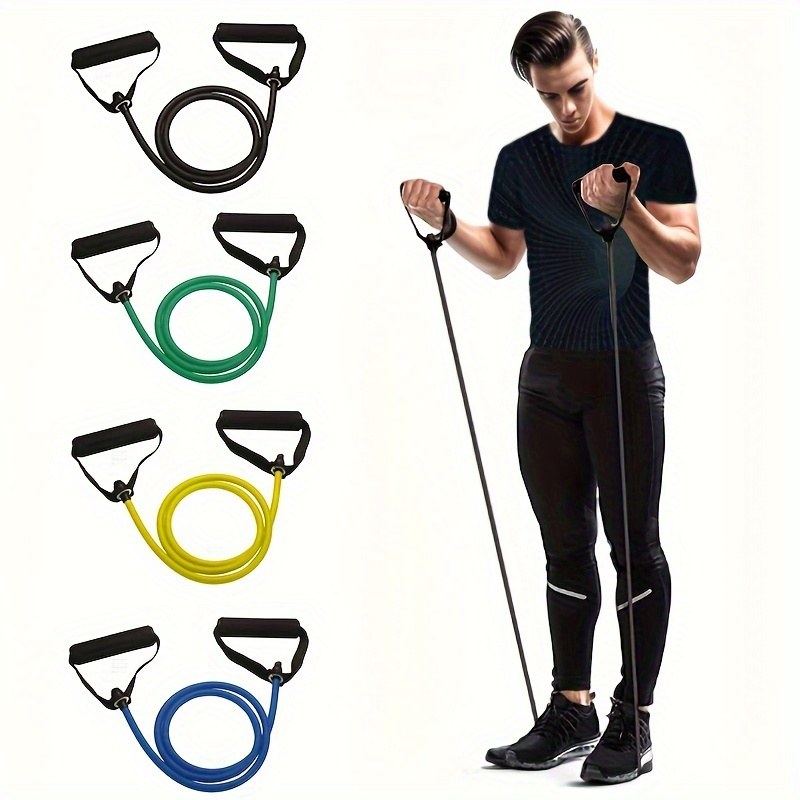
What changes: Loop a light resistance band around your feet (or hold one end in each hand anchored behind you) so the band adds tension through the extension. A 5-Level Resistance Band Set or simple Circular Resistance Loops both work well. Best for: adding progressive resistance without weights.
4. Dead Bug Pullover (Dumbbell)
What changes: Hold a light dumbbell (1–3 kg) in both hands and extend the arms overhead as the opposite leg extends. The weight dramatically increases the anti-extension demand. Best for: experienced practitioners ready for loading — see our guide to the Best Dumbbells for Women for picking a weight.
5. Opposite-Limb Hold (Extended Dead Bug)
What changes: Extend both the arm and leg fully and hold the position for 10–20 seconds per side before switching. Best for: maximum stability challenge and balance carryover — a nice complement to Balance Exercises for Women.
Common Mistakes
- Letting the back arch. The single most important error. Shrink the range until contact is maintained.
- Holding the breath. Breath-holding spikes abdominal pressure without training the coordinated exhale-brace you actually need.
- Going too fast. Dead bugs reward slowness. If you can do 20 quick reps, you can probably do 6 genuinely good ones — aim for the latter.
- Craning the neck. Keep your head resting on the floor with your chin slightly tucked; do not lift your head to "watch" the movement.
- Rushing to variations. Each harder version only helps if the base pattern is solid. If variation form breaks, return to the basic dead bug.
Where the Dead Bug Fits in Your Routine
Place dead bugs early in a workout, right after your warm-up, when your focus is fresh — coordination matters more than fatigue here. They pair beautifully with other stability-first moves. A simple beginner core session:
- Diaphragmatic breathing — 8 slow breaths
- Dead bugs — 2–3 sets of 6–10 per side
- Glute bridges — 2–3 sets of 10–15
- Bird-dogs — 2 sets of 6–8 per side
For a complete program, see our Core Workout for Women Beginners guide.
Safety Notes
- The dead bug is gentle on the spine by design, but stop if anything causes sharp pain — especially in the lower back or hips. Mild muscular effort is normal; pain is not.
- If you are pregnant (especially second trimester onward) or postpartum, lying flat for extended periods and some abdominal bracing patterns may need modification — check our Exercise During Pregnancy Safety and Postpartum Exercise Guide, and get provider clearance first.
- Pelvic floor connection matters: if you notice leaking, heaviness, or pressure during the exercise, shorten the range and see our Pelvic Floor Exercises for Women.
FAQ
Q: How many dead bugs should a beginner do?
Start with 2 sets of 5–8 reps per side, resting 30–60 seconds between sets. Build to 3 sets of 8–12 per side over a few weeks. Quality matters far more than quantity — six perfect reps beat fifteen sloppy ones.
Q: Can dead bugs help back pain?
Dead bugs are commonly used in rehabilitation programs because they strengthen the deep core without stressing the spine, and many people find their backs feel better-supported as this strength builds. They are not a guaranteed treatment, though — results vary, and persistent back pain deserves professional evaluation.
Q: Why is it called a dead bug?
Because of how you look doing it: on your back with your arms and legs in the air, like an upturned insect. It is not the most dignified name in fitness, but it is memorable — and the exercise is one of the most effective core moves you can learn.
Q: Dead bug vs. plank — which is better?
They train different qualities. Planks build static core endurance; dead bugs build dynamic stability — the ability to keep your spine steady while your limbs move, which is closer to how your core works in real life. Ideally, include both. See our guides to plank progressions and beginner core workouts for a complete picture.
Q: How long before I see results from dead bugs?
Most people notice better stability and body awareness within two to three weeks of practicing 2–3 times per week — movements like getting up from the floor or carrying things feel more controlled. Visible muscle definition takes longer and depends on overall training and nutrition, which varies widely between individuals.
Q: Can I do dead bugs every day?
You can, since the exercise is low-intensity — but most people get the same benefit from 3–4 sessions per week. Daily practice is fine if it feels good; just keep the quality high and stop if fatigue makes your form fall apart.
The Bottom Line
The dead bug looks unimpressive and works like magic — it teaches the deep core pattern that every other abdominal exercise depends on, with none of the spinal stress. Master the basic version with a flat, quiet lower back, then progress through the variations one at a time. Give it a month of honest practice, and it may become the exercise you wonder how you ever trained without.
