12 foundational yoga poses for beginners explained with clear setup, breathing, and modifications. Build a safe home practice from your very first session.
Yoga Poses for Beginners: 12 Foundational Poses Explained
Starting yoga can feel intimidating — the studio classes move fast and the Sanskrit names sound like a secret code. These twelve foundational poses are the alphabet of yoga. Learn them with good form and you will understand most of what happens in any beginner class.
This guide explains each pose the way a good teacher would: what it is for, how to set it up, how to breathe in it, what beginners usually get wrong, and how to modify it so it works for your body today. No flexibility prerequisites — just you, a mat, and twenty minutes.
This guide contains affiliate links. If you buy through them, VÉLORA may earn a commission at no extra cost to you.
Before Your First Pose
Set up your space. You need a mat-sized patch of floor, enough room to extend your arms overhead, and ideally a door you can close — yoga rewards attention, and attention needs quiet.
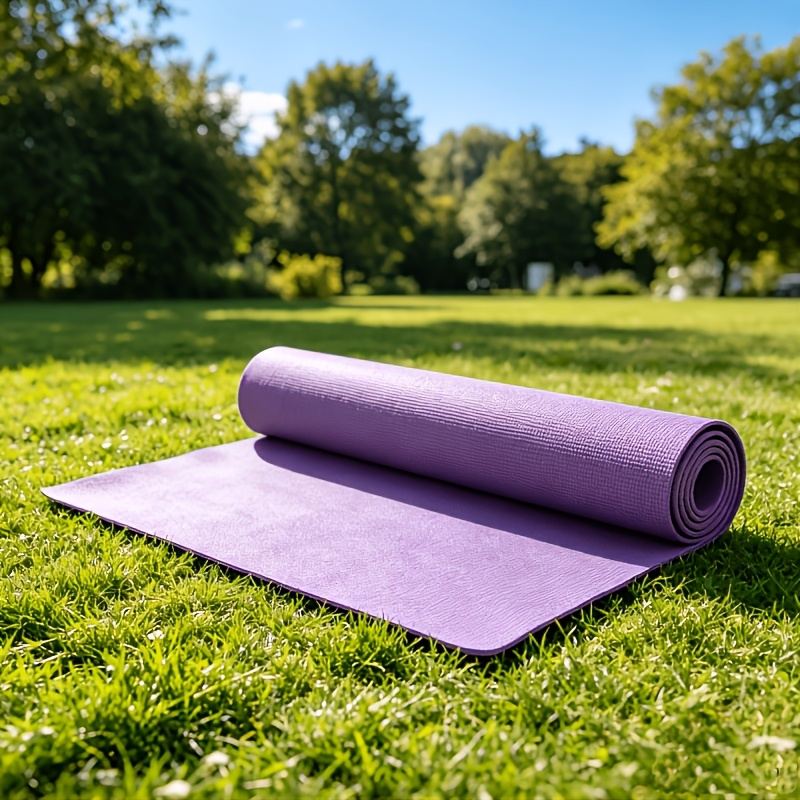
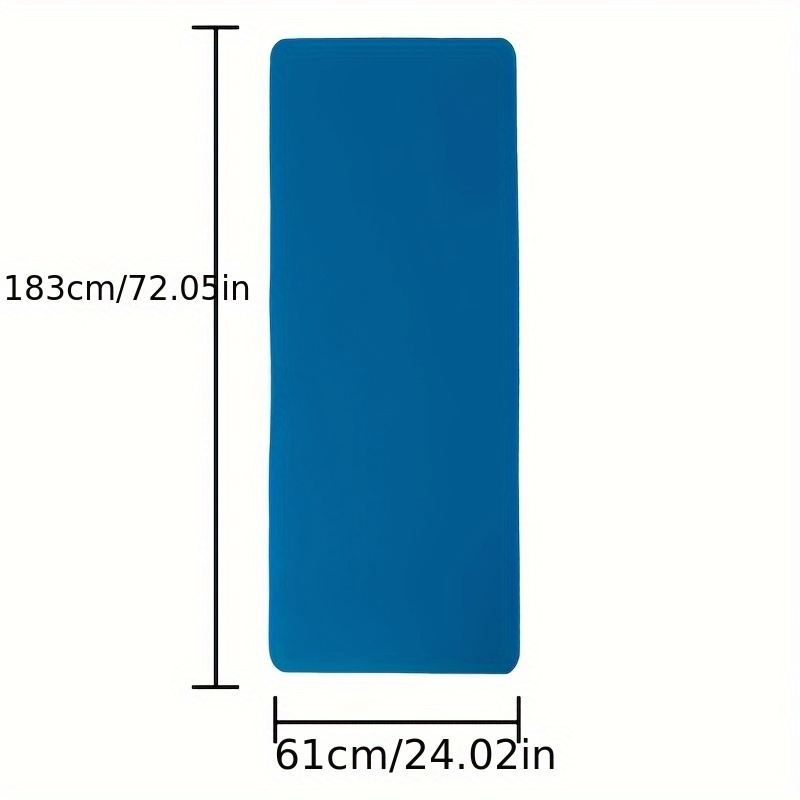
Get a mat you will actually use. The 1pc 8mm Thick Yoga Mat is cushioned enough for knees and spine, grippy enough for standing poses, and light enough to move aside. If you are choosing between options, our guide to yoga mat thickness and our picks for the best yoga mat for bad knees will help you decide.
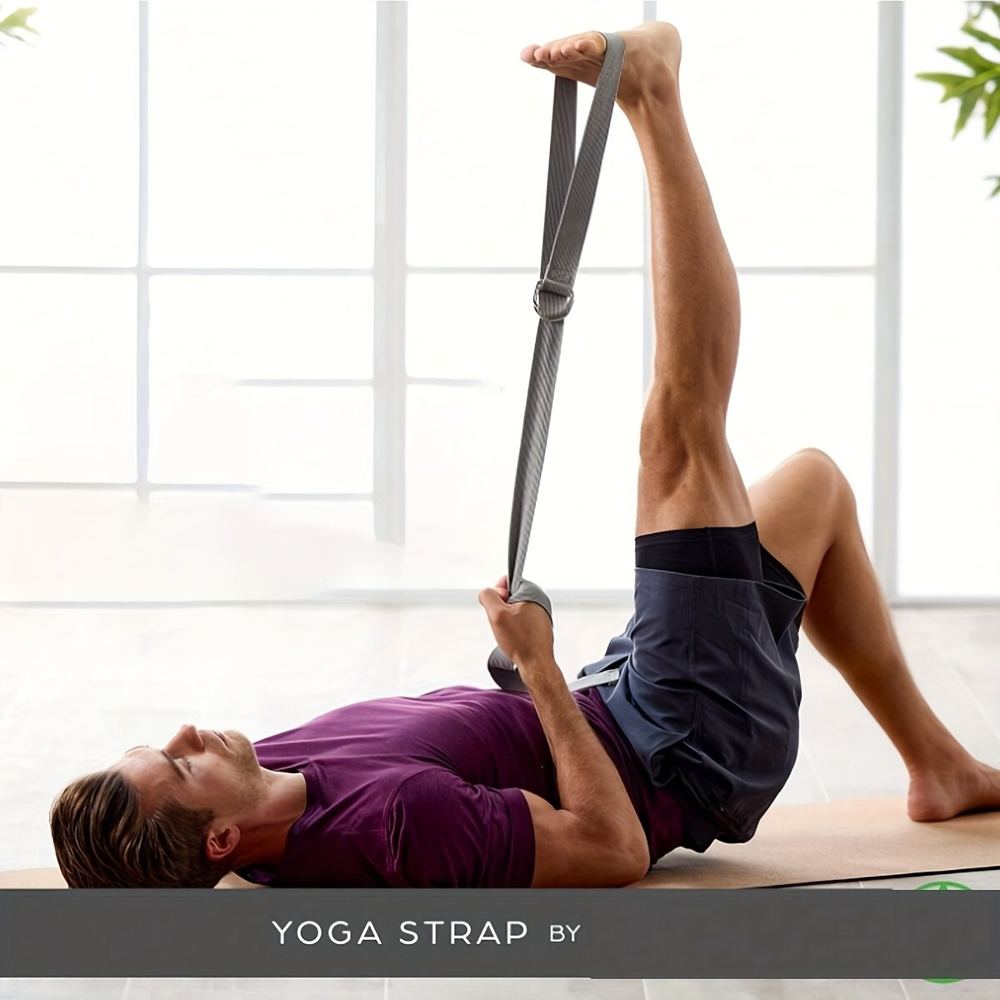
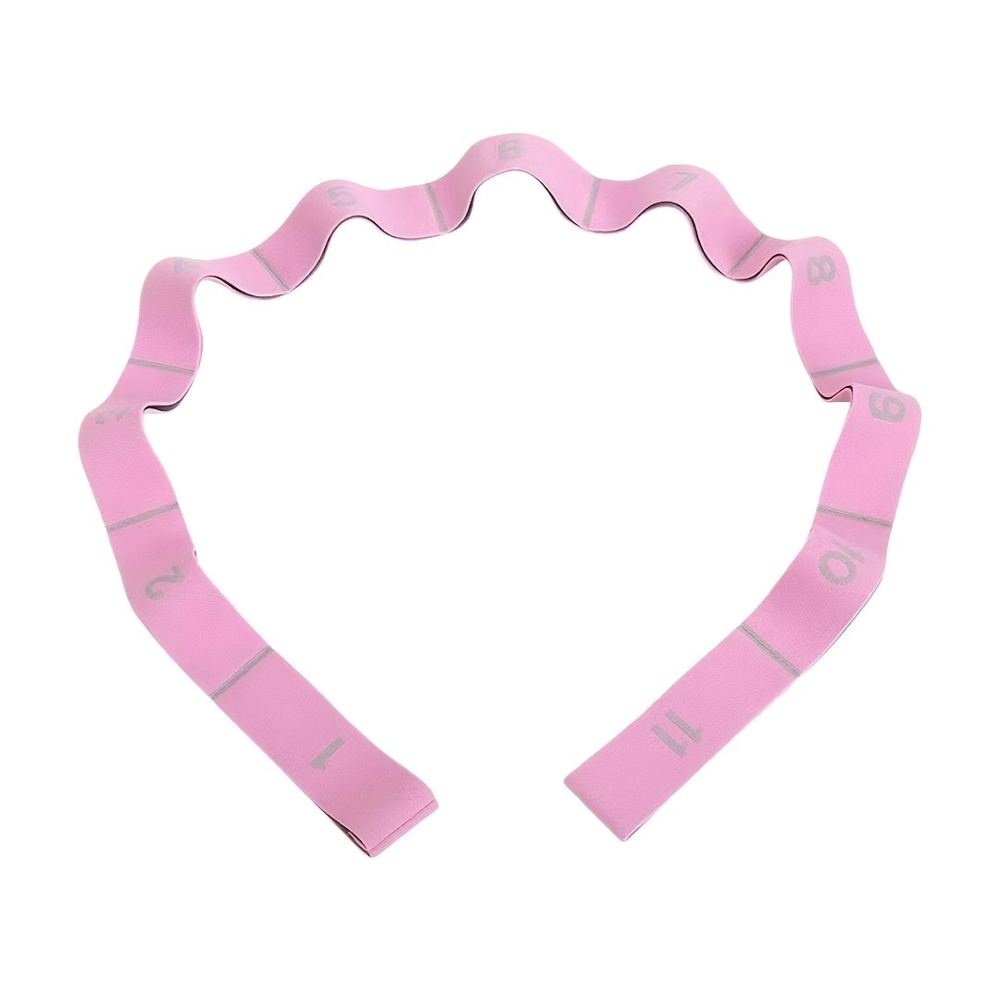
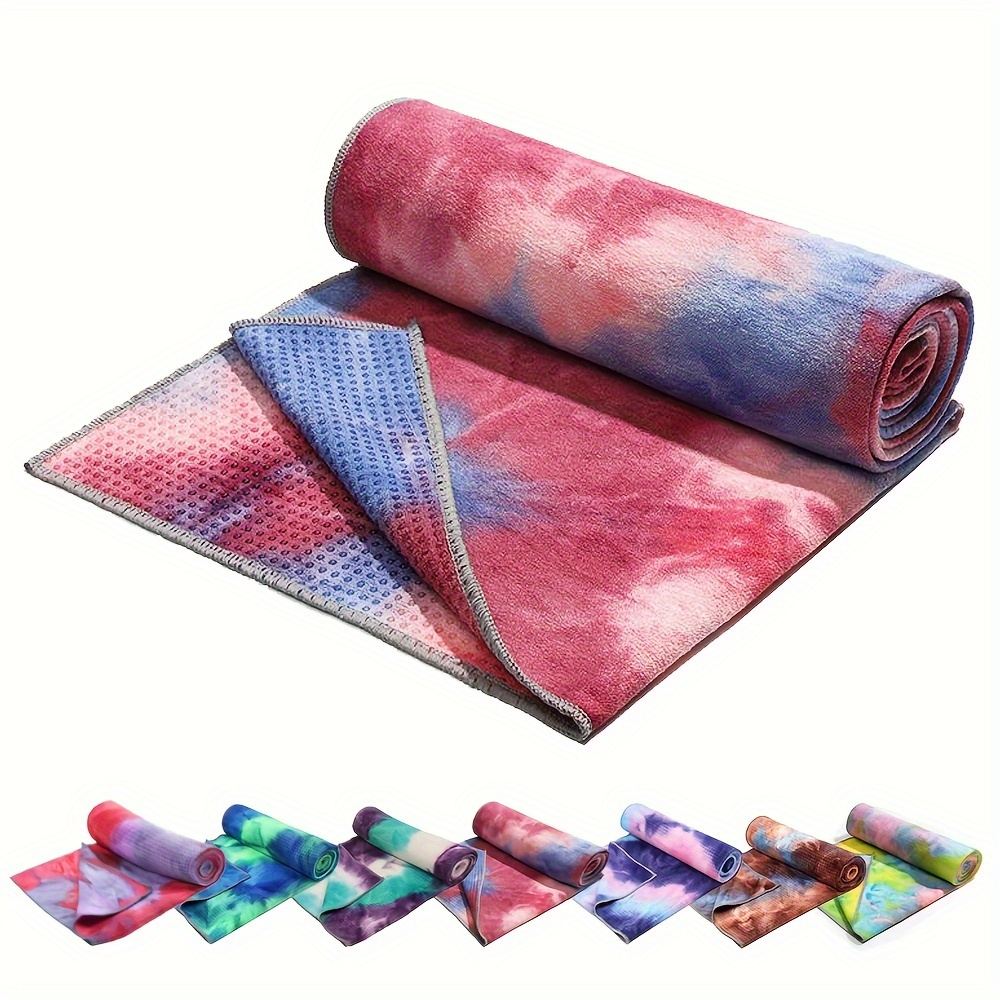
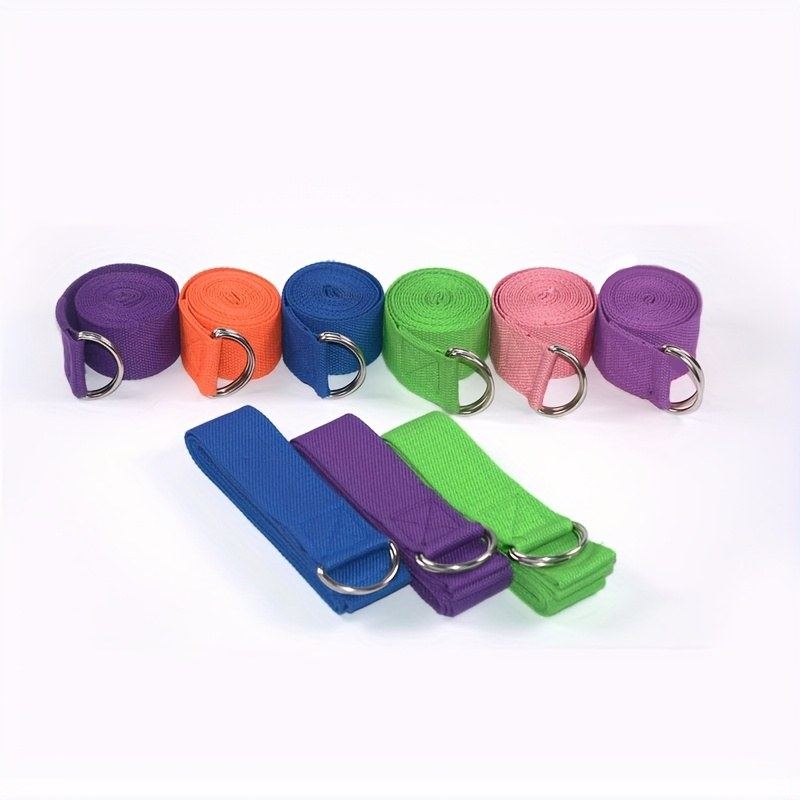
Props are not cheating. A yoga strap and a folded yoga towel (as a knee cushion or neck support) make poses accessible months earlier.
The breathing baseline. Throughout every pose: inhale and exhale through the nose, slow and even. If a pose makes you hold your breath, ease off — the breath is the governor of intensity.
The 12 Foundational Poses
Hold each pose for 5–8 slow breaths (about 45–60 seconds) per side where applicable. Move between them in the order given — it flows as a gentle sequence on its own.
Standing Poses
1. Mountain Pose (Tadasana). Stand with feet hip-width apart, weight balanced across all four corners of each foot. Lengthen the spine, roll the shoulders back and down, arms at your sides with palms forward. Purpose: it teaches the alignment — grounded feet, long spine, relaxed shoulders — that every other standing pose builds on. Common mistake: locking the knees and clenching the glutes. Stand tall but soft. Breathing: 5 slow breaths.
2. Downward-Facing Dog (Adho Mukha Svanasana). From hands and knees, tuck your toes and lift your hips up and back into an inverted V, hands shoulder-width, feet hip-width. Purpose: stretches the hamstrings, calves, and shoulders while building upper-body strength. Beginner modification: bend the knees generously; the priority is a long spine, not straight legs. Pedal the feet alternately to ease in. Common mistake: hanging in the joints — press the floor away actively, spreading the shoulder blades wide.
3. Warrior I (Virabhadrasana I). Step your right foot forward into a lunge, left foot angled out about 45 degrees, back heel grounded. Bend the front knee toward 90 degrees, square the hips forward, and raise your arms overhead. Purpose: builds leg strength and opens the hip flexors and chest. Technique: the front knee tracks over the ankle, not past the toes; the back leg stays straight and strong. Beginner modification: shorten the stance and keep the back heel lifted if grounding it strains the ankle. Safety: if the lower back compresses, draw the ribs down and tuck the tailbone slightly.
4. Warrior II (Virabhadrasana II). From Warrior I, open the hips and arms to the side — front knee bent, arms extended parallel to the floor, gaze over the front middle finger. Purpose: hip opening plus leg endurance. Common mistake: letting the front knee collapse inward — press it gently toward the outer edge of the foot. Breathing: steady and even; this pose gets warm, and the breath is what keeps you in it.
5. Triangle Pose (Trikonasana). Straighten the front leg from Warrior II, hinge at the hip, and reach the front hand to the shin (or a block), the other arm straight up. Purpose: a deep lateral stretch for the hamstrings, hips, and side body. Beginner modification: hand on the shin or a stack of books rather than the floor; a micro-bend in the front knee is fine. Common mistake: rounding forward to get the hand lower — keep the chest open and the torso in one plane, as if between two panes of glass.
Seated and Kneeling Poses
6. Child's Pose (Balasana). Kneel, touch your big toes together, widen the knees, and fold forward with arms extended or resting alongside the body. Purpose: the universal resting pose — a gentle stretch for the back, hips, and shoulders. Beginner modification: place the folded towel between thighs and calves for sensitive knees, or rest the forehead on stacked hands. Use it any time; resting is part of yoga, not quitting.
7. Cat-Cow (Marjaryasana–Bitilasana). On hands and knees, alternate: inhale, drop the belly and lift the head and tailbone (cow); exhale, round the spine and tuck chin and tailbone (cat). Purpose: spinal mobility and breath-movement coordination — the warm-up that prepares the back for everything else. Technique: move slowly, one full breath per shape, 6–8 cycles.
8. Seated Forward Fold (Paschimottanasana). Sit with legs extended, hinge at the hips, and fold forward over the legs, hands wherever they reach. Purpose: hamstring and calf stretch plus a calming, inward-turning shape. Beginner modification: sit on the folded towel to tilt the pelvis forward, keep the knees bent, and loop the yoga strap around the feet instead of straining to reach them. Safety: fold from the hips with a long spine; never force the head toward the knees.
9. Bridge Pose (Setu Bandha Sarvangasana). Lie on your back, knees bent, feet hip-width and close to the hips. Press through the heels and lift the hips, keeping the knees tracking over the ankles. Purpose: the beginner's backbend — strengthens the glutes and hamstrings while opening the chest and hip flexors. Technique: squeeze the glutes at the top; do not turn the head side to side. Beginner modification: place a block or firm cushion under the sacrum and rest on it — a supported bridge you can hold for a minute. Sets: 3 rounds of 30–45 seconds, or one long supported hold.
Restorative and Core Poses
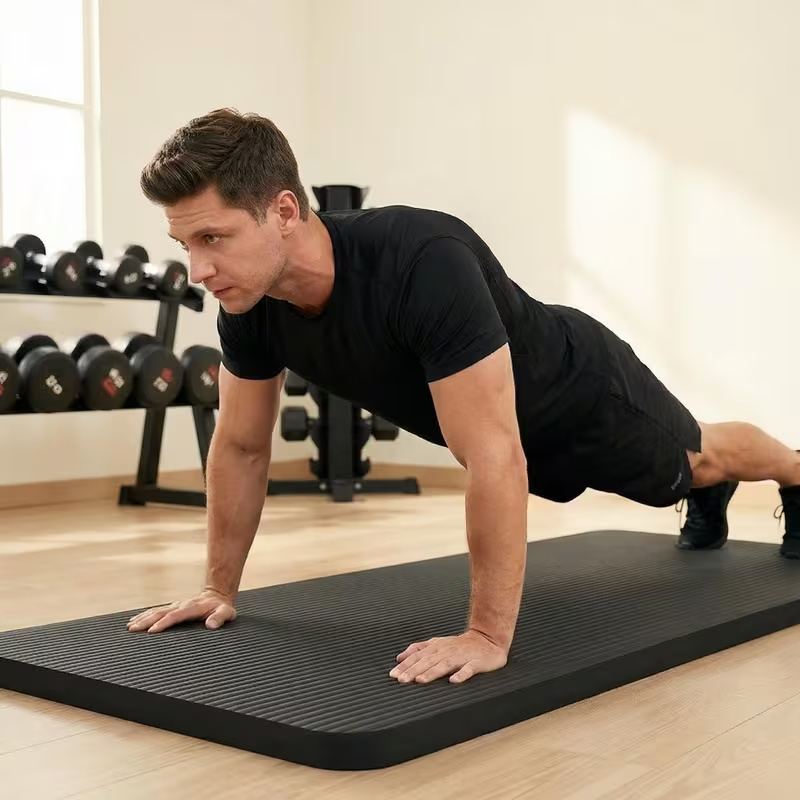
10. Plank Pose (Phalakasana). From hands and knees, step the feet back into a straight line from head to heels, hands under shoulders, core braced. Purpose: full-body strength — the foundation for arm balances and a genuinely effective core exercise. Technique: push the floor away and draw the navel gently in; hips neither sagging nor piked. Beginner modification: drop the knees to the floor while keeping the straight line from knees to head. Sets: 3 holds of 20–30 seconds with rest between.
11. Cobra Pose (Bhujangasana). Lie face down, hands under shoulders, elbows close to the body. Press gently through the hands to lift the chest, keeping the lower ribs near the floor. Purpose: a gentle backbend that strengthens the spinal muscles and opens the chest — the antidote to desk posture. Common mistake: pushing up too high and crunching the lower back; the back muscles do the lifting and the arms assist lightly. Safety: keep it pain-free in the lower back.
12. Corpse Pose (Savasana). Lie on your back, legs extended and slightly apart, arms at your sides with palms up, eyes closed. Do nothing for 2–5 minutes. Purpose: the pose where the nervous system absorbs the practice — experienced practitioners consider it the most important pose in the sequence. Technique: systematically relax — jaw, shoulders, belly, hands, feet. Let the breath return to natural.
Your First 20-Minute Sequence
| Order | Pose | Hold | | --- | --- | --- | | 1 | Cat-Cow | 8 breath cycles | | 2 | Child's Pose | 1 min | | 3 | Downward-Facing Dog | 5–8 breaths | | 4 | Mountain Pose | 5 breaths | | 5 | Warrior I (each side) | 5–8 breaths | | 6 | Warrior II (each side) | 5–8 breaths | | 7 | Triangle (each side) | 5–8 breaths | | 8 | Plank | 3 × 20–30s | | 9 | Cobra | 5–8 breaths | | 10 | Bridge | 3 × 30–45s | | 11 | Seated Forward Fold | 1 min | | 12 | Savasana | 3–5 min |
Practice this 2–4 times per week. Between sessions, gentle stretching keeps the body open — our low-impact workouts for women pairs well, and our beginner home workout plan for women adds strength work as you progress. For balance-focused next steps, see balance exercises for women.
Pose Families: How the 12 Fit Together
| Family | Poses from this guide | What it trains | | --- | --- | --- | | Standing strength | Warrior I, Warrior II, Triangle | Legs, hips, stamina | | Forward folds | Downward Dog, Seated Forward Fold | Hamstrings, calm | | Backbends | Cobra, Bridge | Spine strength, chest opening | | Restorative | Child's Pose, Savasana | Recovery, relaxation | | Core stability | Plank, Cat-Cow | Trunk strength, spinal mobility |
Nearly every yoga class is some combination of these five families. Learn the twelve poses and you will never feel lost in a class — you will recognize the family even when the variation is new.
Common Beginner Mistakes
- Comparing yourself to the room. Flexibility varies enormously with anatomy — hip structure, limb length, and genetics matter more than effort. Your only honest benchmark is your own practice last month.
- Skipping Savasana. Leaving before the final rest is like leaving the theater before the last scene.
- Forcing depth. Pain is information, not a milestone. Work at the edge of sensation, never past it.
- Holding the breath. If you cannot breathe smoothly, back off. The breath is the intensity dial.
- Practicing sporadically. Two 20-minute sessions a week for two months beats one heroic 90-minute session. Consistency is the entire secret.
FAQ
Q: How often should a beginner do yoga?
Two to three sessions of 20–30 minutes per week is an ideal start — enough to build familiarity without soreness or burnout. Daily practice is wonderful eventually, but not required to progress well.
Q: Do I need to be flexible to start yoga?
No — that is like saying you need to be clean to take a shower. Yoga builds flexibility; inflexibility is the starting condition, not a disqualification.
Q: What is the best time of day for beginner yoga?
The time you will actually do consistently. Morning practice energizes; evening practice unwinds. Regularity beats timing — pick the slot with the fewest obstacles and protect it.
Q: How long until I see progress in yoga?
Most beginners feel a difference — less stiffness, easier breathing in poses, better balance — within 3–4 weeks of regular practice. Visible flexibility changes typically take 2–3 months. Plateaus of a few weeks followed by sudden ease are completely normal.
Q: Is yoga enough exercise on its own?
It depends on your goals. Yoga builds flexibility, balance, body awareness, and moderate strength — a genuinely complete foundation. For cardiovascular fitness and progressive strength, most people eventually add walking or resistance training. Yoga plus two strength sessions a week is an excellent all-around combination for most women.
The Bottom Line
Twelve poses. That is the whole starting curriculum: stand tall, fold forward, bend back gently, rest deeply, and breathe through all of it. Learn them slowly, modify without shame, practice twice a week, and never skip Savasana. The mat is waiting; the only bad first session is the one you keep postponing.