How to choose yoga mat thickness without the guesswork — what 3mm, 4mm, 6mm and 10mm actually feel like, and which one your knees and practice need.
How to Choose Yoga Mat Thickness: A Straightforward Guide
Walk into any store or scroll any marketplace and yoga mats run from a barely-there 3mm to a pillowy 10mm — and every listing swears its thickness is the right one. Learning how to choose yoga mat thickness is mostly about ignoring that noise and matching two things: how your joints feel on hard floors, and how much balance work your practice involves. That's it. Get those two right and the decision makes itself.
Here's the honest version of what each thickness actually does, who it suits, and where the trade-offs bite — based on comparing specs and buyer feedback across the mats on VÉLORA, not on marketing copy.
This guide contains affiliate links. If you buy through them, VÉLORA may earn a commission at no extra cost to you.
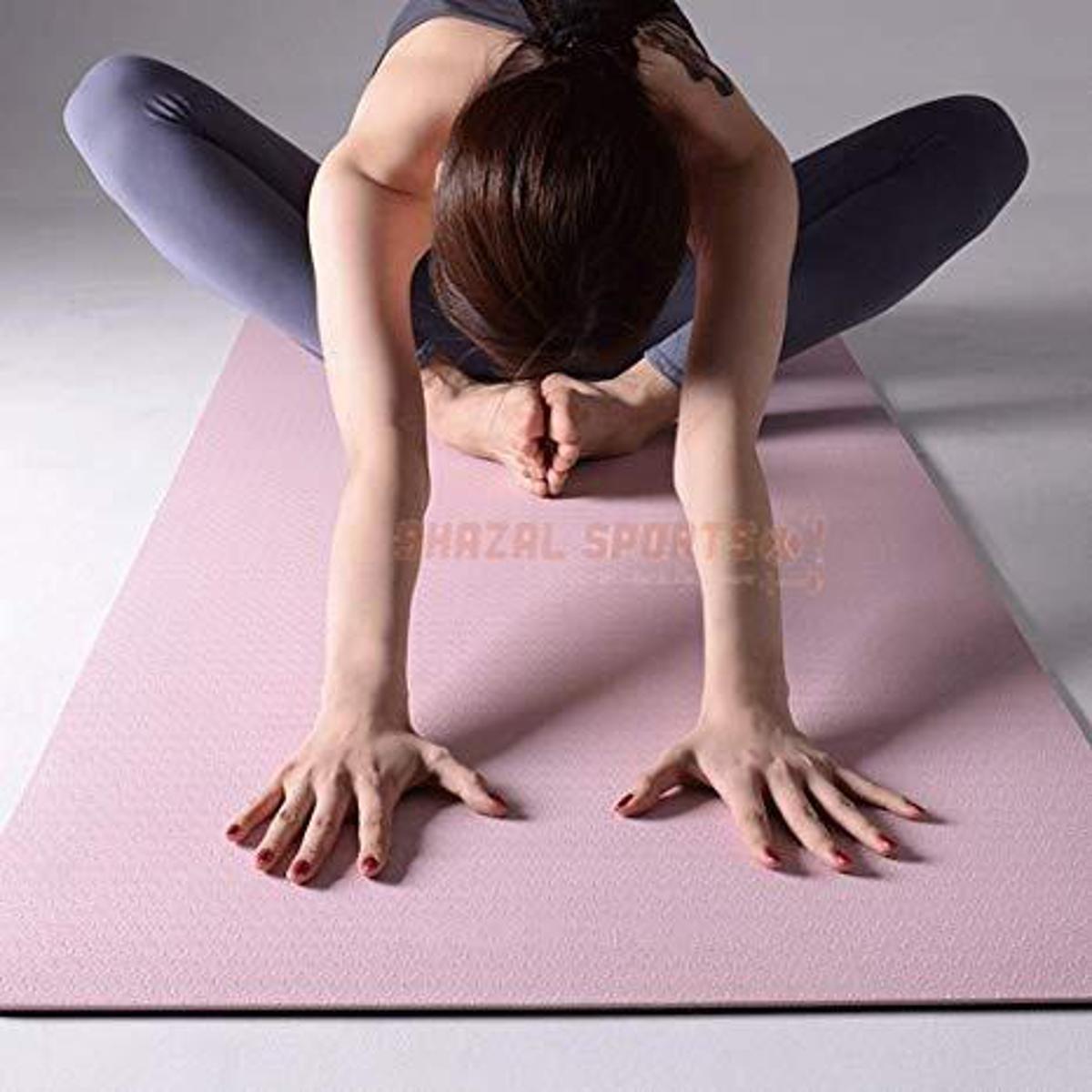
The One Thing Most People Get Wrong: Thickness Isn't Cushioning
Before the numbers, a quick myth to clear out. A thick mat made of soft, spongy foam can feel less supportive than a thinner, denser mat. What protects your knees is the combination of thickness and density — how much the material resists bottoming out when your full weight presses through one kneecap.
Cheap, very thick mats are the usual trap: they feel luxurious in the shop, then your knee sinks straight through to the floor in tabletop position, and in standing poses the squishy surface wobbles under your feet. If you remember one line from this guide, make it this one: a firm 6mm beats a spongy 10mm for most people.
The Thickness Tiers, Honestly Explained
3mm: The Travel and Stability Tier
A 3mm mat is thin, light and rolls up to almost nothing — the one you take to the studio, the park, or on holiday. Because there's so little foam between you and the floor, balance poses feel rock solid; your feet get real feedback from the ground.
The cost is exactly what you'd guess: kneeling, elbow and hip-bone work on hard floors ranges from uncomfortable to genuinely painful. If your knees are fine and your practice is standing-heavy (vinyasa, power yoga), 3mm is a legitimate choice. If you do any floor work, it isn't.
Best for: travel, studio classes over their provided mats, experienced practitioners with happy joints.
4–5mm: The All-Round Tier
This is the standard thickness most studios stock, and for good reason. There's enough padding for comfortable floor work in a typical class, and still enough ground feel for tree pose and warriors without the ankle-wobble of thicker foam. If you do a bit of everything and your knees are generally okay, this is the safest single purchase.
Best for: mixed home practice, beginners who don't have joint complaints, anyone buying their first mat.
6mm: The Comfort Tier
At 6mm you start feeling real protection in kneeling and forearm positions, while balance is still manageable — especially with a denser foam. This is the tier we'd point to for women over 40, anyone returning to exercise, or anyone whose home "studio" is tile or hardwood rather than carpet. It's the sweet spot more often than the internet admits.
Best for: home practice on hard floors, gentle and restorative yoga, Pilates-style floor work mixed with standing poses.
8–10mm and Beyond: The Joint-Protection Tier
This is no longer really a "yoga mat" category — it's floor-work territory. At 8–10mm, kneeling, side-lying and hip work become genuinely comfortable even with sensitive or recovering knees. The trade-off is balance: standing poses on 10mm of foam feel like standing on a mattress, because that's more or less what you're doing. Many women keep a mat this thick for Pilates, stretching, core work and rehab-style exercise, and do their standing yoga on the bare floor or a thinner mat beside it — a two-mat system that sounds indulgent and is actually very practical.
Beyond 10mm you're into gym-mat territory: thick folding pads built for floor exercise, mobility work and gymnastics-style training rather than flowing yoga.
Best for: bad knees, floor-based workouts, Pilates, stretching and mobility routines, post-rehab training.
The Recommendation Flow
Skip the agonising. Run through these in order:
- Do your knees, elbows or hip bones hurt on hard floors? Go 8–10mm, dense foam. Comfort wins; do standing work off the mat if balance feels wobbly.
- Is your practice mostly standing flows, and do you travel with your mat? Go 3–4mm.
- A bit of everything, no joint issues, first mat? Go 4–5mm. Upgrade later if floor work bothers you.
- Mostly floor work — Pilates, core, stretching — on tile or wood? Go 6mm minimum, 8mm if you're choosing between the two.
- Training on carpet? Drop one tier from whatever the above suggested. The carpet is doing part of the mat's job.
One Mat per Tier, From Our Catalog
What About Material? EVA, TPE and Rubber in Plain English
Thickness gets all the attention, but the material quietly decides how a mat feels and how long it lasts. EVA foam is the budget standard — light, cheap, decently grippy, and what most mats under about $15 are made of. It compresses faster over the years, but at these prices most women treat it as a consumable and replace it when it goes flat. TPE is a step up: a bit denser, a bit more durable, and often marketed as the eco-friendlier option. Natural rubber is the heavyweight — literally. Rubber mats grip beautifully and feel dense and planted, but they weigh two or three times as much as EVA, cost more, and have a distinct smell when new that takes days to fade. If you train at home and rarely move the mat, rubber's density is lovely. If you carry your mat anywhere, EVA or TPE will make you happier. None of this overrides the thickness rules above — it just refines the choice once you've picked your tier.
3mm EVA Yoga Mat — the travel tier
Lightweight, durable and non-slip, this is the mat that lives in your car boot or suitcase. It does exactly what a 3mm mat should: protects you from a cold, grubby floor and stays out of the way of your balance. It will not love your knees, and it doesn't pretend to.
Price: $6.48 — View on VÉLORA
4mm EVA Yoga Mat — the all-round tier
The sensible default. A step up in comfort from the 3mm without giving away stability, at a price that makes it a low-regret first mat or a second mat for guests and partners who "might" join in.
Price: $7.04 — View on VÉLORA
8mm Thick Yoga Mat — the comfort tier
Our most-recommended thickness for home practice, and this one pairs the depth with a non-slip surface that keeps hands planted in downward dog. If your sessions mix standing flows with a lot of floor work, this is the mat that stops you thinking about the mat.
Price: $12.39 — View on VÉLORA
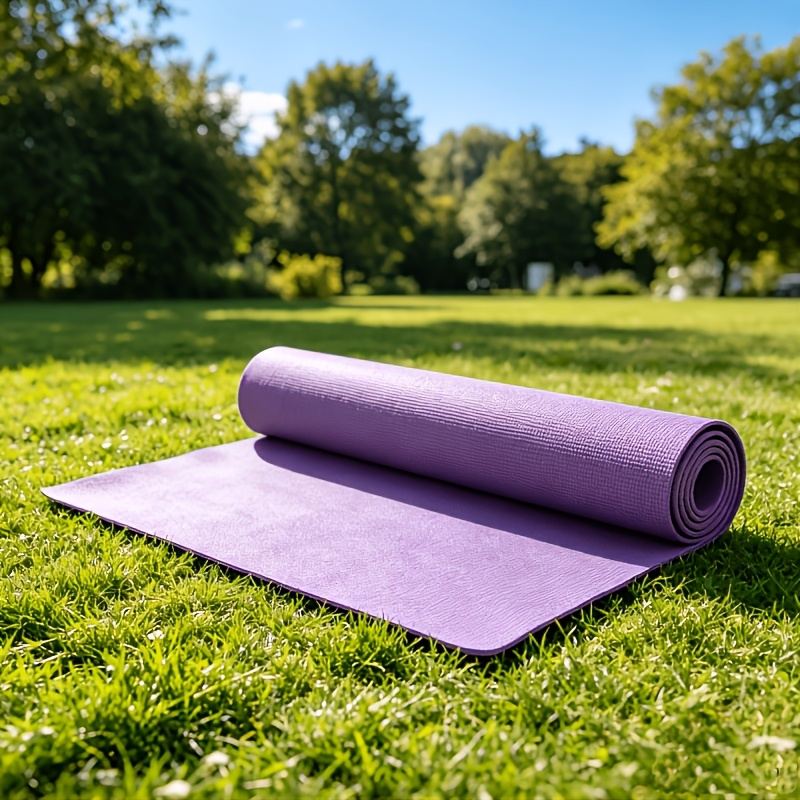
Yoga Mat 10mm Purple — the joint-protection tier
Full 10mm of cushioning for knees that have opinions. Lovely for Pilates, stretching, core work and gentle floor yoga; expect standing balances to feel floaty, and plan to step off it for those. The purple is a nice change from the sea of black and grey, too.
Price: Rs 2,799 — View on VÉLORA
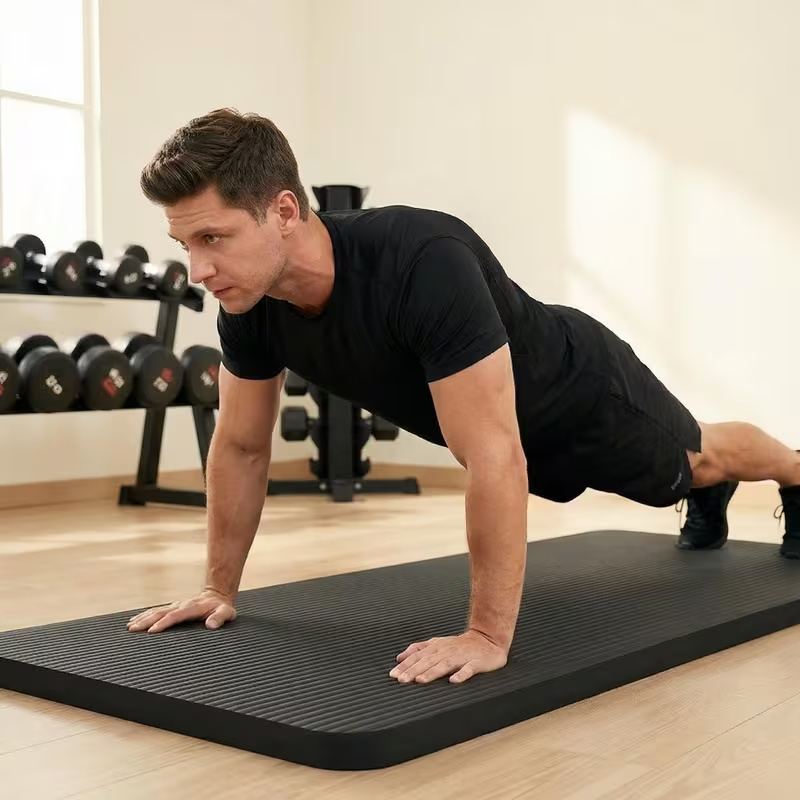
Black Folding Gym Mat PU Foam Pad — the floor-work tier
When your training is mostly on the ground — mobility drills, core circuits, gymnastics-style conditioning — a folding gym pad beats any yoga mat. Thick PU foam, a wipe-clean surface, and it folds away flat against a wall. It's overkill for sun salutations and perfect for everything that happens at floor level.
Price: $44.15 — View on VÉLORA
A Note on Sizing and Grip
Two quick extras while you're choosing. If you're over about 5'7", look for a longer mat (183cm rather than 173cm) so your heels stay on it in savasana and your hands stay on it in plank. And whatever thickness you pick, grip beats everything in a flowing practice — a non-slip surface matters more than an extra millimetre. Browse the full range in our yoga collection to compare lengths and surfaces, and if knees are your main concern, our dedicated guide to the best yoga mat for bad knees goes deeper on density, knee pads and positioning tricks.
Frequently Asked Questions
What is the best yoga mat thickness for beginners?
For most beginners, 4–6mm is the sweet spot: enough cushion for floor work, enough stability for standing poses. If your knees already bother you, skip straight to 8mm — comfort is what keeps beginners coming back.
Is a 10mm yoga mat too thick?
For floor work, Pilates and sensitive knees, no. For balance-heavy standing yoga, it can feel unstable and wobbly. Many people use a 10mm mat for ground exercises and step onto the floor for standing sequences.
Does a thicker mat always protect knees better?
No — density matters as much as thickness. A soft, spongy 10mm mat can let your knee sink straight through to the floor, while a firm 6–8mm mat keeps a supportive layer under the joint. Press your thumb hard into the mat: if it bottoms out easily, your knee will too.
What thickness do yoga studios use?
Most studios stock mats around 4–5mm, because they balance cushion, stability, durability and storage. If studio mats feel fine to you, buy that thickness for home.
Should I choose a thicker mat if I practice on carpet?
Usually the opposite. Carpet adds its own padding and grip challenges, so a thinner, firmer mat (3–4mm) often works better on carpet than a thick one, which can bunch and slide.