Confused by your smart scale's body-fat and muscle numbers? Learn how bioimpedance works, which metrics actually matter, when to weigh, and how to track trends.
Smart Scales Explained: What Body-Composition Numbers Mean
Step on a smart scale and it throws a dozen numbers at you — body fat percentage, muscle mass, visceral fat, metabolic age, even something called "body water." It feels like a full health report in five seconds. But what do those numbers actually mean, how accurate are they, and which ones should you pay attention to at all?
This guide breaks down every major metric a smart scale reports, explains how the scale guesses at them, and shows you how to turn daily weigh-ins into something genuinely useful: a long-term trend. Spoiler: the single day's numbers matter far less than the direction they're moving over weeks and months.
This guide contains affiliate links. If you buy through them, VÉLORA may earn a commission at no extra cost to you.
How a Smart Scale Gets Its Numbers
A smart scale measures your total body weight with a standard load cell — that part is straightforward and accurate. Everything else is estimated using bioelectrical impedance analysis (BIA): the scale sends a very weak, painless electrical current up through your feet and measures how much resistance it meets.
Lean tissue, which holds more water, conducts the current easily. Fat resists it. From that resistance reading — combined with your height, age, and sex, which you enter in the app — the scale's software estimates body fat percentage, then derives everything else from that.
Here's the honest part: BIA is an estimate, not a measurement. Its readings shift with hydration, recent meals, exercise, skin temperature, and even where you stand on the scale. A smart scale is a consistent measuring tool, not a precise medical instrument. That's fine, as long as you use it for trends rather than treating any single reading as gospel.
The Numbers, Explained
Here's every metric you're likely to see, what it means, and how to interpret it sensibly.
| Metric | What it is | How to use it | |---|---|---| | Body weight | Total mass, measured directly. The most accurate number on the scale. | Watch the 7–14 day average, not daily jumps. | | Body fat % | Estimated proportion of your weight that is fat. | Compare trends over 4+ weeks; day-to-day swings of 1–2% are normal noise. | | Muscle mass | Estimated lean soft tissue (skeletal muscle plus organs and water). | Rising muscle mass + stable weight often means good recomposition. | | Visceral fat rating | Estimate of fat around internal organs, usually shown as a rating (e.g., 1–13). | Lower is generally better; treat the trend, not the exact number. | | Bone mass | Estimated mineral weight of bones. Changes very slowly in adults. | Should stay nearly flat; big swings are scale error, not bone change. | | Body water % | Estimated total body water as a percentage of weight. | Drops after hard exercise or low-fluid days; it's a hydration signal, not fat. | | BMR / metabolic rate | Estimated daily calories burned at rest, calculated from your composition. | Useful for setting calorie targets, but it's an estimate — results vary. | | BMI | Weight relative to height. | A rough population-level indicator that ignores muscle entirely; don't overthink it. | | Metabolic age | Compares your BMR to age-group averages. | Motivational flavor, not a clinical measure. Take it lightly. |
No single metric tells your whole story. The useful move is watching weight and body fat percentage trend together over time.
Why Your Readings Jump Around
Many people weigh themselves three days in a row, see three different body-fat numbers, and conclude the scale is useless. Usually the scale is just reflecting real — and temporary — changes in your body:
- Hydration. The biggest driver of BIA swings. More water in your tissues reads as more lean mass and less body fat; dehydration does the opposite. Morning readings after the bathroom are most consistent.
- Recent exercise. A hard workout shifts fluid into muscles and raises skin temperature, which changes impedance. Readings taken within a few hours of training are unreliable.
- Meals and salt. Food and sodium hold water. Evening readings after a full day of eating and drinking will almost always show higher body fat than a morning reading.
- Menstrual cycle. Hormonal fluid shifts during the cycle move the numbers noticeably for many women. Compare week-to-week across cycles, not day-to-day within one.
- Foot contact. Dry feet, cold feet, or standing off-center on the sensor pads can skew a reading. Same position, same time, every time.
Understanding this isn't a flaw of your scale — it's how bioimpedance works. Our fitness myths guide covers more ways numbers can mislead when taken out of context.
How to Get Consistent, Useful Readings
If you want your scale's trend line to mean something, control the variables:
- Weigh at the same time daily — first thing in the morning, after the bathroom, before eating or drinking.
- Wear nothing or minimal clothing, and use the same outfit every time.
- Stand the same way — centered, feet covering the metal sensors, dry feet.
- Skip training-day readings or take them knowing they'll be noisier.
- Log weekly averages, not daily numbers. Most scale apps do this automatically.
Do this for 3–4 weeks and the trend line becomes genuinely informative — far more so than any single weigh-in. Our workout tracking guide explains how to combine scale data with training logs for the full picture.
Which Numbers Actually Matter
If the dashboard overwhelms you, focus on just three:
- Body weight trend (7-day average). The anchor metric.
- Body fat % trend (monthly). Slow, steady direction is what counts.
- Muscle mass trend. Especially if you're strength training — holding or gaining muscle while weight drops is a great sign.
Ignore metabolic age, and don't stress over bone mass day to day. BMI is worth one glance and then forgetting — a woman who strength trains can have a "high" BMI and excellent body composition, because muscle weighs more than fat by volume. If belly fat specifically concerns you, our truth about belly fat and exercise explains what training can and can't change.
Smart Scale Limits: What They Can't Tell You
Be clear-eyed about what the numbers can't do:
- They cannot diagnose any health condition. They're screening estimates.
- They can't measure exactly how much fat you lost this week. Real body-composition change shows over weeks, not days.
- They don't capture fitness, strength, energy, or how your clothes fit — which often improve before the numbers move.
- Results vary between brands and even between two scales of the same brand. Compare yourself only to your own history on one device.
If you have a medical condition, are pregnant, or have an implanted electronic medical device such as a pacemaker, check with your provider before using a scale with bioimpedance — the electrical current is tiny, but standard manufacturer guidance is to avoid BIA in those situations. A plain weight-only reading is fine for anyone.
Syncing Your Scale with a Companion Smartwatch
Most smart scales push their readings to a phone app, and many of those apps also accept data from a fitness smartwatch — step counts, workouts, heart rate, and sleep. Combined, you get a fuller picture: training activity from the watch, body-composition trends from the scale, all in one dashboard.
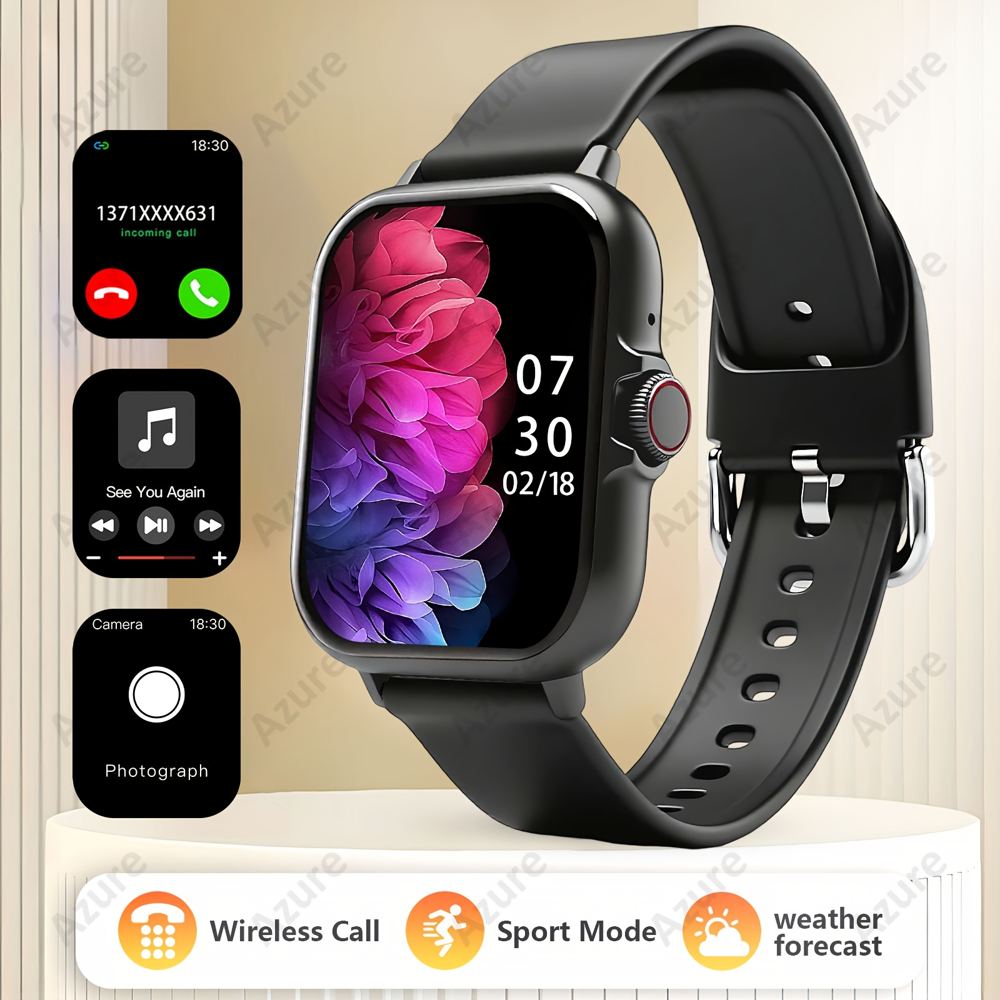
A companion watch like the 1.83-inch Full Touchscreen HD Sports Smartwatch tracks the activity side of that equation — workouts, daily movement, and heart rate — while your scale handles the composition side. The two data streams complement each other: you can see how consistent training weeks line up with favorable trend shifts over time.
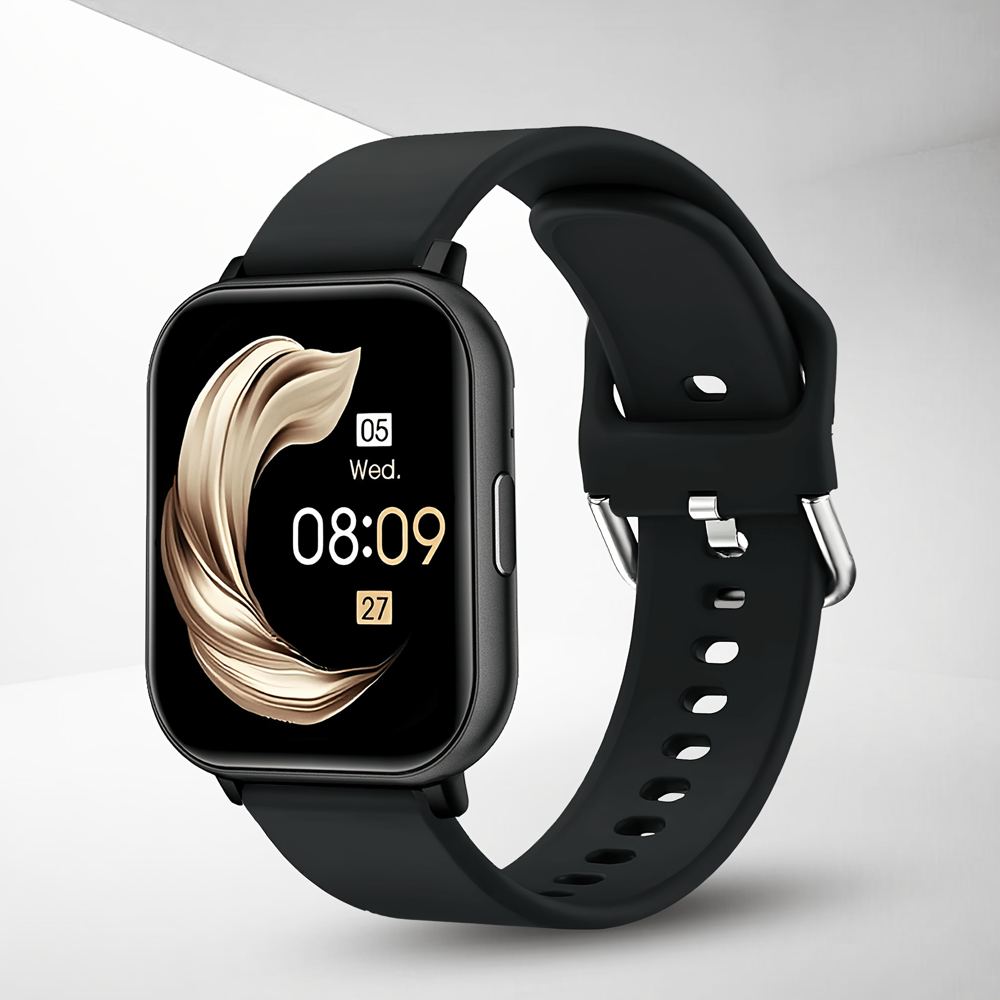
Similarly, the 2026 New Smartwatch with 1.83-inch Screen pairs with most major fitness apps, so its activity data lands in the same place your scale syncs to. To be clear: these are smartwatches, not scales — they don't measure body fat themselves. They add the movement and workout context that makes your scale's trend lines meaningful.
Practical tip: open your scale app's settings and confirm it's actually receiving data from both devices. Many people own both and only sync one, which leaves half the story untold. If you're building a home setup around tracking, our fitness equipment guide for women over 40 covers which tools earn their place.
Safety Notes
- Don't weigh yourself compulsively. Once daily at most; weekly is enough for many people. If the numbers affect your mood or relationship with food, step back — the scale serves you, not the other way around.
- Keep the scale on a hard, flat floor. Carpet can distort readings significantly.
- Pregnant women should use weight-only mode and skip bioimpedance readings, unless their provider says otherwise.
- As noted above, avoid BIA readings if you have an implanted electronic medical device; check with your provider first.
FAQ
Q: Are smart scales accurate?
For total body weight, yes — very. For body fat percentage and the derived metrics, they're reasonable estimators, not precise instruments. BIA readings can shift a few percentage points with hydration, food, and exercise timing. Use them for long-term trends on one device, and you'll get genuinely useful information.
Q: Why does my body fat % change every day?
Mostly water. Hydration, meals, salt, exercise, and hormonal cycles all shift how the electrical current travels through your body, and the scale interprets those shifts as composition change. Daily fluctuations are noise; the 4-week trend is the signal.
Q: When is the best time to weigh myself?
First thing in the morning, after using the bathroom and before eating or drinking, wearing minimal clothing. Same time, same conditions, every day — consistency is what makes the trend line trustworthy.
Q: Can a smart scale replace a DEXA scan or doctor's assessment?
No. A smart scale is a home tracking tool. DEXA and clinical assessments use different, more precise methods. If you have health concerns, talk to a professional — don't diagnose from an app dashboard.
Q: My scale says my muscle mass dropped overnight. Did I lose muscle?
No. Muscle doesn't disappear overnight. A sudden drop is almost certainly a hydration or measurement-condition shift — you weighed at a different time, after exercise, or with different foot contact. Re-check under your standard morning conditions before drawing any conclusion.
Q: Do I need a smart scale, or is a regular scale enough?
A regular scale plus a tape measure, progress photos, and how your clothes fit can track progress perfectly well. A smart scale just adds convenience — automatic logging, trend charts, and extra estimated metrics. It's a nice-to-have, not a must-have.
Conclusion
Smart scales are at their best when you treat them as trend trackers, not truth machines. Weigh consistently under the same conditions, watch the weekly averages of weight and body fat percentage, give it a month before judging anything, and let a companion smartwatch fill in the activity side of the story. The numbers will never tell you everything — how you feel, how you move, and how your training is progressing matter just as much. But a well-read trend line is a genuinely useful coach, and it only takes ten seconds a morning.
