How to track your workouts simply: what to log, easy systems from paper to smartwatches, and how to review progress without obsessing over numbers.
How to Track Your Workouts (Without Obsessing)

You cannot manage what you do not measure — but you can absolutely ruin a good training habit by measuring too much. Workout tracking sits on that line. Done simply, it is one of the most powerful tools a beginner has: a short log turns vague effort into visible progress and tells you exactly when to increase weight or reps. Done obsessively, it turns every session into an exam and every plateau into a crisis.
This guide shows you what is worth tracking, what to skip, the simplest systems from paper notebooks to smartwatches, and a calm weekly review routine — plus how to keep the numbers as feedback, not verdicts on your worth. No complicated spreadsheets required, and no promised timelines: just a sustainable habit that makes your training smarter.
This guide contains affiliate links. If you buy through them, VÉLORA may earn a commission at no extra cost to you.
What to Track (and What to Skip)
Track the smallest set of numbers that lets you make your next training decision.
Track these:
- Exercise name. "Goblet squat" — obvious now, mysterious in three months.
- Weight used. The dumbbell size or band color. Without this, progressive overload is guesswork.
- Sets and reps. "3 × 10" tells you exactly what to beat or match next time.
- How it felt. One quick note: "easy," "challenging," "last set hard," or an RPE 1–10. This is the context that makes the numbers meaningful — 3 × 10 that felt easy means increase; 3 × 10 that felt like RPE 9 means hold steady.
Optionally track: rest periods (if you are deliberately shortening them), the date, and any pain or unusual fatigue. A brief "left knee twinge on lunges" note is worth more than a page of heart-rate graphs when something needs attention.
Skip these, at least as a beginner: calories burned per workout, exact macro splits per day, body measurements every week (monthly at most), and comparing your numbers to anyone else's.
Tracking Methods Compared
| Method | Effort | Best for | | --- | --- | --- | | Paper notebook | 1 minute per session; pen and paper | Beginners; anyone who wants zero friction and zero battery anxiety | | Phone notes app | 1 minute per session; always with you | People who always have their phone nearby and like searchable history | | Simple workout app principles | 2–3 minutes; structured logging | Lifters who want tidy history and basic progress charts without complexity | | Smartwatch metrics | Automatic; review takes minutes | Cardio sessions, daily activity, sleep and recovery context | | Whiteboard on the wall | Seconds; glanceable | Home gym owners who repeat the same program and like visible streaks |
There is no best method — only the one you will actually use for months. A beautiful app you abandon in week three loses to a battered notebook you fill for a year. Pick the lowest-effort option that captures exercise, weight, sets, reps, and feel.
The Notebook Method (Simplest)
Buy any small notebook and keep it where you train. Each session gets a few lines:
Mon — Goblet squat 10kg 3×10 (challenging, last set hard) · Floor press 8kg 3×10 (okay) · Row 8kg 3×10/side (easy — increase next time)
That is the entire system. When you sit down to train, flip back to the last session with the same exercises and you know exactly what to aim for: match it, or beat it by a rep or a small weight jump. The parenthetical notes are doing quiet, important work — they are your progressive overload decisions, pre-made.
Phone Notes and Simple Apps
If pen and paper is not your style, a notes app works identically — one note per week, or one running note per program. The advantage is searchability: months later you can find every session that included Romanian deadlifts in seconds.
Workout apps add structure: exercise libraries, timers, and automatic charts of your estimated one-rep max or total volume over time. Useful, but watch the trap — apps gamify, and gamification nudges toward obsessing over streaks and numbers. Use the app as a logbook, not a scoreboard. If you catch yourself anxious about "breaking the streak" on a planned rest day, the app is now working against you.
Smartwatch Metrics: Useful Context, Not the Main Event
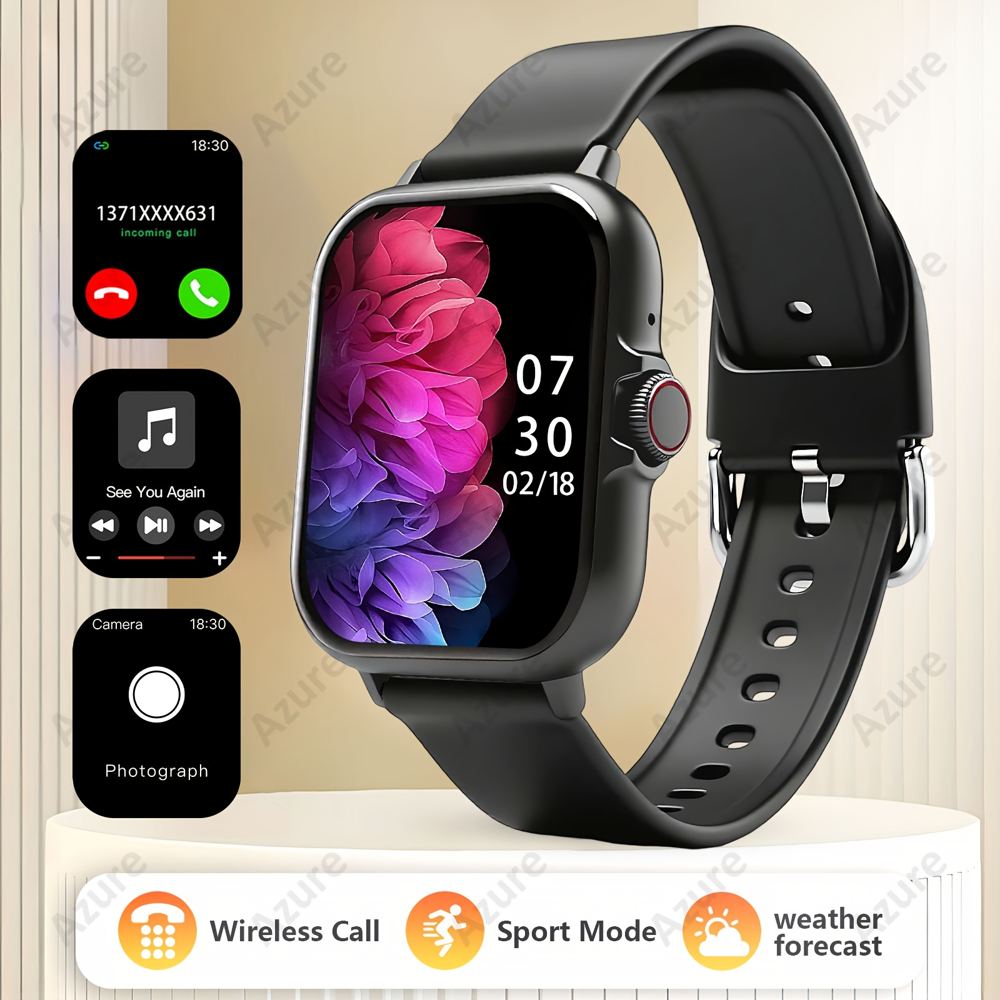
A fitness smartwatch like the Women's Smart Watch Fitness Tracker automatically records genuinely useful context: workout duration, heart-rate zones during cardio, daily step counts, and sleep. Sleep data is arguably the most valuable — poor recovery usually shows up there before it shows up in your lifts.
But keep the watch in its lane. For strength training, the watch cannot tell you what weight you lifted or whether your form was clean; your notebook still owns that job. Treat watch metrics as background context rather than targets to maximize.
The 10-Minute Weekly Review
Once a week — Sunday evening works well — spend ten minutes with your log. This is where tracking pays off:
- Scan the week's sessions. Did you train the planned days? Do not judge, just notice.
- Find one progression. Which exercise improved — more reps, more weight, or the same work feeling easier? Circle it. This is your evidence that the program works.
- Find one decision for next week. Which exercise is ready to progress? Which felt too heavy and should stay put? Write the decision down ("goblet squat → 12kg next time").
- Check recovery signals. Any recurring pain notes? Two bad-feeling sessions in a row? Note it and consider an easier week — not as failure, as data.
- Close the book. The review is done. Do not carry the numbers into the rest of your evening.
This routine replaces vague feelings ("am I even improving?") with specific facts from your own hand. Most people are surprised how motivating their own log is — progress that felt invisible week to week looks obvious across a month of entries.
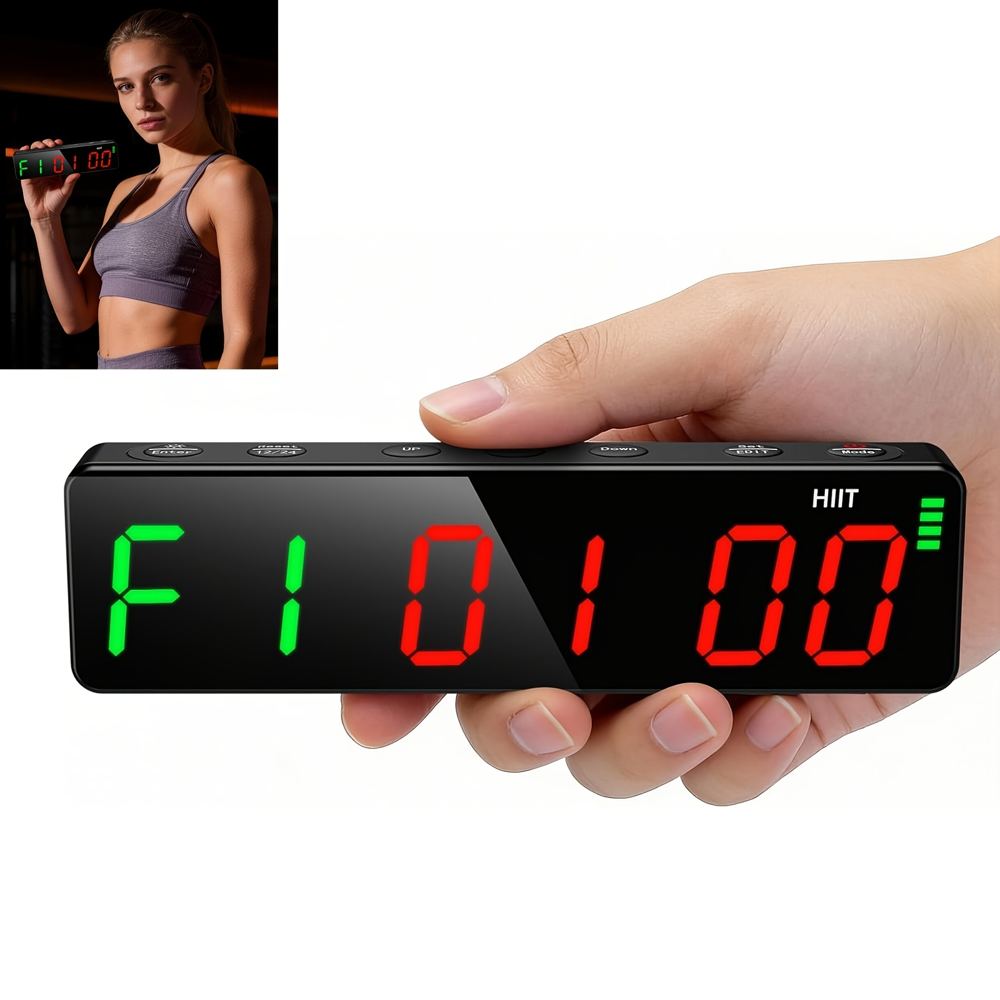
For timing your work and rest intervals during sessions, a dedicated portable magnetic gym timer on the shelf keeps you honest without reaching for your phone.
Motivation: Streaks vs. Real Progress
Streaks — consecutive days trained — feel motivating, and short ones can be. But streaks measure attendance, not adaptation. A 30-day streak of easy, unchanging workouts produces less strength than 12 well-progressed sessions with rest days between them. Worse, streak-thinking punishes necessary rest: people train through illness or exhaustion to "keep the streak," which is precisely how overtraining and injuries happen.
Real progress is quieter: the same workout with slightly more weight, one more clean rep, shorter rest while keeping form. Your log captures it; a streak counter does not. If you like streaks, streak the habit of logging rather than the workouts — even rest days get a line ("rest — walked 20 min, slept well"). That reframes rest as part of the program, which it is.
Pair this mindset with a sensible starting plan — our beginner home workout plan for women and how to start strength training as a woman both include simple logging cues — and with beginner yoga on recovery days if you want gentle movement that is worth one line in the log, not a performance.
Anti-Obsession Guidance: Numbers Are Feedback, Not Verdicts
Tracking serves training; training does not serve tracking. Keep these guardrails:
- A bad session is data, not a verdict. Everyone has off days — poor sleep, stress, hormones, life. Log it honestly ("tired, weights felt heavy, cut last set") and move on. One session means nothing; the trend across weeks means everything.
- Plateaus are normal and informative. When an exercise stalls for 3–4 weeks, your log has done its job by showing you. The response is a calm adjustment — a lighter week, a variation swap, checking sleep — not panic or doubling the workload.
- Do not track to punish yourself. If opening the log fills you with dread, simplify: fewer metrics, less frequent reviews. The system should feel like a helpful assistant, not a supervisor.
- Bodies are not spreadsheets. Weight fluctuates daily, strength varies with the menstrual cycle and stress, and progress is never a straight line. Results vary between people and across weeks for the same person. Zoom out to monthly trends and the noise fades.
- Take planned breaks from tracking. A week of intuitive training now and then — moving by feel, no log — reminds you that the habit lives in you, not in the notebook. Many long-term exercisers do this seasonally.
Common Mistakes
- Tracking everything, using nothing. Pages of heart-rate zones you never review are clutter. If a metric never changes a decision, stop recording it.
- Changing the system monthly. Notebook to app to spreadsheet to watch-only — every switch loses history and momentum. Pick one and commit for at least three months.
- Letting the log dictate risky jumps. "The app says I should hit 15kg today" is not a reason to lift 15kg with shaky form. The log informs; your body and technique decide.
- Comparing logs with others. Someone else's numbers reflect their body, history, and equipment — not a standard you are failing. Your log is a conversation with yourself.
FAQ
Q: How detailed should my workout log be?
As simple as possible while still answering "what do I do next time?" Exercise, weight, sets, reps, and a one-word feel note cover it. Anything beyond that should earn its place by changing a decision you make. Most beginners do best with the notebook method described above — five lines per session.
Q: Should I track calories burned during workouts?
You can, but treat the number skeptically — wrist-based calorie estimates are rough approximations, often off by a meaningful margin. More importantly, it rarely changes training decisions. Track it only if you find it motivating, and never use it to "earn" food or punish rest days.
Q: How often should I review my progress?
A quick 10-minute weekly review plus a slightly longer monthly look-back is plenty. Weekly reviews catch what to progress next; monthly reviews reveal the trends that weekly noise hides. Daily analysis is where obsession starts — resist it.
Q: What should I do when my numbers stall for weeks?
First, check the basics: sleep, stress, nutrition, and whether you have been progressing too aggressively without easier weeks. Then make one calm change — swap the exercise variation, add a light week, or adjust volume slightly — and give it 3–4 weeks. Stalls are information, and your log is what makes them visible early instead of months later.
Q: Is a smartwatch necessary for tracking workouts?
No. A smartwatch is a convenience, not a requirement — the notebook method outperforms an unused watch every time. A watch earns its place if you do regular cardio (heart-rate zones are genuinely useful there) or want automatic sleep and activity context. For pure strength training, pen and paper remain undefeated.
Conclusion
Track the few numbers that drive your next decision — exercise, weight, sets, reps, and how it felt — with whatever system you will actually maintain. Review weekly for ten calm minutes, celebrate the quiet progressions your log reveals, and treat stalls and off days as information rather than indictments. The goal was never a perfect spreadsheet; it is a training habit that lasts years. A simple log, honestly kept, is one of the cheapest ways to get there.