Sit-ups, crunches or planks — which strengthens your core best? We compare form, difficulty, spine-friendliness and best uses, with safe technique.
Sit-Ups vs Crunches vs Planks: Which Core Exercise Is Best?
Sit-ups, crunches, and planks are the three most famous core exercises in the world — and the most argued about. Fans of each will tell you theirs is the only one that matters. The truth is calmer: each trains your midsection in a different way, each has genuine strengths, and each has drawbacks worth knowing. This guide compares them honestly, teaches you safe form for all three, and helps you pick the right one for your body and your goals.
The honest starting point: none of these exercises, on their own, creates visible abs or reduces belly fat. No exercise can remove fat from one spot — that is a claim worth ignoring wherever you see it. What core training genuinely delivers is a stronger, more stable midsection that supports your back, improves your posture, and makes daily movement easier. Results vary from person to person, and consistency matters far more than which move you choose.
This guide contains affiliate links. If you buy through them, VÉLORA may earn a commission at no extra cost to you.
What Your Core Actually Does
Your "core" is not just the six-pack muscle. It includes the rectus abdominis (the front "six-pack"), the obliques at the sides, the transverse abdominis (a deep corset-like muscle wrapping your waist), and the muscles of the lower back and pelvic floor. A good core program trains most of these, not just the front.
That is why the comparison below matters. Sit-ups and crunches mainly train the front muscles by bending the spine. Planks train the deep stabilizers by resisting movement. Different jobs, different value.
The Head-to-Head Comparison
| Factor | Sit-Ups | Crunches | Planks | |---|---|---|---| | Difficulty | Moderate | Easy–moderate | Moderate–hard | | Primary muscle focus | Rectus abdominis + hip flexors | Rectus abdominis (upper abs mainly) | Transverse abdominis, obliques, whole trunk | | Spine movement | Full spinal flexion | Small spinal curl | None (anti-movement) | | Spine-friendliness | Lower — repetitive full bending stresses the low back | Moderate — smaller range, less loading | High — spine stays neutral | | Equipment needed | None (bench helps) | None | None | | Best for | Building front-abdominal strength and endurance | Learning ab engagement; gentle starting point | Overall core stability, back support, posture |
Sit-Ups: The Classic Full Move
Purpose: Sit-ups work the rectus abdominis through a large range of motion, with significant help from the hip flexors. They build muscular endurance and are the standard test in many fitness assessments.
Starting position: Lie on your back on a mat, knees bent about 90 degrees, feet flat on the floor (anchoring your feet under a bench or sofa is fine, but unanchored trains the abs harder).
Technique: Cross your arms over your chest or rest your fingertips beside your head — never pull on your neck. Brace your stomach lightly, curl your torso up off the floor, and continue until your chest is close to your thighs. Lower slowly and with control; the way down is half the exercise.
Breathing: Exhale as you sit up, inhale as you lower.
Sets and reps: Aim for 2–3 sets of 8–20 reps, resting 30–60 seconds between sets. Quality beats quantity — stop the set when your form starts to break.
Beginner modification: Start with crunches (below) to build the connection, or do partial sit-ups where you lift only until your shoulder blades clear the floor.
Common mistakes: Yanking the neck forward, slamming down onto the floor, and using momentum — rocking hard at the start and letting gravity do the rest.
Safety notes: Sit-ups involve repeated full bending of the lower spine, which can aggravate sensitive backs. If you have a history of low-back problems, herniated discs, or you feel pulling in your lower back during the move, switch to planks and crunches instead. Never force the range.
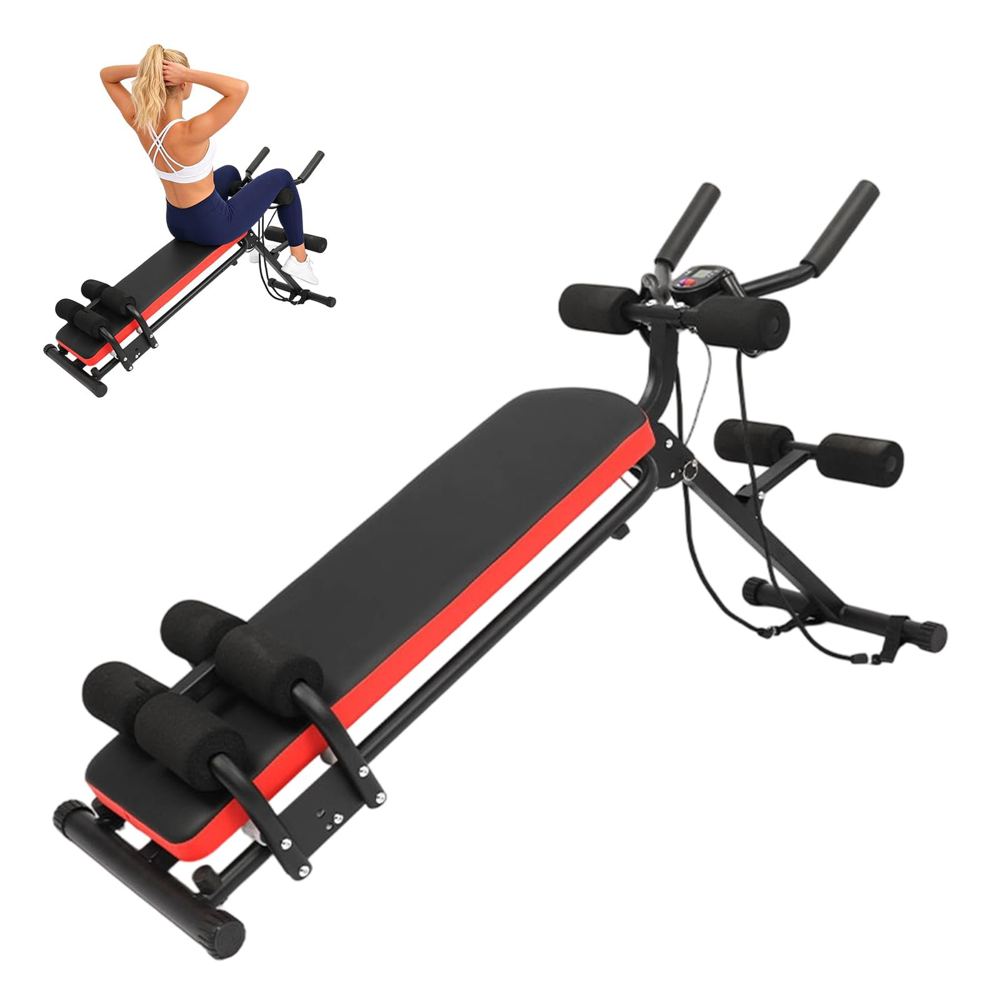
An adjustable ab workout bench or a foldable sit-up bench supports the back and lets you anchor your feet securely at home.
Crunches: The Smaller, Smarter Sibling
Purpose: Crunches isolate the rectus abdominis with a small, controlled curl. They are a gentler introduction to ab training and easier on the spine than full sit-ups.
Starting position: Lie on your back, knees bent, feet flat, lower back resting on the floor. Fingertips beside your head, elbows out, chin slightly tucked as if holding a small ball under your chin.
Technique: Think of lifting your shoulder blades off the floor rather than sitting up. Curl your ribcage toward your hips through a few inches of movement — your lower back stays in contact with the floor the whole time. Pause briefly at the top, then lower slowly.
Breathing: Exhale as you curl up, inhale as you lower.
Sets and reps: Aim for 2–4 sets of 12–25 reps, resting 30 seconds between sets.
Beginner modification: Slide your hands along your thighs toward your knees instead of behind your head — the shorter lever makes each rep easier.
Common mistakes: Pulling the head forward with the hands, holding your breath, and bouncing. The movement is small and deliberate; if your lower back leaves the floor, you are doing a sit-up, not a crunch.
Safety notes: Crunches are generally well tolerated, but anyone with neck issues should keep the head supported and the range small.
Planks: The Stability King
Purpose: Planks train your deep core — the transverse abdominis, obliques, and back muscles — to hold your trunk steady. This "anti-movement" strength transfers directly to good posture, back support, and safer lifting.
Starting position: On a mat, place your forearms on the floor with elbows under your shoulders, hands flat or lightly clasped. Extend your legs back, feet hip-width apart, and lift your knees so your body forms one straight line from head to heels.
Technique: Brace your stomach as if expecting a gentle poke, squeeze your glutes, and press the floor away with your forearms. Keep your neck long — look at the floor between your hands, not at the mirror. Breathe normally and steadily; holding your breath is the most common error.
Time and sets: Hold 2–4 sets of 15–60 seconds each, resting 30–60 seconds between. Pick a hold length you can maintain with a straight body — longer with a sagging back teaches nothing.
Beginner modification: Drop to your knees (forearm plank with knees on the floor) while keeping the same straight line from knees to head. Or hold against a countertop instead of the floor for an incline plank.
Common mistakes: Sagging the hips (lower back pain incoming), lifting the hips too high, holding the breath, and shrugging the shoulders toward the ears. Quality trumps duration: a perfect 20-second plank beats a shaky minute.
Safety notes: If you feel pain in the shoulders or lower back rather than effort in the trunk, shorten the hold or regress to knees. Pregnant and postpartum readers should check our pregnancy exercise safety guide and postpartum guide — a straight plank is usually not the first choice during those phases, and provider clearance comes first.
Which Should You Do?
It depends on what you want and what your body tolerates:
- If your back is healthy and you want ab endurance: a mix of crunches and sit-ups works well. Sit-ups give range, crunches give control.
- If you want the most functional, spine-friendly core strength: planks win. They train the deep muscles that protect your back in daily life.
- If you are a beginner: start with planks (knees-down is fine) and crunches. Learn to brace and breathe first, then add sit-ups later if you enjoy them.
- If you have a sensitive lower back: planks are the safest of the three. Sit-ups are the least forgiving — skip them if they aggravate you.
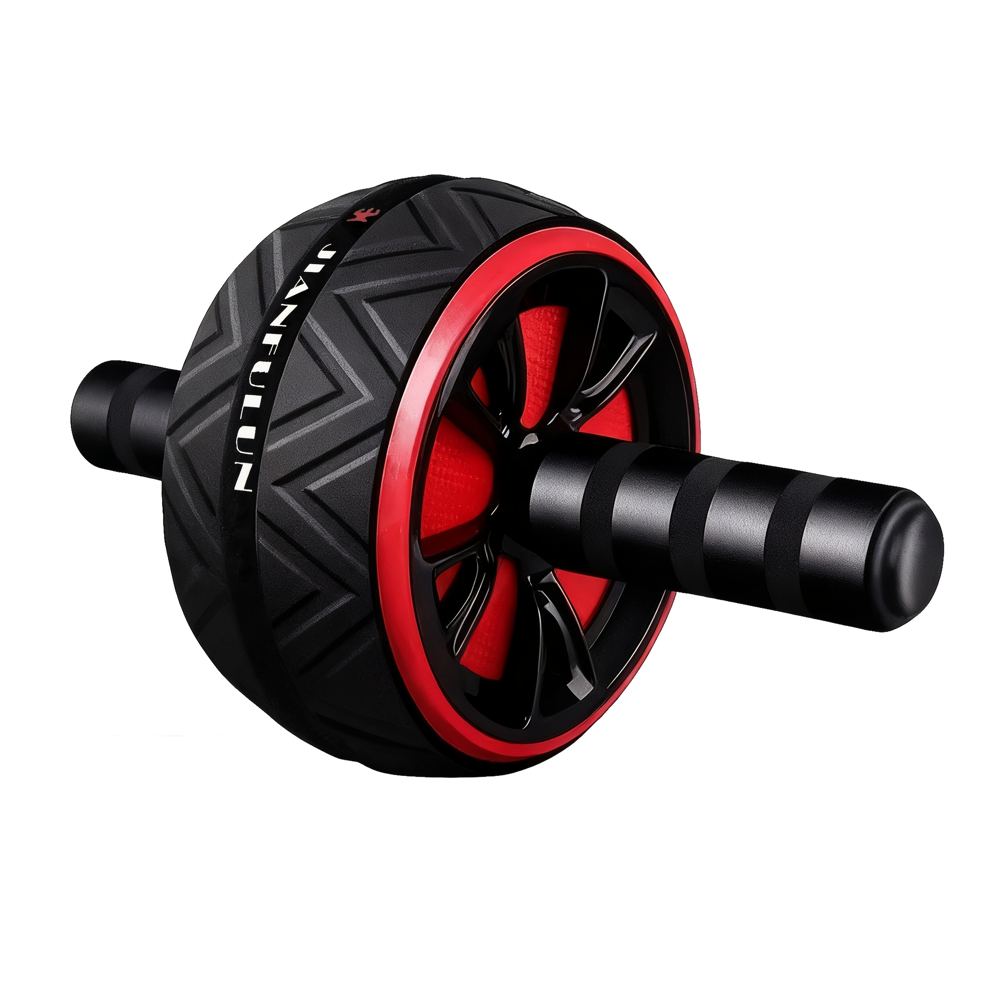
The strongest approach, honestly, is combining them: planks for stability, crunches for controlled front-abdominal work, and sit-ups added only if your back likes them. Variety covers more of the core than any single move. Our core workout for women and core training for men show how to combine these into full sessions, and the ab wheel is a strong next step once planks feel easy.
A Sample Weekly Core Plan
Two to three short sessions per week is plenty for most people. Here is one simple rotation:
- Day 1: Planks 3 × 30–45 seconds + crunches 3 × 15–20 reps
- Day 2 (rest or other training)
- Day 3: Sit-ups 3 × 10–15 reps + planks 2 × 30 seconds
- Day 5: Your choice of favorite, or try side planks for the obliques
Rest at least a day between core-focused sessions. Your abs recover like any other muscle — they do not need daily work, and they do not benefit from it.
FAQ
Q: Do sit-ups, crunches, or planks burn belly fat?
None of them. Fat loss comes from overall activity, nutrition, and consistency — not from targeting one area. These exercises strengthen the muscles under the fat, which is genuinely useful, but they do not selectively shrink the waistline.
Q: How long should I hold a plank?
Only as long as you can hold perfect form. For most beginners that is 15–30 seconds per set; building toward 60 seconds is a reasonable goal. If your hips sag or your back aches, you have held too long — shorten it and build gradually.
Q: Are sit-ups bad for your back?
They are not dangerous for everyone, but repeated full spinal flexion under load does stress the lower-back discs more than the other two moves. People with disc issues, chronic low-back pain, or sciatica-type symptoms usually do better with planks and crunches. When in doubt, planks are the conservative choice.
Q: Can I do core exercises every day?
You can, but you should not train them hard every day. Like other muscles, the abs need roughly 24–48 hours to recover after a challenging session. Two to four focused sessions per week outperforms daily half-hearted ones.
Q: Which is best for a flat stomach?
Honestly, none of the three creates one by itself. A strong core plus sustainable nutrition, daily movement, and sleep matter far more than the specific exercise. Among the three, planks build the functional strength most people notice in daily life, but the exercise choice is a small part of the picture.
Q: Should beginners start with sit-ups?
Crunches and knee planks are friendlier starting points. They teach you to engage the abdominals and brace the trunk before you add the bigger range of sit-ups. Add sit-ups after a few weeks if your back feels fine with them.
The Bottom Line
Planks build the stability your back will thank you for, crunches offer a controlled way to strengthen the front of the trunk, and sit-ups deliver the classic full-range challenge — with the most spinal loading. None of them melts fat from one spot, and none needs to be done daily. Pick the one your body tolerates best, learn it well, then add the others for balance. A consistent, pain-free mix of two or three sessions a week will do more for your midsection than any single "best" exercise performed obsessively.
