Core training for men beyond crunches: what the core really is, anti-movement exercises that build real strength, full form cues, and a sample weekly routine.
Core Training for Men: Beyond Crunches
For decades, "core training" for men meant one thing: crunches — usually done badly, usually chasing visible abs. Here is the uncomfortable truth — crunches are one of the least effective ways to build a strong, useful midsection. Your core's real job is not to curl your spine forward repeatedly; it is to keep your spine stable while the rest of your body moves — carrying groceries, swinging a bat, bracing under a squat.
This guide rebuilds core training from the ground up: what the core actually includes, why anti-movement exercises beat endless crunches, and practical exercises with full form cues. No promises of a six-pack in any timeframe — visible abs depend on body composition, genetics, and nutrition as much as training, and results vary. What you get is a genuinely stronger, more resilient midsection.
This guide contains affiliate links. If you buy through them, VÉLORA may earn a commission at no extra cost to you.
What Your Core Actually Is
The core is not just the "abs" you see in the mirror — it is a cylinder of muscle wrapping your midsection: the rectus abdominis (the front "six-pack" muscle), the obliques (rotation and side-bending), the transverse abdominis (the deep corset that braces your spine), the spinal erectors (which keep you upright), and the diaphragm and pelvic floor (the top and bottom of the cylinder).
A crunch trains one of these muscles through one motion — spinal flexion. A complete program trains all of them, especially their ability to resist movement, which protects your back in real life.
Why Crunches Fall Short
Crunches are not evil — just dramatically overrated. They load the spine in repeated flexion, which many backs tolerate poorly in high volume; they ignore rotation resistance, side stability, and the deep bracing muscles entirely; and most men do them with the hip flexors and neck doing half the work. Beyond a point, more crunches do not build more strength — the movement is too easy to keep progressing.
You do not need to banish them forever — but if crunches are your entire core program, you are training one muscle, one motion, and calling it complete.
The Anti-Movement Framework
Strong cores resist force — train these four patterns:
- Anti-extension — resisting lower-back arching (dead bug, ab wheel rollout, planks).
- Anti-rotation — resisting twisting (Pallof press, bird dog).
- Anti-lateral-flexion — resisting side-bending (side plank, suitcase carry).
- Controlled flexion — the crunch's job, done sparingly (slow reverse crunch).
Two to three core sessions per week, 10–15 minutes each, built from these patterns, will do more for your midsection than any high-rep crunch challenge.
The Exercises
Rest 30–60 seconds between sets — quality of bracing matters more than rep count.
1. Dead Bug
Purpose: Teaches the deep core to brace while the limbs move — the foundation of every exercise here.
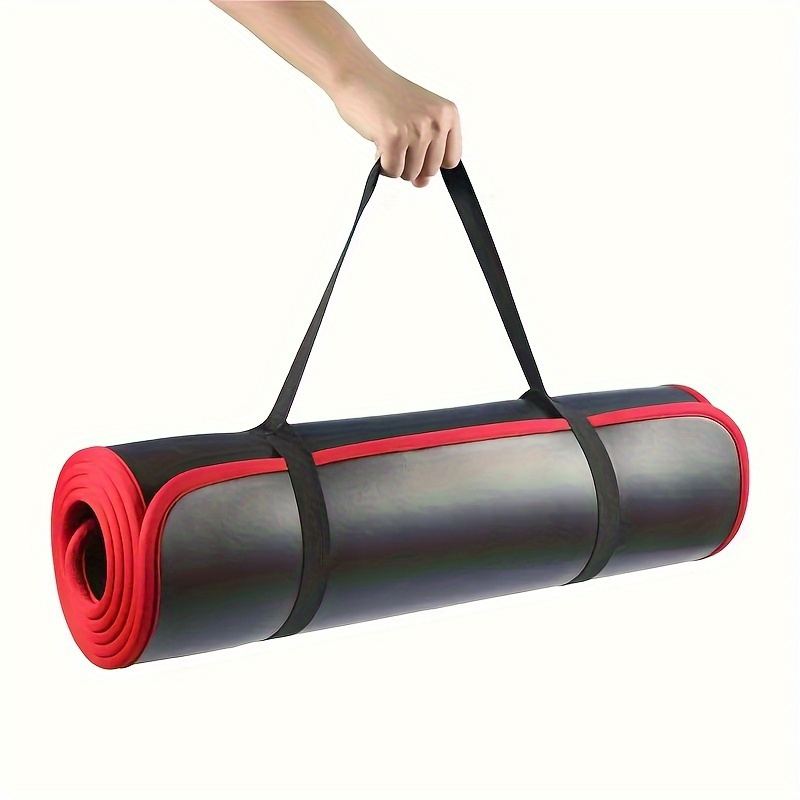
Starting position: Lie on your back on a mat, arms extended toward the ceiling, hips and knees bent at 90 degrees. A cushioned surface like an extra-thick 10mm yoga mat makes floor work more comfortable.
Technique: Press your lower back firmly into the floor, then slowly extend your right arm overhead and your left leg out straight, hovering just above the floor. Return and switch sides — the back must not arch at any point.
Breathing: Exhale as you extend the limbs, inhale as you return — never hold your breath.
Sets and reps: 2–3 sets of 6–10 reps per side.
Beginner modification: Move only the arms first; add the legs when you can keep the back flat.
Common mistake: Letting the lower back peel off the floor — shorten the range until you can keep it pinned down.
2. Forearm Plank (and Progressions)
Purpose: Builds anti-extension endurance across the entire trunk.
Starting position: Forearms on the floor, elbows under shoulders, body in a straight line from head to heels.
Technique: Squeeze the glutes, brace the abs as if expecting a punch, and push the floor away through your forearms, keeping the neck neutral — look at the floor, not forward.
Breathing: Breathe steadily behind the brace — shallow, controlled breaths are fine.
Sets and reps: 2–4 sets of 20–60 seconds.
Beginner modification: Drop to the knees, keeping the same straight line from knees to head.
Progressions: Lift one foot a few inches, or try long-lever planks with elbows further forward.
Common mistake: Sagging hips or piking the butt up — film yourself from the side once; most men are surprised.
3. Side Plank
Purpose: Trains anti-lateral-flexion through the obliques and deep stabilizers.
Starting position: On your side, forearm under the shoulder, feet stacked (or staggered for balance), body straight.
Technique: Lift the hips until your body forms a straight line, brace hard, and lower with control.
Breathing: Steady breathing throughout; exhale on the lift.
Sets and reps: 2–3 sets of 20–45 seconds per side.
Beginner modification: Bend the knees and plank from the knees instead of the feet.
Common mistake: Letting the hips drift forward or backward — imagine your back sliding along a wall.
4. Bird Dog
Purpose: Anti-rotation and spinal stability — a back-friendly classic.
Starting position: On hands and knees, hands under shoulders, knees under hips, back flat.
Technique: Brace the core, then slowly extend your right arm forward and left leg back until parallel to the floor. Pause 2 seconds with no rocking of the hips, then return and switch sides.
Breathing: Exhale as you extend, inhale as you return.
Sets and reps: 2–3 sets of 6–10 reps per side.
Beginner modification: Extend only the arm or only the leg until balance improves.
Common mistake: Rotating the hips open — imagine balancing a glass of water on your lower back.
5. Ab Wheel Rollout
Purpose: The most demanding anti-extension exercise most men will ever need: full-trunk strength under load.
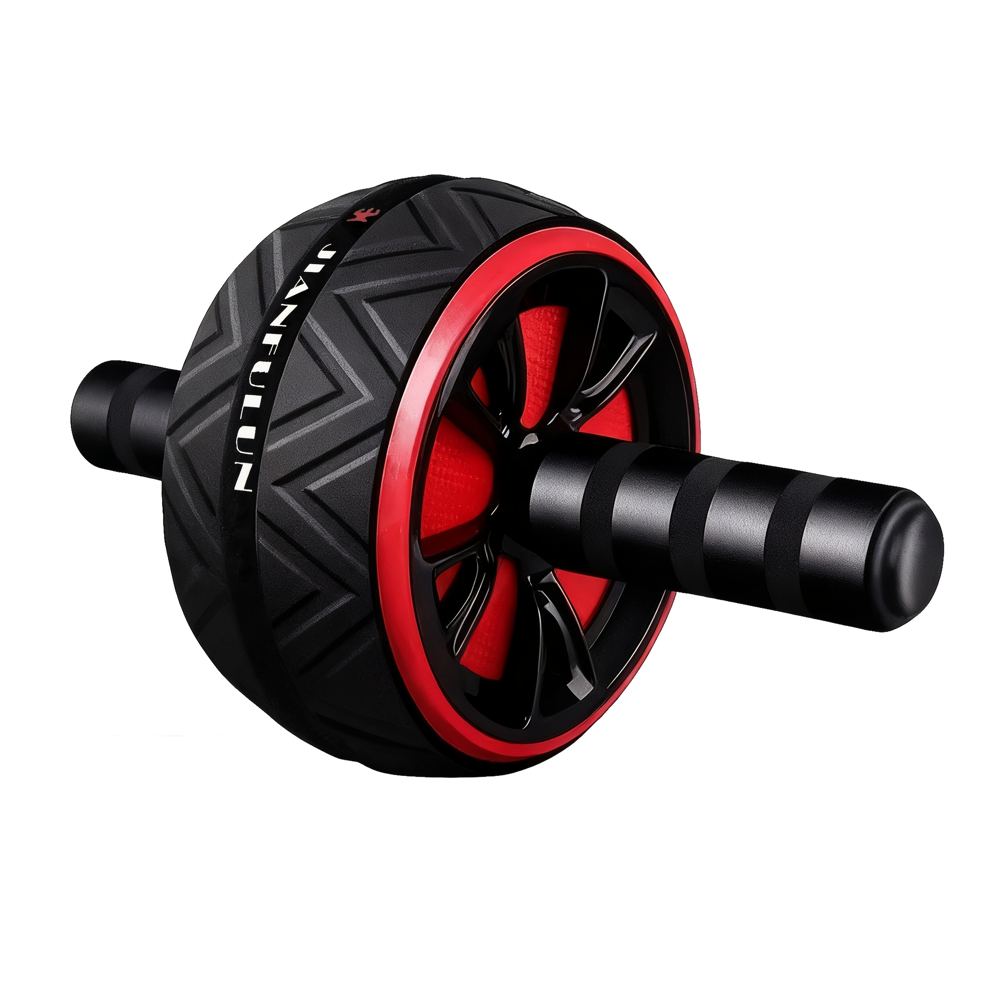
Starting position: Kneel on a pad with the ab wheel on the floor in front of you, hands on the handles.
Technique: Brace your core hard and roll forward slowly, arms straight, back flat — no sagging. Go only as far as you can without your lower back arching, then pull back with your abs.
Breathing: Inhale as you roll out, exhale powerfully as you pull back.
Sets and reps: 2–3 sets of 5–10 reps.
Beginner modification: Roll toward a wall so the wheel stops at a safe distance, or use a short range.
Common mistake: Going too far, too soon — the lower back arching under load is exactly what this exercise is meant to prevent, not cause. Earn your range over weeks.
6. Pallof Press
Purpose: Anti-rotation strength that transfers directly to sports and heavy lifting.
Starting position: Anchor a band at chest height and stand sideways to it, holding the handle at your chest.
Technique: Press straight out and hold 2–3 seconds, resisting the band's attempt to rotate you, then return slowly. Switch sides.
Breathing: Exhale on the press and keep breathing during the hold.
Sets and reps: 2–3 sets of 8–12 presses per side.
Beginner modification: Stand closer to the anchor.
Common mistake: Letting the shoulders or hips rotate. If you twist, the band wins — go lighter.
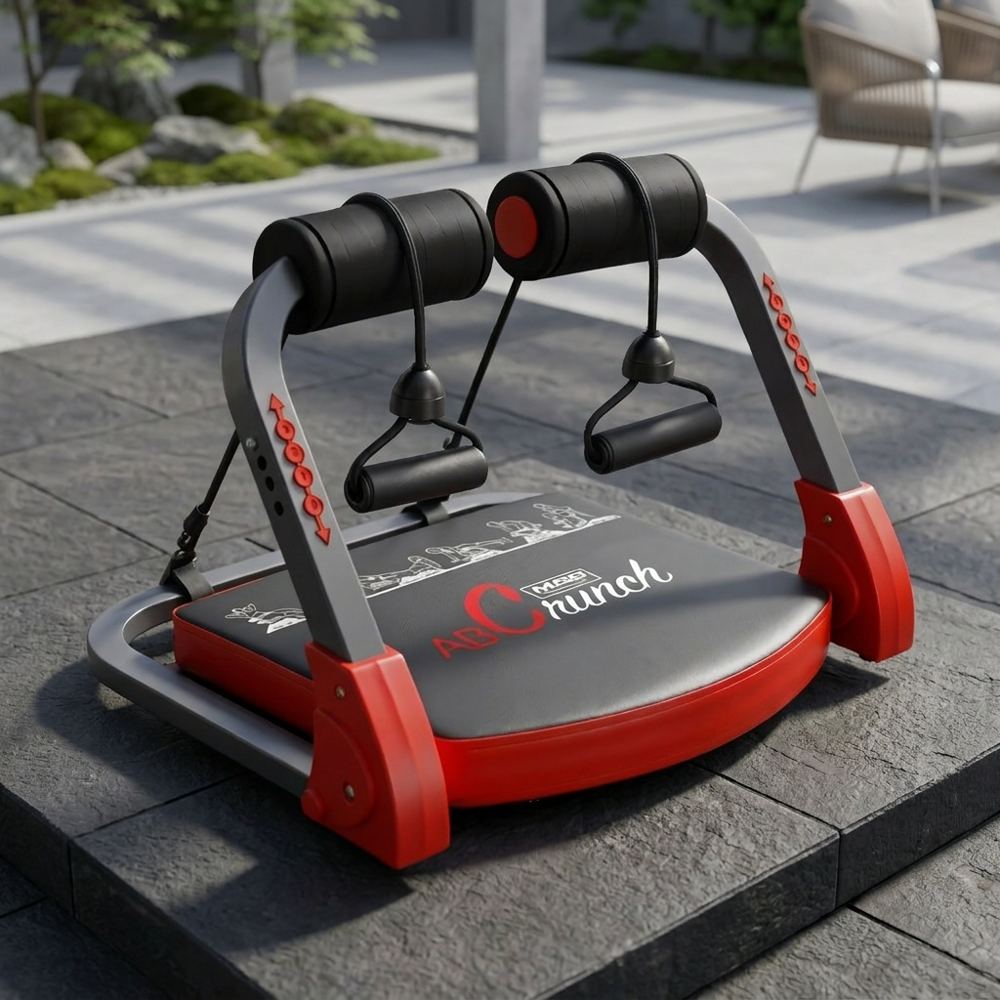
An ab workout machine bench is a useful alternative for men who want guided sit-up and push-up variations with back support, though the free exercises above remain the foundation.
Exercise Comparison: What Each Movement Gives You
| Exercise | Main demand | Difficulty | Spine-friendly | Beginner-friendly | | --- | --- | --- | --- | --- | | Crunch | Spinal flexion (rectus abdominis) | Easy | Moderate | Yes | | Plank | Anti-extension endurance | Easy–Medium | High | Yes (knees) | | Dead bug | Deep bracing + coordination | Easy–Medium | Very high | Yes | | Side plank | Anti-lateral-flexion (obliques) | Medium | High | Yes (knees) | | Bird dog | Anti-rotation + stability | Easy–Medium | Very high | Yes | | Ab wheel rollout | Anti-extension under load | Hard | High (with good form) | No — earn it | | Hanging knee raise | Hip flexors + lower abs | Medium–Hard | Moderate | With bent knees |
A Sample Weekly Core Routine
Do this 2–3 times per week, after your main workout or on its own day — 12–15 minutes total.
| Order | Exercise | Sets × Reps/Time | | --- | --- | --- | | 1 | Dead bug | 2 × 8 per side | | 2 | Forearm plank | 2 × 30–45 sec | | 3 | Side plank | 2 × 30 sec per side | | 4 | Bird dog | 2 × 8 per side | | 5 | Ab wheel rollout (or Pallof press) | 2 × 6–8 |
Every two weeks, add a few seconds, a rep or two, or a harder variation — core strength responds to the same progressive overload as every other muscle. If any movement here feels too advanced, our beginner's core workout guide offers easier starting progressions.
Common Mistakes
- Holding your breath. Bracing is not breath-holding — practice breathing behind a braced core; it transfers to every lift you do.
- Chasing burn instead of control. A shaking, sloppy 60-second plank builds less than a perfect 30-second one.
- Expecting visible abs from training alone. No exercise reveals abdominal definition — that comes down to overall body composition. Train your core to be strong; let nutrition handle the rest.
For quiet, apartment-friendly core sessions, our quiet home gym equipment guide has practical setup tips.
Safety Notes
- This guide is for healthy adults. If you have a heart condition, back problems, high blood pressure, or other medical concerns, check with your doctor before starting.
- Stop and seek advice if you feel chest pain, severe dizziness, unusual shortness of breath, or sharp pain — especially sharp lower-back pain. Muscle effort is normal; spinal pain is not.
- Men with disc issues or chronic back pain should favor the dead bug, bird dog, and side plank, and get professional guidance before attempting ab wheel rollouts.
FAQ
Q: Are crunches actually bad for you?
Not inherently — a controlled crunch is fine for most healthy backs. The problem is volume and exclusivity: hundreds of crunches train one motion while ignoring the stability work your spine needs. Keep a few if you enjoy them, but build around anti-movement exercises.
Q: How often should men train core?
Two to three times per week, 10–15 minutes per session, is the sweet spot for most men. Daily ab training is unnecessary — muscles need recovery days to adapt, just like your chest or legs.
Q: Will core exercises give me visible abs?
Core training builds the muscle; whether it shows depends on body fat — nutrition, overall activity, and genetics. No exercise or timeframe can promise visible abs, and results vary widely. Train for strength and function first.
Q: What is the single best core exercise for men?
If forced to pick one, the ab wheel rollout — full-body tension and brutal anti-extension strength. But no single exercise covers everything, which is why the routine above rotates through all four patterns.
The Bottom Line
Your core is a stability system, not a crunch machine. Train it to resist movement — against extension, rotation, and side-bending — with a handful of well-executed exercises two to three times a week, and you will build midsection strength that shows up in every lift, every sport, and every heavy thing life asks you to carry. Brace well, breathe well, progress slowly — consistency does what crunches never could.
