This massage gun buying guide cuts through the hype: amplitude, speed, attachments, battery and noise — the specs that actually matter, plus honest picks.
Massage Gun Buying Guide: What Actually Matters
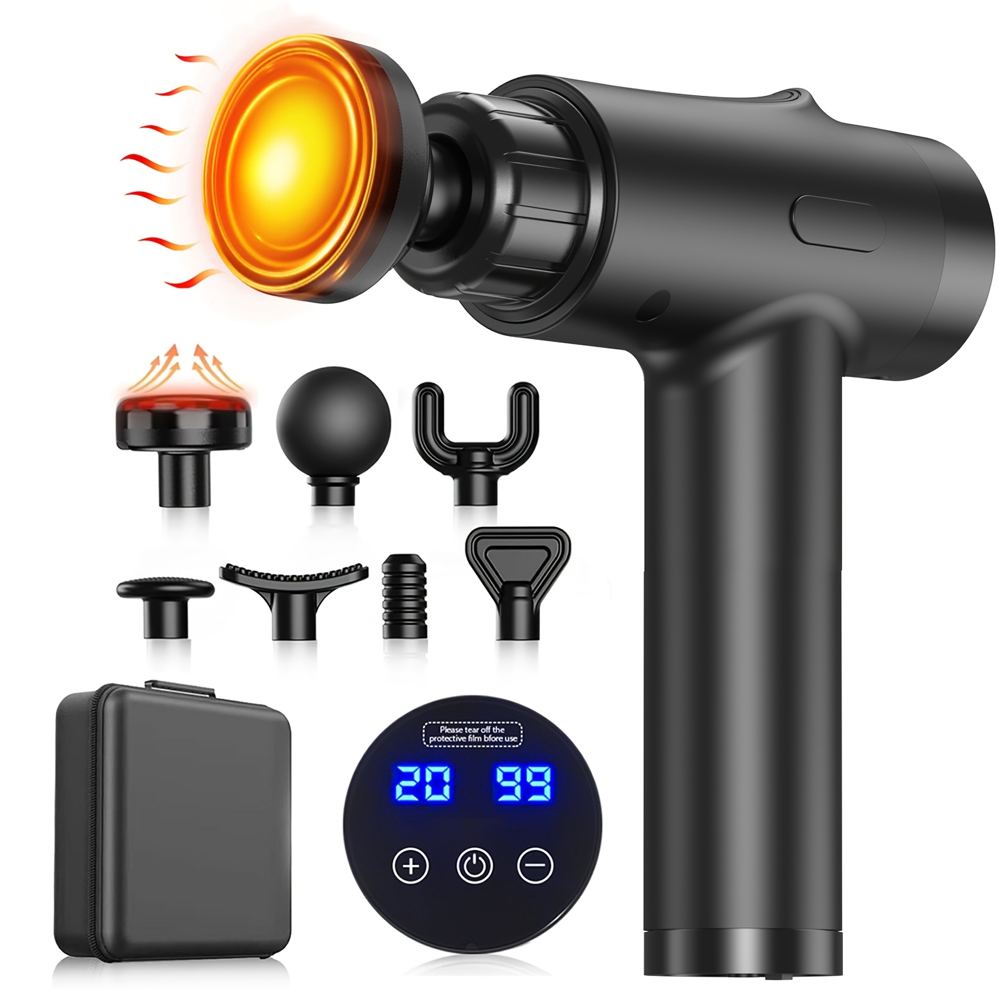
The massage gun went from a physio-clinic luxury to a checkout-aisle impulse buy in just a few years — and the market responded the way markets do: dozens of models, wild price ranges, and spec sheets full of numbers that may not mean anything. It is easy to spend too much on features you will never use, or too little on a gun too weak to do the job.
This guide covers what actually matters: the handful of specifications that decide real-world performance, what is marketing noise, and honest picks at sensible prices. Our best massage guns shortlist collects the top options if you want to compare models side by side.
This guide contains affiliate links. If you buy through them, VÉLORA may earn a commission at no extra cost to you.
What a Massage Gun Actually Is
A massage gun (percussion massager) delivers rapid, repetitive pulses to muscle tissue through an interchangeable head — focused mechanical stimulation that feels like a very fast, consistent thumb press. People use them for post-workout soreness, warming up before training, and general tension relief in the legs, glutes, back, and shoulders.
Honest expectations first: a massage gun is a comfort and recovery tool, not a medical device. It will not fix injuries, will not reduce fat in a specific area, and will not replace professional treatment for persistent pain. Results vary — many people find them genuinely helpful; others find the effect modest.
The Five Specs That Actually Matter
1. Amplitude (Stroke Length)
Amplitude is how far the head travels in and out with each pulse, measured in millimeters. This is the spec that most determines how "deep" a gun feels:
- Under 8 mm: surface-level vibration. Feels buzzy, does little for larger muscles.
- 8–12 mm: the useful middle range for most home users. Good for quads, hamstrings, glutes, and general soreness.
- 12–16 mm: genuinely deep percussion. Better for dense muscle groups and experienced users. The Athlete Massage Gun Deep Tissue Portable Electric sits in this stronger category — the kind of amplitude that actually reaches deep leg and glute muscles rather than just buzzing the surface.
This is the number manufacturers hide most often. If a listing does not state amplitude, treat that as a warning sign. Amplitude matters more than speed, more than price, and more than the number of attachments.
2. Stall Force
Stall force is how much pressure you can apply before the motor stalls (stops under load), measured in pounds. A gun with low stall force dies the moment you lean into a tight quad — which is exactly when you need it working. Look for at least 30 lbs of stall force for general use; serious users benefit from 40+.
You cannot always find this number published. When it is missing, amplitude plus user reviews mentioning "doesn't stall when I press hard" are your best proxies.
3. Speed Settings (Percussions Per Minute)
Most guns offer multiple speeds, typically expressed in percussions per minute (PPM) or as "levels":
- Low (1,200–1,800 PPM): warm-up, sensitive areas, beginners. Start here — always.
- Medium (1,800–2,400 PPM): the everyday workhorse range for general soreness.
- High (2,400–3,200+ PPM): dense muscle, experienced users only.
Here is the truth the marketing hides: you do not need 30 speeds. Three to six genuinely distinct speeds cover everything a home user needs. What matters is that the lowest setting is truly gentle and the range is usable.
4. Attachments (Heads)
The head shapes change how the percussion spreads:
- Ball (large, round): the all-rounder. Large muscle groups — quads, glutes, hamstrings, back. Start with this one.
- Flat head: broader, more even pressure. Good for dense areas and a slightly less intense feel than the ball.
- Fork / U-shape: designed to straddle the spine or Achilles — use with care, low speed, light pressure, and never on the spine itself with force.
- Bullet / cone: very focused, intense pressure for small trigger points. Powerful and easy to overdo — beginners should be cautious.
- Cushioned / air head: softer, for sensitive areas and bony regions.
Four to six well-made heads beat ten flimsy ones. Check that heads attach securely and are made of material you can wipe clean.
5. Battery Life and Noise
- Battery: Look for a genuine 3+ hours of use per charge at moderate speeds (manufacturer claims are usually measured at the lowest speed). USB-C charging is a practical plus.
- Noise: Under ~55 dB at working speeds is genuinely quiet enough to use while watching TV. The Deep Tissue Massage Gun Portable with Quiet Motor and Attachments is built around this priority — a quieter motor paired with a full attachment set for home use where noise matters.
The Spec Comparison: Three Honest Picks
| Feature | Athlete Deep-Tissue Gun | Temu Fascia Gun | Deep-Tissue Quiet Gun | | --- | --- | --- | --- | | Best for | Strong, deep percussion on large muscles | Budget-friendly everyday use | Quiet home sessions | | Amplitude | Deep (12 mm+ class) | Mid-range | Mid-range | | Speed range | Multiple usable speeds | Multiple speeds | Multiple speeds, low-noise tuning | | Attachments | Multi-head set | Multi-head set | Multi-head set | | Portability | Portable electric | Compact fascia gun | Portable | | Noise | Standard | Standard | Quieter motor design | | Product page | View | View | View |
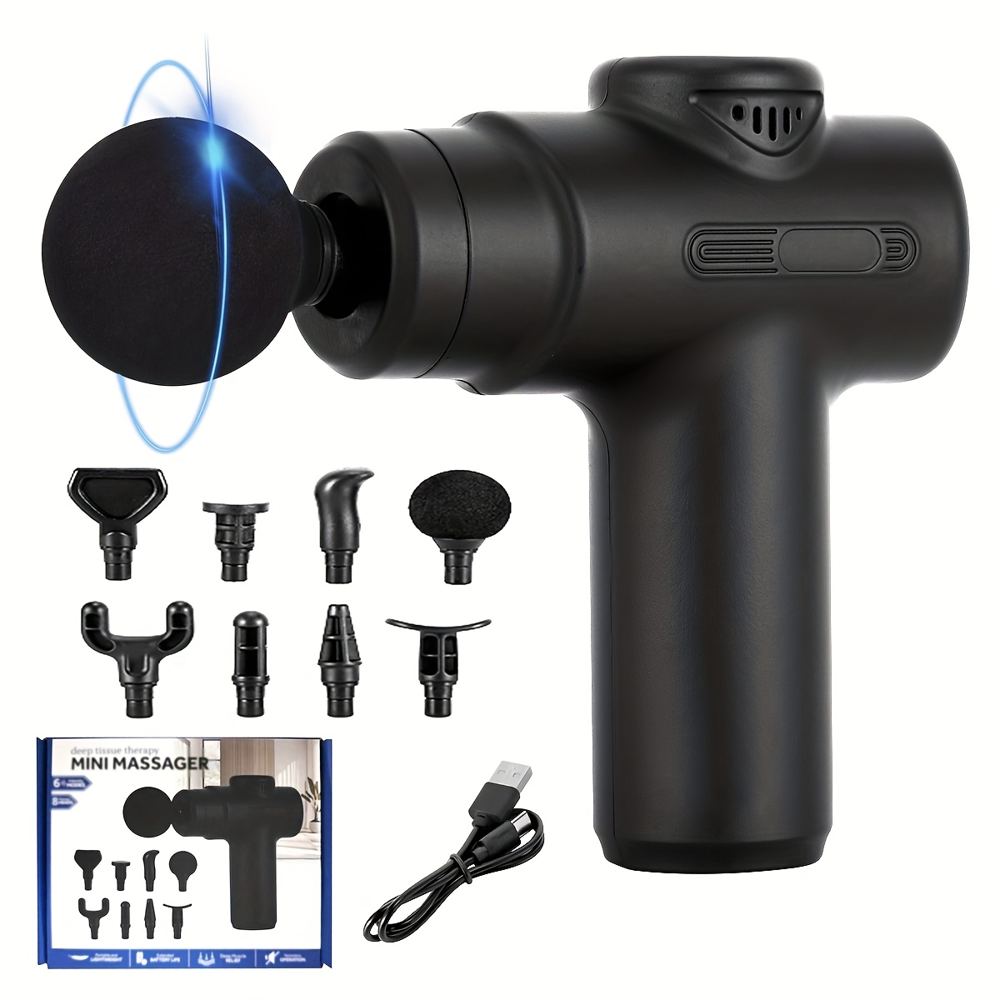
- The deep-work pick: Athlete Massage Gun Deep Tissue Portable Electric. When you want percussion that genuinely reaches quads, hamstrings, and glutes — the big muscles that get sore from leg day and long runs — amplitude is the deciding factor, and this is the stronger-amplitude option. Portable, electric, and built for actual deep-tissue work rather than surface buzzing.
- The sensible budget pick: Temu Fascia Gun. A compact fascia gun with multiple speeds and heads that covers everyday soreness well. If you are buying your first massage gun and are not sure how much you will use it, this is the low-risk way to find out.
- The quiet pick: Deep Tissue Massage Gun Portable with Quiet Attachments. If you train early, share walls with neighbors, or just hate loud gadgets, the quieter motor design matters more than any extra speed setting.
What Does Not Matter (Marketing Noise)
- Speed count above ~6. Thirty speeds or 99 levels is a gimmick. Six genuinely different speeds is plenty.
- Touchscreens and apps. A massage gun is a motor with a head. Bluetooth adds cost and failure points, not recovery.
- Celebrity endorsements. The logo on the box does not change the amplitude.
- "Professional grade" claims. Unregulated marketing language. Judge the specs, not the adjectives.
Matching a Gun to Your Needs
- First gun, general soreness, unsure: a mid-range compact model with 4–6 speeds, 4+ heads, and honest battery life. Low financial risk, covers 90% of home use.
- Regular lifter or runner with real muscle soreness: prioritize amplitude (12 mm+) and stall force (30+ lbs). This is where cheap guns reveal themselves.
- Apartment living, early mornings, shared spaces: prioritize noise. A quieter mid-range gun you actually use beats a powerful loud one you avoid.
- Travel: mini guns trade amplitude and battery for size. Fine as a second gun or for light maintenance on the road; not a replacement for a full-size unit if deep work is the goal.
- Sensitive to pressure or new to percussion: start at the lowest speed with the ball head, and read our safety guide before your first session.
Mini vs. Full-Size: The Honest Tradeoff
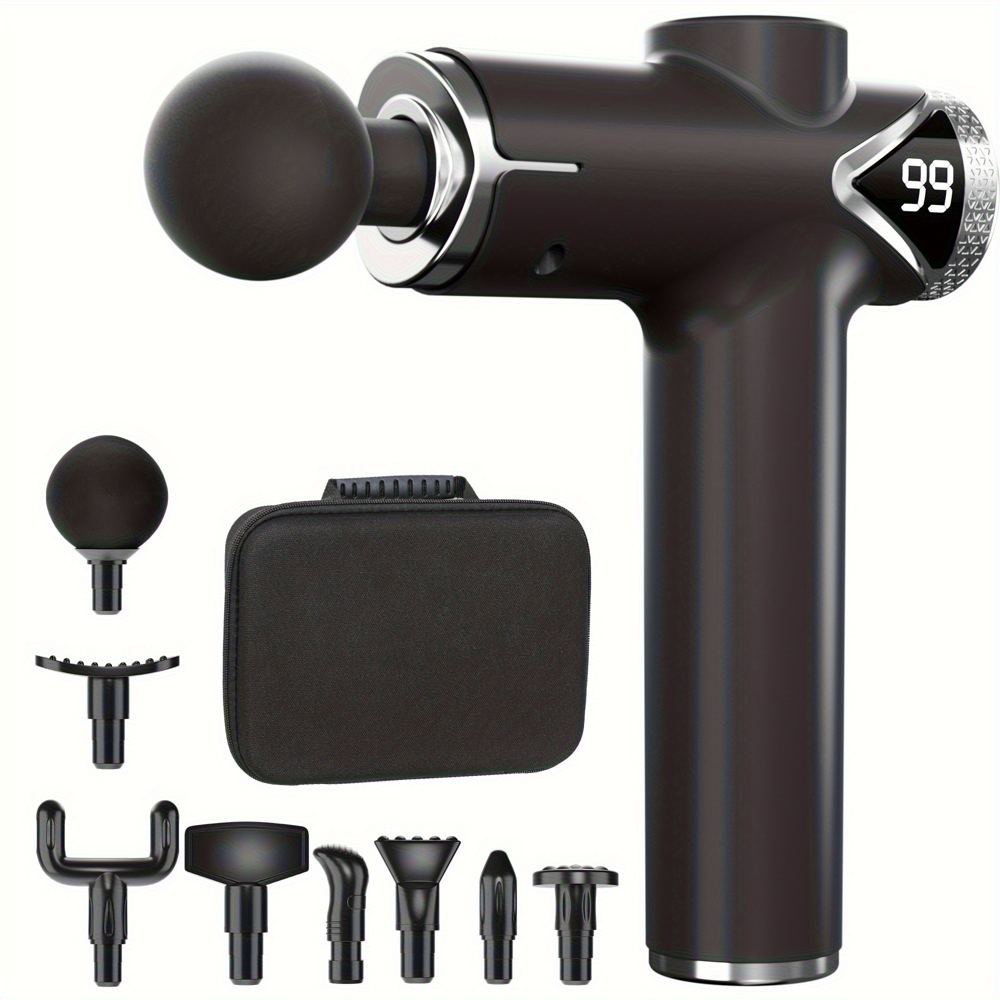
Mini massage guns are genuinely convenient — they fit in a gym bag, charge over USB, and handle light soreness fine. But physics is physics: smaller motors mean lower amplitude and lower stall force. A mini is a maintenance tool; a full-size gun is a treatment tool. If your main use is post-leg-day quads and glutes, full-size wins. If your main use is "my shoulders are tight from my desk and I want something in my drawer," a mini like the Mini Massage Gun with Heating Function is a reasonable, portable answer.
Battery and Maintenance Basics
Charge with the included cable, do not store it fully dead for months, and wipe the heads clean after use — sweat and lotion residue degrade them. Let the motor rest if it gets hot during long sessions (a sign you are pressing too hard — let the gun's weight do the work). A well-kept gun lasts years; a neglected one dies right after the warranty.
FAQ
Q: What is the most important spec in a massage gun?
Amplitude (stroke length). It determines how deep the percussion actually reaches. A gun with 12 mm+ amplitude and modest speeds outperforms a weak-amplitude gun with 30 speed settings every time. If a listing hides the amplitude, be skeptical.
Q: How much should I spend on a massage gun?
Enough to get honest amplitude (8–12 mm minimum), a stall force that survives real pressure, and 4+ decent attachments. Below that tier, guns tend to stall and buzz without doing much. Above it, you are mostly paying for brand, screens, and speed counts you will never use.
Q: Are mini massage guns worth it?
For light, everyday tension — yes. They are portable, quiet, and convenient. For deep post-workout soreness in large muscles, no — they lack the amplitude and stall force of full-size guns. Know which job you are buying for.
Q: How many attachments do I really need?
Four covers everything: ball (general use), flat head (dense areas), fork (around the spine/Achilles, used carefully), and bullet (small trigger points, used sparingly). More heads are nice but not necessary; poorly made extra heads are worse than useless.
Q: Can a massage gun replace stretching or a foam roller?
No — they are complementary tools. Stretching builds range of motion, foam rolling applies broad sustained pressure, and a massage gun delivers focused rapid percussion. Many people use all three. Our best foam rollers shortlist and full-body stretching routine cover the other two.
Conclusion
Buy for amplitude first, stall force second, usable speeds third — and ignore everything with a touchscreen. Match the gun to your actual life (quiet for apartments, strong for heavy training, compact for travel), start gentle, and learn the safety rules before your first session. Pair it with an evening stretching routine for a complete wind-down practice.
