Lower back stretches for everyday stiffness: gentle, safe moves that ease a tight lower back — with clear guidance on when to stretch and when to see a doctor.
Lower Back Stretches: Gentle Moves for Everyday Stiffness
Few things are as quietly draining as a stiff lower back. It makes getting out of bed a negotiation, sitting through a workday an endurance event, and bending to pick something up a moment of held breath. For most women, everyday lower-back stiffness comes not from anything dramatic but from ordinary life: long sitting, weak core support, tight hip flexors, and the general deconditioning of a busy schedule.
Gentle, well-chosen stretches can genuinely help — they ease muscular tightness, encourage the spine to move through its comfortable range, and often take the edge off that end-of-day ache. But the lower back deserves respect: it responds to gentle consistency and punishes aggressive forcing.
Honesty first: these stretches address muscular stiffness and general achiness — the most common kind. They are not a treatment for herniated discs, sciatica, fractures, or other medical conditions, and no stretch can promise a pain-free back. If your back pain is severe, new after an injury, or comes with warning signs (listed below), see a doctor before stretching.
This guide contains affiliate links. If you buy through them, VÉLORA may earn a commission at no extra cost to you.
When to Stretch — and When Not To
Stretch when: your back feels stiff, tight, or mildly achy from sitting, sleeping awkwardly, or general inactivity; movement eases it; and there are no red flags.
Do NOT stretch through it — see a doctor first if you have:
- Severe pain, or pain after a fall, accident, or heavy lift
- Numbness, tingling, or weakness in the legs or feet
- Pain that shoots down the leg (possible sciatica)
- Loss of bladder or bowel control, or numbness in the saddle area (seek urgent care)
- Fever, unexplained weight loss, or pain that is worse at night and unrelieved by rest
- A known spinal condition (herniated disc, stenosis, spondylolisthesis) without your doctor's clearance
Gentle movement is usually helpful for ordinary stiffness; it is not a substitute for medical assessment when something feels wrong. Trust your instincts — if pain feels "different" from your usual stiffness, get it checked.
Setting Up
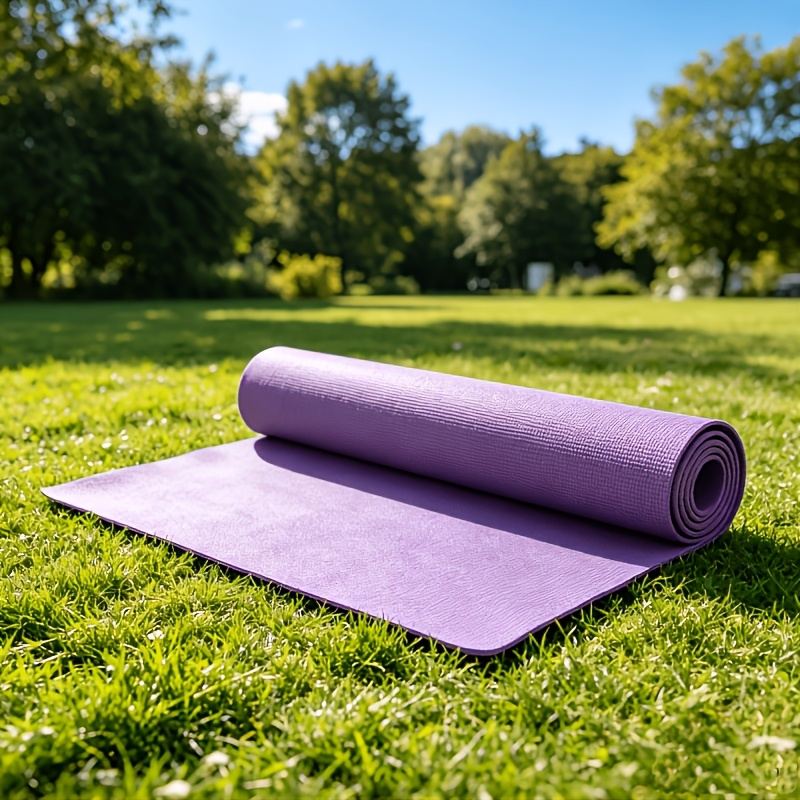
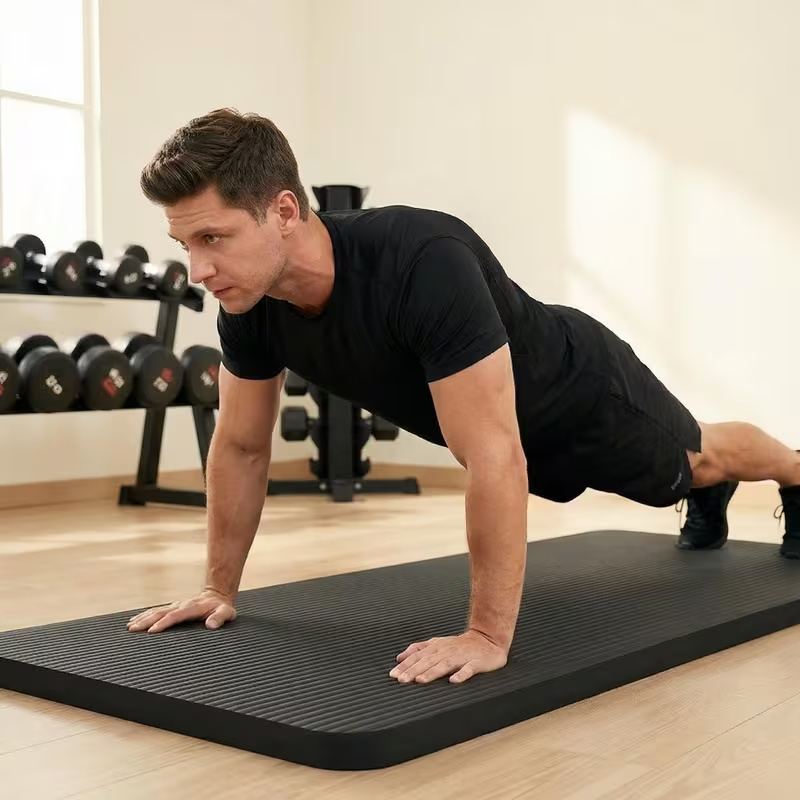
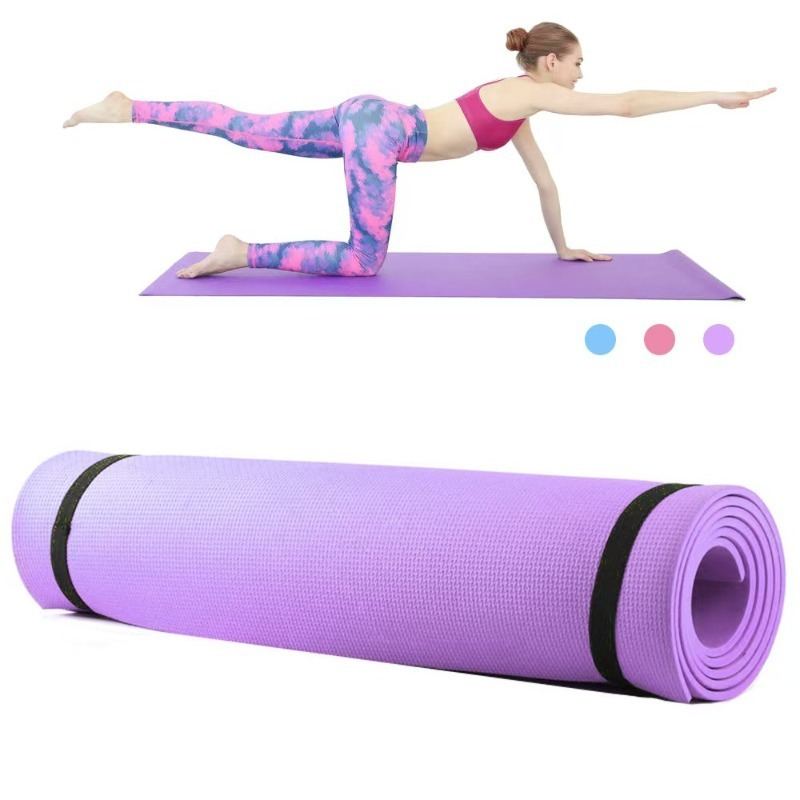
You need a comfortable floor surface. A cushioned mat protects the spine and knees during floor work — a non-slip EVA exercise mat gives enough padding for lying stretches without feeling wobbly. Wear loose clothing, and keep movements slow throughout: this is a 10-minute gentle routine, not a workout.
The golden rules: move into each stretch slowly, hold 20–30 seconds while breathing deeply, never bounce, and stop if you feel sharp pain. Stiffness should ease slightly as you hold; if it intensifies, back off.
The Stretches
1. Knee-to-Chest (Single and Double)
Purpose: the classic gentle lower-back release; decompresses the lumbar spine and stretches the glutes.
Starting position: Lie on your back, knees bent, feet flat on the floor.
Technique: Draw one knee toward your chest, clasping behind the thigh (not on top of the knee joint). Gently pull until you feel a comfortable stretch in the lower back and buttock. Hold 20–30 seconds, breathing slowly, then switch legs. Finish with both knees drawn in, rocking very gently side to side if it feels good. Do 2–3 rounds per side.
Beginner modification: keep the opposite foot flat on the floor rather than extending the leg — it is gentler on the back. Common mistakes: pulling on the knee joint itself; lifting the head and shoulders off the floor.
2. Supine Twist
Purpose: releases tension through the lower back and obliques; many people find this the single most relieving stretch of the set.
Starting position: Lie on your back, arms out in a T, knees bent.
Technique: Slowly lower both knees to the right, keeping the left shoulder anchored to the floor as much as possible. Turn your head left if comfortable. Hold 20–30 seconds, breathing into the stretch, then return to center and repeat to the left. Do 2 rounds per side.
Beginner modification: place a pillow under the knees on each side so the twist stays gentle. Common mistakes: letting both shoulders lift off the floor (shortens the twist into a roll); forcing the knees to the ground.
3. Cat-Cow
Purpose: mobilizes the whole spine gently; teaches the back to move segment by segment instead of as one stiff block.
Starting position: Hands and knees, wrists under shoulders, knees under hips, back flat.
Technique: Inhale as you let the belly drop toward the floor, lifting the head and tailbone (cow). Exhale as you round the spine upward, tucking the chin and tailbone (cat). Move slowly and continuously — 8–10 slow rounds. Let the breath lead the movement: inhale into the arch, exhale into the round.
Breathing: this is the one to master — when breath and movement sync, the whole spine releases more easily. Beginner modification: reduce the range; small, pain-free movement still counts.
4. Child's Pose
Purpose: a restful, sustained lengthening of the lower back — the recovery position of this routine.
Starting position: From hands and knees, sit the hips back toward the heels, arms extended forward.
Technique: Let your forehead rest on the floor (or on stacked fists/a pillow if it does not reach). Breathe deeply, feeling the back of the ribcage expand with each inhale. Hold 30–60 seconds. Do 2–3 rounds, using it as a rest between the other stretches too. Beginner modification: widen the knees to make room for the torso; this is often more comfortable and equally effective.

5. Pelvic Tilts
Purpose: wakes up the deep core muscles that support the lower back — stiffness often persists because these muscles have gone quiet.
Starting position: Lie on your back, knees bent, feet flat, arms at your sides.
Technique: Exhale and gently flatten your lower back into the floor by tilting the pelvis — imagine pulling the belly button toward the spine. Hold 5 seconds, release. Repeat 10–12 times. The movement is small; your hips barely lift. This is about activation, not range. Common mistakes: holding the breath; pressing so hard the glutes cramp — keep it to about 50% effort.
6. Figure-Four (Piriformis Stretch)
Purpose: tight glutes and the deep piriformis muscle often refer achiness into the lower back; releasing them relieves the back indirectly.
Starting position: Lie on your back, knees bent.
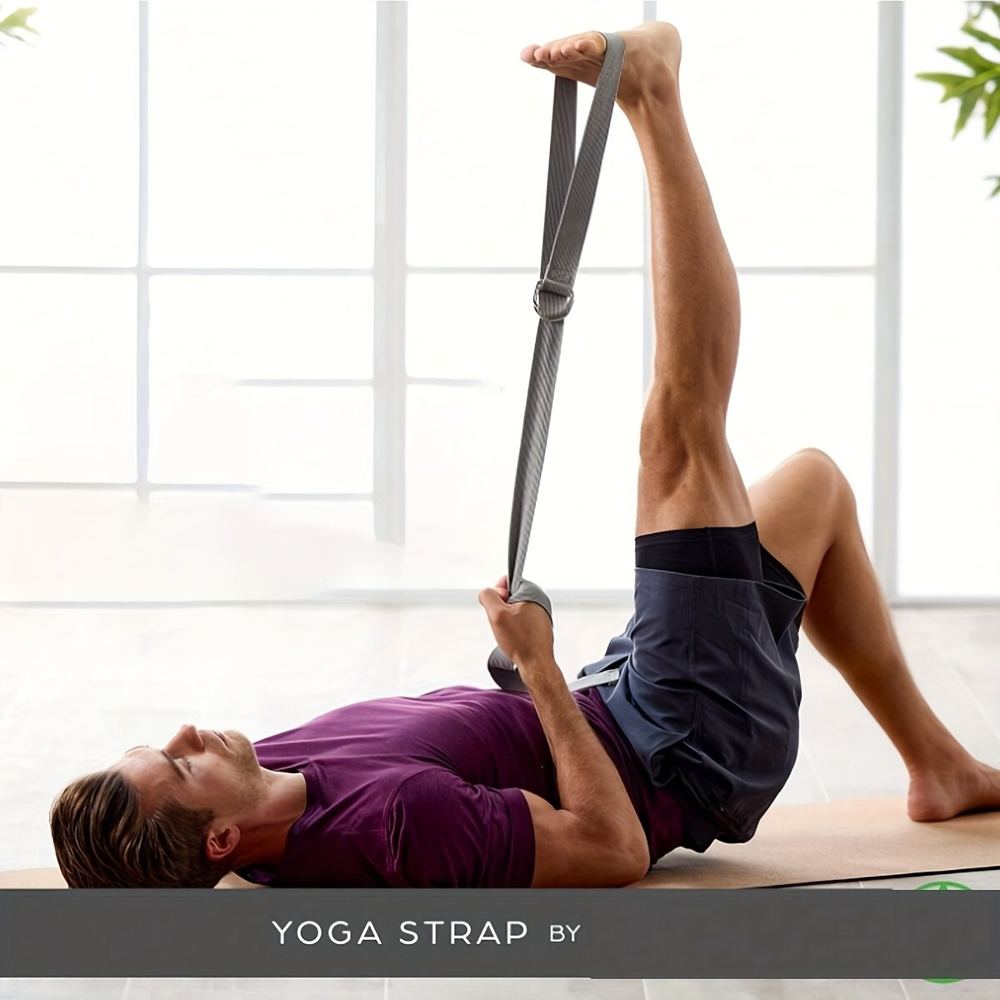
Technique: Cross the right ankle over the left knee, forming a figure four. Reach through and clasp behind the left thigh, gently drawing it toward you until you feel a deep stretch in the right buttock. Hold 20–30 seconds per side, 2 rounds. Beginner modification: if you cannot reach the thigh comfortably, loop a towel or strap behind it.
7. Standing Back Extension
Purpose: counterbalances the flexed sitting posture; a gentle arch in the opposite direction of your desk slump.
Starting position: Stand tall, feet hip-width apart, hands on the small of your back for support.
Technique: Slowly arch backward, looking slightly upward, until you feel a gentle stretch through the front of the torso and a mild compression-free lengthening in the back. Hold 5–10 seconds, return upright. Repeat 5–8 times. Keep the knees soft and the movement small — this is a gentle counterpose, not a backbend. Skip this one if arching backward causes any pain.
Support During the Day: A Note on Back Supports
Stretching addresses stiffness in the moment; daytime habits decide how much stiffness returns. A breathable posture support belt can provide gentle reminder-style support during long sitting or light activity — think of it as a cue to sit taller rather than a brace to depend on. For strengthening the muscles that protect the back long-term, our resistance band workout for women and balance exercises for women build the core and hip stability that keep stiffness from returning.
Stretches at a Glance
| Stretch | Position | Hold / Reps | Best for | | --- | --- | --- | --- | | Knee-to-chest | Lying | 20–30 sec × 2–3 per side | General lumbar tightness | | Supine twist | Lying | 20–30 sec × 2 per side | Rotational stiffness, deep release | | Cat-cow | Hands and knees | 8–10 slow rounds | Spinal mobility, morning stiffness | | Child's pose | Kneeling | 30–60 sec × 2–3 | Restful sustained release | | Pelvic tilts | Lying | 10–12 × 5-sec holds | Waking up deep core support | | Figure-four | Lying | 20–30 sec × 2 per side | Glute/piriformis-related back ache | | Standing back extension | Standing | 5–8 × 5–10 sec | Countering desk-slump posture |
Building the Routine
- Frequency: once daily is ideal; twice (morning and evening) if stiffness is persistent. Many women do cat-cow and child's pose in the morning and the full sequence in the evening.
- Duration: about 10 minutes for the full set. Even 5 minutes of knee-to-chest, supine twist, and child's pose helps on busy days.
- Progression: over 2–4 weeks, the stretches should feel easier and morning stiffness should ease sooner. If stiffness is unchanged after 3–4 consistent weeks — or if it worsens — bring that information to a doctor or physiotherapist.
- What helps alongside: regular walking, breaking up sitting every 30–60 minutes, and gentle core strengthening. Our low-impact workouts for women are designed exactly for this kind of sustainable movement.
FAQ
Q: Should I stretch my lower back if it hurts right now?
Gentle stretching is fine for mild stiffness and achiness that eases with movement. But if the pain is sharp, severe, new after an injury, or comes with numbness, tingling, or leg weakness, do not stretch through it — get assessed first. When in doubt, gentle walking and rest beat aggressive stretching.
Q: Is cracking my back by twisting hard a good stretch?
No. Forceful self-manipulation can feel relieving momentarily but risks straining ligaments and joints, especially with repetition. The supine twist above gives you the same rotational release gently and safely — no yanking required.
Q: How long until my back feels less stiff in the mornings?
With daily practice, many people notice mornings getting easier within 1–2 weeks. Full, lasting change in how the back feels through the day usually takes 3–6 weeks of consistent stretching plus movement habits like walking and sitting breaks. Results vary — age, activity level, and the cause of stiffness all matter.
Q: Can I do these stretches during pregnancy?
Pregnancy changes what is safe: lying flat on the back is generally discouraged after the first trimester, and deep twists are out. Get your provider's clearance first and follow prenatal-specific guidance — see our exercise during pregnancy safety guide for the full picture.
Q: Do I need a back support belt for everyday stiffness?
Not necessarily — most everyday stiffness responds to stretching, movement, and posture habits. A support belt is a reasonable optional aid for long sitting days or as a posture reminder, not a requirement and not a fix on its own. If you find yourself needing it constantly, that is a sign to address the underlying weakness with core strengthening and professional advice.
The Bottom Line
A stiff lower back usually is not a mystery and usually is not dangerous — it is the body asking for movement. Ten gentle minutes a day of the stretches above, done without forcing and without skipping the breathing, keeps the spine mobile and the ache manageable for most women. Respect the warning signs, stay consistent rather than intense, and give it a few weeks. Your back carries you through everything; this small daily practice is how you carry it back.