Gentle, effective lower back strengthening exercises for home: form cues, sets and reps ranges, safety guidance, and how back strength supports your core.
Lower Back Strengthening Exercises That Support Your Core
Your lower back and your core are not two separate projects — they are two sides of the same structure. The deep and surface muscles along your spine (the erector spinae and multifidus) work together with your abdominals to hold your trunk upright, protect your spine when you lift, and keep you moving comfortably through the day. Strengthening the back extensors while training the front of the core is what creates a genuinely supported midsection.
This guide covers the most effective lower-back strengthening exercises you can do at home, with exact form, sensible rep ranges, beginner modifications, and — importantly — clear guidance on when back discomfort needs a professional rather than a workout.
This guide contains affiliate links. If you buy through them, VÉLORA may earn a commission at no extra cost to you.
An Important Safety Note First
Strengthening exercises suit healthy backs and general deconditioning — the stiffness and weakness that come from long sitting and little movement. They are not a treatment for back problems. Please see a doctor or physiotherapist first, and do not self-treat with exercise, if you have:
- Back pain that persists beyond a couple of weeks or keeps returning
- Pain that radiates down one or both legs, numbness, tingling, or weakness
- Back pain following a fall, accident, or injury
- Unexplained weight loss, fever, or bladder/bowel changes alongside back pain
And a standing rule for every exercise below: stop immediately if a movement sharpens your pain. Muscle effort is normal; increasing pain is a signal to stop, not to push through. This guide does not diagnose anything — it offers general strengthening information for healthy backs.
Why Back Strength Supports Your Core
Think of your trunk as a barrel: the abdominals form the front, the obliques the sides, the pelvic floor the bottom, and the back extensors the rear. A barrel missing one wall doesn't hold pressure. Research on spinal mechanics consistently shows that the back extensors and the deep core co-contract — they fire together — during lifting, carrying, and even standing. Training only the front (endless crunches) while ignoring the back creates an imbalance that leaves the spine less supported, not more.
For most women, daily life loads the back constantly: lifting children, carrying bags on one shoulder, leaning over desks and sinks. The exercises below rebuild the endurance and control those muscles need. Pair them with front-core work from our Core Workout for Women Beginners for the full barrel.
What You Need
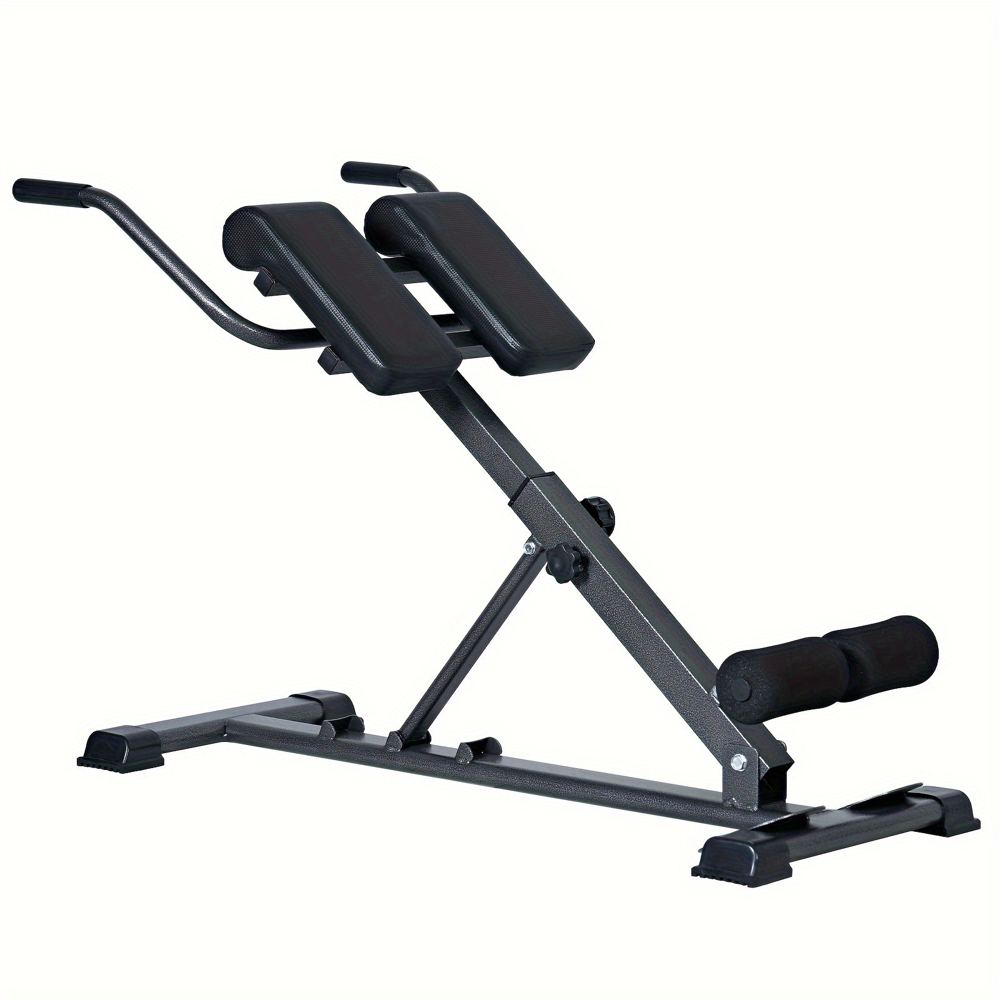
A mat or carpeted floor covers everything here. A mat like the Extra-Thick 10mm Yoga Mat cushions floor work comfortably. If back extensions become a favorite, an adjustable bench like the Sogespower Roman Chair Hyperextension Bench gives you a proper setup at home.
The Exercises
1. Prone Press-Up (McKenzie-Style Extension)
Purpose: A gentle introduction to spinal extension — teaches the back muscles to engage without load, and a common first step in back-care routines.
Starting position: Lie face down, hands flat under your shoulders as if about to do a push-up, legs extended behind you, forehead resting on the mat.
Technique: Keeping your hips and legs relaxed on the floor, slowly press your upper body up by straightening your arms, letting your back arch gently. Only go as high as feels comfortable — for many beginners that's just a few inches. Pause one to two seconds, then lower slowly.
Breathing: Exhale as you press up, inhale lowering.
Sets/reps: 2–3 sets of 8–12 reps.
Beginner modification: Press up only until you feel a gentle stretch, not a strong arch.
Common mistakes: forcing the range higher than comfortable, and tensing the buttocks and legs (keep them soft so the back does the work).
2. Superman (Alternating)
Purpose: Builds endurance in the back extensors, glutes, and shoulders working together — the posterior chain your posture depends on.
Starting position: Lie face down, arms extended overhead, legs straight, forehead on the mat.
Technique: Simultaneously lift your right arm and left leg a few inches off the floor, keeping both straight but not locked. Pause one to two seconds, lower with control, then switch to left arm and right leg. The alternating version is kinder to beginners than lifting all four limbs at once.
Breathing: Exhale on the lift, inhale lowering. Breathe continuously — don't hold your breath.
Sets/reps: 2–3 sets of 8–12 lifts per side.
Beginner modification: Lift only the arms (legs stay down) until you can do so without straining.
Common mistakes: lifting too high (a few inches is plenty — higher usually means the lower back is compressing rather than the muscles working), craning the neck up (keep your gaze down at the mat), and rushing.
3. Bird Dog
Purpose: Trains the deep spinal stabilizers (multifidus) to hold the spine steady while limbs move — the single most functional back exercise for daily life.
Starting position: On all fours — wrists under shoulders, knees under hips, back flat like a tabletop.
Technique: Lightly brace your belly, then extend your right arm forward and left leg back until both are roughly parallel to the floor. Your hips must stay level — imagine a glass of water balanced on your lower back. Hold one to two seconds, return with control, and switch sides.
Breathing: Steady breathing, with a gentle exhale during the extension.
Sets/reps: 2–3 sets of 8–12 reps per side.
Beginner modification: Extend only the leg, keeping both hands on the floor.
Common mistakes: hips rotating open, lower back sagging, and looking up (keep the neck neutral, gaze at the floor).
4. Floor Back Extension
Purpose: A step up from the superman — sustained back-extensor work through a slightly larger range.
Starting position: Lie face down, hands lightly behind your head or crossed over your chest, legs extended, feet hip-width apart.
Technique: Squeeze your glutes and lift your chest a few inches off the floor, keeping your neck long and your gaze down. Pause one to two seconds at the top, then lower slowly. Think "long spine" rather than "high lift."
Breathing: Exhale lifting, inhale lowering.
Sets/reps: 2–3 sets of 8–15 reps.
Beginner modification: Hands at your sides (shorter lever = easier) instead of behind your head.
Common mistakes: pulling the neck with the hands, hyperextending at the top, and using momentum.
5. Glute Bridge
Purpose: Strong glutes take load off the lower back — weak glutes are one of the most common contributors to an overworked lumbar spine.
Starting position: Lie on your back, knees bent, feet flat and hip-width apart, heels close enough to graze with your fingertips.
Technique: Brace lightly, push through your heels, and lift until your body forms a straight line from knees to shoulders. Squeeze the glutes one to two seconds, lower slowly.
Breathing: Exhale on the lift, inhale lowering.
Sets/reps: 2–4 sets of 10–20 reps.
Beginner modification: Lift only as high as you can without arching your back.
Common mistakes: pushing through the toes (shifts work to the quads), overarching at the top.
6. Roman Chair Back Extension (With Equipment)
Purpose: The classic loaded back extension — the back extensors work through a full range against gravity.
Equipment: An adjustable hyperextension bench such as the Sogespower Roman Chair. Set the pad just below your hip bones so you can hinge freely.
Starting position: Face down on the bench, ankles secured, arms crossed over your chest, body in a straight line.
Technique: Hinge forward slowly until you feel a stretch in the hamstrings, then lift back to a straight line using your back and glutes. Stop at neutral — don't hyperextend past straight.
Breathing: Exhale lifting, inhale lowering.
Sets/reps: 2–3 sets of 10–15 reps.
Beginner modification: Master the floor back extension for several weeks first; bodyweight on the bench is plenty to start.
Common mistakes: rounding the upper back on the way down, hyperextending past neutral at the top, and adding weight too soon.
Putting It Together: Two Sample Sessions
Session A (no equipment, 12 minutes): prone press-up → alternating superman → bird dog → glute bridge. Two to three sets of each, resting 30–60 seconds between sets.
Session B (with bench, 15 minutes): floor back extension → roman chair extension → bird dog → glute bridge. Same set and rest structure.
Do one back-focused session two to three times per week, ideally on different days from (or paired with) front-core work — see our Core Workout for Women Beginners. Desk workers may also like our Back Exercises for Women.
Safety Notes (Worth Repeating)
- These exercises are for generally healthy backs. The red-flag list at the top of this guide means "see a professional first" — exercise is not the right first step there.
- Stop any exercise that sharpens pain, causes radiating symptoms, or produces numbness or tingling.
- Progress slowly: when the top of a rep range feels manageable with clean form for two sessions running, add a set or a small range increase — never both at once.
- If you are pregnant or postpartum, get provider clearance before starting back-extension exercises. See our Exercise During Pregnancy Safety and Postpartum Exercise Guide.
FAQ
Q: Will strengthening my lower back fix my back pain?
It depends entirely on the cause, which this guide can't determine. General weakness and stiffness from inactivity often improve with gradual strengthening — but persistent pain, radiating pain, or pain after injury needs professional evaluation first. Strengthening is excellent maintenance and prevention for healthy backs; it is not a diagnosis or a treatment.
Q: Are back extensions safe for beginners?
The floor versions (prone press-up, superman, floor back extension) are gentle enough for most healthy beginners when done slowly and within a comfortable range. Start there for several weeks before considering a roman chair. Anyone with a diagnosed spinal condition should get individual guidance first.
Q: How often should I train my lower back?
Two to three times per week, with rest days between sessions. The back extensors are endurance muscles — they respond well to moderate, consistent work rather than occasional heroic efforts.
Q: My back feels tired after sitting all day. Will these exercises help?
Often, yes — that end-of-day ache is frequently deconditioning and stiffness rather than damage, and gradual strengthening plus regular movement breaks through the day tends to help. But if the ache is persistent, worsening, or comes with any red-flag symptoms listed above, get it checked rather than training through it.
Q: Should I stretch or strengthen a tight lower back?
Both have their place, but most chronically "tight" lower backs are actually weak backs working overtime — they feel tight because they're fatigued. Gentle strengthening (like the exercises here) plus walking and movement breaks usually does more long-term good than stretching alone. Aggressive stretching of an already irritated back can make things worse.
Q: Can I do these exercises every day?
No — muscles adapt during recovery. Two to three sessions per week is the honest recommendation. Daily gentle movement like walking is great; daily loaded back extensions are not necessary and can irritate tissues that need rest.
The Bottom Line
A supported spine needs all four walls of the trunk — and the back wall is the one most home routines skip. Start with the floor exercises, two to three times a week, respect the safety guidance above, and build gradually. Your back carries you through everything; training it is one of the highest-return investments in your daily comfort.
