How to improve flexibility as a beginner: a realistic, no-hype plan — what actually works, how long it takes, and the weekly routine that builds lasting mobility.
How to Improve Flexibility: A Beginner's Realistic Guide
"I want to be more flexible" is one of the most common fitness goals women set — and one of the most misunderstood. Flexibility is not about touching your toes on demand or folding into dramatic poses. It is about your joints moving comfortably through the ranges your life asks of them: reaching overhead without strain, bending to tie your shoes, sitting on the floor with your kids, turning to check traffic without stiffness.
Here is the realistic truth, stated plainly: flexibility improves for almost everyone who works at it gently and consistently. It does not improve on a schedule anyone can promise you, it does not come from forcing, and it is partly influenced by genetics and joint structure you cannot change. But the part you can change is large enough to matter enormously in daily life. This guide gives you the honest plan: what actually works, what does not, and the weekly routine that builds lasting mobility.
This guide contains affiliate links. If you buy through them, VÉLORA may earn a commission at no extra cost to you.
What Flexibility Actually Is
Flexibility is your joints' comfortable range of motion, governed by muscles, tendons, ligaments, and your nervous system's willingness to let a muscle lengthen. That last part surprises people: a big share of "tightness" is your nervous system guarding a muscle it does not trust at longer lengths. This is why gentle, repeated stretching works — you are not just lengthening tissue, you are teaching your nervous system that the longer position is safe.
Two useful distinctions:
- Flexibility = passive range (how far a joint can be moved).
- Mobility = active range (how far you can move a joint yourself, with control). Mobility is the more useful of the two for daily life, and it is built by combining stretching with gentle strength work through full ranges.
What Actually Works (and What Doesn't)
Works: regular gentle stretching (2–4+ sessions per week), holding stretches 20–30 seconds, warming up first, combining stretching with light strength work, staying hydrated and generally active, patience over months.
Doesn't work: aggressive forcing or bouncing into stretches (risks strains and teaches the nervous system to guard harder), one heroic session a week, "30-day splits" programs that promise dramatic results on a deadline, stretching cold muscles intensely, comparing your progress to someone else's starting point.
The honest timeline: most beginners notice daily life getting easier — less morning stiffness, easier bending and reaching — within 3–6 weeks of consistent practice. Visible changes in range (touching toes, deeper squats) typically take 2–4 months. Anyone promising more, faster, is selling something. Results vary with age, starting point, consistency, and genetics — and that is normal, not failure.
The Method: How to Stretch Effectively
Every stretch in your routine should follow these principles:
- Warm up first. 3–5 minutes of easy movement — marching in place, arm circles, gentle torso twists, cat-cow. Warm muscles stretch more willingly and safely than cold ones.
- Ease in, don't force. Move into the stretch until you feel gentle tension — about a 5 or 6 out of 10 — and stop there. Pain is never the goal.
- Hold 20–30 seconds. Shorter holds barely register; much longer is fine but not required. Breathe slowly throughout — exhale consciously into the stretch.
- Repeat 2–3 times per side. Multiple moderate holds beat one aggressive hold.
- Never bounce. Ballistic bouncing triggers the stretch reflex, which tightens the muscle — the opposite of what you want.
- Both sides, every time. Flexibility imbalances cause their own problems; always stretch left and right equally.
Your Weekly Routine
Aim for 3–4 sessions per week, 15–20 minutes each. This full-body sequence hits the areas that matter most for daily life: hamstrings, hip flexors, hips, calves, chest/shoulders, and the spine.
Session Structure
Warm-up (3–5 min): march in place, arm circles, leg swings (gentle, 8–10 per leg), cat-cow × 8.
Main sequence (10–12 min): hold each 20–30 seconds, 2 rounds per side.
- Standing quad stretch — hold a wall or chair, pull one foot gently toward the buttock. Beginner modification: do it lying on your side instead.
- Half-kneeling hip flexor stretch — one knee down (on a folded towel), other foot flat in front, gently shift forward until you feel the front of the back hip open. Common mistake: arching the lower back instead of tucking the pelvis slightly.
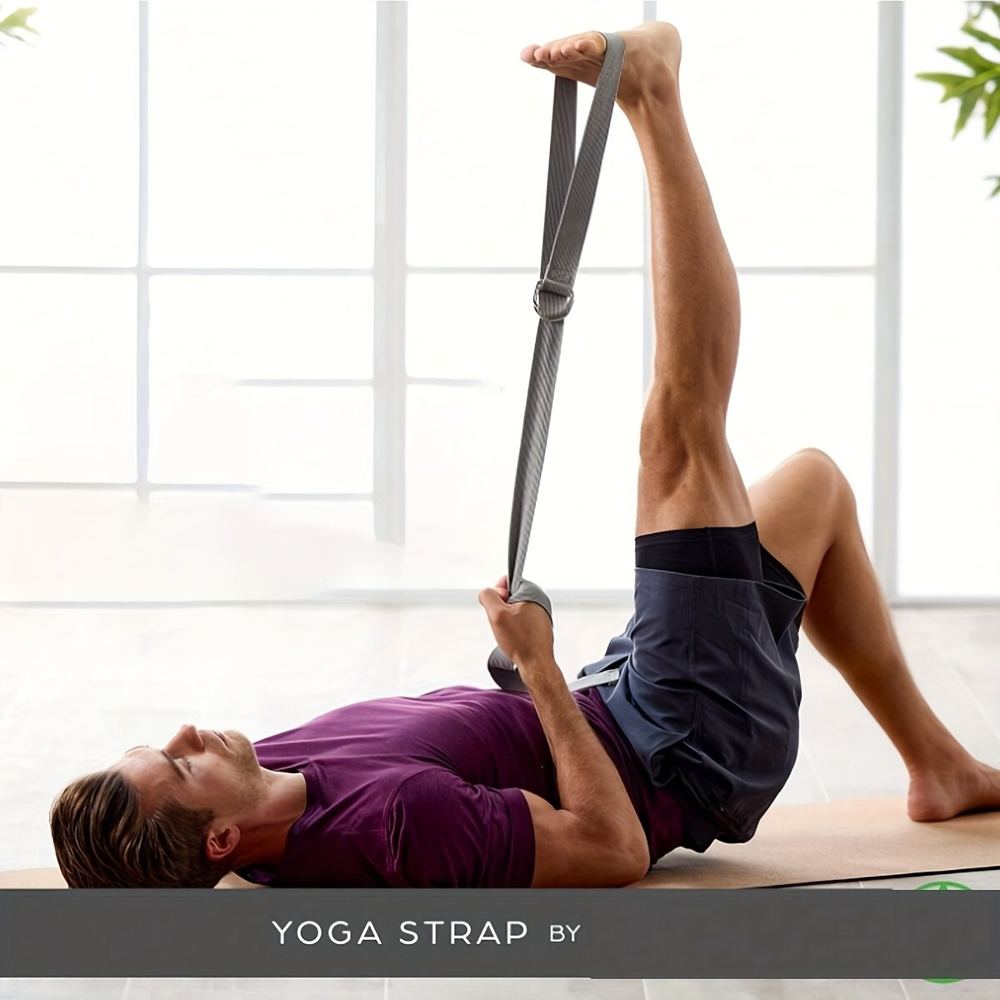
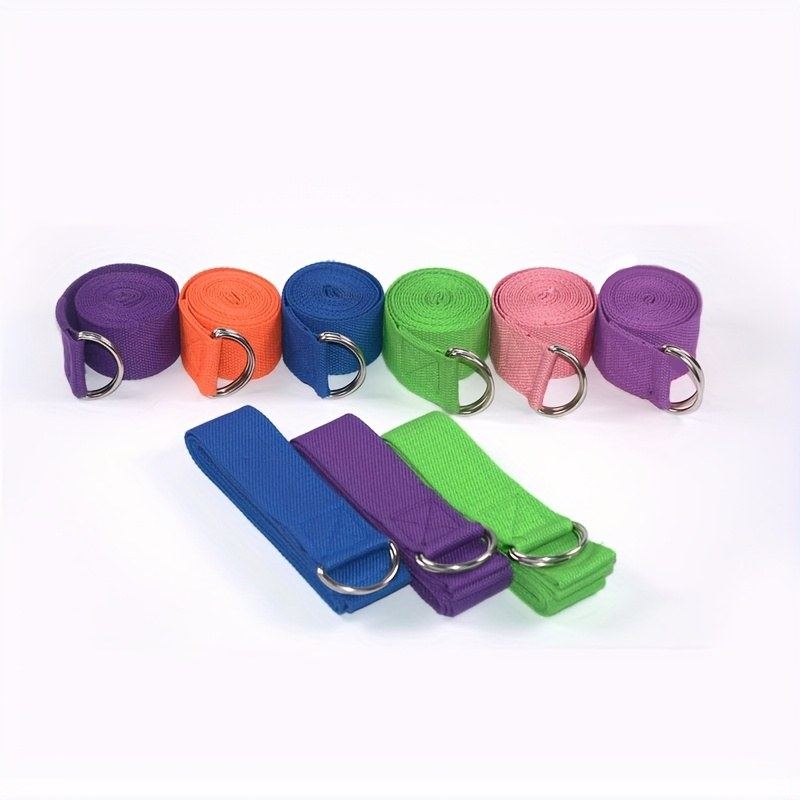
- Seated hamstring stretch — sit with one leg extended, hinge forward from the hips with a flat back. Use a strap: loop a yoga strap around the foot to keep the back flat instead of rounding to reach — this is exactly what straps are for.
- Figure-four hip stretch — lying on your back, ankle over opposite knee, draw in gently.
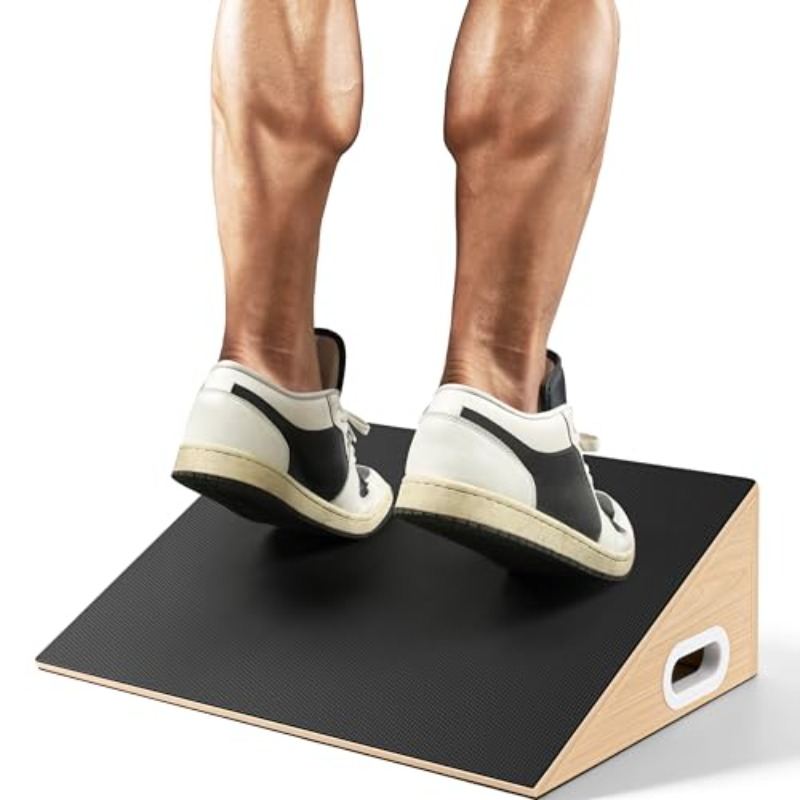
- Calf stretch on a slant board — stand on an adjustable slant board at a gentle angle, knees straight but not locked, leaning slightly forward. The slant board gives a deeper, more even calf stretch than a wall lean, and it is excellent for ankle mobility too. Start at the lowest angle and increase gradually over weeks.
- Chest opener in a doorway — forearms on the frame, step through gently.
- Child's pose — 30–60 seconds to finish, breathing deeply.
Cool-down (2 min): slow walking or gentle marching, then a minute of deep breathing.
For choosing the right surface to practice on, see our guide on how to choose yoga mat thickness — and if you are building an overall routine around this, our beginner home workout plan for women and how often women should work out guides help you schedule stretching alongside strength and cardio.
Stretching Methods Compared
| Method | How it works | Best for | Beginner-friendly? | | --- | --- | --- | --- | | Static stretching | Hold a position 20–30 sec | General flexibility, cool-downs | Yes — the default method in this guide | | Dynamic stretching | Controlled movements through range (leg swings, arm circles) | Warm-ups before activity | Yes — keep movements gentle | | PNF (contract-relax) | Contract the muscle 5–10 sec, then stretch deeper | Breaking through plateaus | With guidance; skip until basics are solid | | Yoga | Poses combining stretch, strength, and breath | Whole-body mobility + calm | Yes — beginner classes or videos | | Foam rolling | Pressure on tight tissue before stretching | Stubborn tight spots | Yes — see our foam roller guide |
You do not need all of these. Static stretching plus a little dynamic warm-up covers 90% of beginner needs. Add the others only if you enjoy them or hit a plateau after a few consistent months.
The Two Tools Worth Having
You can improve flexibility with zero equipment — but two inexpensive tools genuinely help beginners:
- A yoga strap extends your reach so you can hold stretches with good form instead of straining. Seated forward folds, lying hamstring stretches, and shoulder openers all become accessible on day one. The durable nylon yoga strap with metal D-ring adjusts easily and holds its setting mid-stretch.
- A slant board transforms calf and ankle stretching from an awkward wall lean into a stable, progressive exercise. Tight calves limit squat depth, walking comfort, and ankle mobility — the adjustable slant board lets you start gentle and increase the angle as you adapt.
Common Mistakes That Stall Progress
- Stretching cold. Always warm up first — cold stretching is less effective and riskier.
- Chasing pain. The "no pain, no gain" mindset backfires with flexibility; your nervous system guards harder against aggressive stretching. Gentle and consistent wins.
- Skipping one side. Imbalances compound over time. Always do both sides equally.
- Inconsistency. Two sessions a week maintained for three months beats a daily burst for two weeks followed by nothing. Tie sessions to existing habits.
- Ignoring strength. Flexibility without strength is instability. Light strength work through full ranges (bodyweight squats, lunges, rows) locks in your new range so your body trusts it.
- Holding your breath. Breath-holding raises whole-body tension. Slow exhales are part of the technique, not decoration.
Safety Notes
- Stop any stretch that causes sharp, shooting, or joint pain. Mild muscular tension is fine; pain is not.
- Be extra cautious with the neck and lower back — gentle ranges only, no forcing, no aggressive twisting.
- If you are pregnant, get provider clearance and follow prenatal guidance; relaxin loosens joints, so overstretching is easier than you expect.
- If you have hypermobility, joint instability, or a connective tissue condition, focus on strength and stability rather than chasing more range — and get professional guidance.
FAQ
Q: How long does it take to become flexible as a complete beginner?
Expect daily life to feel easier within 3–6 weeks of stretching 3–4 times a week, and noticeable range changes within 2–4 months. There is no fixed timeline — age, starting point, consistency, and genetics all play a role. The only reliable predictor is showing up regularly.
Q: Is 10 minutes of stretching a day enough?
Yes — 10 focused minutes most days beats occasional long sessions. The routine in this guide runs 15–20 minutes, but even a daily 10-minute subset (warm-up plus 4–5 key stretches) produces real results over time. Consistency is the active ingredient.
Q: Should I stretch before or after exercise?
Both, differently: gentle dynamic movements (leg swings, arm circles) before exercise as part of a warm-up; static holds after exercise or as standalone sessions. Save the long static holds in this guide for after workouts or separate flexibility sessions, not for a cold pre-workout.
Q: Can I become flexible at 40, 50, or older?
Absolutely. Flexibility improves at any age with consistent practice — older beginners often progress beautifully because they tend to be patient and careful. Go a little gentler, warm up a little longer, and expect the same gradual timeline. It is never too late to move better.
Q: Why is one side of my body tighter than the other?
Near-total normalcy. Handedness, old injuries, sleeping positions, and daily habits create asymmetries in everyone. Stretch both sides equally, give the tighter side an extra round (not extra force), and the gap usually narrows over a few months. A large or painful asymmetry deserves a physiotherapist's look.
The Bottom Line
Improving flexibility is one of the most honest projects in fitness: the method is simple, the timeline is real, and the payoff shows up in ordinary moments — bending, reaching, sitting, moving through your day without that background stiffness. Warm up, stretch gently 3–4 times a week, breathe through every hold, add a little strength, and be patient for a few months. You do not need to become a contortionist. You just need a body that moves the way you want it to — and that is entirely within reach.