How often should you train abs? The realistic answer: 2–4 focused sessions weekly with recovery days — and why daily ab workouts stall progress.
How Often Should You Train Abs? A Realistic Answer
Some people train abs every single day, convinced that more is always better. Others barely touch them, assuming deadlifts and squats cover it. The realistic answer sits between the two — and it is simpler than the fitness internet makes it sound.
The short version: train your abs with focused work 2–4 times per week, with at least a day of rest between hard sessions. That frequency, kept up for months, beats daily half-hearted crunches every time.
This guide contains affiliate links. If you buy through them, VÉLORA may earn a commission at no extra cost to you.
Why Daily Ab Training Is Not the Shortcut
The "abs every day" myth survives because abs feel different from other muscles. They recover a little faster than big muscles like the glutes or quads, and you can train them without equipment, so daily work feels productive. But three problems make it a poor strategy:
- Muscles still need recovery to adapt. The rectus abdominis, obliques, and deep core muscles grow stronger between sessions, not during them. Training hard every day piles fatigue on top of fatigue, and progress stalls.
- Daily training usually means low effort. Nobody does their hardest plank and crunch sets seven days a week. What "daily abs" becomes in practice is a few easy sets done on autopilot — which trains endurance you already have rather than building new strength.
- It crowds out everything else. Ten minutes a day is 70 minutes a week of ab work — time that would do more for your fitness spent on full-body strength, walking, or actual rest.
If your current routine is gentle core activation — a minute of dead bugs or bird-dogs as part of a warm-up — that is fine most days. But real, challenging ab sessions need recovery days between them.
What Counts as "Training Abs"
It helps to separate two kinds of core work, because they follow different rules:
- Focused ab training: dedicated sets of crunches, planks, leg raises, rollouts, or side planks, done with effort and progression. This is what the 2–4 times per week guidance applies to.
- Indirect core work: the trunk bracing that happens during squats, deadlifts, overhead presses, push-ups, and carrying things. This happens whenever you strength-train with good form and does not need separate scheduling — it is a bonus, not a replacement for direct work.
Both matter. Indirect work keeps the deep stabilizers active across your program; direct work builds the strength and endurance of the abdominal muscles themselves.
The Realistic Frequency Guide
Match your schedule to your level and your effort:
| Level | Focused ab sessions per week | What it looks like | |---|---|---| | Beginner | 2 | 2–3 exercises, 2 sets each, moderate effort, 48h+ between sessions | | Intermediate | 2–3 | 3–4 exercises, 2–3 sets each, some progressive challenge | | Advanced | 3–4 | Varied exercises, progressive overload (harder levers, added resistance, longer holds) |
Effort is the dial that matters most. Two genuinely challenging sessions beat four easy ones. A challenging session means the last reps of your sets feel hard — your form stays clean, but you would struggle to do several more.
What a Good Ab Session Looks Like
A complete focused session takes 10–20 minutes and covers the trunk from a few angles:
- An anti-movement hold — plank or dead bug, 2–3 sets of 20–60 seconds (or 8–12 reps per side for dead bugs). Trains the deep stabilizers that protect your spine.
- A front-abdominal exercise — crunches, reverse crunches, or ab rollouts, 2–3 sets of 8–20 reps. Trains the rectus abdominis.
- A side/oblique exercise — side planks or cross-body mountain climbers, 2 sets per side. Trains the obliques that support rotation and side-bending.
That is it. You do not need ten exercises or a 45-minute ab day. Three movements, done well and progressed over weeks, build a genuinely strong midsection. See our core workout for women and core training for men for full sessions built on this structure.
Progression: The Part Everyone Skips
The reason many people's abs never seem to improve is not frequency — it is that they do the same workout forever. Muscles adapt to a repeated stimulus and then stop changing. To keep progressing, change one variable every few weeks:
- Harder levers: knee planks → full planks → long-lever planks; crunches → weighted crunches.
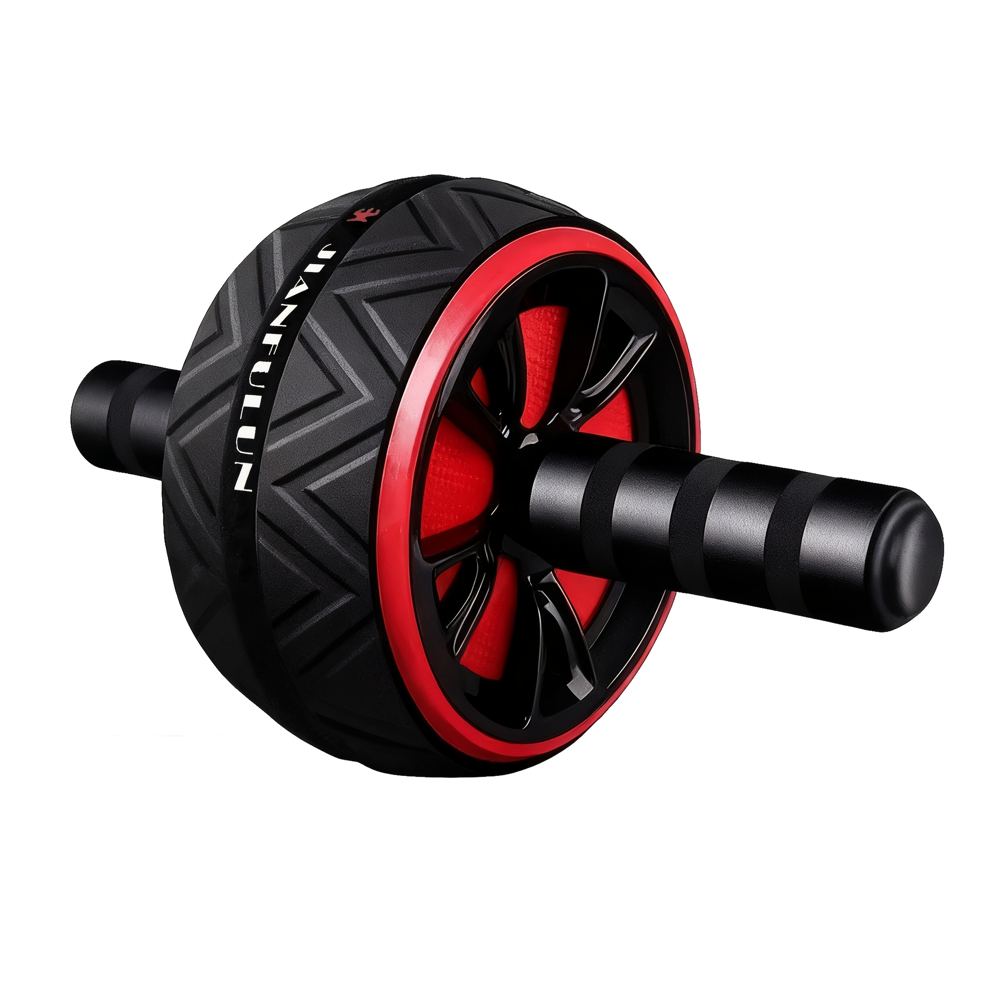
- More resistance: an ab wheel rollout instead of bodyweight crunches once planks feel easy; core sliders to add instability and range.
- More time under tension: slower lowering phases, pauses at the hardest point.
- More volume: an extra set, or a few more reps — but keep total session length under about 20 minutes.

A comfortable thick mat matters more than people expect: floor work you dread because your back and elbows hurt is floor work you skip.
Recovery and Rest Days
Treat ab sessions like any other strength work: schedule at least one full day between hard sessions, and do not stack an intense ab day right before heavy compound lifts that demand a fresh, braced trunk (heavy squats and deadlifts with a fried core is a bad combination).
Signs you are overdoing it:
- Your core feels sore and weak during normal training, not just during ab sets.
- Your plank form is getting worse week to week instead of better.
- Low-back ache is creeping into exercises that used to feel fine — a tired core stops protecting the spine.
If any of those show up, cut back to two sessions a week or take a full easy week. Deloading is part of training, not a failure of it.
The "Visible Abs" Question, Answered Honestly
This is usually what the frequency question is really about. So here is the honest version:
Ab training strengthens and firms the abdominal muscles. Whether those muscles are visible depends on overall body composition, which comes from sustained nutrition, activity, and sleep — not from the number of crunches. No exercise removes fat from one spot, and no ab routine on its own creates a visible six-pack. Anyone promising visible abs in a fixed number of days or from one workout is selling something.
That does not make ab training pointless. A strong core supports your back, improves posture, and makes daily movement — lifting children, carrying groceries, sitting upright — noticeably easier. Those are real, felt benefits, and they arrive with consistent training long before any visible change. Results vary from person to person; the only guarantee is that consistency beats intensity.
A Sample Weekly Schedule
Here is how ab training fits into a realistic week for someone training three days:
- Monday: Full-body strength + 10-minute ab session (plank, crunches, side plank)
- Wednesday: Full-body strength + 10-minute ab session (dead bug, reverse crunch, cross-body mountain climbers)
- Friday: Full-body strength, no dedicated ab work (the compounds covered it)
- Other days: walking, rest, or gentle activity
If you train four days, add a third short ab session. If you train twice a week, one focused ab session after one of those workouts is plenty.
Safety Notes
- Stop any exercise that causes sharp or joint pain. Abdominal effort, a deep burn, and next-day muscle soreness are normal; pain is not.
- Pregnant and postpartum readers: get provider clearance before structured ab work, and choose phase-appropriate exercises. Our pregnancy exercise safety guide and postpartum exercise guide explain what to do and what to avoid.
- Breathe continuously through every rep. Holding your breath during hard ab work spikes blood pressure unnecessarily — exhale on the effort.
FAQ
Q: Can I train abs every day if I keep it light?
Gentle activation work — a minute of dead bugs, bird-dogs, or light bracing — is fine most days. But hard sets to near-fatigue need 24–48 hours of recovery. If "light daily" is all you do, you are maintaining, not building.
Q: How long should an ab workout be?
Ten to twenty minutes of focused work, 2–4 times per week, is enough for most people. Longer sessions usually mean you are resting too long, doing too many redundant exercises, or going too easy.
Q: Should I do abs before or after my workout?
After, or as a separate short session. Doing hard ab work before heavy lifts fatigues the trunk muscles that protect your spine during squats and deadlifts. A light core warm-up before lifting is fine; the real ab session comes later.
Q: How long until I see results from ab training?
Strength changes — planks feeling steadier, movements feeling more supported — often arrive within a few weeks of consistent training. Visible changes depend on many factors and vary widely; there is no honest timeline anyone can give you.
Q: Is it better to do more reps or harder exercises?
Harder exercises, once you can do them with good form. Endless easy reps build endurance you probably already have. Progress toward more challenging variations — that is what drives change.
Q: Do I need equipment to train abs effectively?
No. Bodyweight planks, crunches, dead bugs, and mountain climbers build a strong core. Equipment like an ab wheel or sliders becomes useful later as a progression tool when bodyweight moves get easy — not as a starting requirement.
The Bottom Line
Train your abs 2–4 times per week, with real effort and real rest days in between. Cover the front, the sides, and the deep stabilizers in short sessions, progress the difficulty over weeks, and let recovery do its quiet work. That unglamorous formula — not daily crunches, not marathon ab days — is what actually builds a stronger midsection over time.
