Exercise mat vs yoga mat — they're not the same thing. Compare thickness, grip, size, and best uses so you buy the right mat for your workouts.
Exercise Mat vs Yoga Mat: What's the Difference?
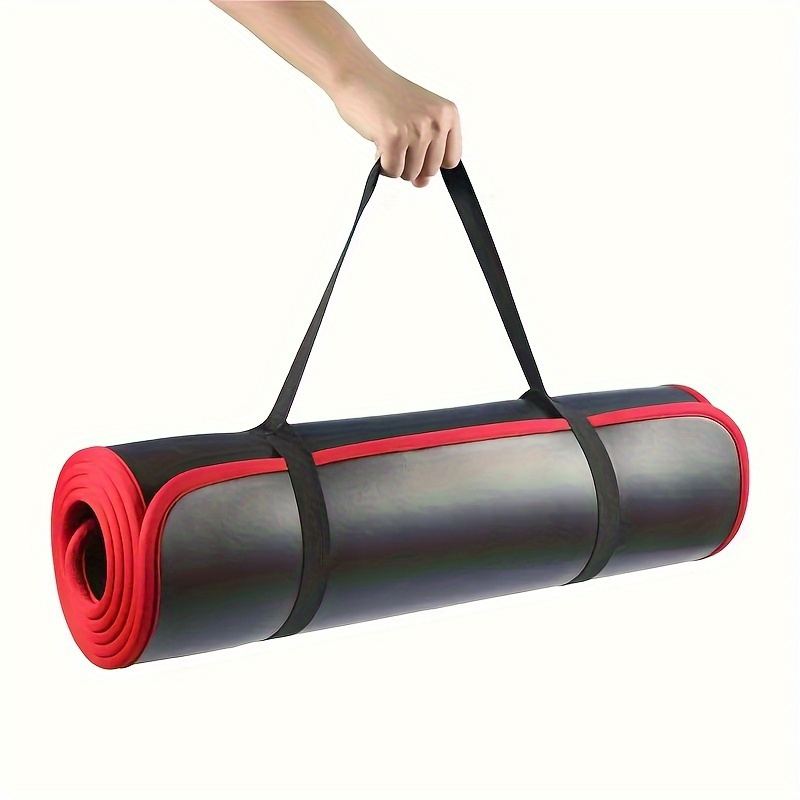
Walk into any fitness store — or scroll any online marketplace — and you will find two products that look almost identical: the "exercise mat" and the "yoga mat." They are both flat rectangles you unroll on the floor. They both come in cheerful colors. And yet they are designed for very different jobs.
Using the wrong one is not dangerous in most cases, but it is uncomfortable in a way that quietly erodes your motivation. A yoga mat under a HIIT session slides around; an exercise mat under a vinyasa flow feels like doing yoga on a mattress. This guide explains exactly how the two differ — thickness, surface, size, and purpose — and how to choose the right one for the workouts you actually do.
This guide contains affiliate links. If you buy through them, VÉLORA may earn a commission at no extra cost to you.
The Short Answer
A yoga mat is thin (typically 4–6mm), grippy, and slightly sticky — designed to hold your hands and feet steady through balance poses, lunges, and downward dogs. An exercise mat (also called a gym or fitness mat) is thick (typically 10–25mm), soft, and cushioned — designed to protect your back, elbows, and tailbone during floor exercises like sit-ups, crunches, and stretching.
One prioritizes grip and stability. The other prioritizes comfort and shock absorption. Everything else follows from that.
Thickness: The Defining Difference
Thickness is the easiest way to tell the two apart, and it drives almost every practical difference.
Yoga mats are usually 4–6mm thick (travel mats can be as thin as 1–3mm). This thinness is deliberate: in yoga, you need to feel the floor beneath you for balance. A thick, squishy surface under a tree pose or warrior III is genuinely destabilizing — your ankle wobbles on the foam instead of rooting into the ground.
Exercise mats start around 10mm and can reach 20–25mm. The extra foam exists to cushion bony contact points. When you are doing sit-ups on a hard floor, your tailbone presses into the surface with every rep; on a thin yoga mat, that becomes painful within a set or two. An extra-thick cushioned mat absorbs that pressure so you can focus on the exercise instead of the floor.
If joint sensitivity is a concern, our guide to the best yoga mat for bad knees goes deeper on how thickness choices affect comfort.
Surface and Grip
The second major difference is the surface texture.
Yoga mats have a grippy, slightly tacky top surface engineered to hold skin in place. Whether the material is PVC, TPE, rubber, or cork (see our yoga mat materials comparison), the design goal is the same: your downward dog should not slide, even as your hands get warm.
Exercise mats prioritize a smooth, wipeable surface. Grip matters less because you are mostly lying, kneeling, or sitting on the mat rather than pushing through your palms and feet in angled positions. Many exercise mats have a slightly slick vinyl-style surface that is easy to clean after sweaty core sessions.
Practical consequence: try a plank on an exercise mat and your forearms may slide; try crunches on a yoga mat and your back will feel every bump of the floor. Match the surface to the movement.
Size and Shape
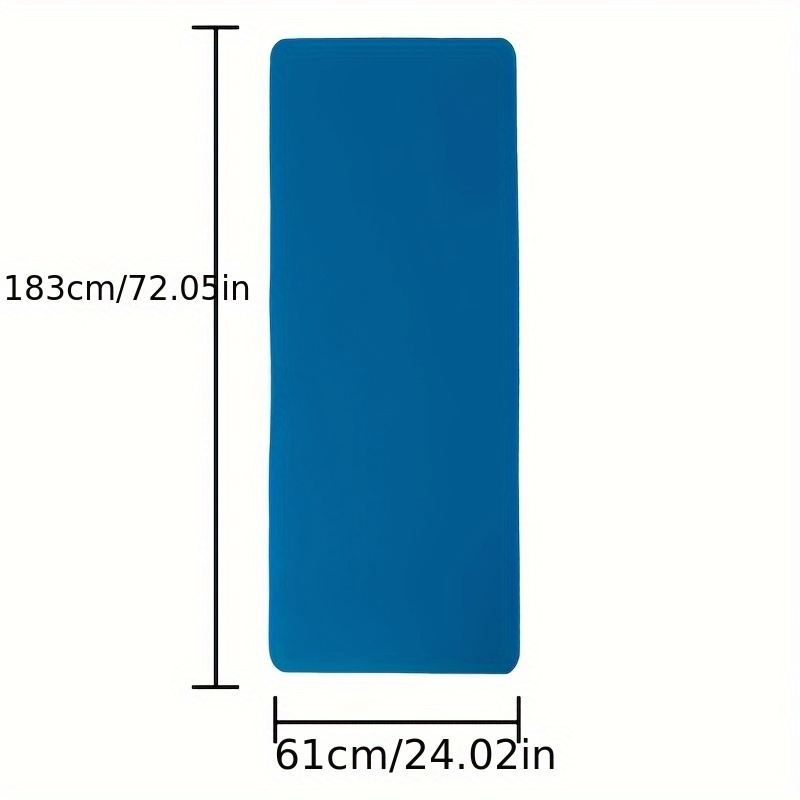
Yoga mats follow a fairly standard format: about 173–183cm long and 61cm wide — sized for a standing human doing sun salutations. Longer and wider "tall" versions exist but the standard is consistent.
Exercise mats vary more. Many are shorter and wider, designed for lying down rather than standing. Some fold up accordion-style for storage; others come as interlocking foam tiles for a home gym floor. If you plan to use one for stretching routines like our full-body stretching routine, make sure it is long enough for you to lie flat.
Weight and Portability
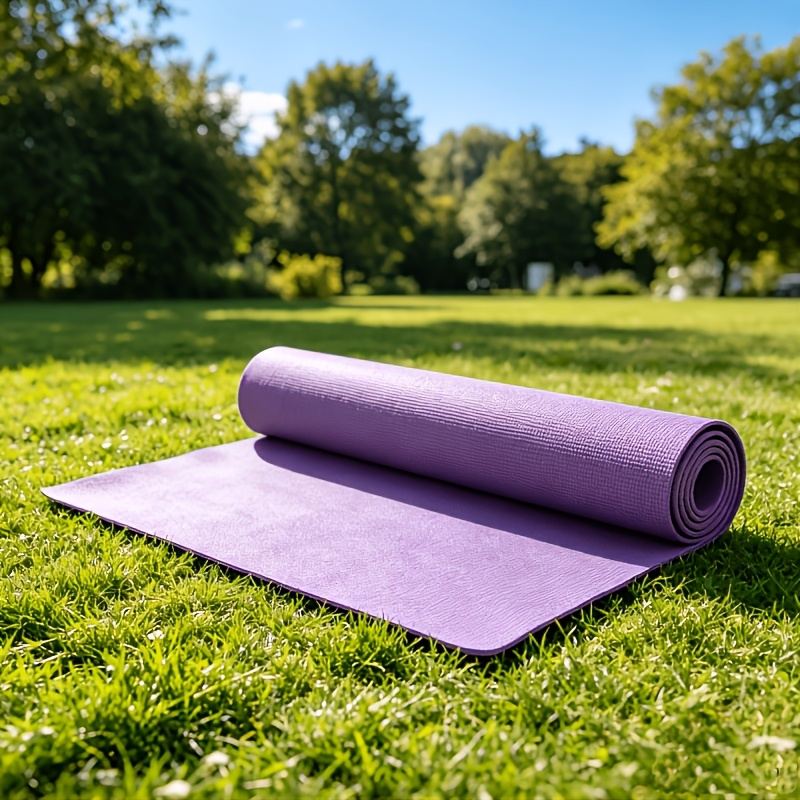
Yoga mats are built to travel: roll it up, sling the strap over your shoulder, walk to class. Most weigh 1–2.5 kg.
Exercise mats are bulkier by nature. A 15mm thick mat does not roll into a neat tube; many fold instead. They are home equipment — excellent in your living room, awkward on the bus. If you need something for the gym bag, a yoga mat (or a thin travel mat) is the portable choice.
What Each One Is Actually For
Choose a yoga mat if you do: yoga of any style, Pilates mat work, stretching, bodyweight mobility flows, or any practice with standing balances, lunges, and poses where grip matters. It is also the better pick for outdoor practice on grass or sand, where you want a stable, grippy layer.
Choose an exercise mat if you do: sit-ups, crunches, and core circuits; glute bridges and hip thrusts; stretching and cool-downs on hard floors; physical-therapy-style floor exercises; or any workout where you spend most of the time lying or kneeling. It is also the kinder choice for beginners doing chair-free floor work while building strength.
The overlap zone: light stretching, cool-downs, and gentle mobility work can be done happily on either. And if you do both yoga and floor workouts, many people simply own one of each — a standard yoga mat for flows and a thick mat for core days.
Side-by-Side Comparison
| Feature | Yoga Mat | Exercise Mat | |---|---|---| | Typical thickness | 4–6mm (thin) | 10–25mm (thick) | | Primary job | Grip and stability | Cushioning and comfort | | Surface | Tacky, textured, non-slip | Smooth, wipeable | | Best for | Yoga, Pilates, balance work | Core work, crunches, stretching | | Standing poses | Stable — you feel the floor | Wobbly — foam shifts underfoot | | Floor exercises | Hard on back and tailbone | Comfortable for long sets | | Portability | Rolls up, travels well | Bulky, mostly a home item | | Typical size | ~183 × 61cm | Varies; often wider/shorter | | Price range | Budget to premium | Usually budget-friendly |
Can You Use One for the Other?
Honestly? In a pinch, yes — with caveats.
Using a yoga mat for core work: fine for short sets. For longer ab sessions on hard floors, fold the mat in half under your tailbone, or place a folded towel under sensitive spots. Many people do exactly this and never buy a second mat.
Using an exercise mat for yoga: workable for gentle, seated, or restorative yoga, but frustrating for standing flows. The soft surface makes balancing noticeably harder, and the slicker top can slip under sweaty hands in downward dog. If you try it, keep the practice slow and skip the fancy balances.
The two-mat solution: if you practice yoga twice a week and do core work twice a week, owning both is genuinely worth it. An 8mm mid-thickness mat can also serve as a compromise for people who want one mat to do a bit of everything — thicker than a standard yoga mat, grippier than a typical exercise mat.
How to Choose: A Simple Decision Path
Step 1 — What do you do most? If your sessions are mostly standing, flowing, and balance-heavy: yoga mat. If they are mostly lying, kneeling, and core-focused: exercise mat.
Step 2 — Where do you practice? Hard tile or wood floors punish thin mats during floor work. Carpet softens everything. If your floor is hard and your workouts are mixed, lean toward the exercise mat or a thicker yoga mat.
Step 3 — How sensitive are your joints? Knee, wrist, or back sensitivity argues for more cushioning — which usually means the exercise mat, or a yoga mat on the thicker end of the range. Our yoga mat thickness guide walks through this in detail.
Step 4 — Do you travel with it? Studio-goers need the rollable yoga mat. Home exercisers can choose whatever is most comfortable.
Caring for Either Mat
Both types last longer with the same basic habits: wipe down after sweaty sessions, roll (don't fold) a yoga mat, keep both out of direct sunlight, and let them air-dry fully before storing. Exercise mats with smooth vinyl-style surfaces are the easiest to clean — usually a damp cloth is all it takes.
FAQs
Is an exercise mat the same as a yoga mat? No. A yoga mat is thin (4–6mm) and grippy, designed for balance poses and flows. An exercise mat is thick (10–25mm) and cushioned, designed for floor exercises like sit-ups and stretching. They look similar but serve different purposes.
Can I do yoga on an exercise mat? Gentle or restorative yoga works fine on an exercise mat. But for standing flows and balances, the thick soft surface feels unstable and the smoother top can slip. A proper yoga mat is noticeably better for dynamic practice.
Can I do sit-ups on a yoga mat? Yes for short sessions, but on a hard floor a thin yoga mat offers little tailbone protection. For regular core work, an exercise mat — or doubling up your yoga mat with a folded towel — is much more comfortable.
Which is better for Pilates at home? Mat Pilates traditionally uses a mat closer to a yoga mat in thickness, because you need stability for roll-ups and teaser balances. But many home practitioners prefer a slightly thicker mat for spine comfort during rolling exercises. An 8–10mm mat is a popular middle ground.
What thickness should a beginner buy? Beginners doing general home workouts usually do best with an exercise mat in the 10–15mm range — comfortable for everything floor-based. Beginners starting yoga specifically should get a standard 4–6mm yoga mat for proper balance and grip.
Do I really need both? Not necessarily. If you only do one type of workout, buy the mat made for it. If you regularly do both yoga and floor-based core work, having both is a genuine quality-of-life upgrade — and both are inexpensive compared to most fitness gear.
Conclusion
The exercise mat vs yoga mat question comes down to one trade-off: grip versus cushioning. Yoga mats grip; exercise mats cushion. Buy the one that matches the workouts you actually do — or buy both if your routine spans both worlds. Either way, the right mat removes a small daily friction from your practice, and removing friction is what keeps a routine alive for months instead of weeks. Browse both styles in VÉLORA's mat collection to find your fit.
