New to training with a bench? These weight bench exercises for beginners cover 8 safe starter moves with form cues, sets and reps ranges, and beginner modifications.
Weight Bench Exercises for Beginners: 8 Starter Moves
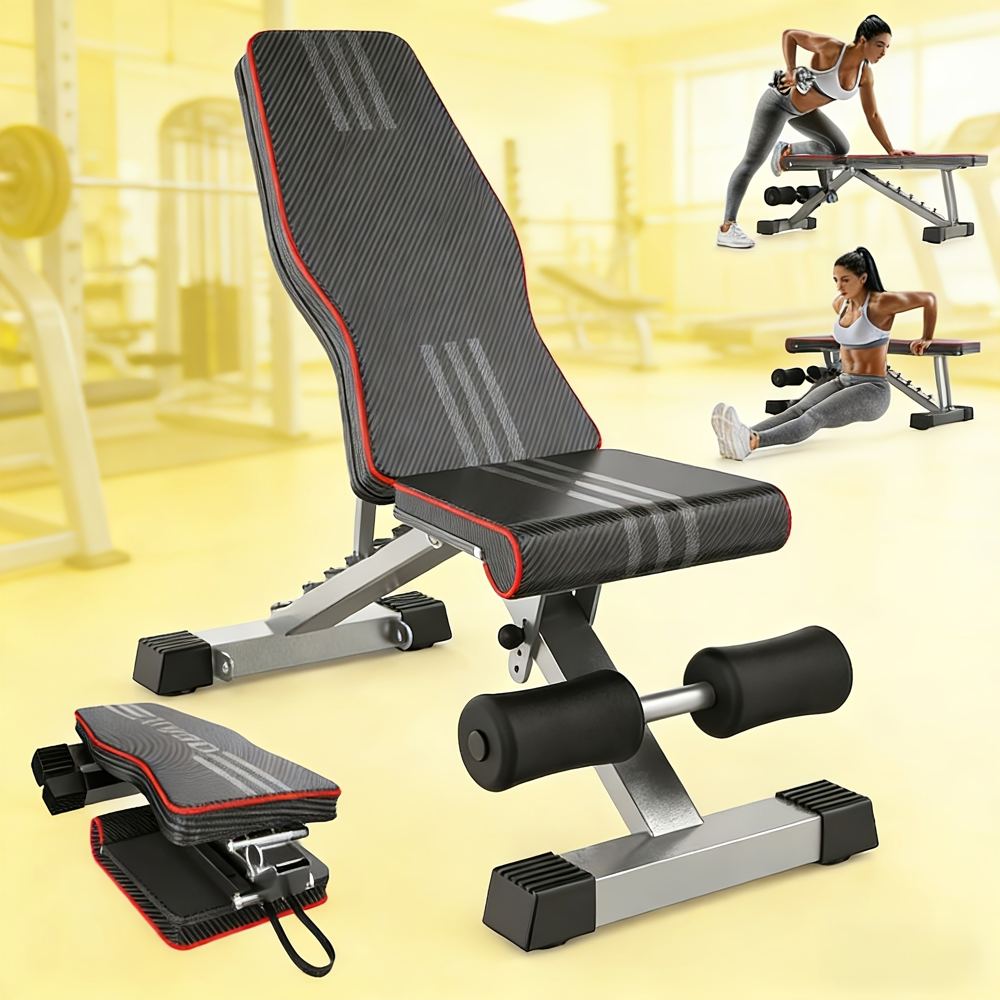
A weight bench is one of the smartest first investments for a home gym — a stable platform where you decide the movement, the weight, and the difficulty. These eight weight bench exercises for beginners cover your whole body: chest, back, shoulders, glutes, and legs. Each one includes setup, technique, breathing, a sensible sets and reps range, a beginner modification, and the mistake to watch for. Results vary, and no single move transforms anything overnight — consistent, careful practice is what builds strength.
This guide contains affiliate links. If you buy through them, VÉLORA may earn a commission at no extra cost to you.
Why Start With a Bench?
A bench gives you support, stability, and options. Sitting or lying down removes balance from the equation, so you can focus entirely on the muscles you are trying to train. A multi-angle bench that adjusts from flat to incline to decline serves chest day, back day, and glute day alike. If you are still shopping, our guide to how to choose an exercise bench covers what to look for.
Before every session: warm up for 5 minutes (marching, arm circles, hip hinges), and start every move with very light weight to rehearse the pattern. Your first rep of the day should never be your heaviest.
The 8 Starter Moves
1. Dumbbell Bench Press (Chest, Shoulders, Triceps)
Purpose: builds a strong, stable pressing foundation — the single most useful upper-body movement you can learn on a bench.
Starting position: lie back on the flat bench with your feet flat on the floor, a dumbbell in each hand resting on your thighs. Kick each knee up to help the weights to your shoulders, then lean back and press them up until your arms are straight but elbows stay soft.
Technique: lower the dumbbells slowly (about 3 seconds down) until your elbows sit just below bench level, then press back up in a slight arc toward the center. Keep your shoulder blades pinched gently together the whole time.
Breathing: inhale on the way down, exhale as you press.
Sets and reps: 2–3 sets of 8–12 reps, resting 60–90 seconds between sets.
Beginner modification: use no weight at all for your first session — press "air" to groove the pattern, then add the lightest dumbbells you have.
Common mistake: bouncing the weights off your chest or flaring elbows straight out to the sides. Keep elbows at roughly 45 degrees from your torso.
2. Incline Dumbbell Press (Upper Chest, Shoulders)
Purpose: trains the upper portion of the chest and front shoulders; the incline angle makes the movement feel more natural for many women who find the flat press awkward on the shoulders.
Starting position: set the bench to one or two notches above flat (roughly 30 degrees). Sit, brace the dumbbells on your thighs, and lean back as before.
Technique: press the weights up over your upper chest, keeping the same controlled lowering as the flat press.
Breathing: inhale down, exhale up.
Sets and reps: 2–3 sets of 8–12 reps.
Beginner modification: keep the bench flat for the first two weeks and add the incline angle once the flat press feels solid.
Common mistake: cranking the bench to 60+ degrees, which turns it into a shoulder press with poor leverage. Stay around 30 degrees.
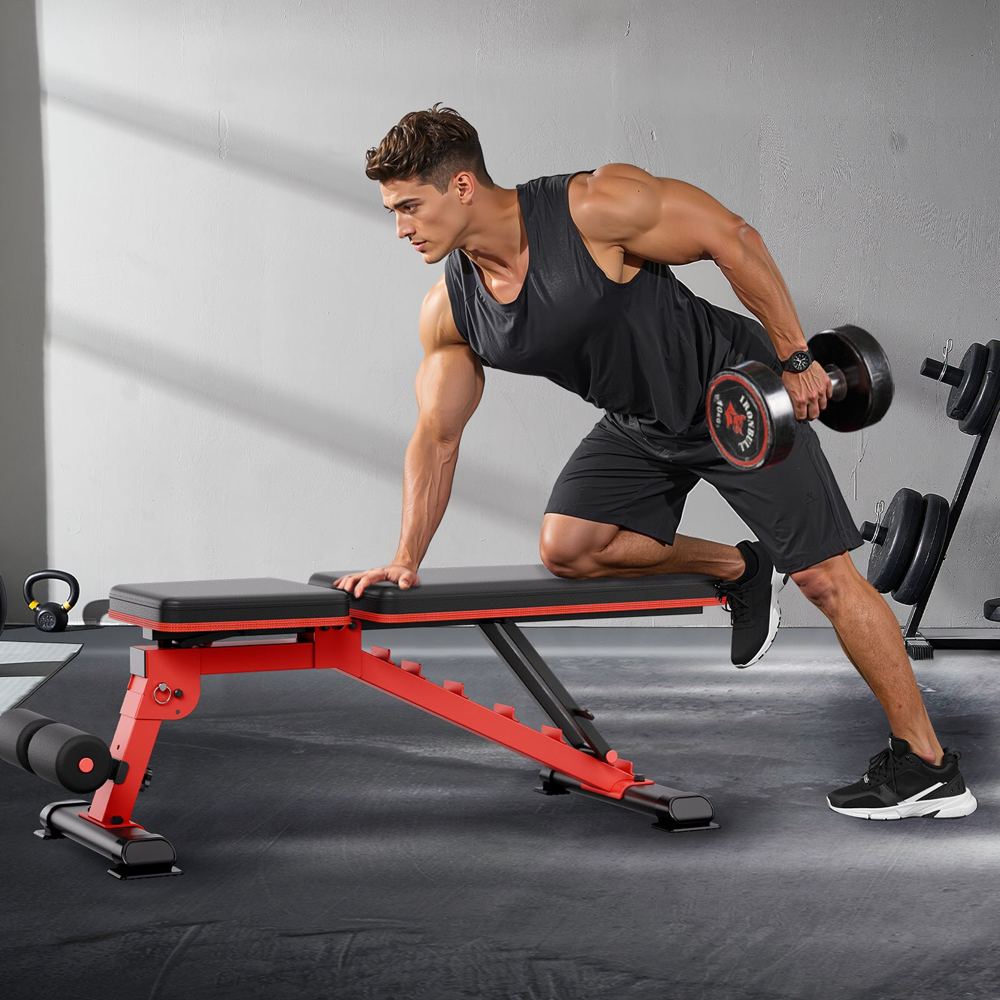
3. Single-Arm Bench Row (Back, Biceps)
Purpose: strengthens the upper back and improves posture — the perfect counterbalance to all the pressing above.
Starting position: place one knee and the same-side hand on the bench, back flat and parallel to the floor, other foot planted on the floor. Hold a dumbbell in the free hand with the arm hanging straight down.
Technique: pull the dumbbell up toward your hip, squeezing your shoulder blade toward your spine at the top. Lower slowly back to a full stretch.
Breathing: exhale as you pull, inhale as you lower.
Sets and reps: 2–3 sets of 10–12 reps per side.
Beginner modification: drop to one set per side for the first week; the row is technically simple but easy to overload early.
Common mistake: rotating the torso to heave the weight up. If your body twists, the weight is too heavy.
4. Seated Dumbbell Shoulder Press (Shoulders, Triceps)
Purpose: builds overhead strength safely — the upright bench supports your back, which is a real advantage over standing for beginners.
Starting position: set the bench near-upright (75–85 degrees). Sit tall with your back against the pad, dumbbells at shoulder height, palms facing forward.
Technique: press straight up until your arms are nearly straight, without shrugging your shoulders toward your ears. Lower slowly to shoulder height.
Breathing: exhale on the press, inhale on the lower.
Sets and reps: 2–3 sets of 8–12 reps.
Beginner modification: press one arm at a time — it is easier on the core and exposes side-to-side imbalances.
Common mistake: arching the lower back off the pad to push the weight up. Brace your core and keep your back in contact with the bench.
5. Bulgarian Split Squat (Glutes, Quads)
Purpose: the best single-leg move you can do with a bench — builds leg strength and balance in a way bilateral squats cannot.
Starting position: stand a long stride in front of the bench, facing away. Rest the top of one foot on the bench behind you, front foot far enough forward that your front knee stays over your ankle when you lower.
Technique: lower straight down until your front thigh is roughly parallel to the floor, keeping your torso tall. Drive up through the front heel.
Breathing: inhale down, exhale up.
Sets and reps: 2–3 sets of 8–10 reps per leg. Start bodyweight only.
Beginner modification: hold the wall or a doorframe lightly for balance until the pattern is steady.
Common mistake: setting the feet too close together, which turns the move into an awkward wobble. Take a bigger step forward.
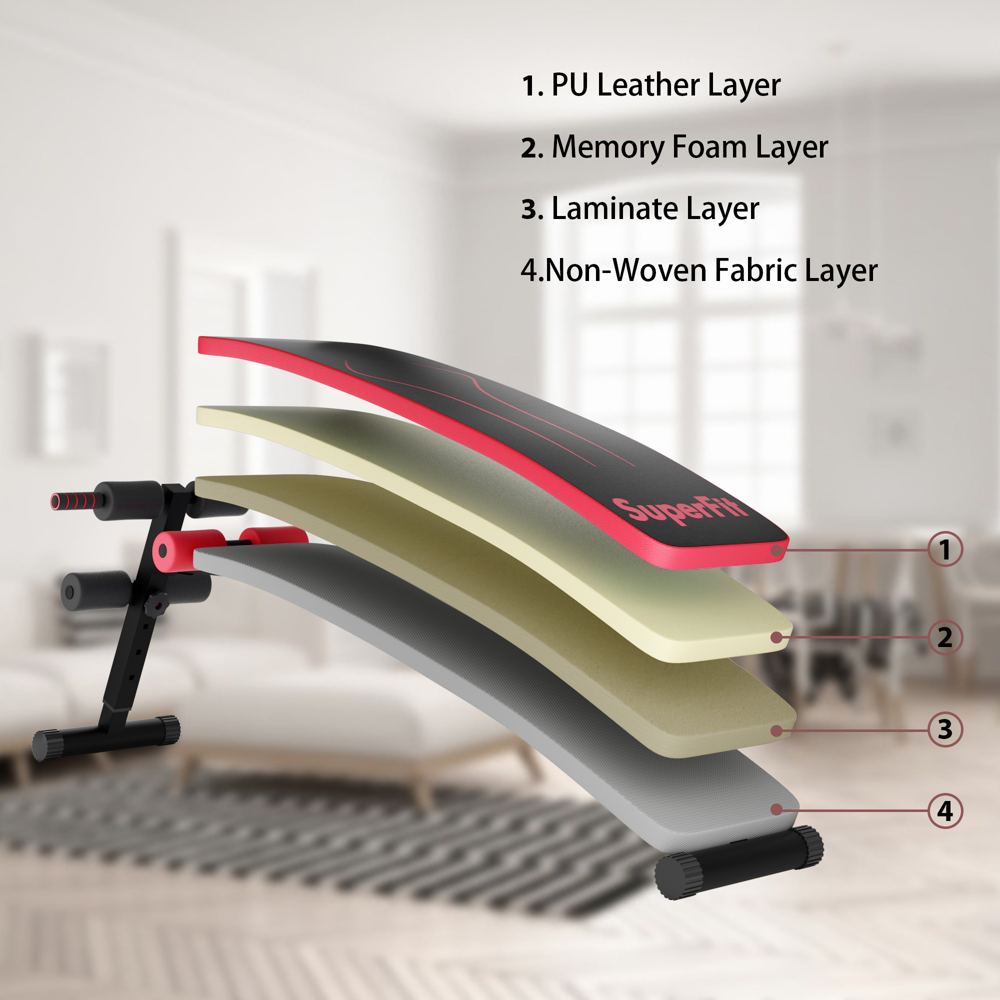
6. Bench Hip Thrust (Glutes)
Purpose: the single best glute builder available to a home trainer, and very joint-friendly.
Starting position: sit on the floor with your upper back against the long edge of the bench, knees bent, feet flat on the floor hip-width apart. (A light dumbbell can rest across your hips once bodyweight feels easy.)
Technique: drive your hips up until your body forms a straight line from shoulders to knees. Squeeze your glutes hard for one second at the top, then lower slowly.
Breathing: exhale at the top squeeze, inhale on the way down.
Sets and reps: 3 sets of 12–15 reps.
Beginner modification: do the glute bridge on the floor (no bench) for the first week.
Common mistake: hyperextending the lower back at the top instead of squeezing the glutes. Ribs down, pelvis tucked slightly.
7. Bench Step-Up (Legs, Cardio)
Purpose: a practical, functional leg move that also raises the heart rate — stairs, hiking, and carrying groceries all get easier.
Starting position: stand facing the bench with your whole foot planted on it, chest up.
Technique: drive through the heel to stand tall on the bench, then lower back down slowly and with control. Do all reps on one leg before switching.
Breathing: exhale as you step up, inhale as you step down.
Sets and reps: 2–3 sets of 10–12 reps per leg.
Beginner modification: use a lower step (a sturdy box or the lowest bench setting) until you can do it without pushing off the floor foot.
Common mistake: launching off the back leg. The working leg should do all the work.
8. Bench Reverse Crunch (Core)
Purpose: trains the deep abdominals without the neck strain that sit-ups cause many beginners.
Starting position: lie back on the bench, grip the bench behind your head, legs bent with feet off the floor.
Technique: curl your hips up off the bench, bringing your knees toward your chest, then lower slowly without letting your feet touch the floor between reps.
Breathing: exhale as you curl up, inhale as you lower.
Sets and reps: 2–3 sets of 10–15 reps.
Beginner modification: keep the range short — small curls are more effective than big swinging ones.
Common mistake: using momentum to swing the legs up. Slow and controlled wins.
Flat vs. Incline vs. Decline: Which Angle When?
| Bench angle | Best for | Beginner friendliness | |---|---|---| | Flat (0°) | Bench press, rows, hip thrusts | Easiest to set up — start here | | Incline (30–45°) | Incline press, seated shoulder press | Very friendly once flat feels solid | | Decline (slight) | Decline press, core work | Optional for beginners — add later |
A bench like the Adjustable Weight Bench locks securely into multiple angles, covering all three positions in one purchase.
A Simple Starter Week
- Day 1: Moves 1, 3, 5 (chest, back, legs)
- Day 2: rest or a gentle walk
- Day 3: Moves 2, 4, 6 (chest, shoulders, glutes)
- Day 4: rest
- Day 5: Moves 7, 8 + your two favorites (legs, core)
Add one rep per set each week, or a small weight increase when the top of your range feels easy. Two to three sessions per week is plenty — muscles adapt during recovery, not during the workout. For a broader program, see our beginner strength training program, and if you want more upper-body ideas, our upper body workout for women pairs well with these moves.
Safety Notes
- Check the bench's adjustment pins lock firmly before lying on it, every session.
- Keep feet flat and planted during presses; never press with feet dangling.
- Stop any exercise that causes sharp or joint pain — dull muscle effort is normal, pain is not. If pain persists, see a professional before continuing.
- Train near a wall or rack if you ever press alone with meaningful weight.
Frequently Asked Questions
How heavy should my dumbbells be as a beginner? Lighter than you think. Most women start comfortably with 3–8 lb (1.5–4 kg) dumbbells for upper-body moves and can go heavier on leg moves. You should be able to finish every rep in your range with good form — form first, weight later.
Do I need a spotter for bench exercises at home? For the starter weights in this guide, no. Use dumbbells (which you can drop safely to the sides) rather than a barbell, and keep the weight modest. A spotter becomes advisable once you are pressing heavy barbells.
How long until I see results? Results vary with consistency, nutrition, sleep, and where you start. Most beginners notice strength gains within a few weeks of regular training; visible body-composition changes typically take longer. Focus on the strength trend — it is the most reliable early signal.
Can I do these moves if I have a bad back? The supported moves here are often well tolerated, but back issues vary enormously — clear it with your doctor or physiotherapist first, start light, and stop if anything hurts.
Is a flat bench enough, or do I need adjustable? A flat bench handles six of the eight moves perfectly well. The adjustable angles add the incline press and seated shoulder press variants — nice to have, and worth it if you can afford the upgrade, since it future-proofs your setup.
Conclusion
A bench and a pair of dumbbells can carry your training for years. Start with these eight moves, own the technique, and add weight patiently — strength built slowly is strength that stays. And remember: the best workout program is the one you actually repeat, week after week. Keep it simple, keep showing up, and the results will follow in their own time.
