A complete upper body workout for women covering arms, shoulders, chest and back — with clear form cues, sets and reps, and beginner-friendly options.
Upper-Body Workout for Women: Arms, Shoulders and Back
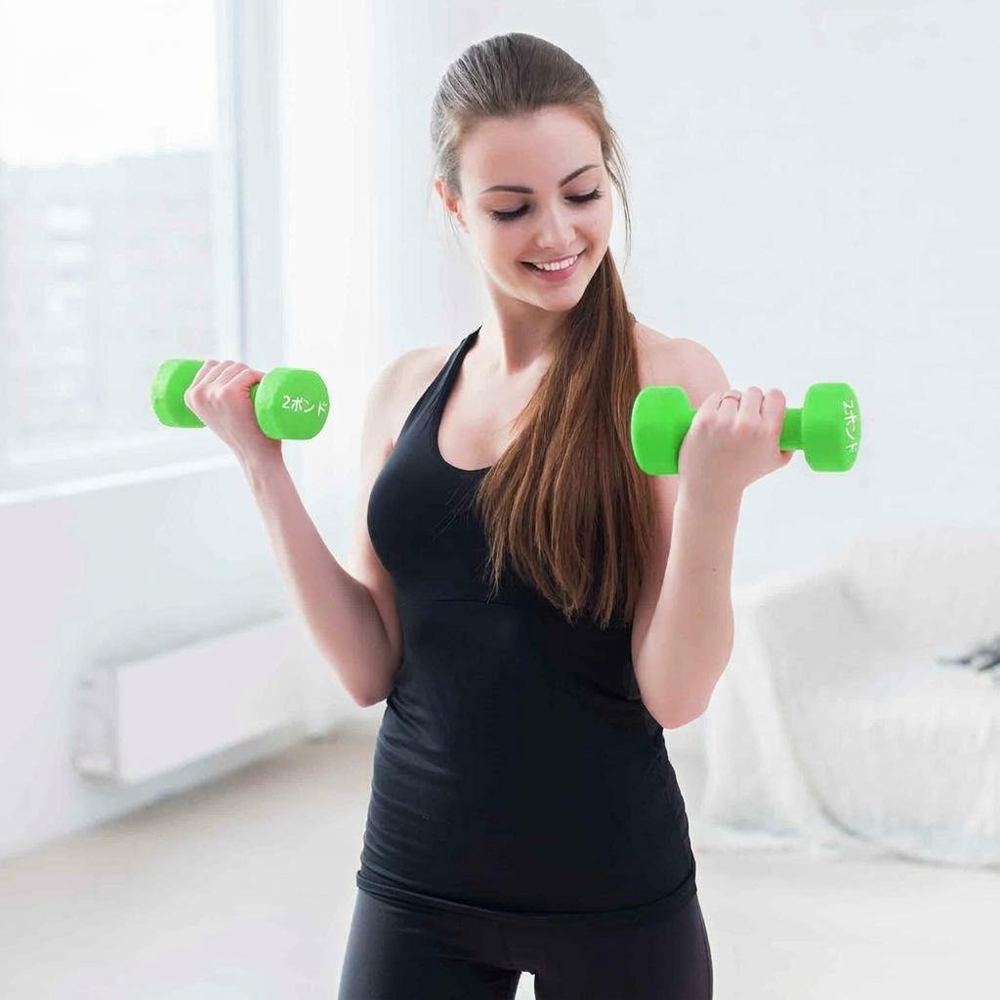
Strong arms, shoulders, and back are not about looking a certain way in a tank top — although that can be a nice side effect. They are about carrying groceries without a second trip, lifting a suitcase into an overhead bin without help, and sitting at a desk without your shoulders creeping toward your ears. If you have never trained your upper body, or have only ever done cardio, this workout was built for you.
This guide gives you one complete upper body workout for women covering the chest, back, shoulders, biceps, and triceps. Each exercise includes its purpose, equipment, starting position, technique, breathing, and sensible sets and reps — plus beginner modifications and the mistakes that cause aches instead of progress.
This guide contains affiliate links. If you buy through them, VÉLORA may earn a commission at no extra cost to you.
What You Need
You do not need a gym membership or a wall of equipment. For this workout, gather:
- One or two pairs of dumbbells. A light pair (around 3–8 lbs) for shoulder and arm work, and a moderate pair (around 10–20 lbs) for rows and presses. If you are not sure what to buy, our Best Dumbbells for Women guide walks through the options honestly.
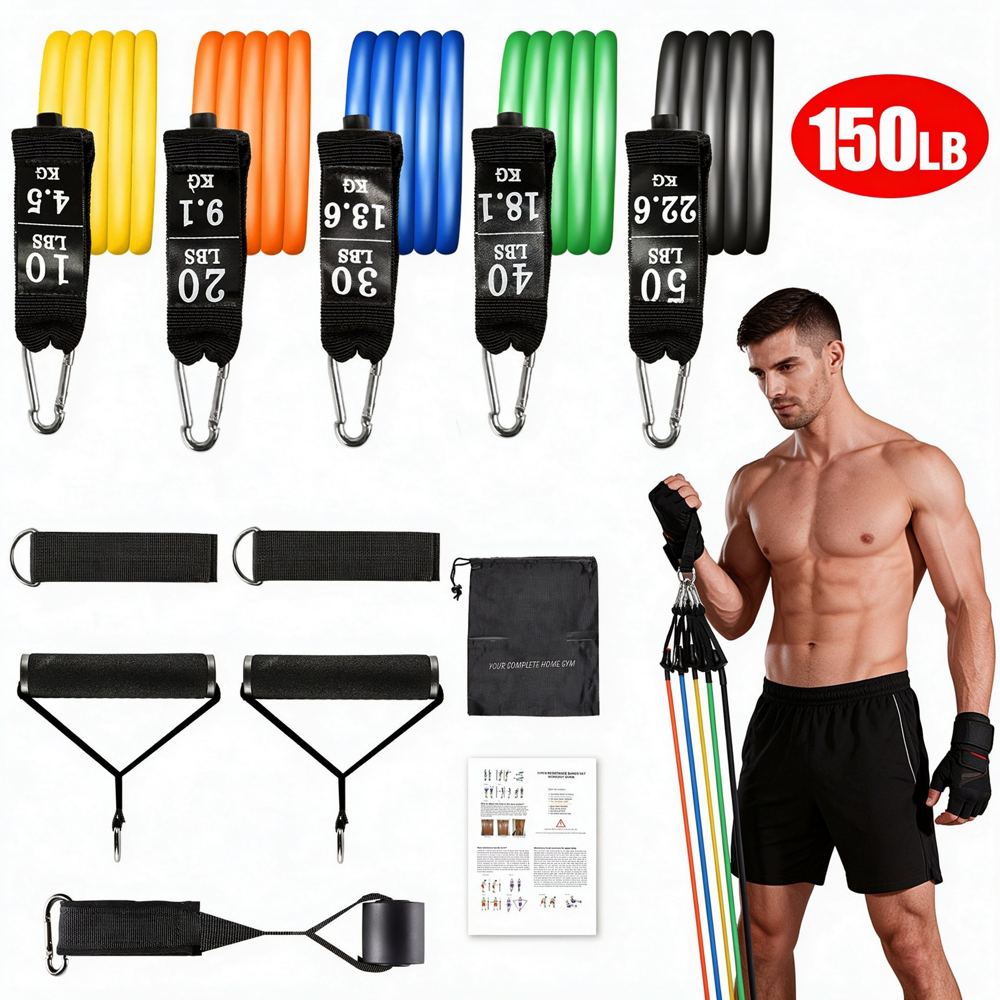
- A resistance band with handles (optional, but excellent for rows if your dumbbells are light).
- A mat or carpeted floor space. A sturdy chair works for support on rows.
A light multi-pair set like the 3 Pair PVC Dumbbell Set with Case covers most beginners well, because upper-body muscles differ a lot in strength — your back can handle far more than your side delts can, and having three sizes means every exercise gets the right challenge.
Warm-Up (5 Minutes)
Never skip straight to weights with cold shoulders. Spend five minutes on:
- Arm circles — 30 seconds each direction, starting small and growing larger.
- Band pull-aparts or wall slides — 10–12 slow reps to wake up the upper back.
- Shoulder rolls and neck turns — 30 seconds, gentle.
- One light rehearsal set of your first exercise, at half weight or less, to groove the movement.
The Workout
Do the exercises in order. Rest 60–90 seconds between sets, and 2 minutes between exercises if you need it. The full session takes roughly 35–45 minutes.
1. Dumbbell Floor Press — Chest, Shoulders, Triceps
Purpose: Builds pressing strength through the chest and the front of the shoulders. The floor limits the range of motion slightly, which makes it friendlier for beginners and sensitive shoulders than a bench press.
Starting position: Lie on your back, knees bent, feet flat. Hold a dumbbell in each hand at chest height, upper arms resting on the floor, elbows bent at about 45 degrees from your body — not flared straight out to the sides.
Technique: Exhale and press the weights up until your arms are straight above your chest, keeping a soft bend in the elbows at the top. Inhale as you lower them slowly until your upper arms touch the floor again. That touch is your cue to press again — no bouncing.
Sets and reps: 3 sets of 8–12 reps.
Beginner modification: Use one dumbbell held with both hands, or press one arm at a time while the other rests.
Common mistakes: Letting the weights drift out wide, slamming the elbows into the floor, and holding your breath.
2. One-Arm Dumbbell Row — Back and Biceps
Purpose: The single best dumbbell exercise for your back. Rows build the muscles that support posture and counteract hours of sitting, and they train one side at a time so your stronger side cannot do all the work.
Starting position: Stand beside a sturdy chair, bench, or sofa. Place your left knee and left hand on it, right foot on the floor, back flat and roughly parallel to the ground. Hold a dumbbell in your right hand, arm hanging straight down.
Technique: Exhale and pull the weight up toward your hip, driving your elbow toward the ceiling and squeezing your shoulder blade into your spine. Your torso should not twist. Inhale and lower the weight slowly until your arm is straight. Do all reps on one side, then switch.
Sets and reps: 3 sets of 8–12 reps per side.
Beginner modification: Do both-arms bent-over rows with lighter weights, hinging at the hips with a flat back, or use a band: the 11-Piece Resistance Bands Set with Handles and Door Anchor lets you anchor a band at chest height and row standing up.
Common mistakes: Rounding the lower back, yanking the weight with momentum, and shrugging the shoulder toward the ear. Think "elbow to back pocket," not "hand to armpit."
3. Seated or Standing Shoulder Press — Shoulders and Triceps
Purpose: Pressing overhead builds the deltoids — the cap of muscle that gives shoulders their shape — and teaches your whole body to brace and stabilize.
Starting position: Sit tall on a chair (back support is fine for beginners) or stand with feet hip-width apart and stomach braced. Hold dumbbells at shoulder height, palms facing forward or facing each other if your shoulders prefer it.
Technique: Exhale and press the weights overhead until your arms are nearly straight, without letting them drift far in front of or behind your head. Inhale and lower slowly back to shoulder height.
Sets and reps: 3 sets of 8–12 reps.
Beginner modification: Press one arm at a time, or use noticeably lighter weights — shoulders fatigue fast, and small weights are correct weights here.
Common mistakes: Arching the lower back to push the weight up (brace your stomach, squeeze your glutes), and lowering too fast. If you feel a pinch in the front of your shoulder, switch to a palms-facing-each-other grip.
4. Bicep Curl — Front of the Arms
Purpose: Curls train the biceps, the muscles that help you lift, carry, and hold anything in front of you.
Starting position: Stand tall, dumbbells at your sides, palms facing forward, elbows tucked close to your ribs.
Technique: Exhale and curl the weights toward your shoulders, keeping your elbows still — only your forearms move. Squeeze briefly at the top, then inhale and lower slowly, taking about two seconds down. That slow lowering is where much of the benefit lives.
Sets and reps: 2–3 sets of 10–15 reps.
Beginner modification: Alternate arms, one at a time, which gives each arm a mini-rest.
Common mistakes: Swinging from the hips, letting the elbows drift forward, and dropping the weights quickly at the end of each rep.
5. Overhead Triceps Extension — Back of the Arms
Purpose: The triceps make up roughly two-thirds of your upper arm, so if firmer arms are a goal, this muscle matters more than the biceps do. The overhead position also gently challenges shoulder mobility.
Starting position: Stand or sit tall. Hold one dumbbell with both hands above your head, arms straight but not locked, elbows pointing forward and close to your head.
Technique: Inhale and bend your elbows to lower the weight behind your head, keeping your upper arms as still as possible. Exhale and straighten your arms to press it back up.
Sets and reps: 2–3 sets of 10–15 reps.
Beginner modification: Use a lighter weight, or do kickbacks instead: hinge forward slightly with a flat back and extend the forearms straight behind you.
Common mistakes: Letting the elbows flare wide, arching the back, and rushing. If your shoulders cannot comfortably reach this position yet, kickbacks are a perfectly good substitute — consistency beats any single exercise.
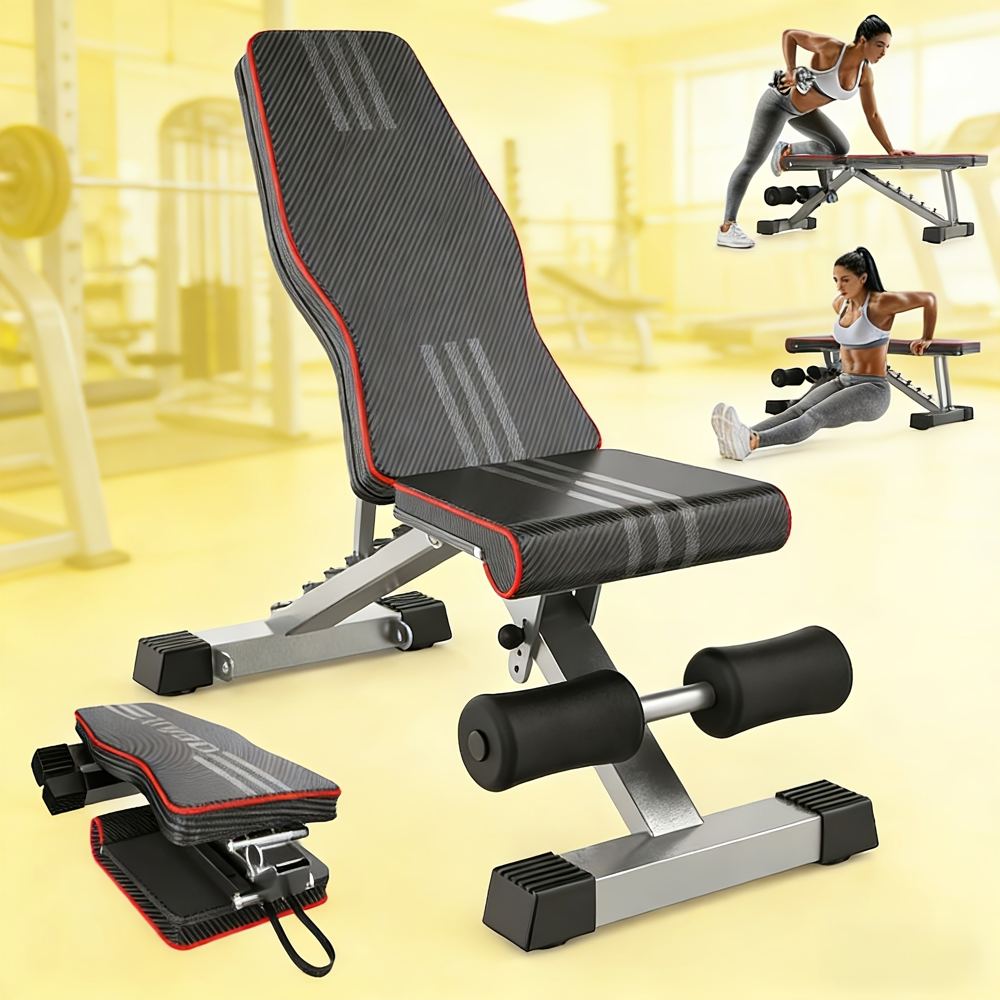
If you train at home regularly, a bench like the Adjustable Weight Bench makes rows, seated presses, and extensions feel steadier — but it is an upgrade, not a requirement.
Putting It Together: Your Session at a Glance
| Exercise | Muscles | Sets × Reps | Rest | |---|---|---|---| | Dumbbell floor press | Chest, shoulders, triceps | 3 × 8–12 | 60–90 sec | | One-arm dumbbell row | Back, biceps | 3 × 8–12 per side | 60–90 sec | | Shoulder press | Shoulders, triceps | 3 × 8–12 | 60–90 sec | | Bicep curl | Biceps | 2–3 × 10–15 | 45–60 sec | | Overhead triceps extension | Triceps | 2–3 × 10–15 | 45–60 sec |
How heavy should the weights feel? Choose a weight where the last two reps of each set feel genuinely challenging while your form stays clean — you could manage one or two more reps, but not five. If you finish a set feeling like you could have done ten more, go heavier next time. If your form breaks down halfway through, go lighter. Both adjustments are normal; neither is a failure.
How Often Should You Do This Workout?
Once or twice a week is a strong start. Muscles need roughly 48 hours to recover between sessions, so if you train upper body on Monday, wait until Wednesday or Thursday to repeat it. As the weights feel easier over several weeks, first add a rep or two, then move up to the next dumbbell size — small, steady steps are how strength builds. When fixed pairs start to feel limiting, an adjustable option like the Adjustable Dumbbell with Wear Resistant Grips grows with you in one compact unit; our guide to Are Adjustable Dumbbells Worth It? can help you decide.
Safety Notes
- Some muscle soreness one to two days after a new workout is normal. Sharp or joint pain, or pain that changes how you move, is not — stop and reassess.
- Keep your wrists straight and in line with your forearms on presses and curls.
- If you are pregnant, postpartum, managing a shoulder or neck condition, or returning after an injury, check in with your doctor or physiotherapist before starting — modifications exist for almost everything.
- Results vary from person to person and come from consistent training over weeks and months, alongside sleep and overall activity — not from any single workout.
FAQ
Q: How long until I see results from upper-body training?
Most beginners notice they feel stronger — weights that felt heavy start to feel manageable — within the first few weeks. Visible changes in muscle tone develop more gradually over consistent months, and the pace differs for everyone. Feeling stronger is the first result; trust it.
Q: Will this workout make my arms bulky?
No. Building noticeably large muscles requires years of dedicated, heavy, high-volume training plus a deliberate muscle-building nutrition plan. Training like this typically produces firmer, more defined arms and a stronger back and shoulders — the outcome most women describe as "toned" — because women build muscle more gradually than men on average.
Q: I can only do push-ups from my knees. Is that okay?
Completely. A knee push-up with good form trains the same muscles as a full push-up at a load your body can currently handle. As you get stronger, progress to an incline (hands on a chair or counter), then to the floor. Meeting yourself where you are is how progress happens, not a shortcut.
Q: What if one arm is much weaker than the other?
That is very common, especially on rows and presses. Start each set with your weaker side, match its reps on the stronger side (even if the stronger side could do more), and the gap will narrow over time. Single-arm exercises like the one-arm row are ideal for this.
Q: Can I do this workout with only resistance bands?
Yes, mostly. Rows, presses (anchored under your feet or a door), curls, and extensions all adapt well to bands. You will miss the floor press, but a standing band chest press covers similar ground. Bands are also a kind, joint-friendly starting point if dumbbells feel intimidating.
The Bottom Line
A good upper-body workout does not need to be complicated or exhausting. Five well-chosen exercises, done with care once or twice a week, will strengthen your arms, shoulders, chest, and back, support your posture, and make everyday lifting feel easier. Start light, learn the movements slowly, add weight in small steps, and let consistency do the quiet work.
