How to choose an exercise bench: flat vs adjustable, weight capacity, padding, stability and storage — a practical buying guide with honest picks for home gyms.
How to Choose an Exercise Bench for Home Training
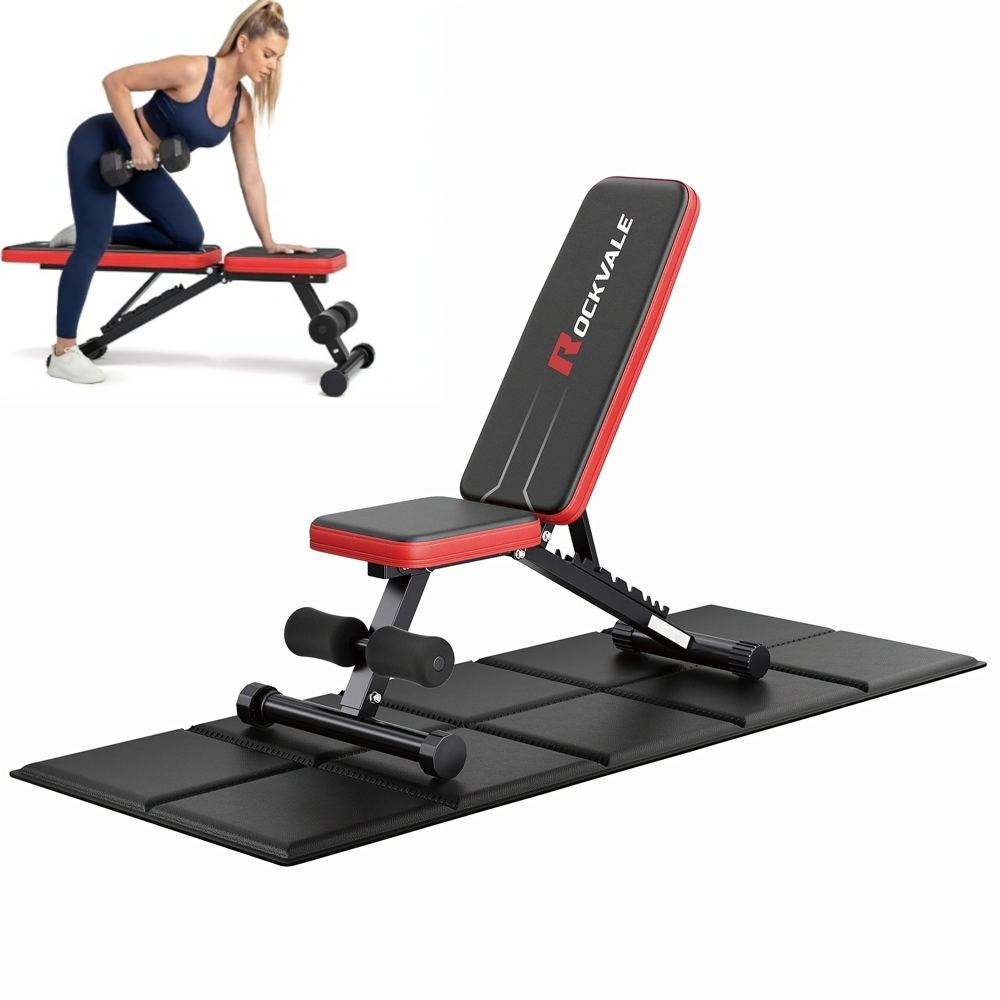
A weight bench looks like the simplest thing in a home gym — a padded plank on legs — yet it quietly determines which exercises you can do safely. The right bench opens up presses, rows, step-ups, hip thrusts, and dozens of core movements; the wrong one wobbles under load, sits too high for your feet to reach the floor, or folds itself into a corner you cannot use. Buying well is mostly about knowing which details matter and which are marketing.
This guide covers flat versus adjustable benches, how to read weight capacity honestly, pad width and height, stability cues, the gap problem, storage, and three honest picks for home gyms.
This guide contains affiliate links. If you buy through them, VÉLORA may earn a commission at no extra cost to you.
Flat vs Adjustable: The First Decision
Flat benches do one thing: provide a stable, level surface. They are the cheapest, the most stable per pound, the lightest to move, and essentially indestructible. If your training is mostly dumbbell presses, rows, step-ups, hip thrusts, and core work, a flat bench is all you need — and it will outlast fancier options.
Adjustable benches change angle: flat, incline (typically 15–85°), and often decline. This unlocks incline presses, incline rows, supported curls, and angled core work — a meaningfully bigger exercise menu. Adjustable benches come in two flavours:
- FIB (flat/incline): adjusts from flat to upright. Covers almost everything most home trainers do.
- FID (flat/incline/decline): adds decline positions. Nice for decline presses and some core work, but the decline mechanism adds cost, weight, and a potential wobble point. Worth it only if you will genuinely use decline.
The honest rule: buy adjustable if you will use incline regularly (most people training chest and shoulders will); buy flat if your program is rows, presses on the floor, step-ups, and hip thrusts — and spend the savings on dumbbells. A wobbly adjustable bench is worse than a solid flat one at every angle.
Weight Capacity: Read It Like an Engineer
A bench rated for 600+ lb sounds like overkill until you do the arithmetic: capacity must cover your body weight plus whatever you are lifting. A 180 lb person pressing a pair of 50 lb dumbbells is loading 280 lb through the bench — before counting the dynamic force of setting weights down. Add a safety margin on top.
For most home trainers, a bench rated 500–700 lb covers years of progression. Ratings below 400 lb are fine for light bodyweight and core work but will limit you as dumbbells get heavier. Treat the rating as a ceiling, not a target: a bench used near its limit flexes, and flex under load is how wobbles and failures start.
The adjustable weight bench with 9 backpad settings and 660 lb capacity sits squarely in the sensible zone — its 660 lb rating covers a wide range of body weights plus serious dumbbell loads, and nine back-pad positions give genuine angle choice rather than three token notches.
Pad Width, Height and Comfort
Pad height: the standard bench top sits 17–18 inches off the floor. This matters more than it sounds: with feet flat on the floor you can brace properly for presses, and the height works for step-ups and seated work. Taller benches leave shorter users' feet dangling (killing leg drive and stability); shorter benches feel cramped for taller users. If you are well outside average height, check the spec — it is usually listed.
Pad width: around 10–12 inches is the comfortable standard. Narrower pads (under 9 inches) let your shoulder blades move freely for pressing but feel tippy; wider pads feel stable but can restrict shoulder movement. For most women and average-framed men, 10–11 inches is the sweet spot.
Padding: firm is better than soft. A pad that compresses deeply under you creates an unstable, hammock-like surface — your shoulders sink and pressing becomes wobbly. You want dense foam with a grippy, sweat-resistant cover. Vinyl or leather-like upholstery wipes clean and lasts; fabric covers absorb sweat and wear faster.
Stability: What to Look For (and the Red Flags)
A bench should feel like furniture, not a seesaw. Check these before you buy:
| Feature | What to look for | Red flag | | --- | --- | --- | | Weight capacity | 500–700 lb for progressive dumbbell training | Under 400 lb if you plan to lift seriously | | Frame | Triangular or wide rectangular footprint; thick steel tubing | Narrow single-post base; thin, light tubing | | Feet | Wide-set, rubber-capped, non-slip | Small hard feet that slide on smooth floors | | Pad height | 17–18 in standard; feet flat on floor | Over 19 in (feet dangle) or under 16 in for tall users | | Pad width | 10–12 in; firm, dense foam | Soft, deeply compressing foam; under 9 in unless you press competitively | | Adjustment mechanism | Ladder-style or pop-pin with positive locking; no play at angle | Wobble or rattle when locked; vague "friction" adjustments | | Seat-to-back gap | Small gap or a seat that moves with the back pad | A wide gap that your lower back falls into on incline | | Storage | Folds upright or flat; manageable weight | "Foldable" but still 40+ lb and awkward |
The gap between seat and back pad deserves special attention on adjustable benches: on incline settings, a wide gap leaves your lower back unsupported exactly where the load is heaviest. Better designs minimise the gap or slide the seat forward as the back rises. It is a small detail that matters every single incline session.
Storage: The Apartment Question
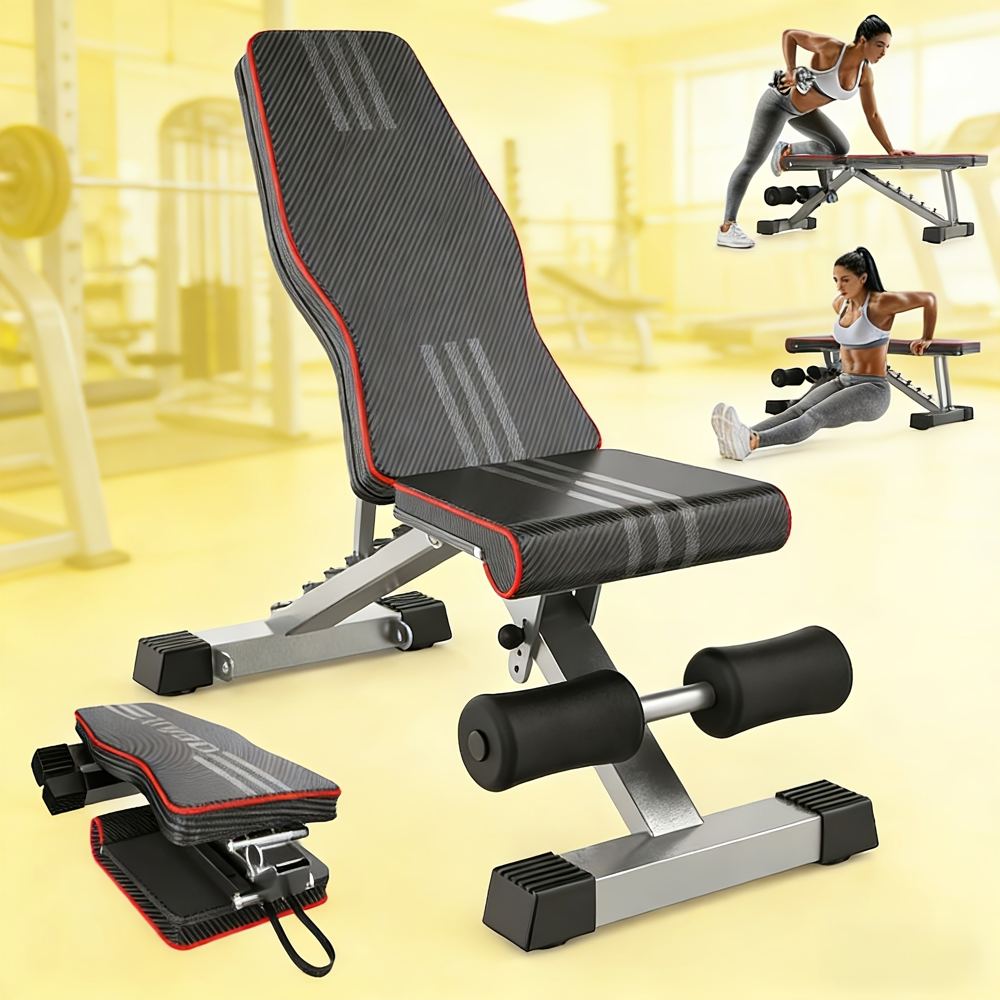
Benches are not small, and an adjustable bench can weigh 25–40 lb. If space is tight, look for genuinely foldable designs — flat-folding for sliding under a bed or upright-folding for a closet corner. The foldable multi-angle adjustable weight bench rated 660 lb is built around this idea: full adjustability and a serious weight rating in a frame that folds away when the living room needs to be a living room again.
Be honest about your routine, though: a bench you must unfold, carry, and set up before every session gets used less than one that lives ready in a corner. If you train most days, a permanent spot — even a small one — beats the tidiest folding design. Our home gym equipment under $100 guide helps prioritise when space and budget are both tight.
Three Honest Picks
Best all-rounder: the adjustable weight bench with 9 backpad settings and 660 lb capacity — nine angles, a 660 lb rating, and a proper adjustable frame. This is the bench for someone building a real dumbbell program: incline pressing, rows, and years of progression headroom.
Best for small spaces: the foldable multi-angle adjustable weight bench, 660 lb rated — same serious capacity in a frame designed to fold away. Ideal for apartments where the workout area doubles as living space.
Best value with extras: the VEVOR adjustable foldable weight bench with sit-up bench — adjustable, foldable, and configured for sit-up and core work too. A sensible choice if core training is a big part of your program and you want one bench to cover pressing and abs.
Whichever you choose, pair it with a program that uses it properly — our beginner strength training program shows how a bench fits into full sessions — and check the home gym vs gym membership cost breakdown to see how a bench plus dumbbells compares with a year of dues.
Using Your Bench Safely
Set up on level ground. Even a great bench wobbles on uneven flooring; a mat underneath protects floors and adds grip.
Lock before you load. On adjustable benches, confirm the pin or ladder is fully engaged at your chosen angle before you sit down with weight. Give the back pad a firm shake — any play means re-seat the mechanism.
Feet planted. For pressing, keep both feet flat on the floor, shoulder-width apart, driving lightly through your heels. If your feet cannot reach, the bench is too tall for you — use a lower surface or place plates under your feet.
Dumbbell handling. Lift dumbbells from the floor or a rack, not by twisting off the bench; set them down with control rather than dropping them onto the pad. Dropping damages padding and frames over time — and floors.
Spotter logic. Training alone? Keep presses submaximal, learn the "roll of shame" escape or press inside a rack, and never bench a weight you cannot safely lower to your chest and return to the floor. Benches are safe; egos are the hazard.
Maintenance. Wipe the pad after sweaty sessions, check bolts and the adjustment mechanism monthly, and retire a bench that develops structural wobble — a loose frame under load is not a repair project for most people.
FAQ
Q: Do I need an adjustable bench, or is flat enough?
It depends on your exercises. Flat covers dumbbell bench press, rows, step-ups, hip thrusts, and core work — plenty for many programs. Adjustable adds incline pressing and angled rows, which matter if you train chest and shoulders seriously. If in doubt, adjustable covers both; if budget is tight, a solid flat bench plus heavier dumbbells beats a wobbly adjustable one.
Q: What weight capacity do I actually need?
Add your body weight to the heaviest dumbbells you will use, then add margin. Most home trainers land comfortably under a 500–700 lb rating. Below 400 lb is fine for light and bodyweight work but limits progression. When in doubt, buy more capacity than you think you need — benches last a decade.
Q: Why does bench height matter?
Because your feet must reach the floor flat for stable pressing. The 17–18 inch standard suits most adults. Too tall and you lose leg drive and balance; too short and taller users feel folded up. It is a fit question, not a quality ranking.
Q: Is a folding bench less stable?
Not necessarily. Stability comes from the frame design and locking mechanism, not from whether it folds. A well-built folding bench locks rigid; a cheap non-folding bench can still wobble. Judge the specific bench — footprint, feet, and lock quality — not the category.
Q: Can I do a full workout with just a bench and dumbbells?
Yes — presses (flat and incline), rows, step-ups, Bulgarian split squats, hip thrusts, pullovers, and a full menu of core work. A bench plus an adjustable dumbbell set is one of the highest-value home gym combinations there is.
Q: How do I stop my bench sliding on a smooth floor?
Rubber-capped feet help, but the reliable fix is a mat or rug underneath — it protects the floor and adds friction. If a bench still walks during step-ups, the floor is too slick or the feet are worn; address the floor rather than fighting the bench.
Conclusion
Choosing an exercise bench is a short checklist, not a research project: adjustable if you will use incline, flat if you will not; capacity that covers your body plus your dumbbells with margin; 17–18 inch height, 10–12 inch firm pad; a wide, rubber-footed frame with a positive-locking mechanism; a small seat-to-back gap; and folding only if your space demands it. Get those right and the bench disappears into your training — which is exactly what good equipment should do. Start with a sensible pick from the three above, learn the basic movements with light weights first, and let the bench earn its place one consistent session at a time.
