Home gym vs gym membership cost, worked out honestly — what a membership really costs per year, what a starter home gym costs, and when each one wins.
Home Gym vs Gym Membership Cost: The Honest Maths
The home gym vs gym membership cost debate usually gets argued by people selling one or the other. Gyms show you gleaming rows of machines; equipment brands show you a smiling woman mid-workout in a sunlit loft. Here's the thing: both can be the right answer, and the honest deciding factor isn't really the sticker price — it's cost per workout you'll actually do. A $40-a-month membership you use twice is terribly expensive. A $200 home gym you use four times a week is almost free. Let's do the real maths, then talk about who should still choose the gym anyway.
This guide contains affiliate links. If you buy through them, VÉLORA may earn a commission at no extra cost to you.
What a Gym Membership Actually Costs
The advertised rate is not the real rate. A typical mid-range gym membership runs $30–60 per month, which is $360–720 per year — before the extras most contracts quietly include:
- Joining and annual fees: commonly $30–100 in the first year, sometimes repeated annually.
- Travel: even a 10-minute drive each way adds fuel or fares, plus 20 minutes of your life per session. At three sessions a week, that's roughly 50 hours a year spent commuting to exercise.
- The classes upsell, the smoothie bar, the "premium" tier — optional, but they exist because people buy them.
- The freeze/cancellation dance: life gets busy, you stop going, but the direct debit carries on. Industry surveys have repeatedly found that a large share of members barely attend after the first months. A membership you don't use costs exactly the same as one you do.
Run the per-workout maths: $50/month, training 12 times a month, is about $4 per workout — genuinely good value. The same $50/month training twice a month is $25 per workout, which is boutique-class money for a treadmill you didn't enjoy.
What a Starter Home Gym Actually Costs
Now the other side, priced from real products rather than a fantasy setup. A starter home gym that covers strength, conditioning and floor work does not need to cost $1,000. Here's a complete kit under $200, built from items in our catalog:
- 8mm Yoga Mat — $12.39. Your floor protection and your base for everything from stretching to core work. View on VÉLORA
- Pilates Bar Kit with Resistance Bands — $10.78. A bar plus bands that mimics a Pilates reformer and covers rows, presses, squats and glute work for the price of a pizza. View on VÉLORA
- Adjustable Dumbbell with Wear Resistant Grips — $67.60. The strength backbone: multiple weights in one dumbbell, no rack, kind grips for high-rep work. This is where real muscle-building happens. View on VÉLORA
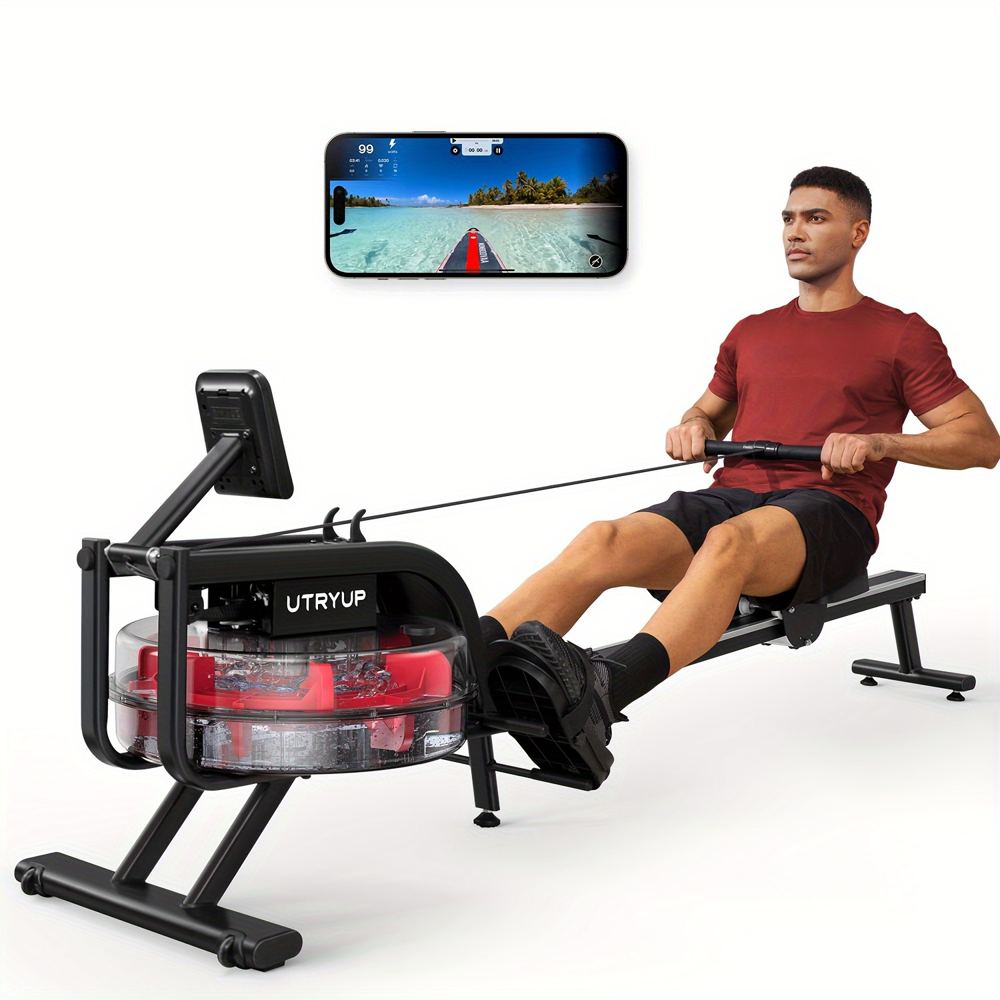
- Utryup Magnetic Water Rowing Machine — $96.88. The one bigger piece: a quiet magnetic/water rower rated to 350 lbs that handles your cardio in the corner of a room and won't wake the household. View on VÉLORA
Total: $187.65, once. Not per month. Not per year. Once — and the equipment is yours, resalable, and still in your home in year three.
Against a $40/month membership ($480/year), this kit breaks even in under five months. Against a $60/month membership, under three months. Every workout after that is effectively free, and even if you later add a kettlebell or a second dumbbell, you're spending in a year what membership costs in a month or two. If budget is the whole argument, it isn't close. Our home gym collection and the guide to the best home gym equipment under $100 show how far smaller budgets stretch, too.
The Hidden Variable: Cost Per Workout
Economists would call the sticker-price comparison naive, and for once they'd be right. The number that actually decides this debate is cost per workout over a year:
- Membership at $50/month, used 12 times a month: about $4 per workout. Excellent — if that's really you.
- Membership at $50/month, used 4 times a month: $12.50 per workout. This is where most people honestly live by March.
- Membership at $50/month, used once a month: $50 per workout. This person is donating to the gym, and gyms' business models quietly depend on them.
- The $187.65 home kit, used 12 times a month: about $1.30 per workout in year one — and roughly 13 cents per workout in year two, because the kit is already paid for.
Notice the pattern: the membership's value collapses or soars entirely on your attendance, while the home kit's value only depends on you walking eleven steps to the corner of the room. That's why the home gym wins the maths for most women even before we argue about travel time — its break-even doesn't require you to become a person who loves leaving the house at 6am in February.
There's one more hidden cost worth naming: your time has value. If a gym session costs you 30 minutes of travel for 45 minutes of training, your real price per session isn't $4 — it's $4 plus half an hour of your life, three times a week. The home gym's commute is zero, forever.
Who Should Still Choose the Gym — Honestly
Cost isn't everything, and pretending otherwise would make this article an advert. The gym genuinely wins if:
- You lift heavy. Chasing a serious deadlift or squat needs barbells, plates and a rack — replicating that at home costs thousands and a spare room.
- Classes are your motivation. If a booked Pilates or spin class is the only thing that reliably gets you moving, that accountability is worth money. A rower in the corner provides none.
- The social side matters. Gym friends, a trainer who knows your name, the energy of a busy floor — for some women that's not a bonus, it's the entire point.
- Home is genuinely unworkable. A studio flat with a sleeping baby, thin walls and no floor space is a real constraint, not an excuse. (Though our guide to a quiet home gym for apartments solves more of this than you'd expect.)
- You need childcare at the gym crèche to train at all. Enough said.
Who Wins with a Home Gym
- Time-poor schedules. The number one reason workouts die is friction. A home gym reduces the commute to eleven steps. Twenty-minute sessions that would never justify a gym trip become normal — and frequency beats duration for most goals.
- Privacy and comfort. Train in your pyjamas, at 5am or 11pm, with no queue for the squat rack and no audience. For many women this isn't a luxury; it's the difference between training and not training.
- Consistency through life's chaos. Bad weather, a sick child, a late meeting — the home gym survives all of it. Memberships get "paused" and never unpaused.
- Long-term cost. After the break-even point (months, not years), your cost per workout trends towards zero. Nothing in the membership world does that.
The Hybrid Most Women End Up With
Honestly? The answer a lot of women land on is both, in sequence. Build the under-$200 home kit first — it pays for itself in a single season and guarantees you can always train. Then, if you crave classes, heavy barbells or the social buzz, join a gym later with zero guilt, because your home setup means the membership becomes a bonus rather than your only lifeline — and you can cancel it in a busy month without your training collapsing. That ordering matters: equipment keeps, contracts lapse.
Frequently Asked Questions
Is a home gym really cheaper than a gym membership?
Yes, for most people, and it isn't close. A typical membership costs $360–720 every year, while a complete starter home gym can be built for under $200 once. The home setup usually breaks even within three to five months and costs nothing after that.
How much does a basic home gym cost to set up?
A functional starter setup — mat, resistance bands or a Pilates bar, an adjustable dumbbell, and one cardio piece like a rower — can be assembled for roughly $150–250. You can start for under $50 with just a mat, bands and one dumbbell, and add pieces over time.
What if I buy home equipment and never use it?
That's the real risk on both sides — unused memberships and unused rowers are equally wasted money. The difference is the equipment is a one-time cost you can resell, while an unused membership keeps billing monthly until you cancel it.
Can I build real muscle with a small home gym?
Yes. An adjustable dumbbell (or two), progressive overload and consistency will build meaningful strength and muscle for most women. The main things a home gym can't easily replicate are very heavy barbell lifts — if a 100kg deadlift is your goal, you need a gym or a much bigger home budget.
How much space does a home gym need?
Less than you think. The under-$200 kit in this guide fits in a corner: the mat rolls up, the bands live in a drawer, the dumbbell sits on the floor, and the rower is the only piece that claims real estate. A 2m × 2m area is enough for the vast majority of home workouts.