A proper warm-up takes 8-10 minutes and changes everything. Follow this step-by-step routine — pulse raiser, joint mobility, movement prep — for any workout.
Warm-Up Exercises Before a Workout: A Step-by-Step Guide
Be honest: how often do you skip the warm-up? You're short on time, the workout itself is waiting, and standing around doing arm circles feels like the least productive part of training. So you jump straight in — and then wonder why your first ten minutes feel stiff, creaky, and harder than they should. A proper warm-up isn't filler. It's the difference between a workout your body is ready for and one it has to survive. The good news: an effective warm-up takes only 8–10 minutes, and once you feel what a warmed-up body can do, you'll never want to skip it again.
This guide explains why warm-ups matter in plain language, gives you a concrete step-by-step routine you can use before any workout, and shows how to tailor it for strength days versus cardio days.
This guide contains affiliate links. If you buy through them, VÉLORA may earn a commission at no extra cost to you.
Why Warm-Ups Matter (Plain Language)
Your body at rest is in energy-saving mode: heart rate low, muscles cool and a bit stiff, joints moving on minimal lubrication. A workout asks for the opposite. The warm-up is the transition between those two states — warmer muscles contract more efficiently, circulation ramps up gradually, joints get lubricated through gentle movement, and your nervous system rehearses the patterns ahead. You'll simply notice workouts feel better from the first working set.
The 3-Part Structure Every Warm-Up Needs
Forget random stretching. An effective warm-up has three phases, in this order:
1. Raise the pulse (3–4 minutes). Light cardio that gets your heart rate up and your body temperature climbing. You're aiming for "slightly warm and breathing a bit quicker" — not tired.
2. Mobilize the joints (3–4 minutes). Controlled movements that take your major joints through their full range of motion: shoulders, hips, knees, ankles, spine. This is dynamic movement, not static stretching.
3. Rehearse the movement (2–3 minutes). Lighter, easier versions of what you're about to do. About to squat heavy? Do bodyweight squats. About to run? Do leg swings and a few easy strides. This phase is specific to the workout ahead.
Total: 8–10 minutes. On days you're short on time, you can compress to 5–6 minutes — but don't skip it entirely.
The Step-by-Step 8–10 Minute Full-Body Warm-Up
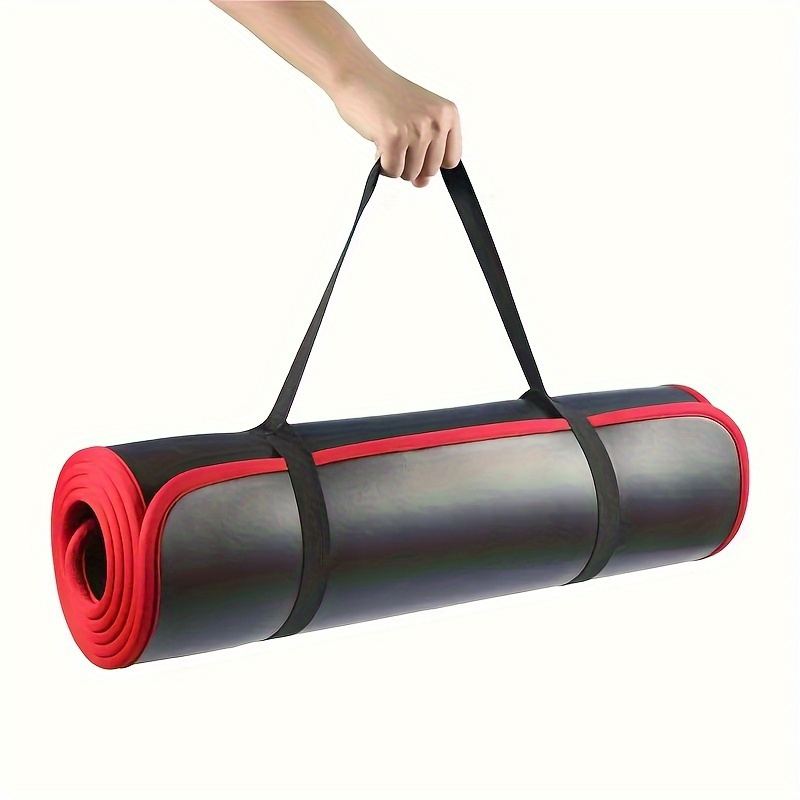
Do this before any workout. You'll need a little floor space; a comfortable surface helps for the ground-based moves — an extra-thick 10mm non-slip yoga mat cushions knees and gives you stable footing for the whole routine.
Phase 1: Raise the pulse (3–4 minutes)
- March in place — 60 seconds. Lift knees to hip height, swing arms naturally. Start easy, build to a brisk march.
- Step-touch side to side — 60 seconds. Step right, touch left foot in, step left, touch right foot in. Add a gentle arm swing. Keep it rhythmic.
- Gentle jog in place or jumping jacks — 60–90 seconds. Pick whichever feels better on your joints. You should feel warm and be breathing noticeably quicker by the end — around a 5 out of 10 effort.
Phase 2: Mobilize the joints (3–4 minutes)
Move slowly and deliberately through each. No bouncing, no forcing range.
- Arm circles — 30 seconds each direction. Start small, gradually make them bigger. Loosens the shoulders for any upper-body work.
- Leg swings — 10–12 per leg, front to back. Hold a wall for balance. Let the leg swing like a pendulum from the hip; don't force height.
- Hip circles — 10 each direction. Hands on hips, make big slow circles like a hula hoop. This is gold for squats, lunges, and running.
- Bodyweight squats — 10–12 reps. Slow and controlled, full comfortable depth. Wakes up the hips, knees, and ankles together.
- Cat-cow — 8–10 rounds. On hands and knees, alternate arching and rounding your back slowly with your breath. Mobilizes the whole spine.
- World's greatest stretch — 4–5 per side. Step into a deep lunge, place the inside hand on the floor, rotate the outside arm toward the ceiling. Hits hips, thoracic spine, and hamstrings in one move.
Phase 3: Rehearse the movement (2–3 minutes)
Pick the version that matches today's workout:
- Before strength training: 1–2 light sets of your first exercise. If you're squatting, do 10 bodyweight squats then 8 with just the bar or light dumbbells. If benching, do band pull-aparts (10–12) then an empty-bar or light set. The point is practicing the pattern, not pre-fatiguing.
- Before cardio: movement-specific drills. Runners: 10 leg swings per leg, 20 seconds of high knees, 20 seconds of butt kicks, then 2–3 easy 30-second strides building pace. Cyclists: 2–3 minutes of easy spinning with a few 10-second slightly-harder bursts.
- Before a class or sport: mimic its key moves at half speed for a couple of minutes — the lateral shuffles, the reaches, the rotations.
If you want help structuring the workout that follows, our guide on how to structure a workout picks up where the warm-up leaves off.

Optional Add-On: Tissue Prep (2–3 Minutes)
If you have chronically tight spots — calves, glutes, upper back — a minute or two of gentle self-massage before the mobility phase can help those areas move better. Roll a fascia massage ball under each foot for 30–45 seconds per side (great before running or leg day), or place it between your upper back and a wall and lean in gently. Keep pressure moderate and breathe — this is preparation, not deep-tissue therapy. If an area is acutely painful or injured, skip it and get professional advice instead.
Warm-Ups for Strength Days vs. Cardio Days
The 3-part structure stays the same; the emphasis shifts:
| Workout type | Warm-up focus | Sample moves | |---|---|---| | Heavy strength (squat, deadlift, press) | Joint mobility + movement rehearsal with light loads | Hip circles, bodyweight squats, empty-bar sets, band pull-aparts | | Light / hypertrophy strength | General mobility + a quick rehearsal set | Arm circles, leg swings, world's greatest stretch, one light set per first exercise | | Running | Pulse raiser + hip/ankle mobility + strides | Jog, leg swings, high knees, butt kicks, 2–3 easy strides | | Cycling / cardio machines | Gradual ramp on the machine itself | 3–4 min easy, then short 10-sec pickups | | HIIT / circuits | Thorough full-body prep — don't rush this | Full routine above, plus practice each circuit move once at half speed | | Yoga / mobility session | Gentle pulse raiser + cat-cow + joint circles | March in place, wrist/shoulder circles, cat-cow, gentle lunges |
For a dedicated morning mobility sequence, see our morning stretching routine — it doubles as a gentle warm-up for early sessions. And if you're new to lifting, the beginner strength training program includes warm-up guidance for each session.
Common Warm-Up Mistakes
- Static stretching cold. Holding long static stretches on cold muscles before a workout can temporarily reduce power and doesn't prepare you the way movement does. Save static stretching for after training or the evening.
- Skipping it when short on time. A 5-minute compressed warm-up (1 min march, 2 min joint circles and squats, 2 min rehearsal) beats zero every time. Shorten the workout, not the warm-up.
- Warming up the wrong things. Doing arm circles before a run, or only jogging before heavy squats. Match the rehearsal phase to the workout.
- Going too hard. The warm-up should leave you warm and ready, not tired. If you're breathing hard and sweating heavily before your first working set, dial it back.
- Treating mobility as optional. The joint circles feel silly until the day your shoulder clicks painfully under load. They're the cheapest injury insurance in fitness.
- Rushing through on autopilot. Two focused minutes of deliberate movement beats five distracted minutes. Pay attention to how each joint feels — that's the diagnostic working.
Practical Tips That Make It Stick
- Keep a mat unrolled where you train and keep a towel handy — you'll break a light sweat, which is the point. A non-slip yoga towel with storage bag stays put on your mat without sliding around.
- Use the same routine for two weeks. Familiarity makes it automatic. Once it's habit, you'll do it without thinking.
Safety Notes
- Warm up at a conversational effort. If you have a heart condition, high blood pressure, or get dizzy with exertion, keep warm-ups gentle and get professional guidance on appropriate intensity.
- Sharp pain during any warm-up move is a stop signal — don't push through it to "warm it up." Rest the area and seek advice if it persists.
- Jumping and high-impact warm-up moves (jumping jacks, high knees) aren't suitable for everyone — march or step-touch instead if you have joint issues, are pregnant, or are returning from injury. When in doubt, choose the lower-impact option.
- In cold environments, extend the pulse-raiser phase by a couple of minutes — muscles take longer to warm when the room is cold.
FAQ
Q: How long should a warm-up be?
For most workouts, 8–10 minutes is the sweet spot: 3–4 minutes raising your pulse, 3–4 minutes of joint mobility, and 2–3 minutes rehearsing your workout's movements. On a tight schedule, a focused 5–6 minutes still does the job. Longer than 15 minutes and you're doing a workout before your workout.
Q: Is stretching part of a warm-up?
Dynamic stretching — controlled movements through full range, like leg swings and arm circles — yes, that's the mobility phase. Static stretching — holding a stretch for 30+ seconds — is better saved for after your workout, when muscles are warm. Doing long static holds on cold muscles before training isn't the best preparation.
Q: Can I skip the warm-up if I'm just doing light exercise?
Even light sessions benefit from 3–5 minutes of easy movement first. Your joints and circulation still need the transition, and the body check (noticing what's tight or off today) is valuable at any intensity. Think of it as non-negotiable, just scalable.
Q: What's the difference between a warm-up and a cool-down?
A warm-up gradually ramps your body up to workout intensity; a cool-down gradually brings it back down afterward with easy movement and then static stretching. Both are transitions — skipping either one skips the transition your body prefers.
Q: Do I need equipment for a good warm-up?
No. The entire routine above needs only your body and a bit of floor space. A mat makes floor moves more comfortable and a massage ball can help stubborn tight spots, but neither is required. The best warm-up is the one you'll actually do.
Conclusion
A warm-up is the smallest investment with the most reliable return in all of training: 8–10 minutes for workouts that feel better from the first rep, joints that move like they're supposed to, and a daily check-in with your body that catches problems early. Learn the three phases — raise the pulse, mobilize the joints, rehearse the movement — run the step-by-step routine a few times until it's automatic, and adjust the emphasis for strength versus cardio days. Your future self, mid-workout and feeling great instead of creaky, will thank you.