Stop guessing: the anatomy of a great workout — how long to warm up, how to order strength and cardio, work-to-rest ratios, and how to cool down properly.
How to Structure a Workout: Warm-Up, Main Work, Cool-Down

Most disappointing workouts fail for the same reason: not the exercises, but the structure around them. You skip the warm-up, lift cold, run out of time, and collapse on the couch instead of cooling down — then wonder why progress feels slow and everything aches for days.
A well-structured workout is simply a session with an intentional beginning, middle, and end. Once you learn the anatomy — how long to warm up, what order to train things in, how long to rest, and how to finish — every workout you ever do gets better. Here is the full breakdown, with a ready-made 45-minute template you can use today.
This guide contains affiliate links. If you buy through them, VÉLORA may earn a commission at no extra cost to you.
Phase 1: The Warm-Up (5–10 Minutes)
The warm-up exists for one reason: to prepare your body for what comes next. A good one raises your heart rate gradually, loosens the joints you are about to use, and wakes up the muscles that will do the work.
What a warm-up should include
- Light general movement (2–3 minutes). March in place, jog on the spot, or do easy jumping jacks. You should feel warm and your breathing should pick up — this is not the workout yet, just the ignition.
- Dynamic mobility (3–5 minutes). Move the joints through the ranges you will train: arm circles, leg swings front-to-back and side-to-side, hip circles, torso twists, and walking lunges with a reach overhead. Focus on the areas your main session targets — extra hip and ankle mobility before leg day, extra shoulder and thoracic mobility before upper body.
- Specific activation (1–2 minutes). One or two light sets of the movement you are about to train, at very low effort. Before squats: 10 easy bodyweight squats. Before rows: 10 light band pull-aparts. This bridges the gap between "warm" and "ready."
Warm-up mistakes to avoid
- Skipping it entirely. This is the most common one. Cold muscles are stiffer and less responsive; jumping straight into heavy work is asking for a pulled muscle.
- Static stretching as a warm-up. Long-held stretches before training can temporarily reduce the power your muscles produce. Save deep static stretches for the cool-down, when they belong.
- Turning the warm-up into the workout. If you are breathless and sweating heavily after your warm-up, you went too hard. You should feel ready and energized, not pre-exhausted.
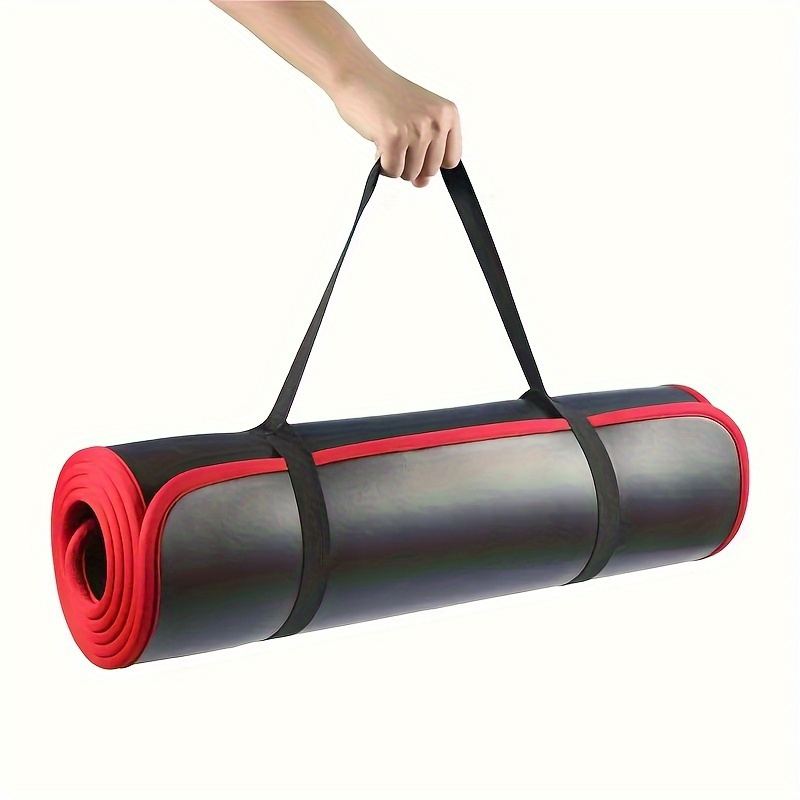
A cushioned exercise mat gives your knees and back a comfortable surface for the floor-based parts of your warm-up.
Phase 2: The Main Block (25–40 Minutes)
This is where training happens. The single most important decision is ordering: strength work goes before cardio in the same session.
Why strength comes first
Heavy or challenging resistance work demands fresh muscles, good coordination, and full focus. If you do cardio first, you arrive at your strength work tired — form deteriorates, the weight you can handle drops, and the stimulus that builds strength and muscle shrinks. Do your strength work while you are fresh; cardio works fine on tired legs.
Structuring the strength portion
Order your exercises from the biggest, most demanding movements to the smallest:
- Compound, multi-joint lifts first. Squats, deadlifts, presses, rows — the moves that use the most muscle. These are where your best energy goes.
- Accessory and isolation work next. Lateral raises, biceps curls, calf raises — smaller muscles, lighter loads, less systemic fatigue.
- Core work last. Your core stabilizes everything else you do, so training it at the end means your trunk is fresh for the big lifts. Planks, dead bugs, and Pallof presses fit here.
Typical ranges for a general fitness session: 3–4 sets of 8–15 reps for main compound moves, 2–3 sets of 10–15 reps for accessories. Rest 60–120 seconds between heavy compound sets and 30–60 seconds between lighter accessory sets. Beginners can rest a little longer — rushing rest does not earn bonus points.
Adding cardio after strength
After your resistance work, 10–20 minutes of cardio fits naturally: a brisk incline walk, cycling, rowing, or a few intervals. Or place cardio on separate days entirely — both approaches work, and separating them lets you give each your best. Our weekly workout frequency guide can help you split the week.

Phase 3: The Cool-Down (5–10 Minutes)
The cool-down is the mirror image of the warm-up: a gradual descent instead of a gradual ascent. Spend 5–10 minutes easing your heart rate down, then stretch the muscles you trained while they are still warm and pliable.
- Easy movement (3–5 minutes). Walk slowly, pedal lightly, or march in place until your breathing returns to near-normal.
- Static stretching (5 minutes). Hold each stretch 20–30 seconds, breathing slowly. Focus on the muscles you worked: quads and hip flexors after leg day, chest and lats after push day, hamstrings and glutes after hinge work.
- Optional deep breathing (1–2 minutes). Slow nasal inhales and long exhales. It is a simple signal to your nervous system that the work is done — many women find this part improves sleep on training days.
See our guide on stretching before vs after workout for exactly which stretches belong where.
A Sample 45-Minute Session (Timeline Table)
| Time | Phase | What to do | |---|---|---| | 0:00–5:00 | Warm-up | 2 min marching/jacks, 3 min dynamic mobility | | 5:00–8:00 | Activation | 1–2 light sets of first exercise | | 8:00–23:00 | Strength: compound | 3 sets squats + 3 sets push-ups, 90s rest | | 23:00–33:00 | Strength: accessories | 2–3 sets rows + 2 sets lunges, 60s rest | | 33:00–36:00 | Core | 2 rounds plank + dead bug | | 36:00–46:00 | Cardio | 10 min steady bike or incline walk | | 46:00–50:00 | Cool-down | 2 min easy walk + 5–8 min static stretching |
Scale it to your schedule: a 30-minute session simply shortens each block — 5-minute warm-up, 20-minute main work, 5-minute cool-down. The structure stays identical.
Common Structure Mistakes
- Training core first. It exhausts the stabilizers you need for everything else.
- Doing cardio between heavy sets. It turns a strength session into a conditioning session — both goals suffer.
- Skipping the cool-down every time. Occasionally is fine; habitually is how stiffness becomes a permanent feature.
- No rest between sessions for the same muscle. Structure applies to the week too: give trained muscles 48 hours before hitting them hard again. A beginner home workout plan shows how to space sessions across the week.
Adjusting the Structure to Your Goal
- Fat loss / general fitness: Keep this balanced structure as written — strength plus moderate cardio is the classic pairing.
- Building strength: Spend more of the session on the strength block (fewer exercises, longer rests of 2–3 minutes), and trim cardio to 10 easy minutes.
- Building endurance: Flip the emphasis — a short 10-minute strength maintenance block, then 25–30 minutes of cardio.
- Just starting out: One well-structured 30-minute session twice a week beats three chaotic hour-long sessions. Build the habit of structure first; add volume later.
Frequently Asked Questions
How long should each phase be in a typical workout?
As a rule of thumb: about 10–15% of your session for the warm-up, 70–80% for the main work, and 10–15% for the cool-down. For a 60-minute session, that is roughly 7 minutes, 45 minutes, and 8 minutes. Shorter sessions keep the same proportions — a 20-minute workout still deserves a 3-minute warm-up and a 2-minute cool-down.
Should I stretch before or after my workout?
Both — but different kinds. Dynamic, moving stretches belong before training as part of your warm-up. Static, held stretches belong after training in your cool-down, when muscles are warm. Doing static stretches before heavy lifting can temporarily reduce performance, so keep them for the end.
Is it bad to do cardio and weights in the same workout?
Not at all — it is a perfectly valid way to train, especially when time is short. Just order them sensibly: strength first when building muscle and strength is a priority, and keep the cardio moderate (10–20 minutes). If you are training for a running event, cardio priority flips the order.
Do I really need a cool-down if I feel fine?
The cool-down is less about magic recovery effects and more about a sensible transition: easing your heart rate down, calming your breathing, and stretching warm muscles. Many people find it reduces next-day stiffness and makes the session feel "complete." Five minutes is all it takes.
How many rest days should I take between full workouts?
For full-body sessions, leave 48 hours before training the same muscles hard again — so 2–3 full-body sessions per week with rest or light activity between. Upper/lower or push/pull splits allow more training days since different muscles rest on different days.
Can I do two workouts in one day?
You can, but most beginners and intermediates get better results from one well-structured session than two rushed ones. Splitting the day — strength in the morning, cardio in the evening — works well for advanced trainees with the schedule for it. Eat and hydrate between sessions.
Conclusion
Workout structure is not complicated, but it is the difference between sessions that build you up and sessions that beat you up. Warm up with intent, put strength before cardio, order big moves before small ones, and close with a calm cool-down. Follow this anatomy for a few weeks and you will notice the difference: better lifts, less soreness, and sessions that feel satisfying instead of scattered.
Results vary from person to person, and consistency with a good structure always outperforms occasional heroic sessions. If you are new to all of this, start with a simple beginner home workout plan built on exactly these principles, and let the structure do the heavy lifting for you.