Haven't exercised in years? Start embarrassingly small with this honest 4-week plan — walking, bodyweight, and bands — plus when to check with your doctor first.
How to Start Exercising After Years of Doing Nothing
It's been years. Maybe life got busy, maybe motivation evaporated, maybe your body just feels like a stranger now. And somewhere in the back of your mind, a voice says you've left it too long — that everyone else is so far ahead, starting is pointless. That voice is wrong. Your body hasn't forgotten how to move; it's just waiting for an invitation. The trick isn't finding the perfect program. It's starting so small that you can't fail, and letting momentum do the heavy lifting from there.
This guide is a realistic, judgment-free plan for going from zero to a genuine exercise habit in about four weeks. No gym required. No suffering required. Just a sensible progression, honest expectations about soreness, and clear guidance on when to check with a professional first.
This guide contains affiliate links. If you buy through them, VÉLORA may earn a commission at no extra cost to you.
First: When to Check With a Professional
Exercise is safe for most people, but after years of inactivity — especially with health conditions — a quick check-in is wise. See your doctor or another qualified professional before starting if you:
- Have a heart condition, high blood pressure, or diabetes (especially if poorly controlled)
- Have experienced chest pain, pressure, or unusual shortness of breath with exertion
- Feel dizzy, faint, or get palpitations during activity
- Have significant joint problems, arthritis that limits movement, or a recent injury or surgery
- Are pregnant or recently postpartum
- Take medications that affect heart rate, blood pressure, or balance
And once you're moving: stop and seek prompt care for chest pain or pressure, severe dizziness or fainting, or pain that is sharp, worsening, or doesn't ease with rest. Mild muscle soreness is normal (more on that below). Sharp joint pain is not — that's a signal to back off and get guidance.
Getting clearance isn't a barrier; it's a green light that lets you train with confidence.
The Mindset: Start Embarrassingly Small
The number one reason restarts fail is starting too big. After years off, people try to resume where they left off — the old running route, the old gym program — and their body files a formal complaint within days. Soreness, exhaustion, and discouragement follow, and the whole thing collapses by week two.
The fix is counterintuitive: make your first workouts feel almost too easy. Your goal in week one isn't fitness; it's proof — proof that you can show up, do the thing, and survive. That proof compounds into a habit, and the habit is what actually changes your body over months. Consistency beats intensity, every time.
What You'll Need
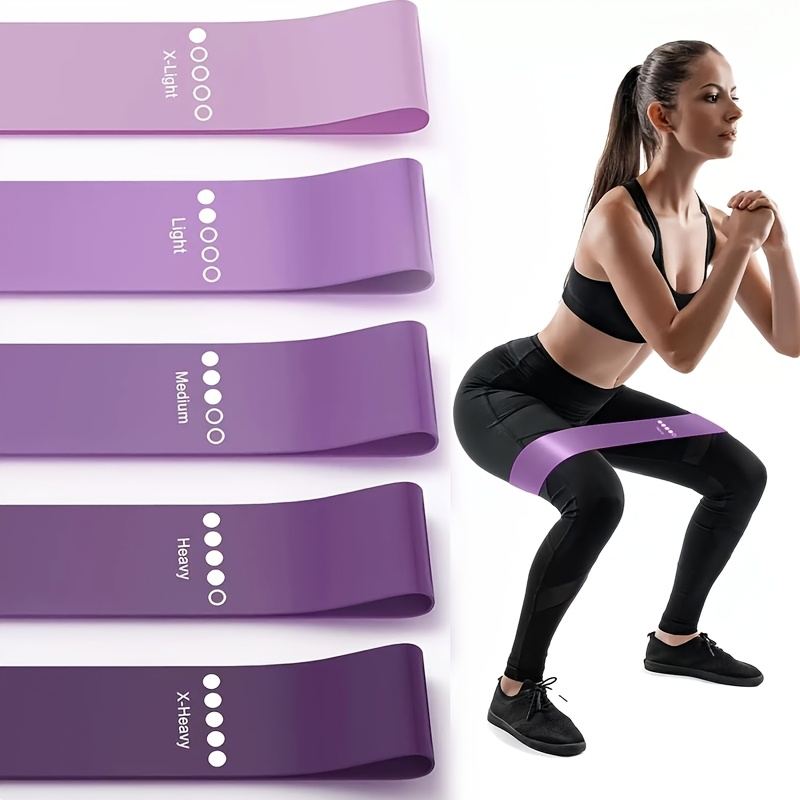
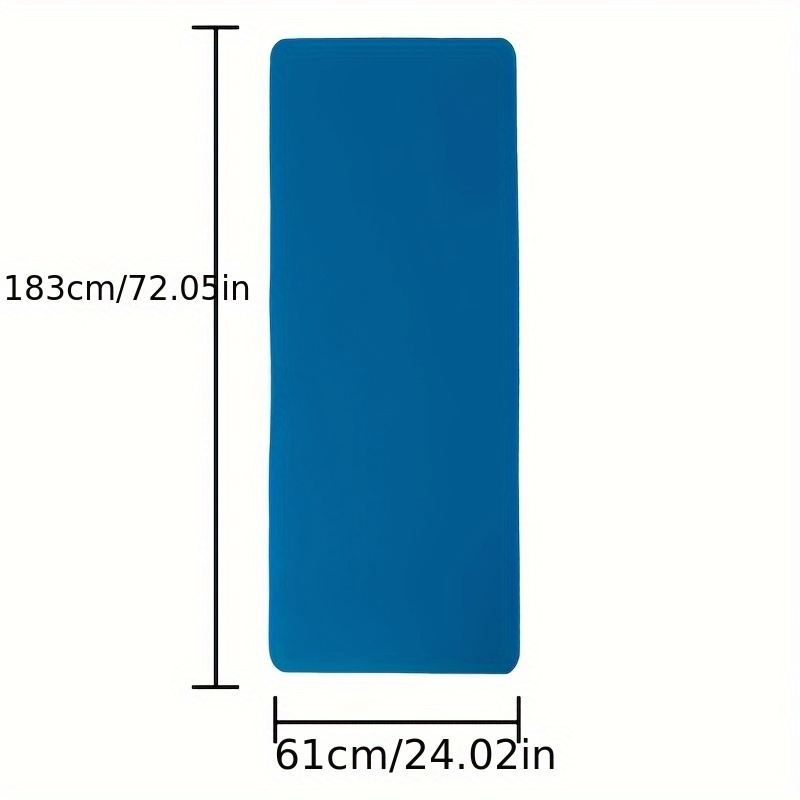
Almost nothing. Comfortable clothes, supportive shoes you already own, and a bit of floor space. Two inexpensive additions make home sessions much more pleasant: a set of circular resistance loops for gentle, joint-friendly resistance, and an 8mm thick non-slip mat that cushions knees and backs during floor work. No treadmill, no membership, no elaborate setup.
The 4-Week Starter Plan
This plan assumes a true beginner: no current exercise habit, generally healthy (or cleared by your provider). It mixes walking (cardio), bodyweight and band moves (strength), and gentle mobility. Each week builds slightly on the last. Rest days are part of the plan — muscles adapt during recovery, not during the workout.
Week 1: Prove you can show up
Focus: establishing the routine; everything easy.
- 3 walks: 10–15 minutes each, comfortable pace. Flat route. If 10 minutes feels like plenty, that's fine — it's week one.
- 2 strength sessions (15 minutes): bodyweight squats to a chair (2 sets of 8–10), wall push-ups (2 sets of 8–10), glute bridges (2 sets of 10–12), dead bugs (2 sets of 6–8 per side). Rest 60–90 seconds between sets.
- Daily: 5 minutes of gentle stretching — neck rolls, shoulder rolls, standing quad stretch holding a wall, calf stretch.
The rule: finish every session feeling like you could have done more. That's the point.
Week 2: Add a little
Focus: slightly longer walks, slightly more strength volume.
- 3 walks: 15–20 minutes each. Add one gentle hill or a few minutes at a brisker pace if it feels good.
- 2 strength sessions (20 minutes): same moves as week 1, but 3 sets each. Try incline push-ups (hands on a sturdy table or countertop) if wall push-ups feel easy. Add band pull-aparts (2 sets of 12–15) with a light loop band.
- Daily: same 5-minute stretch, or try a short guided routine — our low-impact workouts for women has gentle options.
Week 3: Build the pattern
Focus: four active days; introduce light dumbbells or bands for upper body.
- 3–4 walks: 20–25 minutes. One walk can include 4–6 short brisk intervals (1 minute brisk, 2 minutes easy).
- 2–3 strength sessions (20–25 minutes): goblet squats holding a light dumbbell or a household weight (3 sets of 8–12), incline push-ups (3 sets of 8–12), band rows looped around a sturdy post (3 sets of 10–15), glute bridges (3 sets of 12–15), plank on knees (2–3 holds of 15–30 seconds).

A 3-pair PVC dumbbell set with case gives you light, medium, and slightly heavier options so you can progress without buying twice — start with the lightest pair for goblet squats and move up when 12 reps feel easy.
- Add: 5 minutes of balance work once a week — stand on one foot holding a wall, 30 seconds per side, a few rounds.
Week 4: You have a routine now
Focus: consolidating; slightly challenging yourself.
- 3–4 walks: 25–30 minutes, with brisk intervals feeling natural now.
- 3 strength sessions (25–30 minutes): same exercises, and nudge one variable: a slightly heavier band, one more set, or a harder push-up angle. Keep reps in the 8–15 range and stop 1–2 reps before failure — you're building a base, not testing limits.
- Keep the daily stretch. It's the habit glue.
| Week | Focus | Sample sessions | |---|---|---| | 1 | Show up; everything easy | 3× 10–15 min walks; 2× 15-min bodyweight sessions | | 2 | Add a little volume | 3× 15–20 min walks; 2× 20-min sessions (3 sets, band pull-aparts) | | 3 | Four active days; light weights | 3–4× 20–25 min walks with intervals; 2–3× 20–25 min strength | | 4 | Consolidate the routine | 3–4× 25–30 min walks; 3× 25–30 min strength, nudging difficulty |
After week 4, you're no longer "starting" — you're training. From here, our beginner home workout plan for women is a natural next step, and building a sustainable workout habit helps you keep it going for the long term.
What About Soreness? (The Honest Version)
If you haven't exercised in years, you will get sore. That stiffness and tenderness 24–48 hours after a session has a name — delayed onset muscle soreness — and it's a normal sign that your muscles encountered something new. Practical guidance:
- Expect it most in week 1–2. It fades as your body adapts, usually within a couple of weeks of consistent training. A gentle walk or easy session often loosens mild soreness up.
- Severe soreness means you did too much. If you're hobbling for four days, scale back next time — that's what the "embarrassingly small" rule prevents. And soreness is never required for progress; plenty of productive training produces only mild soreness.
- Sharp, one-sided, or joint pain is different. Muscle soreness is dull and spread across the muscle belly. Sharp pain, pain in a joint, or pain that worsens over days warrants rest and professional advice.
Technique Basics: The Big Three Moves
Good form matters more than heavy effort, especially at the start. Here's the short version:
Chair squat: Stand in front of a sturdy chair, feet shoulder-width apart. Push your hips back and bend your knees to lower until you lightly touch the chair, then stand. Keep your chest up and knees tracking over your toes (not collapsing inward). Breathe in going down, out coming up. The chair is your safety net and your depth gauge.
Wall/incline push-up: Hands on the wall (or countertop) at shoulder height, body in a straight line from head to heels. Bend your elbows to bring your chest toward the surface, then push back. Keep your core braced — no sagging hips. As these get easy, lower the incline (countertop → sturdy table → floor on knees → full).
Glute bridge: Lie on your back, knees bent, feet flat and hip-width apart. Press through your heels to lift your hips until your body forms a straight line from knees to shoulders. Squeeze your glutes at the top for a second, lower slowly. This wakes up the glutes that years of sitting put to sleep — and strong glutes protect your lower back.
Breathing rule for all strength work: exhale on the effort (pushing up, standing up), inhale on the easier phase. Never hold your breath.
Beginner modifications: reduce range of motion, use a higher incline for push-ups, do fewer reps, rest longer. There's no shame in modifications — they're how you build the strength to not need them.
Common Mistakes (and What to Do Instead)
- Doing too much in week one. The classic. Follow the plan's easy start even if you feel fine on day one — the soreness bill arrives on day three.
- Skipping the warm-up. Two to three minutes of marching in place, arm circles, and leg swings before strength work. Cold muscles complain.
- Training through sharp pain. Dull muscle burn is effort; sharp or joint pain is a warning. Learn the difference and respect it.
- Comparing to your younger self. You're not picking up where you left off; you're starting a new chapter. Give it time — it comes back faster than you think.
- Waiting for motivation. Motivation follows action, not the other way around. Schedule sessions like appointments and show up whether you feel like it or not.
FAQ
Q: I'm embarrassed about how unfit I am. How do I get past that?
Everyone starts somewhere, and nobody at home is watching. Home workouts exist precisely for this — you can build your base privately with walks and living-room sessions. By the time you ever set foot in a gym (if you ever do), you'll already be someone who exercises. The embarrassment fades fast once the habit starts working.
Q: How long until I see results?
Honest answer: you'll feel different (more energy, better sleep, less stiffness) within 2–4 weeks of consistent movement. Visible body changes take longer — typically a couple of months — and depend on many factors including nutrition, sleep, and genetics. Results vary, and anyone promising a timeline is selling something. Focus on the habit; the outcomes follow.
Q: Is walking enough exercise to start with?
Absolutely — walking is one of the best possible starting points. It's low-impact, free, and sustainable. Pair it with basic strength work (bodyweight, bands) two to three times a week and you have a genuinely complete beginner program. You can add intensity later; you can't get back weeks lost to burnout from starting too hard.
Q: When should I make workouts harder?
When your current sessions feel comfortably easy for two weeks straight. Then change one variable: a bit more weight, one extra set, a harder variation, or slightly longer walks. Small, occasional increases — not weekly overhauls — are how beginners progress safely for months.
Conclusion
Starting after years off isn't about reclaiming your old fitness — it's about building a new relationship with movement, one embarrassingly small session at a time. Walk a little. Do some squats to a chair. Show up three times this week. That's genuinely enough to begin, because the beginning is the whole battle. A month from now, you won't be the person who "used to exercise." You'll be someone who does.