Shoulder pain during overhead exercise needs care, not pushing through. Learn what impingement means, which moves deserve caution, and when to get checked.
Shoulder Impingement and Overhead Exercise: A Cautious Guide

Shoulder pain during overhead pressing or lateral raises is one of the most common complaints in home gyms — and also one of the most misunderstood. You've probably heard the term "shoulder impingement," and you may be wondering whether to push through, modify your exercises, or stop entirely. This guide explains what impingement means in plain language, which overhead moves deserve the most respect, and how to train safely around shoulder sensitivity — without diagnosing you or prescribing a rehab protocol.
This guide contains affiliate links. If you buy through them, VÉLORA may earn a commission at no extra cost to you.
What "Shoulder Impingement" Actually Means
The shoulder is a remarkably mobile joint — it can move in almost every direction — and that mobility comes at the cost of stability. The bones of the shoulder (the upper arm bone, the collarbone, and the shoulder blade) are held together by muscles and tendons, most notably the four muscles of the rotator cuff. When you raise your arm overhead, the space between the top of the upper arm bone and the bony arch above it (the acromion) narrows. If the tissues in that space — tendons, a small fluid-filled sac called the bursa — get pinched or irritated during that movement, the result is the achy, pinching sensation people often call impingement.
A few important clarifications, because the term gets thrown around loosely:
- It's a description of symptoms, not a single diagnosis. Pain when raising the arm can come from several different structures. "Impingement" describes the mechanism — tissue getting compressed under the shoulder's bony roof — but only a clinician can say what's actually going on in your shoulder.
- It isn't caused by one bad workout. Irritation typically builds up from repeated overhead loading, too much volume too soon, or insufficient rest — combined with individual differences in shoulder structure.
- Having it doesn't mean you're broken. Shoulder irritation is extremely common, especially among people who do overhead pressing, swimming, or jobs with arms raised.
The single most important thing to understand: this article is general information, not a diagnosis. If your shoulder hurts during exercise, get an assessment by a clinician or physiotherapist before you keep training through it.
Why Overhead Moves Stress the Shoulder
Overhead pressing, lateral raises, upright rows, and dips all load the shoulder while the arm is raised — exactly the position where that subacromial space is narrowest. That's not a reason to fear these exercises; for healthy shoulders, overhead pressing is a perfectly reasonable strength movement. But it explains why they're the moves most likely to aggravate an irritated shoulder.
Several factors raise the stress further:
- Pressing too heavy, too soon. The shoulder's stabilising muscles are small. When the main pressing muscles outpace the stabilisers, the mechanics of the lift get sloppy and the irritation worsens.
- Pushing into pain. The "no pain, no gain" mindset is especially harmful here. Pain during the movement is the shoulder's warning system — training through sharp or worsening pain tends to prolong the problem.
- Poor posture during lifts. Rounded shoulders and a forward head change the angle at which the arm rotates, often narrowing the space under the acromion further. Some people find a breathable back support belt a useful cue for posture during desk work (not a treatment for shoulder problems).
If you train shoulders at home, our shoulder workout at home for men covers exercise selection and programming.
The Cautious Approach: Get Checked Before Pushing Through
This is the heart of the guide, and it deserves to be stated plainly: do not exercise through shoulder pain on a guess. A physiotherapist or doctor can assess your shoulder's range of motion, strength patterns, and pain behaviour in a way no article can. That assessment is what turns vague discomfort into a clear picture — and a clear picture is what allows safe training decisions.
Getting checked is especially important because shoulder pain has multiple possible causes, and they don't all respond to the same approach. A short professional assessment early on saves months of trial-and-error — and avoids turning a manageable irritation into a persistent problem.
In practical terms, "cautious" means: book the physio appointment before designing a workaround routine; keep the shoulder moving gently within a pain-free range unless a clinician says otherwise; and don't let the internet diagnose you. If a program promises to "fix your impingement in 7 days," treat that as marketing, not medicine.
Warning Signs: When to Stop and Get Checked Promptly
Certain signs mean you should stop exercising the shoulder and seek care sooner rather than later:
- Sharp, catching, or grinding pain during movement — especially a painful "arc" roughly between shoulder height and overhead.
- Pain at night that disturbs your sleep, or pain that aches even at rest.
- Weakness — struggling to lift things you normally manage, or the arm feeling like it might give way.
- Numbness or tingling down the arm or into the hand.
- A specific injury — a fall, a sudden pop, or pain that started immediately after one incident.
- Pain that isn't improving after a couple of weeks of backing off and modifying activity.
If any of these sound familiar, skip the home experiments and get assessed. Persistent or worsening shoulder problems do not reliably resolve on their own, and early professional input generally leads to better outcomes.
General Safe-Movement Principles for Sensitive Shoulders
Once you've been assessed (or while you're waiting for your appointment and keeping things gentle), these principles keep training sensible. They're general movement hygiene, not a rehab protocol:
- Stay in a pain-free range. If a movement hurts, reduce the range, reduce the load, or choose a different movement. Ask your clinician if you're unsure how to tell muscular burn from joint pain.
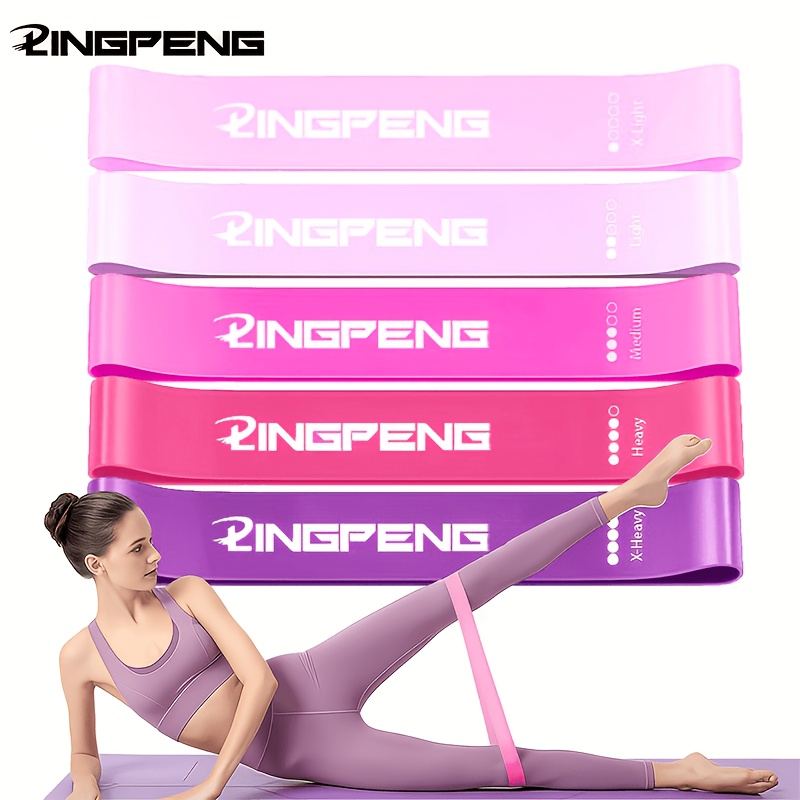
- Warm up the shoulders every session. Five minutes of gentle arm circles, cross-body swings, and light band work before pressing movements. Loop resistance bands are ideal — the lightest bands gently activate the rotator cuff and upper back without loading the joint. Read more about warm-up timing in our guide on stretching before vs after workout.
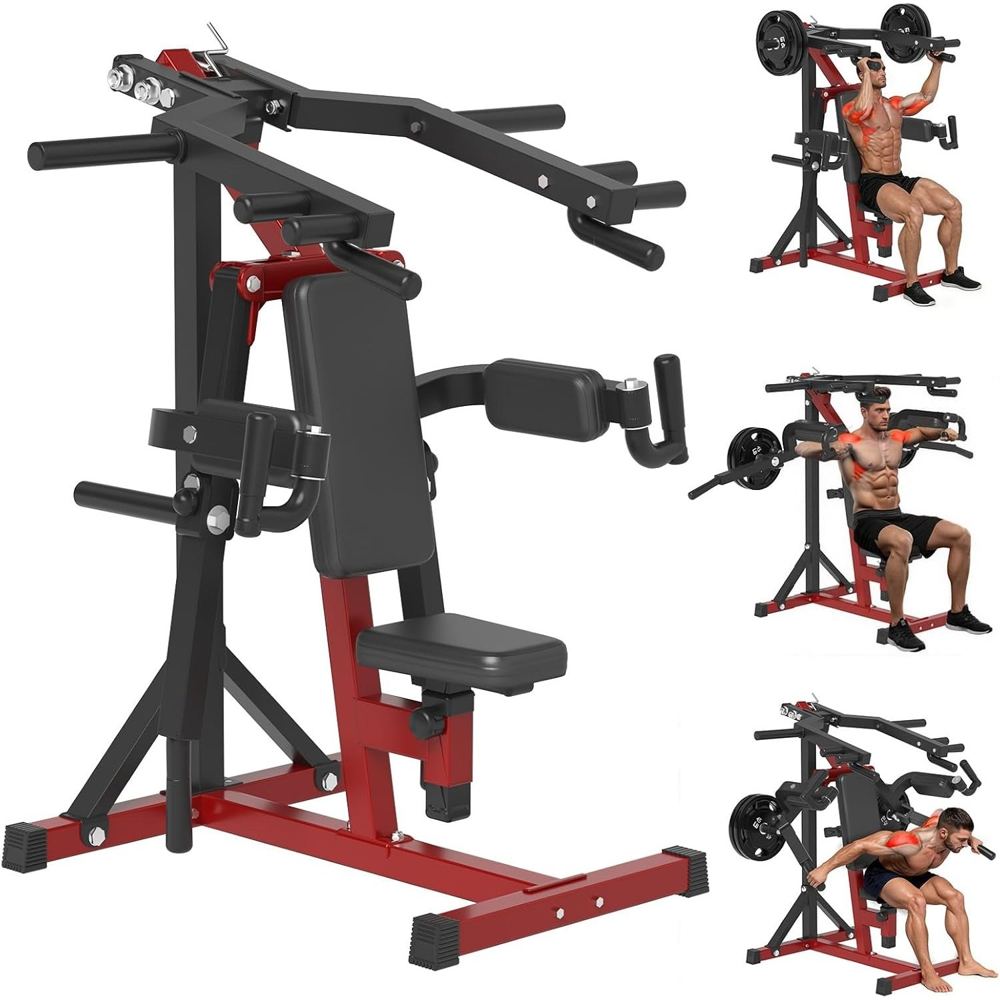
- Keep loads modest. For shoulder work, lighter weights with clean control usually achieve more than heavy, sloppy reps. If you're using equipment like a 3-in-1 shoulder press and lateral raise machine, use it at conservative settings and through a comfortable range.
- Prioritise posture. Stand tall, ribs down, shoulder blades set gently back and down before each set. Good alignment gives the joint its best available space.
- Build up gradually. If you're returning to overhead work after a layoff or flare-up, progress in small steps over weeks, not one ambitious session.
- Balance pressing with pulling. Rows, face pulls, and band pull-aparts strengthen the upper back and external rotators — the muscles that keep the shoulder blade moving well during pressing. A press-only program is a common setup for shoulder complaints.
For gentle mobility work that pairs well with strength training, see our neck and shoulder stretches guide — with the caveat that stretching a painful shoulder deserves the same caution as strengthening it.
Overhead Moves: A Caution Guide
Not all overhead exercises stress the shoulder equally, and individual responses vary. But as a general guide, here's how common moves rank in terms of how carefully a sensitive shoulder should approach them. This is about caution levels, not bans — and again, your clinician's advice overrides any table.
| Exercise | Typical caution level for a sensitive shoulder | Why | |---|---|---| | Behind-the-neck press | High — avoid if symptomatic | Forces the shoulder into maximum rotation under load; offers no benefit over safer variants | | Upright rows (narrow grip) | High | Internally rotates and elevates the shoulder into a pinching position | | Dips (deep) | High | Loads the shoulder at the extreme end of extension; hard to modify | | Overhead barbell press | Moderate–high | Heavy fixed-bar path can force the shoulder into its least comfortable groove | | Dumbbell overhead press | Moderate | Allows a more natural movement path than a barbell; still loads the narrow-space position | | Landmine press | Moderate | Angled press path is often better tolerated than straight overhead | | Lateral raises | Moderate | Raises the arm directly through the painful arc; keep light and pain-free | | Front raises | Low–moderate | Shorter lever and a slightly friendlier path than lateral raises | | Face pulls / band pull-aparts | Low | Strengthen the muscles that support healthy shoulder mechanics |
The pattern is straightforward: the more an exercise forces the arm overhead under heavy or fixed-path load, the more caution it deserves. Lighter, dumbbell or band-based variations through a comfortable range are generally the friendlier options.
Common Mistakes That Make Things Worse
- Training through sharp pain because a program says the workout is mandatory. No program is worth a chronic shoulder problem. Pain is information — use it.
- Self-diagnosing from videos and following a stranger's rehab protocol. Impingement-like symptoms have several causes, and the wrong exercises can aggravate some of them.
- Stretching an irritated shoulder aggressively, especially hanging stretches or deep overhead stretches through pain. Gentle mobility is fine; forcing range is not.
- Returning to full loads too quickly after the pain eases. A shoulder that feels better after a week off isn't necessarily ready for last month's weights. Ease back in over two to three weeks.
FAQ
Q: Can I train through shoulder pain?
Mild, dull muscular soreness that fades within a day or two is usually fine to train around. Sharp, pinching, or worsening pain during a movement is not — stop the movement and get assessed. "Pushing through" joint pain is one of the most reliable ways to turn a minor irritation into a long-term problem.
Q: Which overhead moves are riskiest for the shoulder?
Behind-the-neck presses, narrow-grip upright rows, and deep dips top the list. Heavy barbell overhead pressing is next. None are mandatory exercises; safer alternatives like dumbbell presses through a comfortable range build the same muscles with less joint stress.
Q: Should I stretch a painful shoulder?
Gently, and only within a pain-free range. Easy arm circles and relaxed range-of-motion work can help stiffness. Aggressive stretching through pain can irritate tissues further. If stretching consistently makes pain worse, stop and mention it to your clinician.
Q: When is it just soreness and not something to worry about?
Normal workout soreness is a dull, even muscle ache appearing a day after training, roughly equal on both sides, fading within two to three days. Impingement-type pain tends to be sharper, localised to one shoulder, triggered by specific movements (especially raising the arm). Night pain, weakness, or symptoms lasting beyond a couple of weeks point away from ordinary soreness.
Q: Does posture really affect shoulder pain?
Posture is one factor among many. Rounded shoulders and a forward head can narrow the space under the shoulder's bony arch — unhelpful when that space is already irritated. Sitting and standing taller, with shoulder blades resting gently back and down, gives the joint a bit more room. A supporting habit, not a treatment on its own.
Conclusion
Shoulder impingement symptoms are a signal, not a verdict — but they're a signal worth respecting. Get the shoulder assessed before training through pain, learn the warning signs that mean stop, favour lighter loads and pain-free ranges, and skip the highest-risk overhead moves without regret. Results vary from person to person, and no approach guarantees a particular outcome — but caution is never the wrong first step.