Neck and shoulder stretches for tension relief: gentle seated and standing moves that ease desk-day tightness, plus massage tools that help stubborn knots.
Neck and Shoulder Stretches for Tension Relief
That familiar tightness at the end of the day — the stiff neck, the heavy shoulders that seem to live somewhere near your ears — is one of the most common complaints of modern life. Hours of looking down at phones, hunching over laptops, and carrying stress in the upper body leave the neck and shoulders short, stiff, and tender.
The good news: a short daily routine of gentle stretches can make a real difference. You do not need special flexibility or equipment to start, and most people notice their shoulders dropping and their neck turning more freely within a couple of weeks of consistent practice. This guide walks you through the stretches that help most, how to do them safely, and when a little extra help — like a massage tool — earns its place.
This guide contains affiliate links. If you buy through them, VÉLORA may earn a commission at no extra cost to you.
Why the Neck and Shoulders Get So Tight
The neck and shoulder muscles work all day holding your head upright — your head weighs roughly as much as a bowling ball, and every inch it drifts forward of your spine multiplies the load on the neck. Add shallow stressed breathing, which recruits the neck and shoulder muscles as helpers, and cold air conditioning or tense sleep positions, and you get the classic end-of-day knot.
A word of honesty: stretches ease tension and improve how you feel, but no stretch can permanently "fix" posture or erase stress by itself. Think of this routine as daily maintenance — like brushing your teeth for your upper body — rather than a one-time cure.
Before You Start: The Safety Basics
- Never force a neck stretch. The neck contains delicate structures. Stretch to a gentle pulling sensation only — never pain, dizziness, tingling, or numbness. If any of those appear, stop immediately.
- No aggressive neck cracking or yanking. Gentle sustained stretches only; avoid jerky movements and never pull hard on your head with your hands.
- Move slowly. Hold each stretch 20–30 seconds, breathe deeply, and repeat 2–3 times per side rather than going deeper in one shot.
- If you have a history of neck injury, herniated discs, or radiating arm pain, check with a doctor or physiotherapist before starting a neck routine.
The Stretches
Do this sequence 1–2 times daily — morning to loosen overnight stiffness, evening to release the day. It takes 8–10 minutes. Sit tall on a chair or the floor with both feet flat. Shoulders relaxed, chin level.
1. Ear-to-Shoulder Stretch (Upper Trapezius)
Purpose: releases the long muscle running from the neck to the shoulder — the classic desk-tension holder.
Starting position: Sit tall, right arm resting at your side or gently holding the chair edge to anchor the shoulder down.
Technique: Slowly tilt your right ear toward your right shoulder — think of bringing the ear down, not the shoulder up. Stop where you feel a gentle stretch along the left side of the neck. Rest your right hand lightly on the left side of your head for a whisper of extra weight (not a pull). Hold 20–30 seconds, breathing slowly, then switch sides.
Common mistakes: lifting the shoulder toward the ear (which shortens the very muscle you are stretching); rotating the chin down instead of a pure side tilt. Beginner modification: skip the hand entirely — the weight of the head is enough at first.
2. Chin Tucks
Purpose: counteracts forward head posture and wakes up the deep neck flexors that stabilize the neck.
Starting position: Sit tall, eyes forward, shoulders relaxed.
Technique: Keeping your eyes level, gently glide your chin straight back, as if making a double chin on purpose. You should feel a mild stretch at the base of the skull and a gentle engagement in the front of the throat. Hold 5 seconds, release, repeat 8–10 times. Breathing: breathe normally throughout; this is a small movement, not a strain. Common mistakes: tilting the head down instead of gliding back; holding the breath.
3. Neck Rotation Hold
Purpose: improves turning range — checking blind spots, looking over your shoulder.
Technique: Turn your head slowly to the right until you feel a gentle stretch, keeping the chin level. Hold 20–30 seconds, return to center, and repeat to the left. Do 2–3 rounds per side. If one side is noticeably tighter, give it an extra round rather than forcing the stiff side to match.
4. Shoulder Rolls
Purpose: warms and loosens the entire shoulder girdle; excellent first move of the day.
Technique: Inhale as you lift both shoulders toward your ears, squeeze them back, then exhale as you roll them down and forward — making slow, full circles. 5–8 slow rolls backward, then 5–8 forward. Make the circles as big as comfortable. This should feel relieving, never pinchy.

5. Cross-Body Shoulder Stretch (Posterior Deltoid)
Purpose: opens the back of the shoulder, which tightens from reaching forward all day.
Technique: Extend your right arm across your chest at shoulder height. With your left hand, gently guide the right arm closer — pressing above the elbow, never on the elbow joint itself. Keep the right shoulder down away from the ear. Hold 20–30 seconds per side, 2 rounds. Common mistakes: hunching the shoulder up during the stretch; bending the wrist awkwardly.
6. Chest Opener (Doorway Stretch)
Purpose: the front of the shoulders and chest shorten when we hunch; opening them relieves the rounded-shoulder pull that drags the neck forward.
Technique: Stand in a doorway. Place both forearms on the doorframe with elbows at shoulder height. Step one foot through the doorway until you feel a gentle stretch across the chest and front shoulders. Hold 20–30 seconds, breathe deeply, repeat 2–3 times. Beginner modification: do one arm at a time if both feels like too much.
7. Upper Back Stretch (Thread the Needle)
Purpose: the mid-back stiffens from sitting, and a stiff mid-back forces the neck to compensate. This gentle twist mobilizes it.
Starting position: On hands and knees, wrists under shoulders, knees under hips.
Technique: Slide your right arm under your body to the left, lowering your right shoulder and temple toward the floor. Let the left hand press lightly into the floor for support. Hold 20–30 seconds, breathing into the upper back, then switch sides. Beginner modification: if the knees complain, fold a towel under them or do a seated torso twist instead.
When Stretching Alone Isn't Enough: Massage Tools
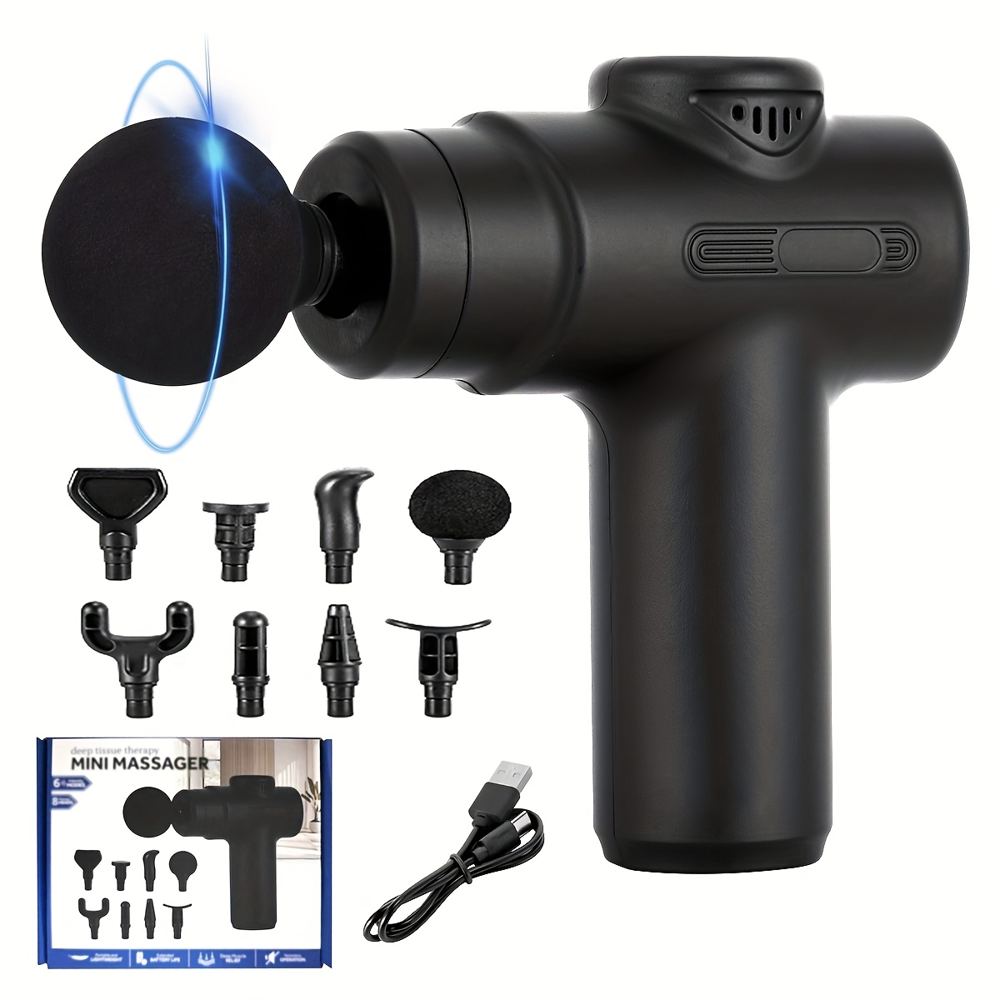
Some tension — especially stubborn knots between the shoulder blades — responds slowly to stretching alone. That is where a massage tool earns its place. A handheld massage gun delivers rapid pulses to tight muscles; use the softest head on the lowest setting on the upper trapezius and around (never directly on) the neck, for 30–60 seconds per spot, 2–3 times a week. A fascia ball pressed between your upper back and a wall works beautifully on those hard-to-reach spots between the shoulder blades — lean in, find the tender point, and hold gentle pressure for 20–30 seconds while breathing.
Safety: never use a massage gun on the front or sides of the neck, over bones, or on areas with numbness or tingling. Gentle pressure only.
Stretches vs. Tools: What Helps What
| Problem | Best first step | When to add a tool | | --- | --- | --- | | General end-of-day tightness | Daily stretch routine above | Optional — stretching alone often suffices | | Stubborn knot between shoulder blades | Cross-body stretch + thread the needle | Fascia ball against a wall, 20–30 sec holds | | Heavy, achy shoulders after long desk days | Shoulder rolls + chest opener | Massage gun on traps, lowest setting | | Stiff neck on waking | Ear-to-shoulder + chin tucks | Usually unnecessary; warmth + gentle movement works | | Tension that never eases after 2 weeks | Keep the routine, reduce desk strain | Consider a physiotherapist assessment |
For a broader approach to desk-day stiffness, our resistance band workout for women adds gentle strengthening for the upper back — strong postural muscles hold tension less. And if you want the full-body picture, low-impact workouts for women covers joint-friendly ways to stay mobile overall.
Building the Habit: Sets, Reps, and Frequency
- Frequency: 1–2 times daily. Consistency matters more than duration — 8 minutes daily beats 30 minutes once a week.
- Holds: 20–30 seconds per stretch, 2–3 rounds per side. For chin tucks: 8–10 repetitions of 5-second holds.
- Breathing: slow nasal breaths throughout; consciously exhale into the stretch, letting the shoulders drop a fraction with each exhale.
- Progression: over 2–4 weeks, you should notice the stretches feeling easier and your range slightly larger. Do not chase range aggressively — the goal is how your neck and shoulders feel through the day, not a flexibility record.
FAQ
Q: How quickly will these stretches relieve my neck tension?
Many people feel some relief during the very first session — looser shoulders, easier turning. Lasting change builds over 2–3 weeks of daily practice. Tension that returns every evening is usually a sign the daytime setup (screen height, chair, stress) needs attention too, not that the stretches failed.
Q: Is it safe to stretch my neck every day?
Gentle daily neck stretching is safe for most people, provided you follow the rules: no pain, no forcing, no aggressive pulling on the head, and stop if you feel dizziness, tingling, or numbness. If you have a neck injury or radiating symptoms, get professional guidance first.
Q: My shoulders click when I roll them. Is that bad?
Painless clicking or popping in the shoulders is common and usually harmless — it is often tendons moving over bone. It only warrants attention if the clicking comes with pain, weakness, or a feeling of instability. When in doubt, mention it to a physiotherapist.
Q: Should I use heat or ice for neck tension?
For everyday muscular tension (the desk-day kind), warmth usually feels better — a warm shower, a heated towel, or simply the stretches themselves. Ice suits acute injuries or fresh inflammation. When unsure, gentle warmth plus movement is the safer default for chronic tightness.
Q: Can poor sleep posture cause morning neck stiffness?
Very often, yes. Sleeping with the neck cranked at an odd angle — too many pillows, stomach sleeping with the head turned — is a classic cause of waking up stiff. A pillow that keeps your neck roughly in line with your spine, and sleeping on your back or side rather than your stomach, helps more than most people expect.
The Bottom Line
Neck and shoulder tension is rarely mysterious — it is the predictable result of how most of us spend our days. The fix is equally unmysterious: 8–10 minutes of gentle, well-chosen stretches once or twice a day, done consistently, with breathing and patience. Start with the ear-to-shoulder stretch and chin tucks tonight; add the rest over the week. Your shoulders have been carrying the day for you — this small routine is how you set some of it down.