How many reps and sets should beginners do? Clear ranges for strength, toning and endurance, how to pick your starting point, and when to progress.
How Many Reps and Sets Should Beginners Do?
"How many reps and sets?" is the question every beginner asks and almost nobody answers clearly. Gyms and apps throw numbers around — 3 sets of 10, 5 sets of 5 — as if one formula fit every body and goal. The truth is more useful: reps and sets are dials you turn based on what you want to build, and for beginners the right answer is always a range, never a single prescription.
This guide gives you the ranges that work — for strength, muscle growth, and endurance — plus how to choose your starting weight, when to progress, and the mistakes that stall beginners most. Your body adapts at its own rate; these numbers help you train in the right neighborhood while it does.
This guide contains affiliate links. If you buy through them, VÉLORA may earn a commission at no extra cost to you.
Reps, Sets, and Rest: The Basics
Quick definitions, because the whole topic collapses without them:
- A rep (repetition) is one complete movement — one squat down and up, one push-up down and up.
- A set is a group of reps performed back-to-back — 10 squats in a row is one set of 10.
- Rest is the recovery time between sets, and it matters as much as the work: too little rest and your form falls apart; too much and the workout drags.
Together, these three variables determine what your training emphasizes. Heavier weight for fewer reps with longer rest builds maximal strength. Moderate weight for moderate reps with moderate rest builds muscle size. Lighter weight for higher reps with shorter rest builds muscular endurance. Beginners, importantly, gain some of all three no matter which range they pick — in the first months, almost any sensible training makes you stronger, because your nervous system is learning to use the muscle you already have.
The Ranges by Goal
Here are the standard, evidence-informed ranges. Use them as starting frameworks, not commandments.
| Goal | Reps per set | Sets per exercise | Rest between sets | | --- | --- | --- | --- | | Maximal strength | 4–8 | 3–5 | 2–3 minutes | | Muscle growth ("toning") | 8–15 | 2–4 | 60–90 seconds | | Muscular endurance | 15–25 | 2–3 | 30–60 seconds | | General beginner fitness | 8–15 | 2–3 | 60–90 seconds |
A note on "toning": there is no separate physiological process called toning. What people mean by toned — firm, defined-looking muscle — comes from building some muscle and carrying less body fat over it, which is driven mostly by nutrition, overall activity, and consistency over time. The 8–15 rep range is the classic muscle-building zone, which is why it sits under that heading. No rep range burns fat from a specific body part; targeted fat loss is a myth regardless of how many reps you do.
For most beginners, the 8–15 rep range for 2–3 sets is the sweet spot. It is light enough to learn good form safely, heavy enough to build real strength, and the sets are short enough to keep a workout under 45 minutes. You can specialize later, once the movements feel automatic.
If you are just starting strength training, our guide on how to start strength training for women walks through the first weeks, and the beginner strength training program puts these ranges into a full weekly plan.
How to Choose Your Starting Weight
The weight is right when the last 2–3 reps of a set feel challenging but your form stays clean. Concretely:
- Too light: You could do 5+ more reps with perfect form. Add weight or pick a harder variation next set.
- Too heavy: Form breaks down before you reach the bottom of the range — back arches, knees cave, or you swing the weight. Drop the weight; ugly reps build nothing.
- Just right: The final reps are slow and effortful, you finish the range, and you could maybe do one or two more. This is the productive zone.
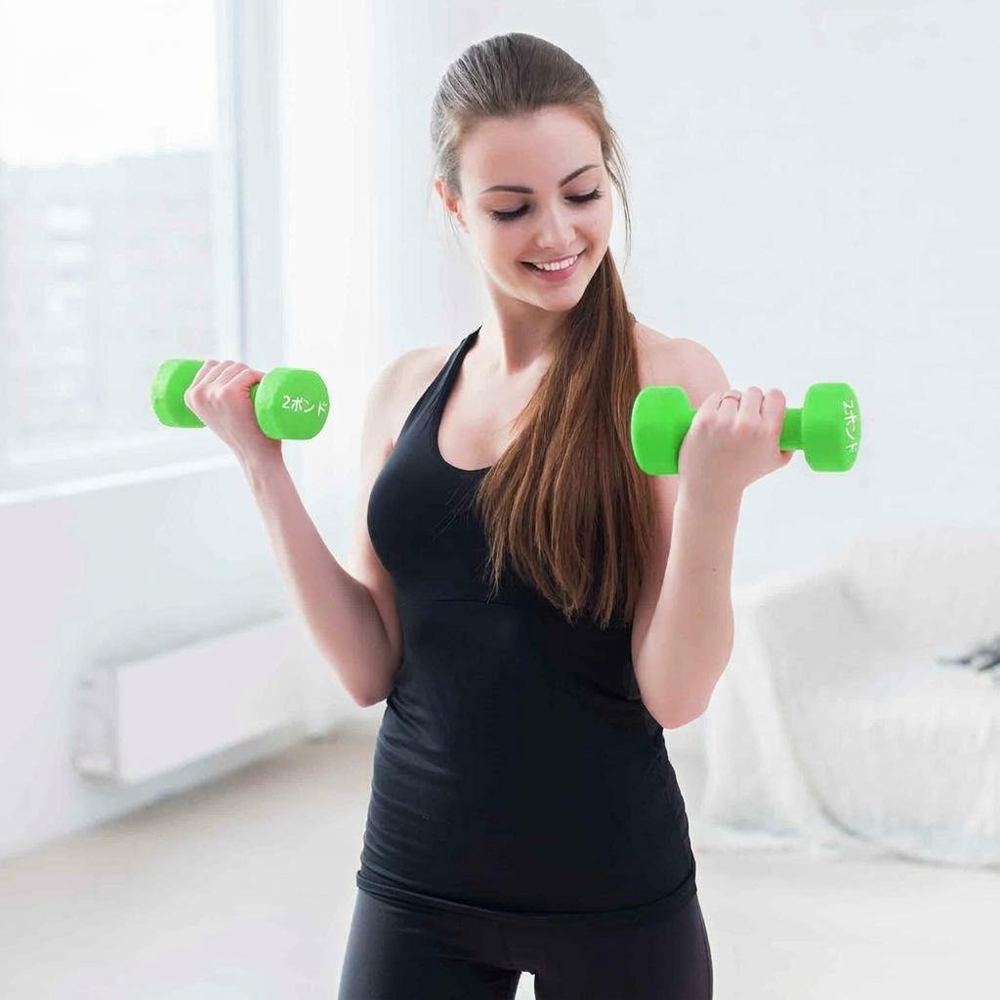
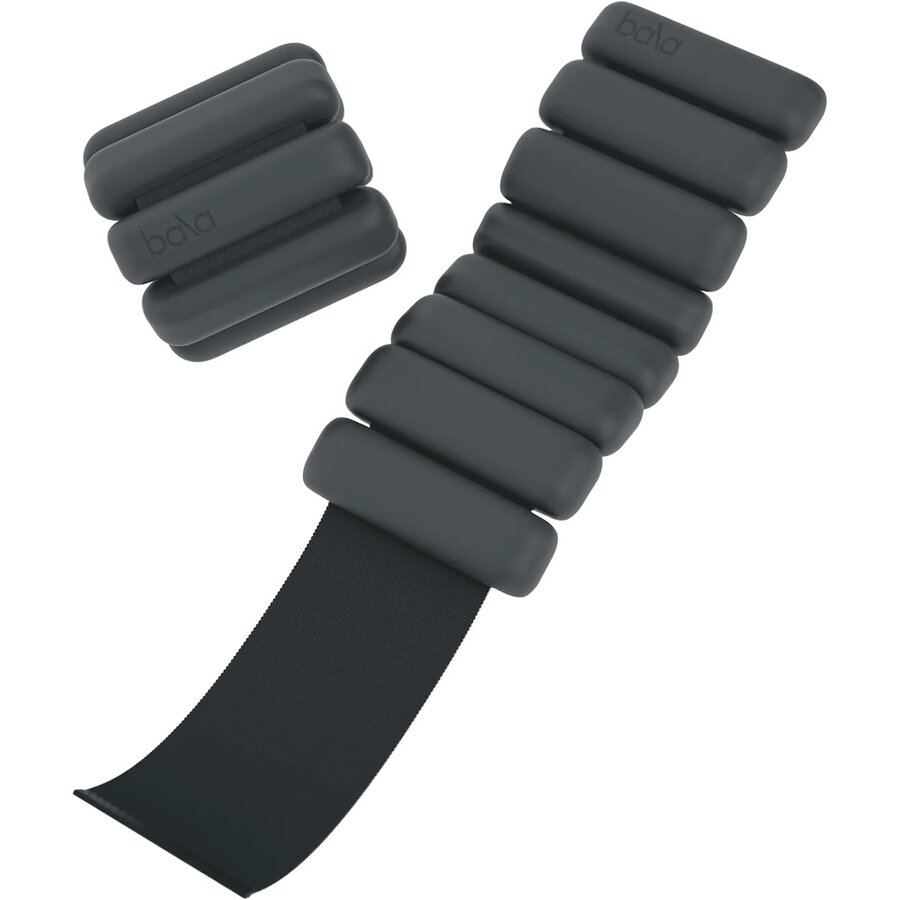
Start conservatively. For most women beginning with dumbbells, that means starting lighter than your ego suggests — many upper-body moves begin well with 1–3 kg per hand, lower-body moves with 3–5 kg. A set with multiple light options, like the 3 Pair PVC Dumbbell Set with Case, lets you match the weight to the muscle group instead of forcing one dumbbell to do everything. Wrist and ankle weights such as the Bala Bangles 3lb Set are another gentle way to add load to bodyweight moves.
Timing Your Sets and Rest
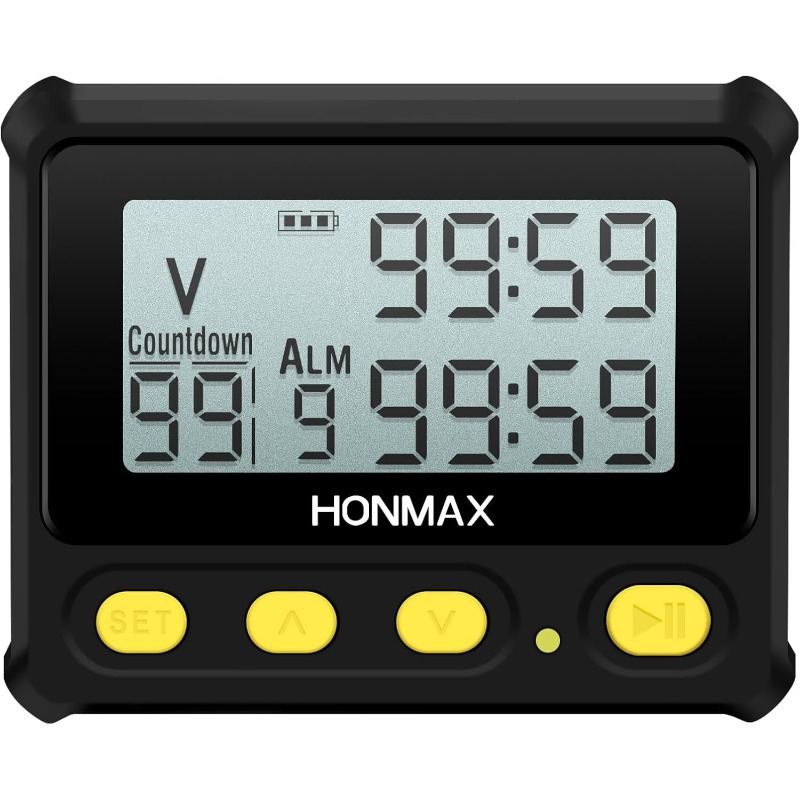
Beginners often rest by feel — which usually means either rushing (20 seconds, still breathless) or scrolling (5 minutes, fully cold). A simple timer removes the guesswork. The Temu 8200 Interval Timer is made for exactly this: set your work and rest intervals and follow the beeps. As a rule of thumb, rest until your breathing is mostly recovered and you feel ready to give the next set good form — for most beginner work in the 8–15 range, that is 60–90 seconds.
Tempo matters too, though beginners need not obsess over it. A good default: lower the weight over about 2 seconds, pause briefly, lift over about 1–2 seconds. The lowering (eccentric) phase builds a lot of strength, so don't let gravity do it for you — control the descent every rep.
The 2-Rep Rule for Progression
Here is the simplest progression method that actually works for beginners — the "2-rep rule":
- Pick a weight and a target rep range, e.g. 8–12.
- Train with it until you can perform the top of the range with good form on all sets — say, 3 sets of 12.
- Next session, increase the weight slightly (the smallest jump available — often 0.5–1 kg for upper body, 1–2 kg for lower body).
- Your reps will drop back toward the bottom of the range (maybe 3 sets of 8–9). Build back up to 12. Repeat.
This is progressive overload in its friendliest form: small, trackable, and self-regulating. Keep a simple log — exercise, weight, sets, reps — on paper or your phone. Without a log, progression is guesswork; with one, you will see the numbers climb week after week, which is enormously motivating.
For exercise ideas to apply these ranges to, see our dumbbell exercises for women.
RPE: A Useful Way to Gauge Effort
RPE stands for Rate of Perceived Exertion — a 1–10 scale of how hard a set feels. Beginners should mostly train at RPE 6–8: challenging but controlled, with 2–4 reps "left in the tank." RPE 9–10 (grinding, form breaking) is for advanced lifters testing limits, not for learning. If every set feels like a 9, the weight is too heavy; if every set feels like a 4, it is time to progress. RPE is personal and takes a few weeks to calibrate — that is normal.
Weekly Frequency: How Often to Train Each Muscle
Muscles grow and strengthen during recovery, so training the same muscles every day is counterproductive. Sensible beginner frequencies:
- Full-body sessions: 2–3 times per week on non-consecutive days (e.g. Monday, Wednesday, Friday). This is the best structure for most beginners — every muscle gets trained 2–3 times weekly with rest between.
- Upper/lower splits: 3–4 times per week, alternating. Fine once you want slightly longer sessions.
- Per-muscle minimum: Each major muscle group benefits from being trained at least twice per week. Once a week maintains; twice or more builds.
Total weekly sets per muscle group: beginners do well with roughly 6–10 hard sets per muscle per week, spread across the sessions. More is not better at this stage — recovery capacity is the limiting factor, not enthusiasm.
Common Beginner Mistakes
- Ego lifting. Choosing weight to impress (yourself or others) instead of weight you can control. The result is bad form, stalled progress, and injury risk. The weight that builds strength is the one you can lift well.
- No rest days. Training the same muscles daily because "more must be better." Muscles adapt between sessions; without rest, you accumulate fatigue instead of fitness.
- Copying advanced programs. A program built for someone with five years of training — high volume, heavy singles, complex splits — will bury a beginner. Start with beginner ranges and earn the advanced work over months.
- Program hopping. Switching routines every two weeks because progress "feels slow." Adaptation takes 4–6 weeks to show clearly in any program. Pick one sensible plan and run it for at least 6–8 weeks before judging it.
- Skipping the log. Relying on memory for weights and reps. Memory lies; the log tells you exactly when to add weight.
- Ignoring the warm-up. Jumping into working sets cold. Spend 5 minutes on light cardio and a warm-up set or two at half weight — it measurably improves performance and reduces injury risk.
Q: Is 3 sets of 10 good for beginners?
A: It is a fine starting point — 3×10 sits squarely in the muscle-building range and is simple to remember. But it is a starting template, not a law. Adjust the reps (8–15), sets (2–3), and weight to your goal and how each set feels. The "best" scheme is the one you can perform with good form and progress consistently.
Q: How long should a beginner workout last?
A: Roughly 30–45 minutes including warm-up is plenty. That covers 4–6 exercises at 2–3 sets each with sensible rest. Longer sessions usually mean too much rest between sets or too many exercises — neither helps beginners more than focused, consistent shorter sessions.
Q: Should beginners train to failure?
A: No. Training to failure — where you physically cannot complete another rep — is an advanced technique with higher fatigue and injury risk and no special benefit for beginners. Stop each set with 1–3 good reps left in reserve. You will progress faster by training frequently with good form than by destroying yourself once.
Q: How do I know when to increase the weight?
A: Use the 2-rep rule: when you can complete the top of your rep range with clean form on every set, add the smallest available weight jump next session. If your form breaks down at the new weight, you progressed slightly early — drop back and build a little more base.
Q: Can I build muscle with light weights and high reps?
A: Yes, within reason. Research consistently shows muscle grows across a wide rep range (roughly 5–30) as long as sets are taken close enough to fatigue. Light weights simply require more reps to reach that point, which takes longer per set. Very light weights for very high reps mainly build endurance. For efficiency, most beginners do best in the 8–15 range.
Q: How long until I see results from lifting?
A: Strength usually improves within the first 2–4 weeks — mostly your nervous system learning to recruit muscle efficiently. Visible muscle definition takes longer, typically a few months of consistent training plus supportive nutrition, sleep, and overall activity. Everyone's timeline differs; track your log numbers and how you feel rather than comparing to anyone else's calendar.
Conclusion
Reps and sets are not a secret code — they are just a way to describe how much work you did. For beginners, the honest answer is beautifully simple: 2–3 sets of 8–15 reps per exercise, weight that challenges the last few reps without breaking your form, 60–90 seconds of rest, 2–3 full-body sessions a week, and the 2-rep rule to tell you when to add weight. Log it all, rest between sessions, and give any program six honest weeks. Strength is built rep by rep, and now you know exactly how to count them.