Twelve dumbbell exercises for women with clear form cues, sets and rep ranges, and beginner-friendly modifications for full-body strength at home.
12 Dumbbell Exercises for Women to Build Full-Body Strength
If you own one pair of dumbbells, you own a full-body gym — but only if you know what to do with them beyond the occasional bicep curl. These twelve dumbbell exercises for women cover every major movement pattern: squatting, hinging, pushing, pulling, and carrying. Together they train your legs, glutes, back, chest, shoulders, arms, and core with nothing more than a pair of weights and a little floor space.
Each exercise below explains its purpose, setup, technique, and the most common mistake to watch for. Rep ranges are given as ranges on purpose: your starting point depends on your experience, your joints, and the weight you have. Choose a load that makes the last two repetitions of a set feel challenging while your form stays clean. Strength builds gradually, and results vary between individuals — what matters is progressing a little over time, safely.
This guide contains affiliate links. If you buy through them, VÉLORA may earn a commission at no extra cost to you.
Choosing Your Weights Before You Start
Most women need at least two loads: a lighter pair for shoulders and arms, and a heavier one for legs and back. If you are buying, our guide to choosing dumbbells for women walks through sizes, shapes, and coatings. Two flexible options from our range:
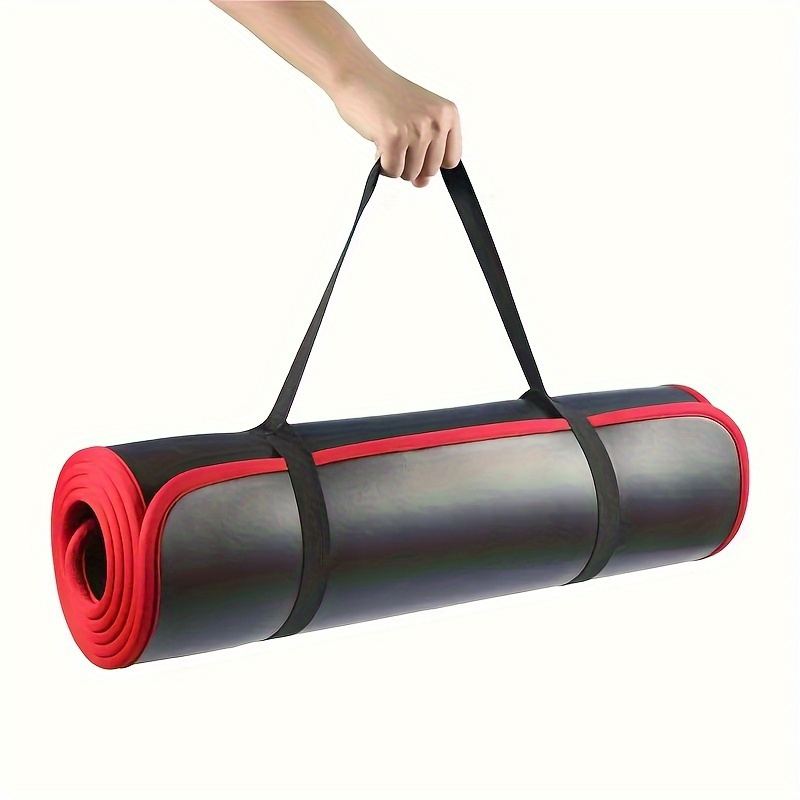
Work on a stable surface. A cushioned mat such as the Extra-Thick 10mm Yoga Mat protects knees and elbows during floor exercises.
The 12 Exercises
1. Goblet Squat — Legs and Glutes
Hold one dumbbell vertically at your chest, cupping the top end. Stand with feet slightly wider than hip-width, toes turned out a little. Sit your hips down between your heels, keeping your chest tall and elbows inside your knees at the bottom, then drive through your whole foot to stand. Breathe in on the way down, out as you stand. Sets and reps: 2–4 sets of 6–12. Beginner modification: squat to a chair. Common mistake: knees caving inward — think of pushing them gently out in line with your toes.
2. Romanian Deadlift — Glutes and Hamstrings
Hold a dumbbell in each hand in front of your thighs, feet hip-width apart, knees soft. Push your hips backward as though closing a door behind you, sliding the weights down your thighs while keeping your back flat. Stop when you feel a firm stretch in the back of your thighs, then squeeze your glutes to stand tall. Sets and reps: 2–4 sets of 8–12. Beginner modification: practise the hinge pattern with no weight against a wall. Common mistake: rounding the back or turning it into a squat — the movement comes from the hips, not the knees.
3. Dumbbell Glute Bridge — Glutes
Lie on your back on a mat, knees bent, feet flat and hip-width apart. Rest one dumbbell across your hips, holding it steady. Push through your heels to lift your hips until shoulders, hips, and knees form a line; pause and squeeze at the top, then lower with control. Sets and reps: 2–3 sets of 10–15. Beginner modification: bodyweight only. Common mistake: overarching the lower back at the top — stop when your body reaches a straight line. The Extra-Thick 10mm Yoga Mat makes the floor work considerably more comfortable.
4. Bent-Over Row — Back and Biceps
Hinge forward from the hips to roughly 45 degrees, back flat, holding a dumbbell in each hand beneath your shoulders. Pull the weights toward your lower ribs, elbows travelling close to your body, and squeeze your shoulder blades together. Lower slowly. Sets and reps: 2–4 sets of 8–12. Beginner modification: use the supported one-arm version, with one knee and hand on a sturdy chair. Common mistake: standing too upright, which turns the row into a shrug — keep the hinge and a long, flat back.
5. Floor Press — Chest, Shoulders and Triceps
Lie on your back, knees bent, a dumbbell in each hand above your chest with arms straight. Lower your elbows toward the floor under control until your upper arms lightly touch down, then press the weights back up. Sets and reps: 2–4 sets of 8–12. The floor naturally limits the range of motion, which many beginners find kinder on the shoulders than a bench press. Common mistake: flaring the elbows wide — keep them at roughly 45 degrees from your body.
6. Shoulder Press — Shoulders and Arms
Stand tall (or sit on a chair for extra stability) holding dumbbells at shoulder height, palms facing forward or toward each other. Brace your core and press the weights overhead until your arms are nearly straight, then lower slowly. Exhale as you press. Sets and reps: 2–3 sets of 6–12. Use your lightest weights here — shoulders are a smaller muscle group. Common mistake: arching the lower back to push the weight up; if that happens, the load is too heavy or you need the seated version.
7. Reverse Lunge — Legs and Balance
Stand holding light dumbbells at your sides. Step one foot backward and lower until both knees are bent to about 90 degrees, torso tall. Push through the front foot to return to standing, and alternate sides. Sets and reps: 2–3 sets of 6–10 per side. Beginner modification: hold a chair or wall for balance, or shorten the step. Common mistake: letting the front knee collapse inward — track it over your second toe.
8. Bicep Curl — Arms
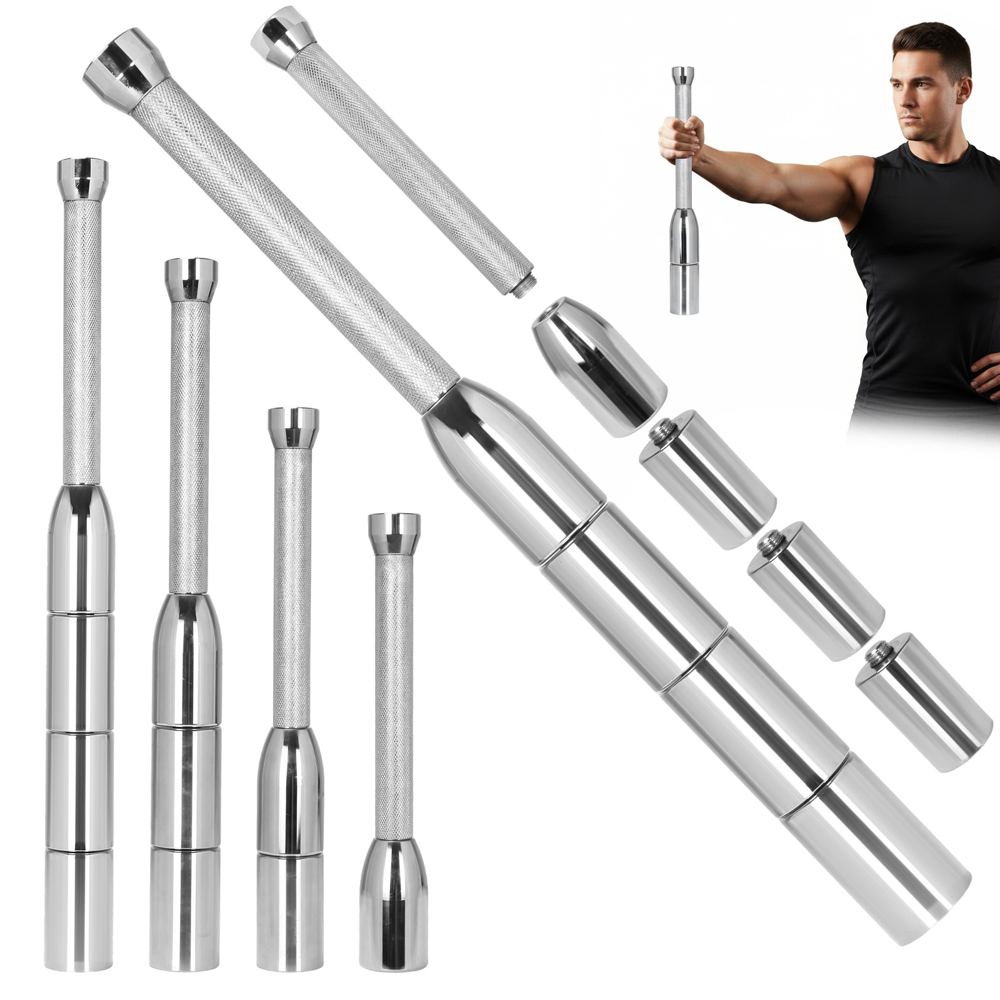
Stand with a dumbbell in each hand, arms at your sides, palms facing forward. Keeping your elbows pinned near your ribs, curl the weights toward your shoulders, then lower them slowly — the lowering phase builds strength too. Sets and reps: 2–3 sets of 10–15. Common mistake: swinging the weights using your back. If you need momentum, choose a lighter pair, such as the lighter settings on the Adjustable Dumbbell with Wear Resistant Grips.
9. Overhead Triceps Extension — Back of the Arms
Hold one dumbbell with both hands and lift it overhead, arms straight but not locked. Bend your elbows to lower the weight behind your head, keeping your upper arms still and pointing up, then straighten to press it back up. Sets and reps: 2–3 sets of 10–15. Beginner modification: do it seated with back support. Common mistake: elbows drifting wide — imagine holding a book between them.
10. Lateral Raise — Shoulders
Hold light dumbbells at your sides, palms facing your thighs, with a slight bend in the elbows. Raise your arms out to the sides to about shoulder height, leading with the elbows, then lower slowly. Sets and reps: 2–3 sets of 10–15. This exercise needs far less weight than most people expect — 3–8 lb is a typical starting range. Common mistake: shrugging toward your ears; keep your shoulders down and the movement smooth.
11. Dead Bug — Core
Lie on your back, arms reaching toward the ceiling, knees bent at 90 degrees over your hips. Press your lower back gently into the mat. Slowly extend one leg and the opposite arm away from you, exhale, then return and switch sides. Optionally hold a very light dumbbell in your hands. Sets and reps: 2–3 sets of 5–8 per side. Common mistake: the back arching off the floor — shrink the movement until you can keep contact throughout.
12. Farmer's Carry — Grip, Core and Posture
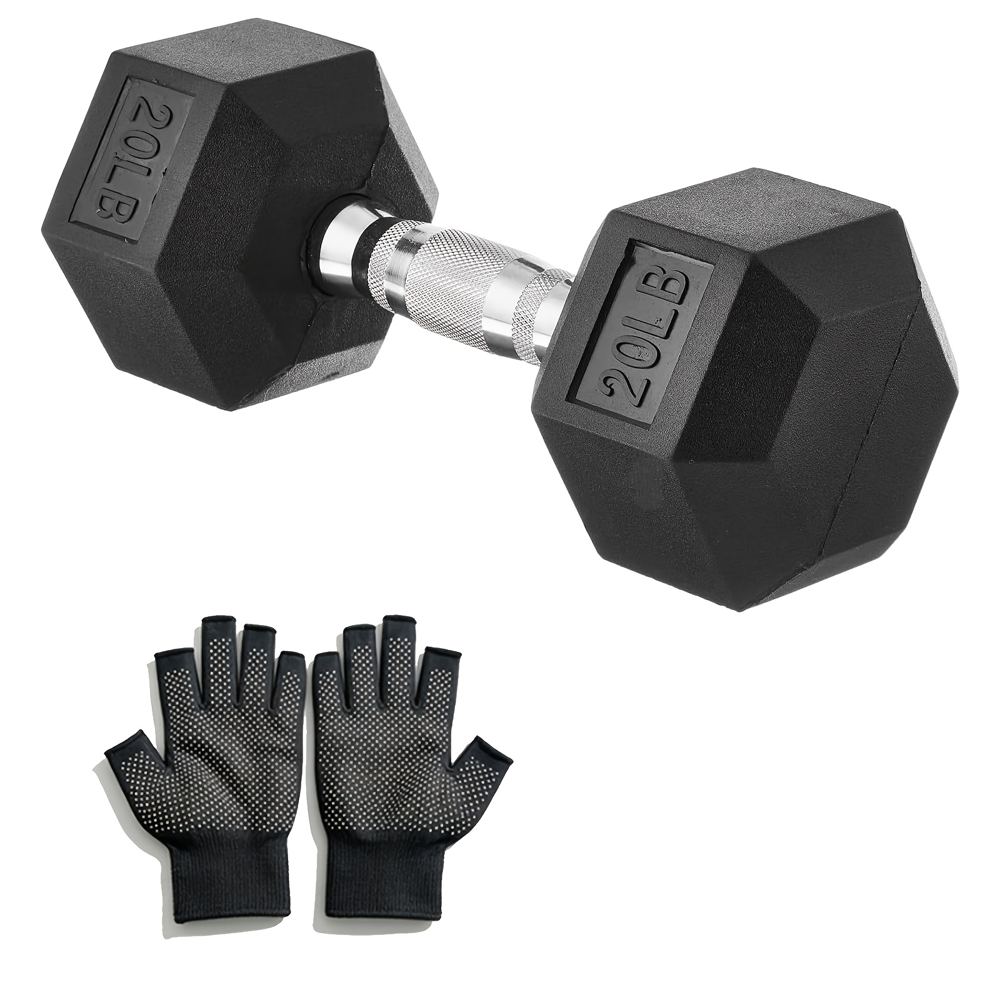
Pick up a heavier dumbbell in each hand — the Rubber-Coated Hex Dumbbells work well here — stand tall, shoulders down and back, and walk slowly for 30–60 seconds, as if carrying two heavy shopping bags. Sets and reps: 2–4 walks. This simple exercise trains grip, core stability, and posture at once. Common mistake: leaning away from the weight or rushing — walk tall and unhurried.
Putting It Together: A Sample Full-Body Session
You do not need all twelve in one day. Pick six to eight and alternate combinations across the week:
| Exercise | Sets | Reps | Rest | | --- | --- | --- | --- | | Goblet Squat | 3 | 8–12 | 60 sec | | Bent-Over Row | 3 | 8–12 | 60 sec | | Floor Press | 3 | 8–12 | 60 sec | | Romanian Deadlift | 3 | 8–12 | 60 sec | | Shoulder Press | 2 | 8–10 | 45 sec | | Dead Bug | 2 | 6 per side | 45 sec | | Farmer's Carry | 2 | 30–45 sec | 45 sec |
Two or three sessions like this per week, with rest days between them, is a solid framework for most women. If bands might suit some movements better, our side-by-side guide Resistance Bands vs Dumbbells lays out the trade-offs, and our notes on fitness equipment for women over 40 may also help.
Form and Safety Reminders
- Warm up for five minutes — marching, arm circles, and a few bodyweight squats — before picking up weights.
- Move slowly enough to control every phase; if form breaks down, the set is finished.
- Mild next-day muscle soreness is common with new exercises. Sharp pain, joint pain, or numbness is not — stop and seek medical advice if it persists.
- If you are pregnant, postpartum, or managing a medical condition, get clearance from your doctor before strength training and follow their guidance.
- Increase weight in the smallest step available, and only when you can complete the top of the rep range with clean form.
FAQ
Q: What weight dumbbells should a woman start with?
A common starting range is 3–8 lb for upper-body exercises and 10–20 lb for lower-body movements like squats and deadlifts, because leg muscles are naturally stronger. Your true starting point is the weight that challenges you while your form stays clean.
Q: How many dumbbell workouts should I do each week?
Two to four full-body sessions per week works well for most women, with at least a day between sessions that train the same muscles. Beginners usually do best with two or three; consistency matters far more than squeezing in extra days.
Q: Will dumbbell training make my arms bulky?
Dumbbell training with home weights builds firm, capable muscle gradually. A bulky physique requires years of heavy, high-volume training and deliberate nutrition aimed at that goal — it does not happen by accident from two or three sessions a week.
Q: Can I do these exercises if my knees are sensitive?
Many women can, with modifications: squat to a chair, shorten the lunge range, and favour glute bridges and deadlifts, which load the knees less. Avoid deep knee bending that provokes pain, and speak to a physiotherapist if knee pain is an ongoing issue.
Q: Do I need a bench for these exercises?
No. Every exercise here is designed for the floor, a mat, or standing. The floor press replaces the bench press, and a sturdy chair provides support for rows and seated presses.
The Bottom Line
Twelve exercises, one pair of dumbbells, and a little floor space: that is enough to train your whole body at home. Learn the movements at light weights, keep your form honest, and add load in small steps as the weeks pass. Strength is a skill as much as a capacity — practise it, rest properly, and let gradual progress do its work.
