Pilates for women beginners: a complete starter routine for core strength and posture — breathing basics, six key exercises, and equipment worth having.
Pilates for Women: A Beginner Routine for Core and Posture
Pilates has a quiet reputation for transforming posture — and for once, the reputation is mostly earned. The method trains the deep core muscles that hold your spine steady, teaches you to breathe with movement instead of against it, and builds balanced strength without impact. For women starting Pilates at home, the barrier is low: a mat and your own body weight are enough for a genuinely effective beginner routine.
This guide gives you exactly that routine: the breathing foundation everything else depends on, six beginner exercises with full technique cues, and honest advice on which equipment is worth buying and which is not. No exercise can promise specific aesthetic results or timelines — bodies adapt at their own pace — but consistent Pilates practice reliably improves core control, postural awareness, and how steady you feel in everyday movement.
This guide contains affiliate links. If you buy through them, VÉLORA may earn a commission at no extra cost to you.
What Pilates Does Best
Pilates targets the deep stabilizers — the transverse abdominis, pelvic floor, multifidus, and diaphragm working as a team — rather than the surface muscles most workouts chase. That is why it pairs so well with everything else: runners, lifters, and desk workers all benefit from a core that stabilizes automatically. Sessions are low-impact and precise, which makes the method suitable for most beginners, though anyone pregnant, postpartum, or managing a health condition should get provider clearance first and follow that guidance over anything here.
The Breathing Foundation (Learn This First)
Pilates uses lateral thoracic breathing: inhale to expand the ribcage sideways and into the back, exhale to draw the ribs together and gently engage the deep abdominals — as if cinching a corset. Practice lying on your back, knees bent, hands on your lower ribs. Feel the ribs widen on the inhale without your belly ballooning upward. Exhale through pursed lips and feel the ribs knit together. Spend 2–3 minutes on this before every session for your first two weeks. Every exercise below assumes this breathing pattern.
Mat vs. Reformer: What Beginners Need to Know
| | Mat Pilates | Reformer Pilates | | --- | --- | --- | | Equipment | Just a mat | A reformer machine | | Cost to start | Very low | High (machine or studio) | | Best for beginners | Yes — learn control with body weight | Great, but not required | | Home practicality | Excellent | Needs space and budget |
Start with mat work. It teaches the control and breathing that make every other Pilates format better later. Home reformers like the VEVOR Pilates Reformer exist, but they are a second-stage purchase — master the mat first, then decide. Our full Pilates equipment guide compares the options in detail.
Equipment Worth Having (and What to Skip)
- A mat. Non-negotiable for floor work. A medium mat around 6–8 mm cushions the spine during rolling exercises without wobbling underfoot — the 1pc 8mm Thick Yoga Mat is a solid choice. See our guide on choosing mat thickness if you are unsure.
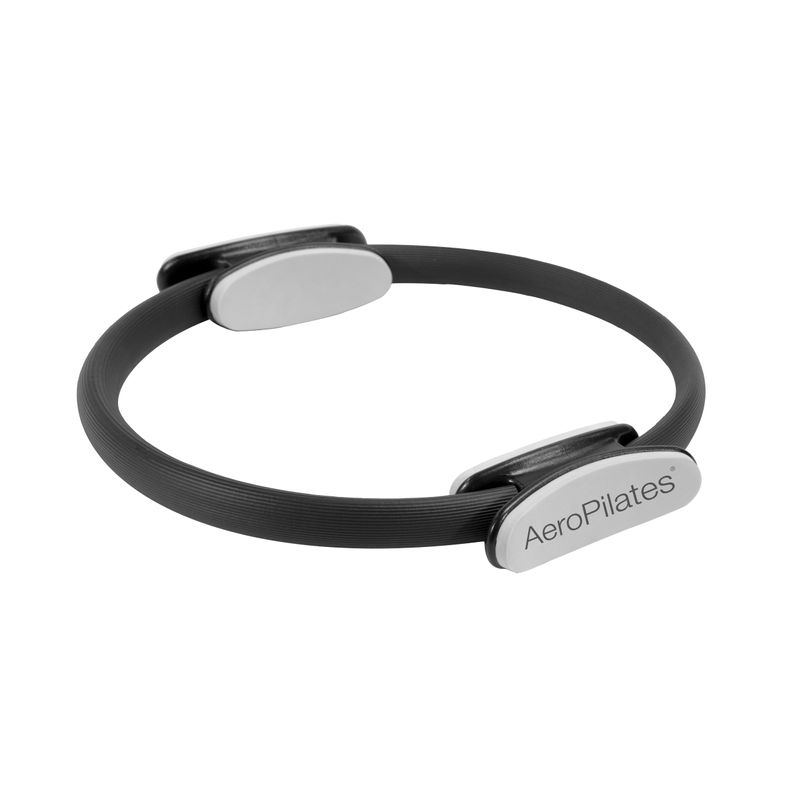
- A Pilates ring (magic circle). The classic small prop: squeeze it between thighs, ankles, or palms to add resistance to familiar moves. The AeroPilates Magic Circle is the standard 14-inch size. Worth buying once you know you enjoy the method.
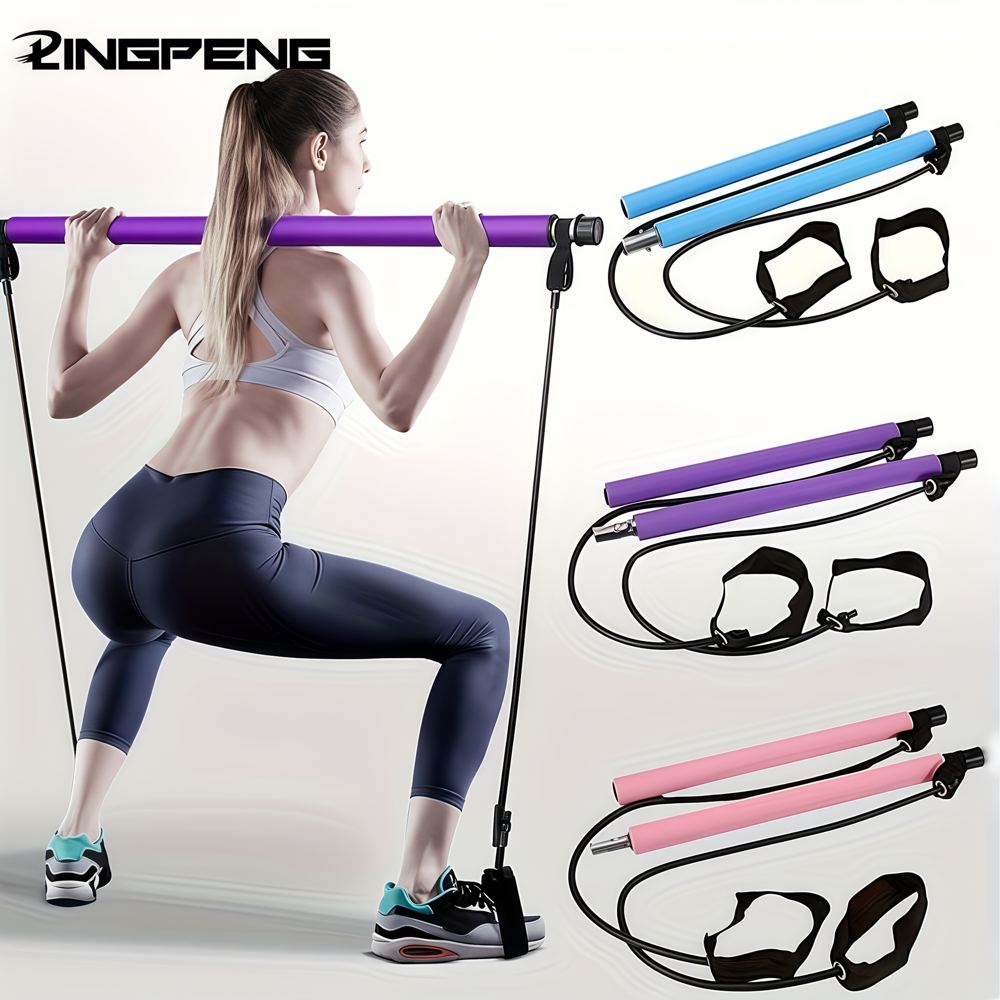
- A Pilates bar kit. A bar with resistance bands that simulates some reformer-style pulling and pressing at home. The Pilates Bar Kit with Resistance Bands adds useful variety for upper-body and leg work.
- Skip for now: reformers, chairs, and barrels until mat practice is a habit you actually keep.
The Beginner Routine
Do this 2–3 times a week, 20–35 minutes. Move slowly — in Pilates, control is the exercise.
1. Pelvic curl (bridge with articulation)
Purpose: wakes up the glutes and teaches spinal articulation, the rolling-through-the-spine skill Pilates is built on.
Starting position: lie on your back, knees bent, feet flat hip-width apart, arms by your sides.
Technique: exhale and tilt your pelvis to imprint your lower back into the mat, then peel your spine off the mat one vertebra at a time until your body forms a line from shoulders to knees. Inhale at the top. Exhale and roll back down slowly, placing each part of the spine down in order.
Sets/reps: 2–3 sets of 8–10 slow repetitions.
Beginner modification: lift only halfway, or skip the roll and do a simple glute bridge.
Common mistakes: rushing the roll-down; pushing through the feet so the knees splay outward — keep them tracking over your ankles.
2. Dead bug
Purpose: trains the deep core to stabilize the spine while limbs move — the single most transferable Pilates skill.
Starting position: on your back, arms reaching to the ceiling, hips and knees bent at 90 degrees, lower back gently imprinted.
Technique: exhale and slowly lower your right arm overhead and left leg toward the floor, keeping the back still. Inhale to return. Alternate sides.
Sets/reps: 2 sets of 6–10 per side.
Beginner modification: move only the arms, or only the legs, until the back stays quiet.
Common mistakes: letting the lower back arch off the mat — shorten the range the moment it happens.
3. Single-leg stretch
Purpose: coordinates breath, core stability, and leg movement — a classical Pilates staple.
Starting position: on your back, head and shoulders curled up, one knee drawn toward your chest with hands on the shin, other leg extended at about 45 degrees.
Technique: exhale to switch legs, hands guiding the incoming knee. Keep the torso still and the extended leg's lower back imprinted.
Sets/reps: 2 sets of 6–10 switches per side.
Beginner modification: keep your head down and the extended leg higher (closer to vertical is easier on the back).
Common mistakes: pulling the knee aggressively toward the chest — the hands guide, they do not yank.
4. Side-lying leg lift series
Purpose: strengthens the outer hips and glutes, which support knee alignment and pelvic stability.
Starting position: lie on your side, head resting on your bottom arm, top hand on the mat in front of your chest, legs stacked and slightly forward.
Technique: exhale and lift the top leg to about hip height, keeping it in line with your body (do not let it drift forward). Lower with control. Add 10–15 small pulses at the top on the final set.
Sets/reps: 2 sets of 10–15 lifts per side.
Beginner modification: bend the bottom knee for a wider base of support.
Common mistakes: rolling the torso backward to lift higher — keep the lift honest and the waist long.
5. Swimming prep (prone back extension)
Purpose: strengthens the back extensors that counteract desk posture.
Starting position: lie face down, forehead on folded hands, legs extended, navel gently drawn in.
Technique: exhale and lift your head, chest, and one arm slightly, reaching long through the fingertips; lower and alternate arms. Think length, not height.
Sets/reps: 2 sets of 8–10 alternating lifts.
Beginner modification: lift just the head and chest, arms staying down.
Common mistakes: cranking the neck — keep your gaze down and the back of the neck long.
6. Spine stretch forward (seated)
Purpose: a gentle closing stretch for the back and hamstrings that reinforces the Pilates C-curve.
Starting position: sit tall, legs extended hip-width apart, feet flexed, arms reaching forward at shoulder height.
Technique: exhale and round forward sequentially — head, then ribs, then lower back — reaching toward your toes. Inhale to stack back up tall.
Sets/reps: 5–8 slow repetitions.
Common mistakes: forcing the reach with straight-spine hinging — let the spine round, and bend the knees slightly if hamstrings are tight.
How Often and How to Progress
Two to three sessions a week is the sweet spot for beginners, paired with walking or another gentle activity on other days — our beginner home workout plan shows how to combine them. Progress by adding repetitions, slowing the tempo, or introducing the ring: try squeezing the magic circle between your inner thighs during the pelvic curl, or between your palms during the single-leg stretch.
Safety Notes
Never force a position through pain — Pilates should feel like deep muscular work, not joint strain. Keep the neck relaxed by imagining a small orange under your chin during curled positions. If you are pregnant or postpartum, get provider clearance first: lying flat, deep flexion, and intense abdominal work all need professional guidance in those seasons. Stop any exercise that causes sharp pain, dizziness, or numbness.
FAQ
Q: Is Pilates enough exercise on its own?
It depends on your goals. Pilates excellently covers core strength, posture, flexibility, and body control, but it does not provide much cardiovascular training or heavy bone-loading resistance. Most women get the best results pairing 2–3 Pilates sessions with walking and 1–2 basic strength sessions weekly.
Q: How long until I see results from Pilates?
The classic quote promises change in tens of sessions — treat that as marketing, not a guarantee. What most beginners genuinely notice within a few weeks is better postural awareness and less stiffness; visible changes in strength and tone build gradually over months of consistent practice. Results vary, and consistency matters far more than intensity.
Q: Do I need a reformer to do real Pilates?
No. Mat Pilates is the original method and a complete workout on its own — many instructors consider it harder than reformer work because nothing assists you. A reformer adds resistance variety, but it is optional, not essential.
Q: Pilates or yoga — which should a beginner choose?
Both are excellent low-impact options. Pilates leans toward core stability, precise muscle sequencing, and postural correction; yoga leans toward flexibility, balance, breathwork, and often a spiritual or mindfulness element. Try a few sessions of each — many women happily practice both.
Q: Why does my neck hurt during ab exercises?
Almost always because the neck is doing the abs' work: the head gets yanked forward or held rigidly. Keep the chin slightly tucked, support the head with interlaced hands during curls, and lower the head entirely if the neck fatigues before the abs do. Neck strain is a form cue problem, not a required part of Pilates.
The Bottom Line
Pilates for women beginners comes down to six honest exercises, one breathing pattern, and a mat. Learn the lateral breath, move slowly enough to stay in control, and repeat the routine two to three times a week. Your posture, core stability, and body awareness will improve — not overnight and not by magic, but steadily, the way all real training works. When the mat routine feels easy, the ring and bar kit are waiting to take it further.
