Pilates reformer vs mat Pilates: compare resistance, cost, space, and results. A clear, honest breakdown to help you choose the right Pilates style for your goals.
Pilates Reformer vs Mat Pilates: Which Is Right for You?
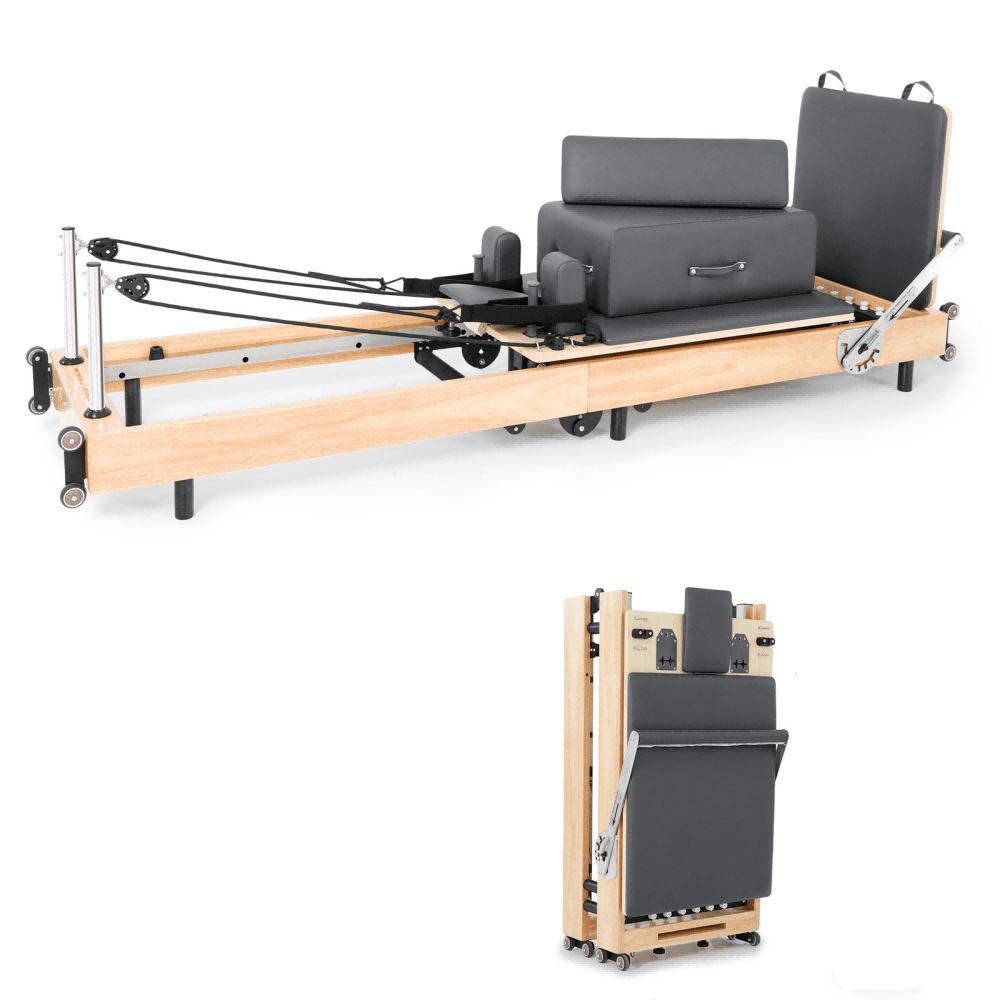
Pilates is having a well-deserved moment. But the moment you look into starting, you meet the big fork in the road: reformer or mat? One involves a sliding carriage, springs, and straps — and a machine that looks like elegant torture equipment. The other needs nothing but a mat and your body.
Both are genuine Pilates. Both were part of Joseph Pilates' original method. And both build the deep core strength, posture, and controlled mobility that make Pilates famous. The differences are in how they deliver resistance, what they cost, how much space they need, and who tends to thrive with each. This guide lays it all out honestly so you can choose with confidence.
This guide contains affiliate links. If you buy through them, VÉLORA may earn a commission at no extra cost to you.
What Each One Actually Is
Mat Pilates is the original form: a sequence of exercises performed on a mat, using your body weight — and sometimes small props like rings, bands, or balls — as resistance. Think roll-ups, the hundred, single-leg circles, and planks with a Pilates twist. If you have done our beginner Pilates routine for women, you have done mat Pilates.
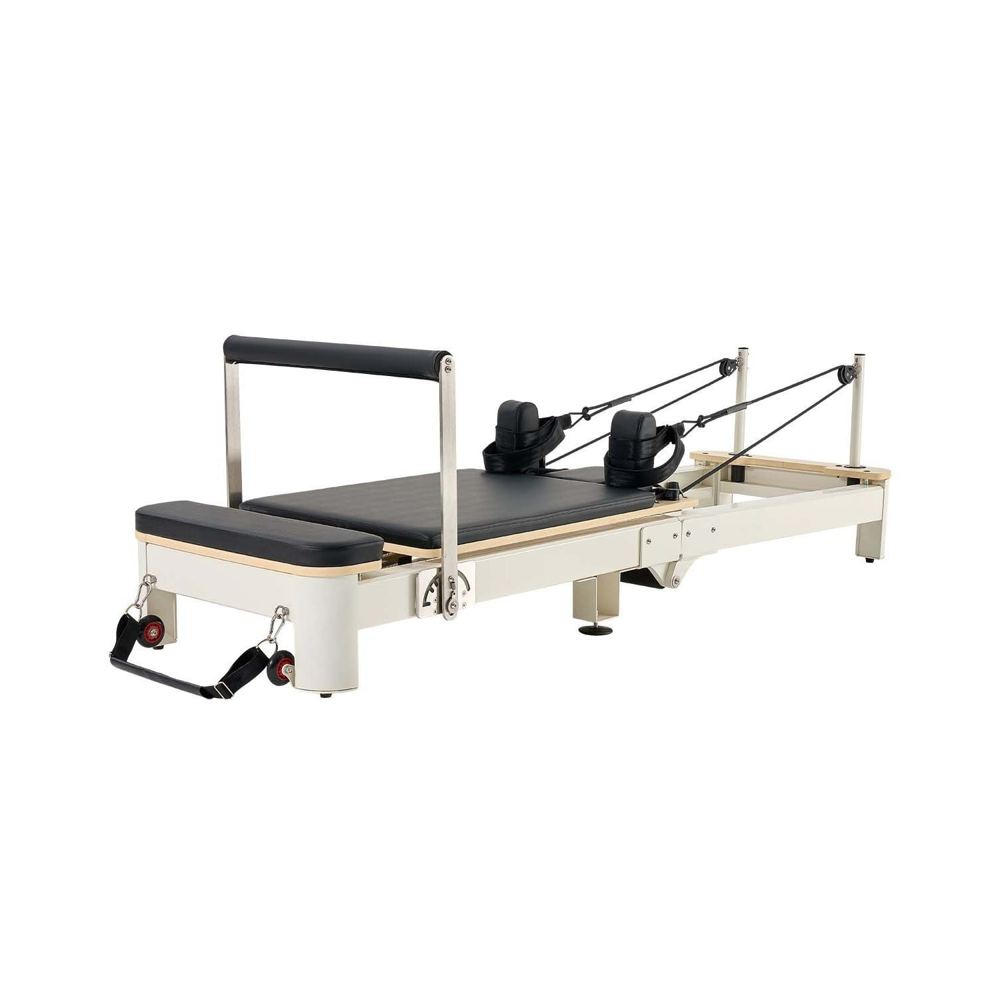
Reformer Pilates uses a machine called a reformer: a sliding carriage on a frame, attached to springs of varying tension, with straps, a footbar, and a headrest. You push and pull the carriage against spring resistance through hundreds of possible exercises — some lying down, some kneeling, some standing on the machine. The machine both assists and resists your movement, which is what makes it unique.
Resistance: Springs vs Gravity
This is the fundamental mechanical difference, and it shapes everything else.
Mat Pilates uses gravity and body weight. Your muscles work against the weight of your own limbs and torso. This is beautifully simple — no equipment to adjust — but it means the resistance is fixed. A beginner and an advanced practitioner do the same roll-up against the same body weight; the difference is control, range, and repetitions. Progress comes from better form and harder variations, not heavier loads.
Reformer Pilates uses calibrated springs. You can make an exercise easier by reducing spring tension (the machine supports more of your weight) or harder by adding springs. This adjustability is the reformer's superpower: the same machine can gently support a rehab client through a leg press and then challenge an athlete with heavy spring-loaded lunges. The springs also provide assistance — for example, the straps can help guide your legs through a controlled circle, teaching your muscles the pattern before you do it unassisted.
For beginners, spring assistance is genuinely helpful: it lets you feel correct movement patterns before your muscles can produce them alone. For experienced practitioners, heavy springs add a strength dimension that body weight alone cannot match.
Cost: The Honest Overview
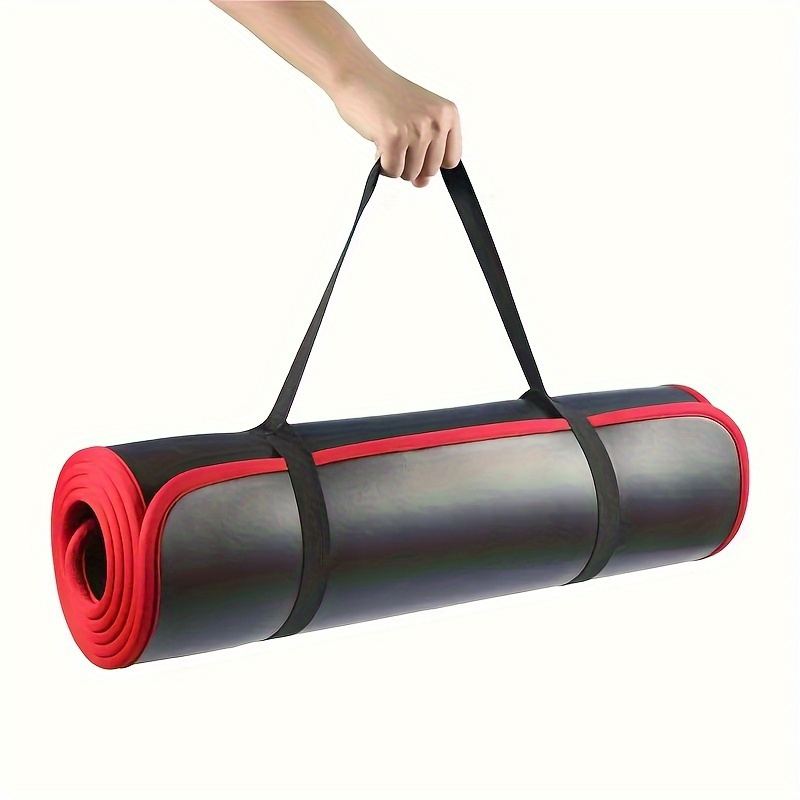
Mat Pilates is one of the most affordable ways to train. A good mat costs very little, classes (in-person or online) are typically priced like standard group fitness, and home practice costs nothing after the initial setup. Many excellent home Pilates programs run entirely on a mat.
Reformer Pilates costs more at every level. Studio classes are priced higher because the equipment is expensive and class sizes are small (usually 4–8 machines). A home reformer is a real investment — generally ranging from a few hundred dollars for basic foldable models to several thousand for studio-grade machines.
The honest math: a year of weekly reformer studio classes typically costs far more than buying a home reformer. If you fall in love with the reformer after a few months of classes, a foldable home reformer can pay for itself within a year or two of regular use — provided you actually use it.
Space Needs
Mat Pilates needs a mat-sized patch of floor — roughly 2 × 1 meters. It fits in a bedroom, a living room corner, or a hotel room. Nothing to store, nothing to assemble.
Reformer Pilates needs a dedicated footprint. A full-size reformer is about 2.2–2.5 meters long and 0.6–0.7 meters wide, plus room to move around it. Foldable and lower-profile models exist specifically for home use and can slide under a bed or stand against a wall — but "foldable" still means a substantial piece of furniture. Before buying, measure your space honestly, including the clearance you need on all sides to use the straps and stand beside the machine.
If space is tight, mat Pilates wins outright. If you have a spare corner or a home gym area, a reformer becomes realistic.
Learning Curve and Guidance
Mat Pilates looks simple and is deceptively demanding. Without springs to guide you, every movement depends on your own body awareness. Beginners often struggle to "find" the right muscles — the deep abdominals, the pelvic floor, the back extensors — because nothing is showing them the path. Good instruction (a few foundational classes or a solid beginner program) makes an enormous difference. The upside: once you learn the fundamentals, you can practice anywhere, forever, for free.
Reformer Pilates is more intuitive for many beginners precisely because the machine guides the movement. The carriage track shows you the line of motion; the straps position your limbs; the springs give your muscles something concrete to work against. Many people report "feeling" their core engage on a reformer weeks before they can find it on the mat. The downside: you need access to a machine, and proper setup (spring changes, strap lengths, headrest positions) takes a few sessions to learn.
Who Each Suits Best
Mat Pilates tends to suit you if: you want an affordable, anywhere practice; you travel often; you are self-motivated and happy to follow video instruction; you want to build body awareness and core control progressively; or you are pairing Pilates with other training (running, lifting) as a complement rather than the main event.
Reformer Pilates tends to suit you if: you love equipment-based training and the feedback it gives; you want adjustable resistance that can both assist and challenge; you are recovering from an injury or managing a condition and would benefit from supported, guided movement (with professional guidance); you enjoy the studio experience and small-group coaching; or you have the space and budget for a home machine and will use it several times a week.
Rehab and special populations: both forms are widely used in rehabilitation settings, but the reformer's adjustable support makes it the more common clinical choice. If you are working around an injury, talk to your physiotherapist about which is appropriate — and get clearance before starting either.
Home vs Studio: Practical Considerations
Mat at home is the easiest fitness habit in existence: unroll, press play, train. Our best Pilates equipment for home guide covers the small props that keep a home mat practice fresh for years.
Reformer at home is realistic but demands commitment. Beyond the purchase, consider: assembly, floor protection, ceiling height for standing work, and — most importantly — instruction. A reformer without guidance is an expensive clothes rack. Budget for a few private or small-group sessions to learn setup and fundamentals, or a reputable online reformer program, before training solo.
Studio reformer gives you professional equipment, an instructor's eyes on your form, and the motivation of a booked class. It is the best way to try the reformer before investing, and for many people it remains the best long-term option — no storage, no maintenance, expert guidance every session.
Side-by-Side Comparison
| Feature | Reformer Pilates | Mat Pilates | |---|---|---| | Resistance source | Adjustable springs (assist + resist) | Body weight and gravity | | Equipment cost | Significant (machine purchase) | Minimal (mat + optional props) | | Class cost | Higher (small groups, pricey machines) | Standard group-fitness pricing | | Space needed | ~2.5m machine + clearance | Mat-sized floor patch | | Portability | Stays home (even foldable models) | Anywhere — travel-friendly | | Beginner-friendliness | Machine guides movement; intuitive | Demands more body awareness | | Strength ceiling | Higher (heavy spring loading) | Lower (progress via variations) | | Best for | Guided resistance, rehab support, equipment lovers | Budget, travel, body awareness, simplicity |
Can You Do Both? (Yes — Many People Do)
This is not actually an either-or decision for most practitioners. A common and effective pattern: reformer classes once or twice a week for guided, spring-loaded strength work, plus short mat sessions at home on other days to maintain the habit. The two reinforce each other — the body awareness from mat work improves your reformer sessions, and the strength from the reformer makes mat exercises feel more controlled.
If budget allows only one: start with mat Pilates. It teaches the foundational principles (breathing, centering, control) that make every other form of Pilates better, and it costs almost nothing to begin. Add the reformer later if you crave adjustable resistance or fall in love with the machine in a trial class.
A Sample Week Combining Both
- Monday: 25-minute mat session at home (the hundred, roll-ups, single-leg stretch, glute bridges — 8–12 reps each)
- Wednesday: Reformer studio class or home reformer session (45–50 minutes)
- Friday: 20-minute mat core focus at home
- Sunday: Gentle mat stretching and mobility (15–20 minutes)
Two to four Pilates sessions per week suits most people. Beginners should start with 2 sessions per week and build gradually.
FAQs
Is reformer Pilates better than mat Pilates? Neither is objectively better — they are different tools. The reformer offers adjustable spring resistance and guided movement; the mat offers simplicity, portability, and affordability. Many practitioners consider the reformer more effective for building strength, and the mat better for body awareness, but results vary with consistency and instruction quality.
Can beginners start directly on the reformer? Yes — in fact, many instructors recommend it. The machine's guidance helps beginners feel correct muscle engagement sooner than the mat often does. Start with beginner or fundamentals classes to learn machine setup safely.
Will Pilates change my body shape? Pilates builds core strength, improves posture, and increases body awareness and mobility — changes many people notice in how they stand, move, and feel. Visible physique changes depend on many factors including diet, overall activity, and genetics; no exercise method guarantees specific aesthetic outcomes, and results vary person to person.
How many times per week should I do Pilates? Two to four sessions per week is a solid range for most people. Joseph Pilates' tradition suggests the method works best with regularity rather than marathon sessions — shorter, frequent practice beats occasional long workouts.
Is a home reformer worth the money? It can be, if you will use it at least 2–3 times per week and have learned proper setup and form first. A home machine typically pays for itself compared to studio classes within a year or two of consistent use. If you are unsure, take a month of studio classes before deciding.
Do I need to be flexible to start Pilates? No. Pilates meets you where you are — the method was designed to build strength and mobility together, and every exercise has regressions. Inflexibility is a reason to start, not a reason to wait.
Conclusion
Reformer vs mat is really a question about your life, not about which is "better." Choose the reformer if you want guided, adjustable resistance and have the budget and space. Choose the mat if you want freedom, affordability, and a practice that travels with you. Choose both if you can — they complement each other beautifully. Whichever path you take, the Pilates principles are the same: breathe, center, control, and practice consistently. That consistency, more than any machine, is what delivers results over time. Explore reformers and mat essentials in VÉLORA's Pilates collection.
