Back pain makes workout decisions feel risky. Learn which gentle movements help, what to pause in a flare-up, and red flags needing prompt professional care.
Lower Back Pain and Exercise: When to Train, When to Rest

Few things create more confusion than lower back pain and exercise. One voice says rest until it passes; another says keep moving. You end up either lying on the couch feeling guilty, or training through pain and making it worse. Neither is ideal.
Here's the modern, widely accepted view, stated plainly: for most common, non-specific low back pain — the garden-variety ache with no red-flag symptoms — gentle movement usually beats prolonged bed rest. That doesn't mean pushing through serious pain or training hard. It means the right kind of easy movement, at the right time, generally helps more than doing nothing. This guide gives you a practical decision framework, back-friendly movements with clear technique, what to pause during a flare-up, and the warning signs that need prompt professional care. This is general information, not medical advice and not a diagnosis.
This guide contains affiliate links. If you buy through them, VÉLORA may earn a commission at no extra cost to you.
The Train-or-Rest Decision Framework
Use this simple three-zone system when your back is acting up:
Green zone — train normally (with awareness). Mild stiffness or a dull background ache that doesn't worsen during or after movement. You can do your regular workout, but warm up a little longer, keep loads moderate, and skip anything that provokes the pain.
Yellow zone — modify and move gently. Noticeable pain that eases with gentle movement but flares with certain positions or loads. Do the back-friendly movements in this guide, walk, and stretch gently. Pause heavy spinal loading, aggressive twisting, and high-impact work until you're back in the green.
Red zone — rest and seek care. Severe pain, pain after trauma, or any red-flag symptom listed below. This is not a training question anymore — get assessed.
The key insight: most back episodes live in the yellow zone, where gentle movement outperforms the couch. Total bed rest beyond a day or two tends to prolong stiffness and weaken the very muscles that support your spine.
Movements That Are Usually Back-Friendly
These are widely considered gentle and safe for non-specific low back pain. Move slowly, breathe naturally, and stay within a pain-free range — mild stretch sensation is fine; sharp pain is not.
Walking
The most underrated back therapy there is. Start with 10–15 minutes on flat ground at an easy pace, building toward 20–30 minutes as comfort allows. Keep your posture tall, arms swinging naturally. If walking consistently eases your back, do more of it — two short walks often beat one long one during a flare-up.
Cat-cow
On hands and knees, hands under shoulders, knees under hips. Cat: exhale, round your back toward the ceiling, tuck your chin. Cow: inhale, let your belly drop, lift your tailbone and chest. Move slowly through 8–10 cycles, twice a day. This gently mobilizes the whole spine without loading it. For the full technique breakdown, see our cat-cow spinal mobility guide.
Bird-dog
From hands and knees with a flat, neutral back: extend your right arm forward and left leg back simultaneously, keeping your hips level — imagine balancing a glass of water on your lower back. Hold 5–8 seconds, return with control, switch sides. Do 2–3 sets of 5–8 reps per side. This trains the deep spinal stabilizers with minimal spinal load.
Glute bridges
Lying on your back, knees bent, feet flat: press through your heels and lift your hips until your body forms a straight line from shoulders to knees. Squeeze your glutes for 2 seconds at the top. 2–3 sets of 10–15 reps. Strong glutes take load off the lower back — weak glutes are a classic contributor to back complaints.
Gentle knee-to-chest stretch
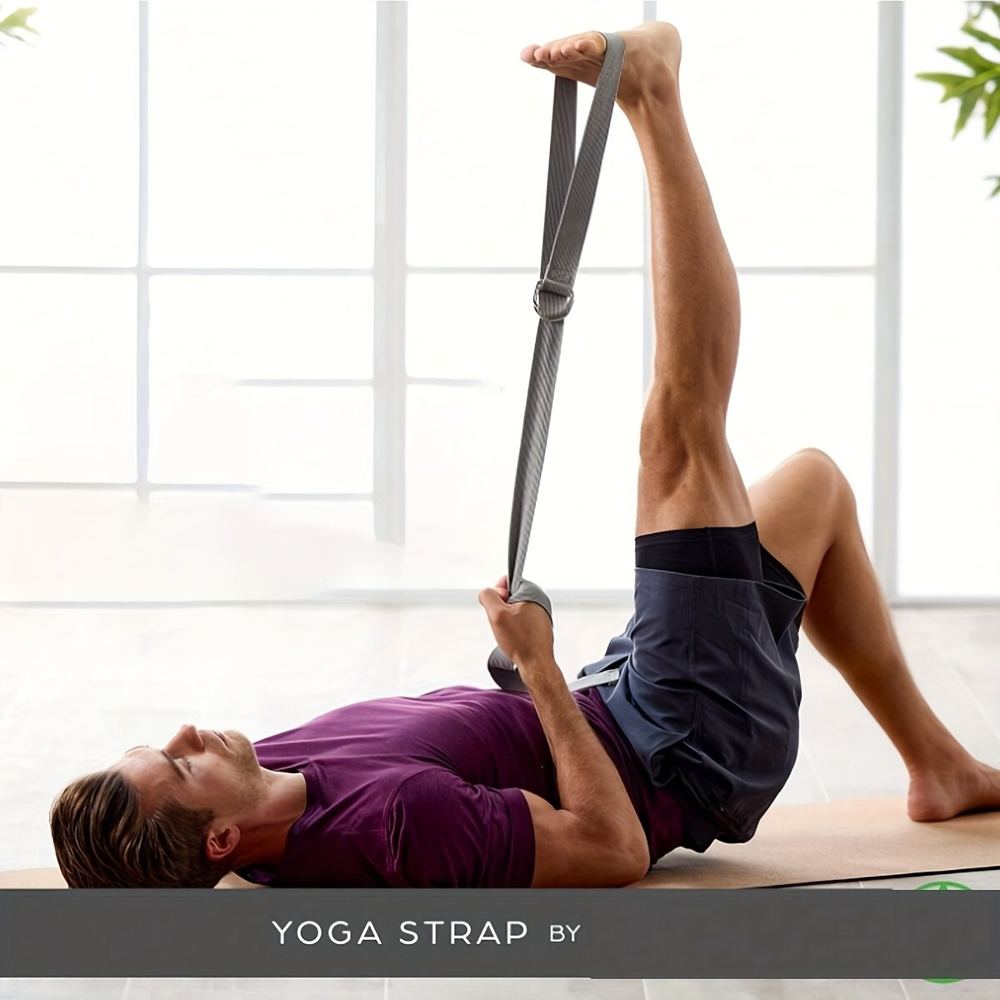
Lying on your back, pull one knee gently toward your chest until you feel a mild stretch in the lower back and glute, hold 20–30 seconds, switch sides. A yoga stretch belt with adjustable metal D-ring buckle looped around your foot lets you get the same stretch without straining to reach your leg — helpful when your back is too sensitive for deep reaching.
Do these on a comfortable surface — a thick mat or carpet makes floor work far more inviting when your back is tender.
What to Pause During a Flare-Up
When you're in the yellow zone, temporarily set aside:
- Heavy spinal loading — heavy deadlifts, barbell back squats, heavy overhead presses. The load isn't the enemy forever, but during a flare-up it's not the time.
- Aggressive twisting under load — Russian twists with weight, loaded rotational work. Gentle unloaded rotation (like supine twists) is usually fine.
- Deep forward bending with load — heavy stiff-legged deadlifts, weighted toe-touches. Bodyweight forward folds with soft knees are generally okay if pain-free.
- High-impact activity — running, jumping, plyometrics. Swap for walking or easy cycling until you're green again.
- Prolonged sitting — not an exercise, but the biggest aggravator for most people. Break sitting every 30–45 minutes with a short walk or standing stretch.
This is a pause, not a ban. As pain settles over days to weeks, reintroduce these gradually, starting light. Our lower back strengthening exercises guide is the right next step once you're back in the green — building a stronger back is the best long-term insurance against repeat episodes.
Supportive Tools (Comfort, Not Cures)
A few tools can make the yellow zone more comfortable while you recover — none of them fix the underlying issue, but comfort supports movement, and movement supports recovery:
- Back support belt. A breathable unisex back support belt can provide a sense of support and postural reminder during daily activity. Use it for tasks that aggravate your back, not as an all-day crutch — your own muscles need to do the long-term work.
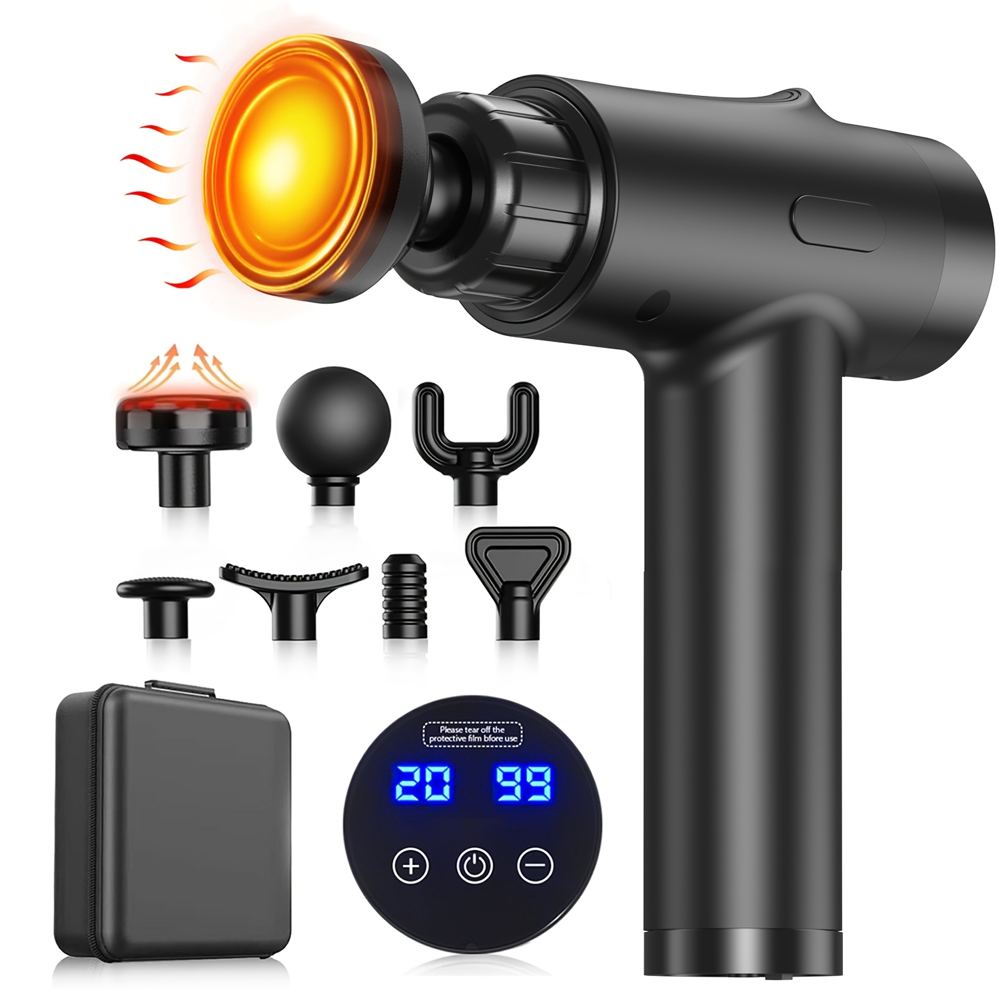
- Massage gun (gentle use). An athlete massage gun on a low setting, used for 30–60 seconds on tight glutes, hip flexors, or the muscles around (never directly pounding on) the sore spinal area, can ease the protective muscle tension that accompanies back pain. Keep pressure moderate and stop if it increases pain.
- Stretch strap. The yoga stretch belt mentioned above makes gentle hamstring and hip stretches accessible without awkward reaching — tight hamstrings and hip flexors commonly contribute to back discomfort.
For dedicated stretching routines as you recover, our lower back stretches guide pairs well with this one.
Situation Guide: Okay, Pause, or Seek Care
| Situation | What to do | |---|---| | Mild stiffness, no red flags, movement helps | Generally okay — walk, do gentle mobility, train lightly | | Dull ache that worsens with specific lifts | Pause and monitor — modify around it; drop the aggravating movements for 1–2 weeks | | Pain after a minor strain, improving daily | Pause and monitor — gentle movement, walking; expect gradual improvement over days | | Pain that doesn't improve after 2–3 weeks of sensible care | Seek care — see a qualified professional for assessment | | Numbness, tingling, or weakness in a leg or foot | Seek care promptly | | Changes in bowel or bladder function | Seek care promptly — urgent | | Severe pain after a fall, accident, or trauma | Seek care promptly — urgent | | Back pain with fever, chills, or unexplained weight loss | Seek care promptly | | Pain that steadily worsens despite rest and gentle movement | Seek care — don't wait it out indefinitely |
This table is a decision aid, not a diagnosis. When in doubt, professional assessment beats internet guidance every time.
Building a Back That Complains Less
Once you're pain-free, the best long-term strategy is a back that's strong and mobile — not one you tiptoe around forever: strengthen the posterior chain (glute bridges, bird-dogs, eventually well-formed deadlifts and rows), train the core with planks and dead bugs rather than endless crunches, keep hips mobile, walk daily, and progress loads gradually. Most training-related back episodes trace to doing too much too soon — not to any single exercise being "bad."
Safety Notes and Red Flags
To state it clearly once more — seek prompt professional care if you experience:
- Numbness, weakness, or tingling in the legs or feet
- Bowel or bladder changes (difficulty urinating, incontinence, numbness in the saddle area) — treat as urgent
- Severe pain following trauma — a fall, car accident, or heavy impact
- Fever accompanying back pain, or unexplained weight loss
- Pain that doesn't improve over several weeks of sensible self-care, or pain that keeps worsening
- History of cancer, osteoporosis, or long-term steroid use with new back pain — mention this history to your clinician
If you are pregnant or postpartum, get your provider's clearance before doing back exercises, and stop and seek care for any warning signs your provider has flagged for you. Never try to diagnose the cause of your back pain yourself — backs are complex, and professional assessment exists for exactly this reason.
FAQ
Q: Should I rest or exercise with lower back pain?
For most common backaches without red-flag symptoms, gentle movement — walking, cat-cow, bird-dogs — usually helps more than prolonged bed rest. Rest briefly if pain is severe, but aim to return to gentle activity within a day or two. Avoid heavy loading and aggressive movements until the flare settles, and see a professional if pain persists beyond a few weeks.
Q: Is walking good for lower back pain?
Yes — walking is one of the most consistently back-friendly activities. It gently mobilizes the spine, improves blood flow to the area, and avoids the stiffness that comes from sitting still. Start with 10–15 minutes on flat ground and build up as comfort allows.
Q: Which exercises should I avoid with back pain?
During a flare-up, pause heavy deadlifts and squats, loaded twisting, deep loaded forward bends, and high-impact work like running and jumping. These aren't permanently forbidden — they're temporarily set aside until you're pain-free, then reintroduced gradually.
Q: Does a back support belt fix back pain?
No — a support belt provides comfort and a postural reminder during aggravating daily tasks, but it doesn't strengthen anything or address the cause. Use it as a short-term comfort aid while you rebuild strength and mobility, not as a permanent solution.
Q: When should back pain be checked by a professional?
Promptly if you notice numbness or weakness in a leg, bowel or bladder changes, severe pain after trauma, or fever with back pain. Also get assessed if pain doesn't improve after 2–3 weeks of sensible self-care, or if it steadily worsens. These situations need professional evaluation, not more home exercises.
Q: Can exercise prevent back pain from coming back?
A stronger, more mobile back is genuinely less prone to repeat episodes. Regular posterior-chain and core strengthening, daily walking, good hip mobility, and gradual load progression are the best-supported long-term strategies. There's no guaranteed prevention — results vary — but an active, strong back complains far less than a deconditioned one.
Conclusion
Lower back pain turns every workout into a judgment call, but the framework is simpler than it feels: gentle movement usually beats the couch, modify around what aggravates, pause heavy loading during flares, and rebuild strength patiently once you're clear. Respect the red flags without exception — numbness, weakness, bowel or bladder changes, post-trauma pain, and non-improving pain all deserve prompt professional care. Your back is built to move; treat it that way, wisely, and it will generally return the favor.