Knee pain during squats is common and often fixable. Learn the usual causes, practical form and load fixes, and the red flags that need professional care.
Knee Pain During Squats: Common Causes and Practical Fixes
Few things are more frustrating than knee pain showing up right when your squat training is going well. The good news: in the absence of injury or red-flag symptoms, knee discomfort during squats most often comes down to fixable things — form details, loading mistakes, or muscle imbalances — rather than anything structurally wrong with your knees.
This guide covers the most common benign contributors to knee pain during squats, practical fixes you can try immediately, and — just as important — the warning signs that mean you should stop self-managing and see a qualified professional. This is general information only, not a diagnosis; knees are individual, and persistent pain deserves professional assessment.
This guide contains affiliate links. If you buy through them, VÉLORA may earn a commission at no extra cost to you.
First: What Kind of Pain Are We Talking About?
Before fixing anything, get honest about what you're feeling. There's a meaningful difference between:
- Muscle effort and fatigue — the burn in your quads and glutes during a hard set. Normal.
- A dull, diffuse ache around the kneecap — the most common complaint; often related to form or load management.
- Sharp, stabbing, or catching pain — a stop signal. Don't push through this.
- Swelling, locking, or the knee giving way — red flags (detailed below) that warrant prompt professional care.
The fixes in this guide address the dull-ache category — the nagging discomfort that appears during or after squatting without any single traumatic incident. If your pain followed a twist, fall, or pop, skip the fixes and get assessed.
Common Benign Cause #1: Form Issues
Form is the first place to look, because small deviations multiply force on the knee joint over hundreds of reps.
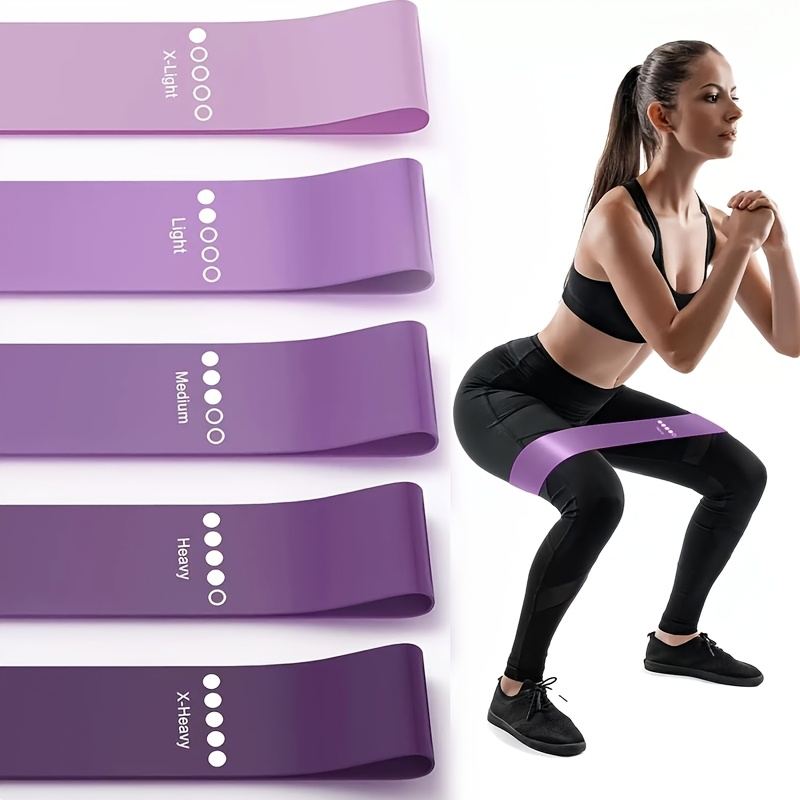
Knees caving inward (valgus collapse). When your knees drift toward each other during the ascent, the kneecap tracks poorly and the inner knee takes excess stress. Fix it with the cue "knees out" — actively press your knees outward over your toes — and strengthen the glute medius (the muscle that controls this) with banded lateral walks. Loop a resistance band for men and women above your knees for 2 sets of 10–15 steps each direction as part of your warm-up.
Weight shifting to the toes. If your heels lift and your weight rolls forward, the knees travel excessively far forward and shear forces rise. Fix: think "tripod foot" — big toe, little toe, and heel all pressing into the floor — and sit back slightly more as you descend.
Stance too narrow (or too wide) for your hips. There's no universal stance. Experiment: try your squat with feet slightly wider and toes turned out a bit more — many people find knee discomfort disappears with a stance change alone.
This section assumes you already know the squat fundamentals — tripod stance, knees tracking over toes, and depth matched to your mobility. Revisit those basics first if they're shaky, since every fix below builds on them.
Common Benign Cause #2: Too Much, Too Soon
The most underappreciated cause of knee pain is simple overload — more squatting volume, heavier weight, or deeper range than your tissues were prepared for. Tendons in particular adapt more slowly than muscles, so a sudden jump in training is a classic trigger.
Practical load-management fixes:
- Deload 20–30% on the weight for 1–2 weeks. This isn't quitting — it's the fastest route back to pain-free progress.
- Cut volume before intensity — drop a set or two per session before you drop the weight itself.
- Slow the tempo. A 3-second descent (3-1-1 tempo) with lighter weight builds the same tissues with far less joint stress than bouncing heavy reps.
- Respect the 10% rule of thumb — increase weekly squat volume or load gradually rather than in big jumps.
If the ache fades during a deload and doesn't return as you rebuild gradually, load management was almost certainly your issue.
Common Benign Cause #3: Tight Quads, Hips, and Calves
Restricted tissue around the knee changes how it moves. Chronically tight quadriceps pull on the kneecap; tight calves limit ankle mobility, forcing the knees forward; stiff hips shift work onto the knees.
A simple 10-minute mobility routine, done 3–4 times per week:
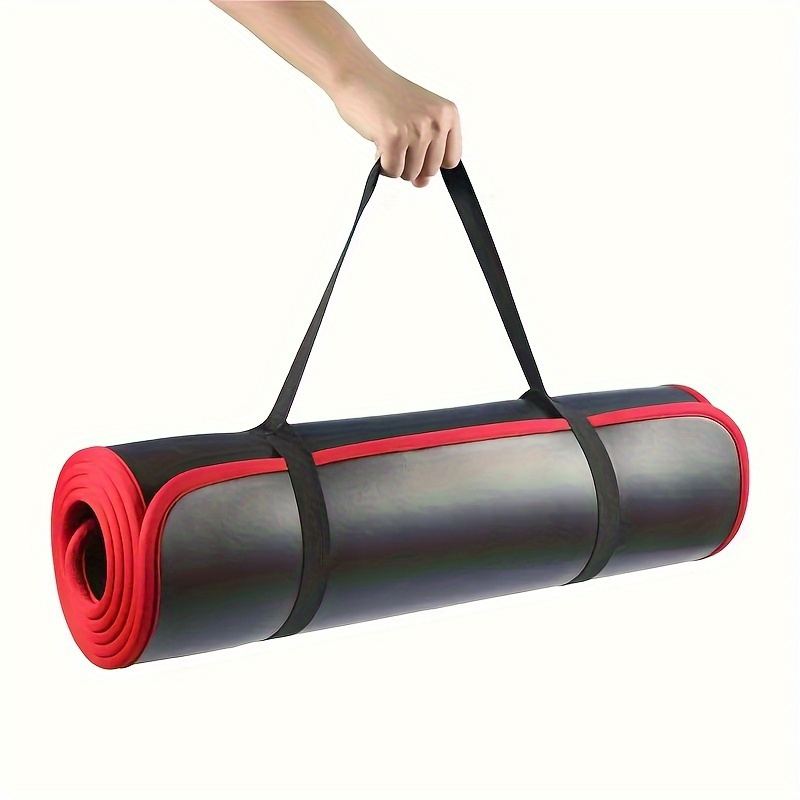
- Couch stretch (hip flexors/quads): half-kneeling with your back foot up on a wall or couch, 60–90 seconds per side. Do this on an extra-thick 10mm non-slip yoga mat — the cushioning makes kneeling positions comfortable enough to actually relax into.
- Deep calf stretch: half-kneeling lunge with the knee tracking over the toes, heel pressed down, 60 seconds per side.
- 90/90 hip rotations: seated with both knees bent at 90 degrees, rotate from one side to the other, 8–10 reps per side.
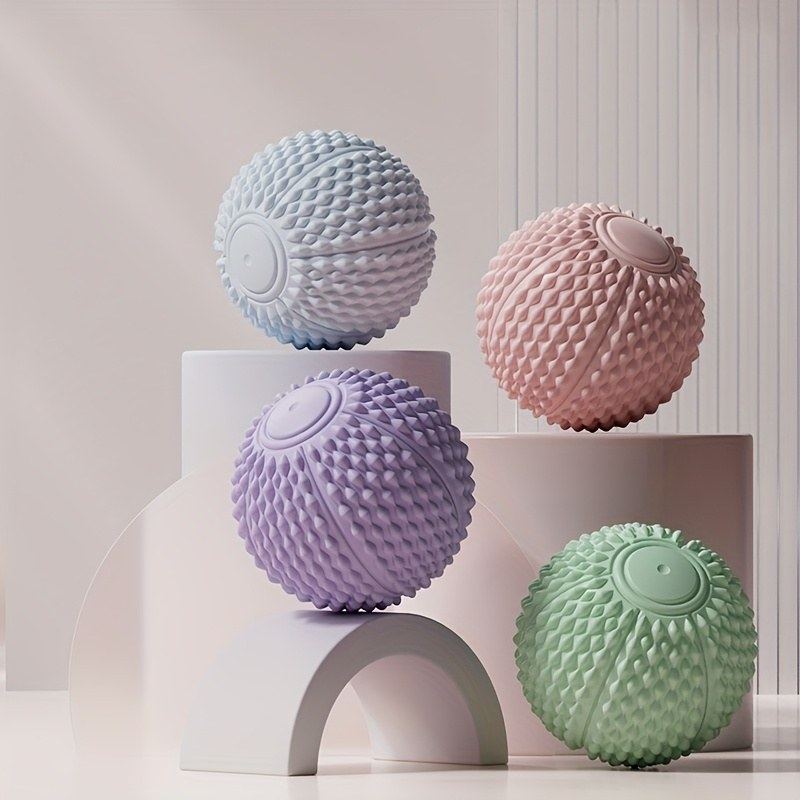
For targeted soft-tissue work, a fascia ball for soles and muscles used gently on the quads, glutes, and calves — 30–60 seconds per spot, moderate pressure, never directly on the kneecap — can help stubborn tightness release. Keep it gentle; aggressive digging on irritated tissue usually backfires.
For a fuller flexibility program, see how to improve flexibility.
Common Benign Cause #4: Weak Glutes
The glutes — especially gluteus medius — control knee position during the squat. When they're weak or "asleep" from long sitting hours, the knees cave and the quads do disproportionate work, which the kneecap area often protests.
Add this mini glute circuit 2–3 times per week (before squats or on rest days):
- Banded lateral walks: 2 sets of 12–15 steps each direction
- Glute bridges: 2–3 sets of 12–15 reps, 2-second squeeze at the top
- Clamshells: 2 sets of 12–15 reps per side, slow and controlled
- Step-ups: 2 sets of 8–10 reps per leg on a sturdy box or bench
Stronger glutes won't just help your knees — they'll improve your squat numbers too. Our lower body home workout includes glute-focused work you can slot into your week.
Knee-Friendly Squat Alternatives While You Recover
You don't have to stop training legs while sorting out knee discomfort — you just need variants that reduce knee stress:
- Box squats: Squat to a box or bench set at a height that stays pain-free. The box teaches you to sit back, naturally reducing forward knee travel. 3 sets of 8–10 reps.
- Tempo bodyweight squats: Slow 4-second descents with no added weight. Builds control and tissue tolerance with minimal joint stress.
- Glute bridges and hip thrusts: Heavy glute work with almost no knee involvement. 3–4 sets of 10–15 reps.
- Step-ups: Single-leg strength with a self-selected range — stop the depth where discomfort begins.
Reintroduce regular squats gradually once you can do these pain-free for a week or two. The squat variations guide has options for building a knee-friendly rotation.
Pain Pattern → Likely Contributor → First Fix
| Pain pattern | Common contributor | First fix to try | |---|---|---| | Dull ache around/under the kneecap during squats | Load jump or quad dominance | Deload 20–30% for 1–2 weeks; add glute work | | Ache on the inside of the knee | Knees caving inward | "Knees out" cue; banded lateral walks in warm-up | | Ache at the front when knees travel far forward | Weight on toes; limited ankle mobility | Tripod-foot cue; calf stretches; slightly wider stance | | General ache after increasing depth | Range exceeded tissue tolerance | Box squat to a pain-free depth; build depth gradually | | Stiffness that eases as you warm up | General tissue tightness | 10-minute mobility routine 3–4x/week before squats |
This table describes common patterns only — it is not a diagnosis. Similar symptoms can have different causes, which is why persistent pain needs professional eyes on it.
What NOT to Do
- Don't push through sharp pain. Dull, mild discomfort that stays stable is one thing; sharp, stabbing, or worsening pain is your body telling you to stop the set immediately.
- Don't mask it and max out. Training through significant pain with painkillers or sheer willpower lets the underlying issue worsen silently.
- Don't assume it's "just weakness" and add weight. If form is the problem, more load makes it worse.
- Don't immobilize the knee completely for weeks without guidance — gentle, pain-free movement generally maintains tissue health better than total rest. (Complete rest is appropriate only when a professional advises it.)
Red Flags: See a Professional Promptly
Stop self-managing and get assessed promptly if you notice any of the following:
- The knee locks (gets stuck and won't straighten or bend)
- The knee gives way or buckles under you
- Significant swelling, especially if it appeared rapidly after a twist or impact
- You cannot bear weight on the leg
- Pain after a specific injury — a fall, twist, direct blow, or a felt/heard "pop"
- Pain that doesn't improve after 2–3 weeks of deloading and form fixes, or that steadily worsens
- Night pain, fever, or redness/warmth around the joint
These signs can indicate structural issues — ligament, meniscus, or other problems — that no amount of form cueing will fix. A physiotherapist or sports-medicine professional can assess what's actually going on. This guide can't diagnose you, and neither can the internet.
FAQ
Q: Is it normal for my knees to ache a little when I start squatting?
Mild, diffuse muscle-area soreness when you're new to squatting is common and usually fades as tissues adapt over a few weeks. But distinct pain in the joint, sharp sensations, or pain that worsens session to session is not something to normalize — check your form, manage your load, and get assessed if it persists.
Q: Should I stop squatting completely if my knees hurt?
Not necessarily. If the pain is mild, dull, and clearly linked to load or form, the better approach is usually to modify — lighter weight, box squats, tempo work, glute and mobility additions — rather than stopping all leg training. Stop and seek care for sharp pain or any of the red flags above.
Q: Do knee sleeves or wraps fix knee pain during squats?
Sleeves provide warmth, compression, and a sense of support that some people find comforting, but they don't fix the underlying cause — form, load, or imbalance issues remain. Fix the cause first; treat sleeves as a comfort accessory, not a solution.
Q: Can weak glutes really cause knee pain?
They're one of the most common contributors. The gluteus medius stabilizes the knee's alignment during the squat; when it's weak, the knee drifts inward and the kneecap tracks poorly, which commonly produces that dull ache around the front of the knee. The glute circuit in this guide directly addresses it.
Q: How long should I deload if my knees ache?
A 1–2 week deload (reducing weight by 20–30% and trimming volume) resolves many load-related aches. If pain fades and stays away as you rebuild gradually, you're on the right track. If it's unchanged after 2–3 weeks of sensible deloading, get a professional assessment rather than extending the deload indefinitely.
Conclusion
Knee pain during squats is common, and in the absence of injury or red flags, it usually traces back to form details, too-rapid loading, tight surrounding tissue, or underactive glutes — all fixable with the practical steps in this guide. Deload, clean up your technique, mobilize what’s tight, strengthen what’s weak, and rebuild patiently. But respect the red flags: locking, giving way, major swelling, inability to bear weight, or pain that won't improve are your cue to see a professional promptly. Your knees have to last you a lifetime — train them like it.