Kettlebell buying guide: how to pick your first weight, handle and material differences (cast iron, vinyl, competition), and honest picks for beginners.
Kettlebell Buying Guide: Weight, Handle and Material
A kettlebell looks almost too simple — a ball of iron with a handle — which is exactly why it works. Swings, goblet squats, deadlifts, presses, carries: one well-chosen bell trains your whole body, builds grip strength nothing else quite matches, and fits in a corner of your room. But walk into the kettlebell aisle (physical or digital) and the choices multiply fast: cast iron, powder-coat, vinyl, soft, competition; 8 kg, 12, 16, 24; wide handles, thick handles, smooth handles. Buy wrong and you get a bell that tears up your hands, bangs your wrists, or sits unused because it is the wrong weight for everything.
This is a genuine buying guide: how materials differ, how handles fit hands, what weight to actually start with, whether you need one bell or two, and honest picks for beginners. If you want the shortlist first, our best kettlebells for women collects the top options; for the weight question in depth, see our kettlebell weight guide for women.
This guide contains affiliate links. If you buy through them, VÉLORA may earn a commission at no extra cost to you.
Materials: What Your Kettlebell Is Made Of (and Why It Matters)
The material decides the bell's feel, durability, floor-friendliness, and price. Here is the honest breakdown.
| Material | Pros | Cons | Best for | | --- | --- | --- | --- | | Raw cast iron | Cheapest; classic feel; very durable | Rough finish can tear hands; rusts if neglected; loud on floors | Budget buyers who chalk up and train on mats | | Powder-coat / E-coat cast iron | Better grip texture; corrosion resistant; still affordable | Finish wears over years of heavy use | Most home trainers — the sweet spot | | Vinyl-coated cast iron | Floor-friendly; quieter; colorful weight coding | Coating can crack or peel; thicker shell changes feel slightly | Apartments, beginners, shared spaces | | Soft / sand-filled | Will not damage floors or feet; gentle on wrists | Light weight range; less durable under hard use | Beginners, rehab, older adults | | Competition steel | Identical size at every weight; precise; pro feel | Expensive; overkill for general fitness | Serious kettlebell sport or precise programming |
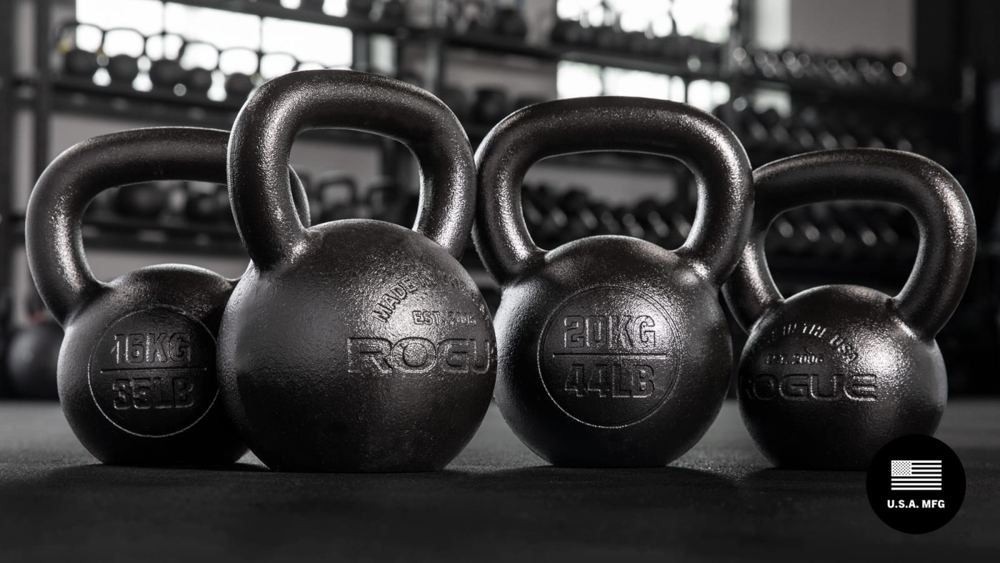
For most beginners, powder-coat or E-coat cast iron is the right answer. It grips well without chewing your hands, resists rust in a home environment, and costs far less than competition bells. The Rogue Kettlebell E-Coat is the reference example of this category: a smooth, durable powder-coat finish on a classic cast-iron body, with the kind of build quality that lasts decades of home use.
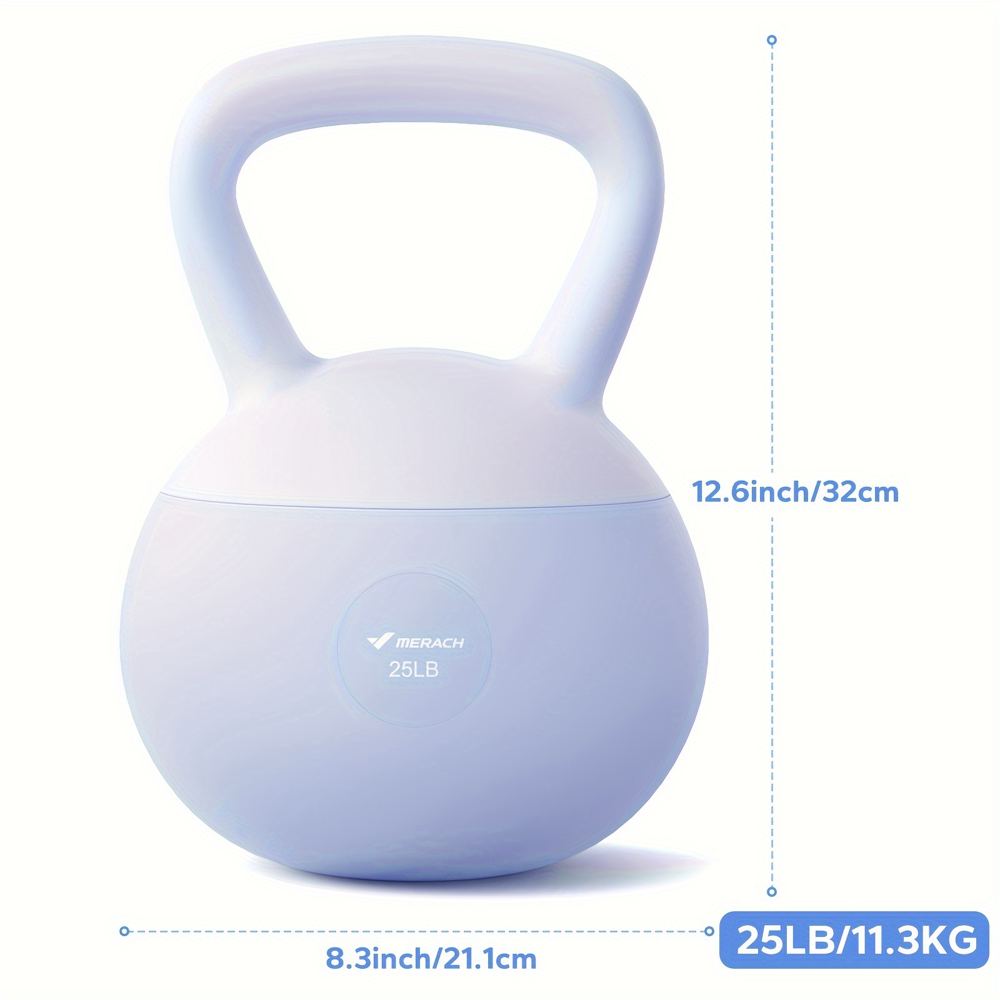
Vinyl-coated bells are the considerate choice if you train in an apartment with hard floors or have children and pets underfoot — the coating hushes the clank and forgives a dropped bell. Soft kettlebells like the MERACH Soft Kettlebell with non-slip wide-grip handle go further: a forgiving body that will not dent floors or bruise shins, with a wide grip that suits smaller hands. They are genuinely excellent first bells for cautious beginners — just know you will outgrow the available weight range if you get serious about swings.
Competition bells deserve a mention because people ask: they are beautiful, precise instruments, and completely unnecessary for general fitness. Same size at every weight is a feature for sport programming, not for home workouts.
Handles: The Part You Actually Touch
You will spend every rep holding the handle, so it matters more than the marketing suggests.
- Diameter. Standard handles run about 33–38 mm thick. Thicker handles build more grip strength but fatigue smaller hands faster. If you have small hands, look for bells marketed with slimmer or "wide-grip" profiles — the MERACH soft kettlebell's wide-grip handle is designed with this in mind.
- Texture. Powder-coat gives a slightly rough, chalk-friendly grip that many lifters prefer. Smooth E-coat and vinyl are kinder to uncalloused hands. Raw iron is the roughest. For your first bell, favor comfort over "hardcore" texture; calluses can come later.
- Window size. The opening between handle and body should fit both hands comfortably for two-handed swings. Bells that are too narrow force an awkward grip; most standard bells get this right.
- Finish on the horns. The curved sides of the handle (the "horns") should be smooth where they rest against your forearms in the rack position. Rough casting marks here cause bruising during cleans and presses — run your hand over them before you commit.
Try before you buy when possible: hold the bell, do a few practice swings in the store, and notice whether the handle feels secure without white-knuckling. A handle you have to death-grip will exhaust your forearms long before your hips get a workout.
What Weight Should Your First Kettlebell Be?
This is the question that paralyzes buyers, and the answer is refreshingly narrow. Kettlebell training centers on big hip-hinge movements (swings, deadlifts) that use large muscles — so beginners start heavier than they expect, not lighter.
Suggested first-kettlebell ranges for healthy adult beginners:
- Women: 8–16 kg (roughly 18–35 lb). Most women find 8–12 kg right for learning technique, with 12–16 kg becoming the workhorse bell within a few months.
- Men: 12–24 kg (roughly 26–53 lb). Most men start well at 12–16 kg and progress toward 20–24 kg for swings.
These are ranges to choose within, not guarantees — body size, athletic background, and any health considerations all shift the answer, and your provider's guidance wins over any chart if you have a condition to manage. The key insight: a bell that feels challenging for overhead presses will feel light for swings, and that is normal. Buy your first bell for the swing and the goblet squat, not for the press. You can press a lighter dumbbell you already own while your kettlebell handles the big lower-body and hinge work.
Signs your weight choice is right: you can hip-hinge and deadlift the bell with a flat back and controlled breathing, your grip is the limiting factor (not your back), and 10 swings leave you breathing hard but in control. Signs it is too heavy: your lower back rounds, you cannot stop the bell cleanly, or your form collapses before your muscles tire.
One Bell or Two?
Start with one. A single kettlebell trains everything: swings, goblet squats, Romanian deadlifts, single-arm rows, presses, Turkish get-up practice, carries. One bell also forces unilateral work — one arm at a time — which builds balanced strength and core stability that bilateral barbell work can miss.
Buy a second bell when you have a clear reason: you want double-bell work (double swings, double presses), or your swing bell has gotten too heavy for your press and you want a lighter dedicated press bell. For most home trainers, the second purchase comes 3–6 months in, and by then you know exactly what weight you need. Our kettlebell vs dumbbell comparison helps if you are deciding which tool to invest in first.
The Travel Option: Adjustable Water Kettlebells
Kettlebells are famously un-portable — iron does not care about your luggage allowance. Adjustable water kettlebells solve this cleverly: an empty shell you fill with water to reach your target weight. The SY Adjustable Self-Filling Water Kettlebell is the honest pick here — variable weight in one unit, genuinely useful for travel or small apartments where a rack of iron is not happening.
Be realistic about the tradeoffs: water sloshes, so the feel differs from solid iron, and maximum weights are modest compared to iron. As a travel bell or a first bell for a tiny space, it is clever and practical.
Honest Picks for Beginners
Pulling it together — three bells for three different beginners:
- The buy-it-once bell: Rogue Kettlebell E-Coat. Powder-coat cast iron, excellent grip texture, corrosion resistant, built to outlast your interest in upgrading. If you want one bell that never needs replacing, this is the category to buy in.
- The gentle first bell: MERACH Soft Kettlebell. Forgiving on floors, wrists, and shins, with a wide non-slip grip that suits smaller hands. Ideal if you are nervous about iron, training around kids or pets, or easing back into exercise.
- The travel/small-space bell: SY Adjustable Water Kettlebell. One shell, variable weight, packs flat when empty. The pragmatic choice for apartments and frequent travelers.
Whichever you choose, pair it with learning the hip hinge properly — the swing is a hip movement, not a shoulder raise, and good instruction (a qualified coach for even one session, or a reputable instructional series) pays for itself in safety and results.
Safety Notes
Kettlebell training is safe when technique leads and ego follows. Learn the deadlift and two-handed swing before anything fancy — no snatches, cleans, or Turkish get-ups until the hinge is automatic. Keep your back flat (never rounded) under load; if your back rounds, the bell is too heavy or you are too tired, and the set is over. Clear your training space: swings need room in front of you, and a bell that slips should land on floor, not furniture or feet. Chalk or a towel for sweaty hands is not optional vanity — grip failure mid-swing is how bells fly. Breathe out sharply on the hip snap, never hold your breath. And progress weight in small steps: 4 kg jumps are the standard for a reason.
FAQ
Q: Is 8 kg too light for a beginner kettlebell?
For learning the swing pattern safely, no — 8 kg is a legitimate starting point, especially for smaller-framed beginners. You will likely outgrow it for swings within a few months, which is fine: it becomes your press and get-up bell. Starting a touch light while technique is new is smarter than starting heavy and learning bad habits.
Q: Can I do a full workout with just one kettlebell?
Absolutely. Swings, goblet squats, deadlifts, rows, presses, carries, and core work all work with a single bell. One-bell training is a complete program, not a compromise — many experienced lifters still do most of their training this way.
Q: Powder-coat or vinyl coating — which should I choose?
Powder-coat for grip and longevity; vinyl for floor protection and quiet. If you train on a mat in a house, powder-coat wins. If you train in an apartment on hard floors with neighbors below, vinyl's forgiveness is worth the tradeoff.
Q: How do I stop the kettlebell from banging my wrists?
In cleans and snatches, the bell should roll around your hand and land softly on your forearm — banging means the technique needs work, usually punching through too late or gripping too tight. A coach or good instructional video fixes this faster than any equipment change. Soft bells and proper wrist position help while you learn.
Q: Kettlebell or dumbbells for a beginner home gym?
Both are excellent; they overlap but do not replace each other. Kettlebells own ballistic hip-hinge training (swings) and grip work; dumbbells own pressing variety and single-limb precision. If you can only buy one tool, our kettlebell vs dumbbell guide walks through the decision by goal and space.
Conclusion
Buy your first kettlebell for the swing, not the press: 8–16 kg for most women, 12–24 kg for most men, chosen within those ranges by your body and experience. Favor powder-coat or E-coat cast iron for the best blend of grip, durability, and price; choose vinyl or soft bells for floor-friendliness and gentle starts; consider water-adjustable for travel. Check the handle with your own hands before you commit, start with one bell, and let technique — flat back, powerful hips, controlled breathing — decide when you are ready for more weight. Chosen this way, a single kettlebell becomes the hardest-working square foot in your home.
