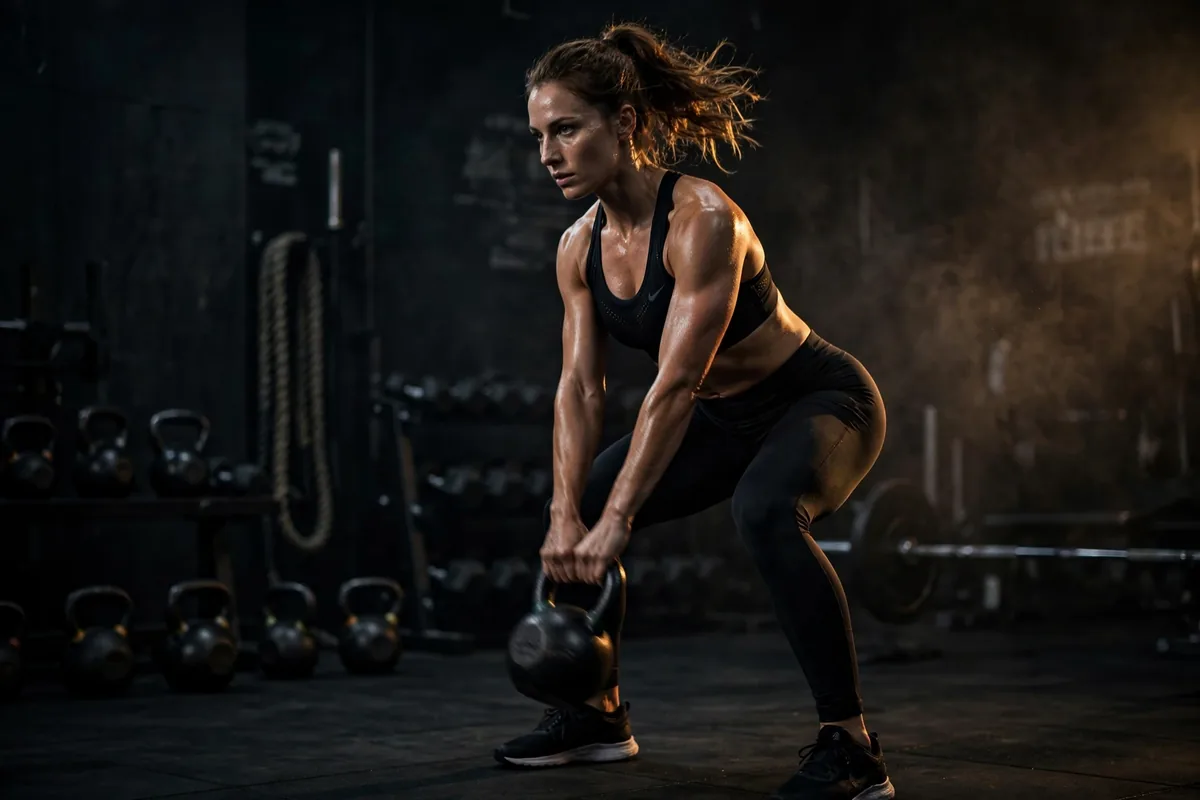
Affiliate disclosure: VÉLORA may earn a commission on purchases made through links on this page — at no extra cost to you. Every pick below is a real product in the VÉLORA catalog, and prices shown are the live catalog prices at the time of writing (prices can change).
Quick answer: The best kettlebell for most women beginners is a soft-coated or padded kettlebell around 8 kg (18 lb) — coaches consistently cite 8 kg as the starting sweet spot for women — because it protects floors and fingers while you're learning form. If you're unsure of your strength or short on space, an adjustable water-fill kettlebell is the cheapest way to cover multiple weights in one.
Best for quick reference
- Best for absolute beginners: MERACH Soft Kettlebell — Non-Slip Wide Grip
- Best weight range in one set: SOGES PVC Soft Kettlebell — 10 to 30 lbs
- Best adjustable (no shelf of bells needed): 44LB Adjustable Kettlebell — Black/Pink
- Best budget adjustable: MACYO Adjustable Water-Fill Kettlebell — 1 to 6kg
- Best classic cast iron: CAPHAUS Hammerstone Cast Iron Kettlebells
- Best value under $21: LAVVON Soft Kettlebell — Cushioned Base, Anti-Slip
- Best style set for home gyms: Pink-Grey Kettlebell & Pedal Puller Home Fitness Set
Kettlebell training is having a moment with women for a reason: a single bell can deliver strength, cardio, and mobility in one compact session. Swings, goblet squats, deadlifts, and Turkish get-ups train your glutes, back, core, and grip at once — and a kettlebell takes up less floor space than a yoga mat. For more on how kettlebells fit into a full home setup, see our roundup of the best adjustable dumbbells for small apartments, and if you live with thin walls, our picks for quiet home gym equipment for apartments.
| Pick | Best for | Type | Catalog price* | |------|----------|------|----------------| | MERACH Soft Kettlebell | Absolute beginners | Soft-coated | $25.35 | | SOGES PVC Soft Kettlebell | Wide weight range | PVC soft | $31.91 | | 44LB Adjustable Kettlebell | One-bell home gym | Adjustable | $114.93 | | MACYO Water-Fill Kettlebell | Budget adjustable | Water-fill | $28.24 | | CAPHAUS Cast Iron | Classic durability | Cast iron | $31.84 | | LAVVON Soft Kettlebell | Best value | Soft-coated | $20.75 | | Pink-Grey Kettlebell Set | Style + extras | Soft + pedal puller | $34.90 |
\*Catalog prices at time of writing; merchants update prices, so check the live price on the product page.
The picks, in detail
MERACH Soft Kettlebell — Non-Slip Wide Grip — $25.35
Our top pick for beginners. The soft outer coating is forgiving on wrists during cleans and snatches, won't chew up your floors if you set it down hard, and the wide grip handle suits two-handed swings. At this price it costs less than one group-fitness class in most US cities. Honest limit: soft-coated bells don't feel exactly like classic iron, so if you ever graduate to a kettlebell gym or class, the grip feel will differ slightly.
SOGES PVC Soft Kettlebell, 10 to 30 lbs — $31.91
The range matters: 10–30 lbs covers beginner swings and goblet squats (lighter end) all the way to heavier deadlifts and presses as you get stronger. The PVC shell keeps it floor-friendly. This is the pick if you want to buy one bell and not outgrow it in two months. Honest limit: a single adjustable-range bell means you can't superset two weights at once the way a pair of fixed bells would.
44LB Adjustable Kettlebell, Black/Pink — $114.93
One bell, many weights, up to 44 lbs — the space-saving answer for small apartments. Adjustable kettlebells replace an entire rack that would cost several times more and eat a corner of your living room. Honest limit: $114.93 is the highest price on this list; adjust-mechanism bells also require a few seconds to change weights, so they're less ideal for rapid drop-set circuits.
MACYO Adjustable Water-Fill Kettlebell, 1 to 6kg — $28.24
The budget adjustable: fill with water to set your weight from 1 to 6 kg. Brilliant for rehab-level starts, travel (ship it empty, fill at home), and anyone who isn't sure they'll stick with kettlebells yet. Honest limit: 6 kg tops out fast — most women outgrow it within months for swings and deadlifts, so treat it as a starter, not a forever bell.
CAPHAUS Hammerstone Cast Iron Kettlebells — $31.84
The purist's pick. Cast iron is the traditional kettlebell material: compact, virtually indestructible, and the standard feel if you ever take a class or follow kettlebell-specific programming. Painted finish helps grip. Honest limit: it's the least forgiving option here — iron chips floors, stings wrists during learning-phase cleans, and is loud if dropped. Keep it on a mat.
LAVVON Soft Kettlebell, Cushioned Base, Anti-Slip — $20.75
The cheapest quality entry point on this list. Cushioned base protects floors, anti-slip texture keeps swings secure even with sweaty hands. Perfect for testing whether you enjoy kettlebell training before spending more. Honest limit: at this price point you're typically getting one fixed weight — check the listing's weight before buying so it matches your starting strength.
Pink-Grey Kettlebell & Pedal Puller Home Fitness Set — $34.90
A two-in-one bundle: a kettlebell plus a pedal puller (a resistance tube with foot pedals) for upper-body pulling moves. Great starter home-gym kit for women who want variety beyond swings. Honest limit: bundles spread your budget across two tools, so neither is premium-grade — fine for beginners, not for heavy lifters.
Buying guide: what weight should a woman start with?
This is the #1 question, and there's a genuine consensus answer. Kettlebell coaches and niche training sites — including kettlebellsworkouts.com and Tom's Guide's kettlebell coverage — converge on 8 kg (about 18 lbs) as the standard starting weight for women. 8 kg is heavy enough that two-handed swings and deadlifts feel like real work, but light enough to learn goblet squats and presses with safe form.
A few practical rules our editors researched:
- Two-handed moves can go heavier. Swings and deadlifts use your biggest muscles (glutes, hamstrings, back), so most women can start swings at 8–12 kg.
- Overhead moves stay light. Presses, snatches, and Turkish get-ups demand shoulder stability — start at 4–6 kg for those and earn the heavier bell.
- One bell is enough to start. Buy the weight that suits your weakest planned movement, then add a heavier bell for swings later.
- Handle width matters for small hands. Women with smaller hands should look for narrower handles — wide handles force a death grip that fatigues forearms fast. The wide-grip MERACH is a two-hand-swing bell; single-hand work suits slimmer handles.
- Coating vs. cast iron is a real choice. Soft/PVC-coated bells forgive mistakes and protect floors; cast iron lasts forever and matches class-standard feel. Beginners in apartments almost always do better with coated.
If you're deciding between bells and other tools, read our head-to-head of resistance bands vs dumbbells and our broader women's strength training category for complementary picks. For a complete home-gym plan on a budget, our under-$100 home gym guide pairs well with one kettlebell pick above.
FAQ
What weight kettlebell should a woman start with?
The widely cited starting point is 8 kg (about 18 lbs) — recommended by coaches at kettlebellsworkouts.com and echoed by Tom's Guide's training coverage. If you're completely new to strength training, 6 kg is a safer first bell; if you're already active, 10–12 kg works for two-handed swings and deadlifts.
Is it worth buying a kettlebell if I already have dumbbells?
For many women, yes — and here's why. Kettlebell swings, cleans, and snatches train power and conditioning in ways dumbbells can't replicate, because the weight sits offset from your grip. Dumbbells are better for pressing and isolation work. The two tools complement each other; a kettlebell doesn't duplicate a dumbbell. See our best dumbbells for women guide for the other half of a perfect home setup.
Are soft-coated kettlebells as effective as cast iron?
The training effect is identical — your muscles don't know what the shell is made of. Soft/PVC-coated bells are actually smarter for most home beginners: they're quieter, protect floors, and are gentler on wrists while learning cleans. Cast iron's advantage is compactness and gym-standard feel, not effectiveness.
How often should a beginner train with a kettlebell?
Two to three full-body sessions per week is the sweet spot — enough stimulus to build strength, enough recovery to stay fresh. A beginner template: 5 rounds of 10 two-handed swings, 8 goblet squats, and 6 Romanian deadlifts, resting 60–90 seconds between rounds. Add weight or rounds when it feels easy.
Can I use a kettlebell on carpet or apartment floors?
Yes, with the right bell and a mat. Soft-coated kettlebells on a thick exercise mat are apartment-safe — they're the exact combo we recommend in our quiet home gym equipment guide. Cast iron bells can dent floors and annoy downstairs neighbors, so skip those (or never set them down hard) in rentals.
What's the difference between competition and cast-iron kettlebells?
Competition bells are all the same size regardless of weight (a 35 mm handle), which matters in kettlebell sport. Cast-iron bells get physically bigger as they get heavier. For home fitness — not sport — cast iron or soft-coated bells are fine and cheaper.
How do water-fill kettlebells compare to fixed weights?
Water-fill bells like the MACYO are adjustable from 1–6 kg by adding or removing water, making them the cheapest adjustable option. The trade-off: water sloshes slightly during swings (which actually challenges stability — a bonus or annoyance, depending on your view), and the 6 kg cap means you'll outgrow them. Iron and sand-filled adjustables feel more solid but cost more.
Bottom line
For most women beginners, the answer is simple: start with one soft-coated kettlebell around 8 kg, learn the swing, the goblet squat, and the deadlift, and add weight only when form is solid. The MERACH Soft Kettlebell is our top starter pick, the 44LB Adjustable Kettlebell is the one-bell home gym, and the CAPHAUS Cast Iron is there for when you're hooked. Pair any of them with picks from our strength training collection and our buying guides hub to build a complete home routine.