What size kettlebell should a woman start with? The direct answer by movement — swings, presses and squats — plus when to size up and how to stay safe.
What Size Kettlebell Should a Woman Start With?
Here's the direct answer, because this question deserves one: most women should start with an 8kg (18 lb) kettlebell for swings and deadlifts, and a lighter 4–6kg (9–13 lb) bell for presses and upper-body work. If you can only buy one, buy the 8kg — your hips and glutes are far stronger than you think, and it's the lower-body movements where kettlebells shine. If you're asking what size kettlebell should a woman start with because you're brand new and a little nervous, don't worry: this guide breaks the answer down by movement, by fitness level, and by what to do when the starting bell gets easy.
This guide contains affiliate links. If you buy through them, VÉLORA may earn a commission at no extra cost to you.
Why "One Starting Weight" Is the Wrong Question
Kettlebell training isn't one movement — it's two families that load your body completely differently:
- Ballistic movements (swings, cleans, deadlifts, high pulls) are powered by your hips and glutes, the strongest muscles you own. These handle — and need — heavier weight to feel right. A swing with a too-light bell actually feels worse, because there's no load to hinge against and your arms end up muscling it up.
- Grind movements (presses, Turkish get-ups, windmills, rows) move slowly under control, often overhead, where your shoulders and arms are the limit. These need much lighter weight, especially while your joints and technique adapt.
So the real question is never "what weight kettlebell?" It's "what weight, for this movement, at my current level?" The sections below answer exactly that.
Starting Weights by Movement
Swings and Deadlifts: 8–12kg
Most women — including complete beginners of average build — can deadlift 12kg comfortably within a session or two, and swing 8kg with good form once the hinge clicks. If you're already active (you walk a lot, do Pilates, chase small children around), start at 10–12kg for deadlifts. If you're returning from a long break or any back issue, start at 8kg and earn the jump.
Goblet Squats: 6–8kg
Holding the bell at your chest, most beginners squat happily with 6–8kg. The goblet position is self-correcting — it keeps your torso upright and your knees tracking well — so this is often the movement where women surprise themselves.
Presses and Get-Ups: 4–6kg
Overhead work humbles everyone. A 4kg bell is not "too light" for learning the press or the Turkish get-up; it's the correct tool for grooving the pattern without your shoulder shrugging up to your ear. Many women press 6kg within a few weeks. Some take longer. Both are fine.
Rows and Carries: 6–8kg
Bent-over rows and farmer's carries sit in the middle — your back and grip are strong, so 6–8kg works for most starters.
Starting Weights by Fitness Level
- Brand new to exercise: 6kg as your single bell (deadlifts and goblet squats), plus patience. Or 4kg + 8kg if budget allows two.
- Generally active but new to kettlebells: 8kg is your bell. Add a 4–6kg for overhead work when you can.
- Already strength training with dumbbells: 10–12kg for swings and deadlifts; you'll likely find 8kg presses manageable sooner than most.
- Returning after pregnancy or a long layoff: start one tier below where you think you are. Your muscles remember more than your connective tissue does. (And if you're postpartum, get cleared by your doctor or physio first — that's not boilerplate, it matters.)
When to Size Up
Kettlebell jumps are big — usually 4kg — so "size up" is a bigger event than with dumbbells. You're ready when:
- You can swing your current bell for 10 sets of 10 with clean form and your heart rate settles quickly between sets.
- Goblet squats feel like a warm-up, not a workout.
- You can press your light bell for 5 strict reps per side without leaning away from it.
Size up the ballistics first (a heavier swing bell), keep pressing the lighter one, and don't rush the overhead jump — going from 6kg to 10kg overhead is a 66% increase, and shoulders vote no on that kind of maths. This is also the honest case for an adjustable kettlebell, covered below.
Safety Notes That Actually Matter
- The hinge is everything. A swing is a hip snap, not a squat and not a front raise. Practice deadlifts until the pattern is boring, then swing. Ten minutes of hinge practice saves your lower back a lot of opinions.
- Bare feet or flat shoes. Cushioned running shoes tilt you forward and steal your balance under load. Train barefoot at home or in flat trainers.
- Mind the forearm. When learning cleans, the bell should roll around your hand, not flip over and bang your wrist. Soft-coated bells forgive this learning curve; iron bells grade it harshly.
- Clear the landing zone. Kettlebells get dropped. Train where a dropped bell meets a mat, not your good flooring or your foot.
- Grip fatigue is real. Chalk or a quick towel-dry between sets isn't vanity — a bell leaving your hand mid-swing is the one accident you genuinely want to avoid.
A Quick Self-Test Before You Buy
Still torn between two sizes? Do this before ordering. Put on your workout clothes, clear a patch of floor, and run through five slow deadlifts and five goblet squats holding whatever heavy household object you have — a full water jug, a bag of books, a small child who enjoys being cargo (that last one is a joke, mostly). Notice two things: whether your grip or your legs gave up first, and whether the weight felt like a warm-up or a workout by rep five. If even a roughly 8kg load felt manageable and your grip held, the standard 8kg starting bell is right for you. If it felt genuinely heavy, start at 6kg without a shred of shame — you'll be swinging it with better form, which is worth more than two extra kilos of sloppy reps. And if it felt light, you're one of the women who should start ballistics at 10–12kg and save herself a purchase three months from now.
The Bells We'd Point You To
MERACH Soft Kettlebell — the beginner-friendly pick
A soft-shell bell with a cushioned base and a wide, non-slip grip that's forgiving on forearms and floors while you learn. If your plan is "start at 8kg and learn at home without wrecking the laminate," this is the one we'd hand you. Soft bells aren't for competition purists, but for home training they're honestly the smarter design.
Price: $34.73 — View on VÉLORA
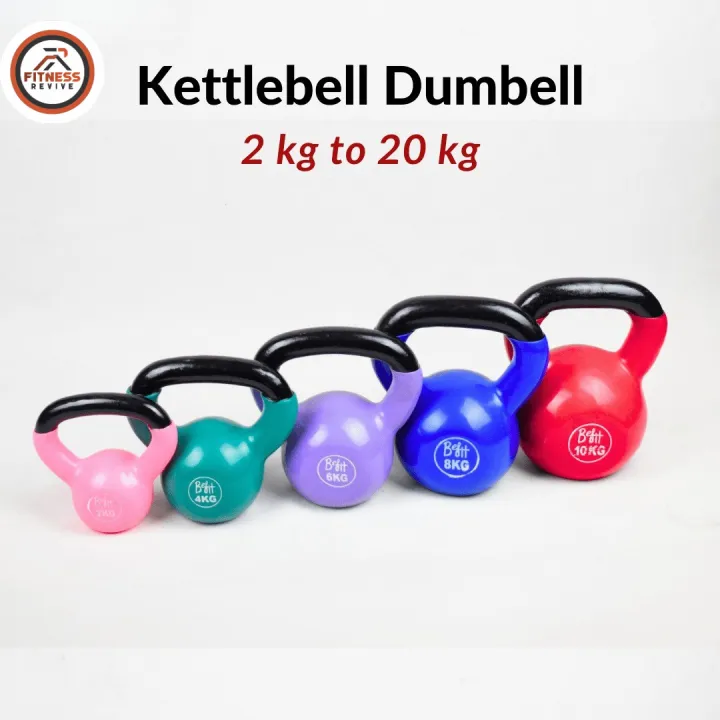
Vinyl Coated Cast Iron Kettlebell — the classic middle route
Proper cast iron under a vinyl coat: you get the traditional feel and durability, with a layer of protection for floors and a smoother finish against your forearm. A good choice in the 6–10kg starting range if you know you'll stick with iron long-term.
Price: Rs 2,349 — View on VÉLORA
Cast Iron Kettlebell 2–18KG — the full-range pick
A complete cast-iron range from 2kg up to 18kg, for women who'd rather buy the ladder once than climb it one purchase at a time — or households where two people train at different levels. Buy the sizes you'll use in the next six months rather than the whole staircase on day one, unless storage is no object.
Price: Rs 16,000 — View on VÉLORA
44LB Adjustable Kettlebell — the grows-with-you pick
One bell that adjusts up to 44 lb (about 20kg), in black and pink. This directly solves the kettlebell's biggest annoyance — those huge 4kg jumps — by letting you progress in smaller steps and cover both your swing weight and your press weight with a single piece of kit. It costs more up front than one fixed bell and less than the three fixed bells it replaces.
Price: $104.93 — View on VÉLORA
Putting It Together
Start with an 8kg for your hips, a 4–6kg for your shoulders, and form practice before load — and you'll be ahead of most people who buy a kettlebell on impulse. Browse the full range in our strength training collection, compare our tested favourites in the guide to the best kettlebells for women, and if you're still deciding between tools entirely, our kettlebell vs dumbbell comparison settles that argument honestly.
Frequently Asked Questions
What size kettlebell should a beginner woman start with?
For most women: 8kg (18 lb) for swings, deadlifts and goblet squats, and 4–6kg (9–13 lb) for presses and get-ups. If you're buying just one bell, make it the 8kg — lower-body movements are where kettlebells deliver the most.
Is a 4kg kettlebell too light?
For presses and learning overhead movements, no — it's the right starting point for many women. For swings it usually is too light: without enough load, you'll lift with your arms instead of snapping your hips, which teaches exactly the wrong pattern.
Should I buy one kettlebell or a pair?
One. Kettlebell training is built around single-bell work — swings, goblet squats, presses, get-ups, carries. A second, heavier bell later is a better purchase than a matched pair now.
How long before I need a heavier kettlebell?
Typically two to four months of consistent training for your swing bell. When 10×10 swings feel controlled and your breathing recovers quickly between sets, you're ready for the next size up — usually a 4kg jump.
Are soft kettlebells good for beginners?
Yes — for home training they're arguably better. The cushioned body protects floors and forearms while your technique develops, and the weight is the weight. Purists prefer iron, but beginners learning cleans tend to prefer not being bruised.