Kettlebell vs dumbbell for women — an honest head-to-head on muscle building, calorie burn, joints, space and cost, with a clear verdict by goal.
Kettlebell vs Dumbbell for Women: Which One Should You Actually Buy?
If you're setting up a home gym and can only pick one to start, the kettlebell vs dumbbell for women debate is probably the first argument you'll have with yourself. Both build strength. Both fit in a closet. And honestly, both marketing camps exaggerate — the kettlebell crowd acts like dumbbells are dinosaurs, and the dumbbell crowd treats kettlebells like a fad with a handle.
Here's the thing: they're different tools that happen to overlap. We compared specs and buyer feedback across the options on VÉLORA to work out where each one genuinely wins, where it genuinely loses, and which one makes sense for your goals, your joints, and your floor space.
This guide contains affiliate links. If you buy through them, VÉLORA may earn a commission at no extra cost to you.
The Short Answer (If You're in a Hurry)
- Choose dumbbells if your main goal is building muscle and getting measurably stronger, especially in your upper body. They're easier to learn, easier to progress, and gentler on beginners.
- Choose a kettlebell if your main goal is full-body conditioning — burning calories, building glute and hip power, and getting your heart rate up in short workouts.
- Choose both eventually if you can. They cover each other's weaknesses almost perfectly, and a single kettlebell plus a modest dumbbell set is one of the most complete small home gyms there is.
Now let's get into why.
Muscle Building: Dumbbells Win, and It's Not Close
Muscle growth needs two things: enough load, and a way to increase that load in small steps over time. Dumbbells are built for exactly that. You can curl, press, row, split-squat and lunge with them, and the movements are steady and controlled, which makes it easy to add a couple of pounds and keep progressing.
Kettlebells build muscle too — goblet squats, presses and rows are all legitimately good — but the weight jumps are the problem. Kettlebells typically step up in 4kg increments. Going from an 8kg press to a 12kg press is a 50% jump, and for most women that's not a step, it's a wall. Dumbbells let you climb the ladder one rung at a time.
There's also a range issue. A kettlebell's offset weight makes some upper-body work awkward, and heavy kettlebell presses put real stress on the wrist and forearm until your technique settles. Dumbbells just sit in your hand and behave.
Verdict: dumbbells for muscle building, clearly.
Calorie Burn and Conditioning: Kettlebells Win
This is where the kettlebell earns its keep. The swing — the movement the whole tool is designed around — is a ballistic hip hinge that recruits your glutes, hamstrings, back and core all at once while spiking your heart rate. Ten minutes of swings feels like cardio and strength training had a baby. Dumbbells can be used for conditioning circuits, of course, but a dumbbell swing feels clunky (and risks the weights slipping or banging your wrists), and dumbbell movements generally isolate muscles rather than chaining them together.
For women training at home in short windows — 20 minutes while dinner's in the oven, say — kettlebell complexes (swing, goblet squat, press, row, repeat) deliver an enormous amount of work in very little time. That's a real advantage that's hard to replicate with dumbbells alone.
Verdict: kettlebells for calorie burn and full-body conditioning.
Learning Curve: Dumbbells Are Friendlier
A dumbbell curl is a dumbbell curl. You can learn most dumbbell movements from a short video and be training safely the same day, because the weight moves slowly and stays close to your hand.
Kettlebell technique matters more. The swing is a skill — hinge too early or squat it instead, and your lower back pays. The clean and snatch can bruise forearms until you learn to guide the bell around your hand instead of flipping it over. None of this is a reason to avoid kettlebells; plenty of women teach themselves perfectly well. But budget a week or two of light practice before you load up, and start lighter than your ego wants.
Verdict: dumbbells for your very first months of training; kettlebells once you're happy to practice a little technique.
Joint Friendliness: It Depends on the Joint
Honestly, this one splits by body part:
- Wrists: Dumbbells win. A kettlebell rests against the back of your forearm during presses and racks, which irritates sensitive wrists. Soft-coated kettlebells soften this a lot (more on that below).
- Shoulders: Roughly even. Kettlebell presses follow a natural arc that many women find more comfortable than a straight dumbbell press, but the margin is small.
- Knees and hips: Kettlebell swings are famously kind to knees — the power comes from the hips, and there's no impact. Dumbbell squats and lunges load the knees more directly, though they're also excellent for building the strength that protects knees long-term.
- Lower back: Technique-dependent. A well-performed swing strengthens the back; a badly performed one strains it. Slow dumbbell deadlifts are the safer starting point if your back is already grumbly.
Verdict: sensitive wrists or a cranky back you're still learning to manage — start with dumbbells. Healthy joints and good hip mobility — kettlebells are fair game.
Space and Storage: Kettlebell, Slightly
One kettlebell is one object the size of a small handbag. A genuinely useful dumbbell setup is either a rack of fixed pairs (space-hungry) or one adjustable dumbbell (compact, but only trains one side at a time unless you buy two). If you live in a small apartment, a single kettlebell under the couch beats everything. If you have a corner to spare, an adjustable dumbbell closes most of the gap.
Verdict: kettlebell for the tiniest spaces; adjustable dumbbells make it close.
Cost: Almost a Tie
A single good kettlebell costs roughly the same as a starter dumbbell set, and both routes have a budget and a premium end. Where costs diverge is the second purchase: with dumbbells you eventually want more weight range (an adjustable solves this once), while with kettlebells you'll want a second, heavier bell within a few months. Either way, you're looking at one sensible purchase now and one later — neither tool is the "cheap forever" option, and anyone who tells you otherwise is selling something.
The Picks: Two of Each, Honestly Assessed
MERACH Soft Kettlebell — the beginner-friendly kettlebell
A soft-shell kettlebell with a cushioned base and a wide, non-slip grip. The soft body is the whole point: it won't dent hardwood floors, won't bruise your forearm as you learn cleans, and won't chip tiles if your grip fails. For most women starting out, this removes the two biggest kettlebell annoyances in one product.
Price: $34.73 — View on VÉLORA
Rogue Kettlebell E-Coat — the traditional iron pick
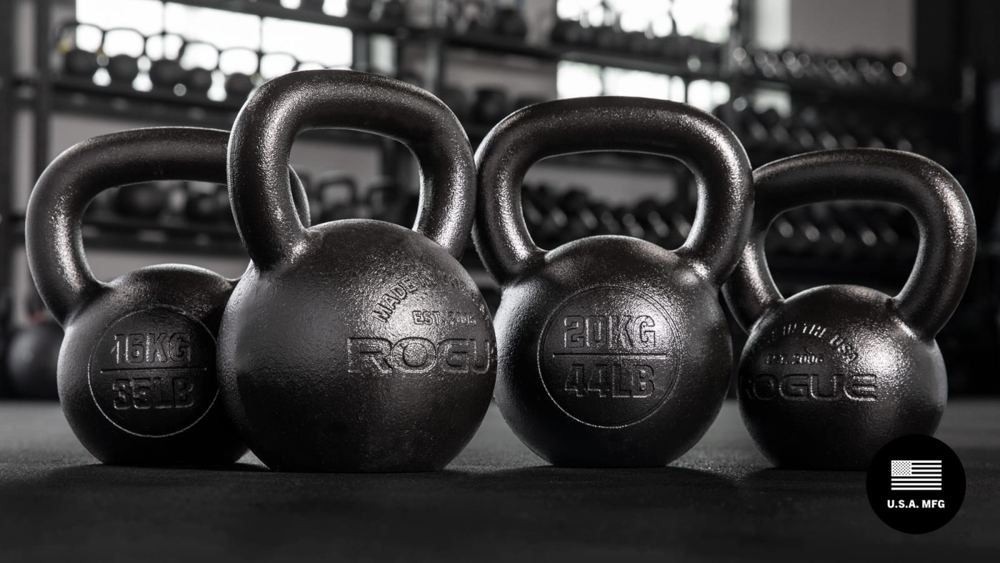
If you want the classic cast-iron experience from a name lifters trust, this is it. The e-coat finish holds chalk well and resists rust, the handle window suits two-handed swings, and it will outlive all of us. The trade-offs are the usual iron ones: it's unforgiving on floors and forearms while your technique develops, so pair it with a mat and some patience.
Price: $48 — View on VÉLORA
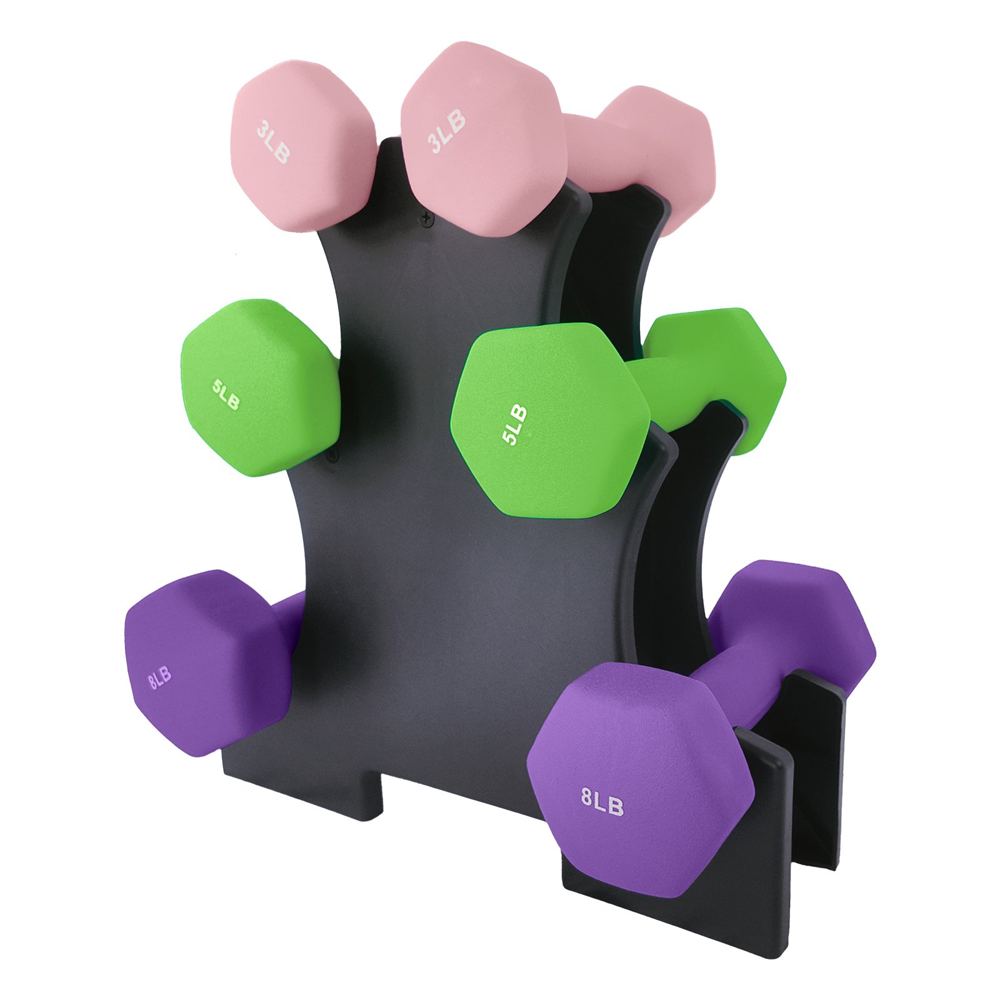
3 Pair PVC Dumbbell Set with Case — the starter dumbbell set
Three light pairs in a carry case — the classic first purchase for women returning to training or starting from zero. The PVC coating is floor-friendly and quiet, and having three sizes on hand makes circuits and supersets simple. Be honest with yourself about the ceiling, though: if you're already reasonably active, you'll outgrow the heaviest pair for lower-body work within a few months. As a starting point or an upper-body set, it earns its money.
Price: $40.85 — View on VÉLORA
Adjustable Dumbbell with Wear Resistant Grips — the grow-with-you dumbbell
One dumbbell, multiple weights, no rack. The wear-resistant grip coating matters more than it sounds — knurling chews up palms during high-rep work, and this is kinder for daily training. It solves the dumbbell space problem almost entirely and gives you the small, steady progressions that make dumbbells the better muscle-building tool. Note it's a single dumbbell, so budget for a second if you want to press or row with both arms at once.
Price: $67.60 — View on VÉLORA
The Verdict, by Goal
- Build visible muscle and strength: dumbbells. Start with the adjustable, add a second later.
- Lose fat and get fitter overall: kettlebell. Swings plus goblet squats in short sessions will do more for conditioning per minute.
- Tone up at home with minimal fuss: dumbbells first (easier to learn), kettlebell second.
- Glutes and posterior chain specifically: kettlebell — swings and deadlifts are glute royalty.
- Tiny apartment, one purchase only: one kettlebell. It's the most training per square inch you can buy.
- Training around wrist issues: dumbbells, or the soft kettlebell if your heart is set on swings.
Want to browse everything in one place? The full strength training collection has both tools side by side. And if you've landed on one side of the fence, go deeper with our guide to the best kettlebells for women or the best dumbbells for women.
Frequently Asked Questions
Which burns more calories, a kettlebell or dumbbells?
Kettlebell workouts usually burn more per minute because swings and complexes combine strength with a big cardiovascular demand. But the best calorie-burning tool is the one you'll use four times a week — a dumbbell circuit you enjoy beats a kettlebell gathering dust.
Can I build muscle with just a kettlebell?
Yes, especially in your glutes, hamstrings, back and core. The limitation is progression: kettlebell weight jumps are large, so upper-body muscle building stalls sooner than with dumbbells, which let you add load gradually.
What weight should a woman start with?
For dumbbells, most beginners do well with pairs around 3–8 lb for upper body and 10–20 lb for lower body. For a kettlebell, 8kg (about 18 lb) suits most women for swings and deadlifts, with 4–6kg better for learning presses. Our full breakdown is in the kettlebell weight guide.
Are kettlebells bad for your wrists or back?
Not inherently — but they're less forgiving of sloppy form. The bell resting on your forearm can irritate wrists (a soft-coated bell helps), and a swing performed as a squat-and-lift can strain the lower back. Learn the hip hinge first, keep the weight modest, and both risks drop sharply.
If I can only afford one, which should it be?
If your priority is strength and muscle, buy the dumbbell. If your priority is fitness, fat loss and glutes in short workouts, buy the kettlebell. Either choice is a good one — the only bad option is waiting for the "perfect" setup while not training at all.