Most fitness goals fail from vagueness, not weakness. Learn to set goals you will actually reach — process over outcomes, realistic timelines, simple tracking.
How to Set Fitness Goals You'll Actually Reach
"Get in shape." "Lose weight." "Be healthier." If your fitness goal sounds like a New Year's resolution, it's probably why it keeps failing — not because you lack discipline, but because the goal itself was never designed to be reached.
Good goals aren't about willpower. They're about clarity: knowing exactly what you're doing, how you'll know it's working, and what to adjust when life gets in the way. This guide walks you through setting fitness goals that survive real life — process-based, trackable, adjustable, and genuinely achievable.
This guide contains affiliate links. If you buy through them, VÉLORA may earn a commission at no extra cost to you.
Why Most Fitness Goals Fail
Most failed goals share the same three flaws:
- They're outcome-only. "Lose 10 kg" describes a result, not an action. You can't directly do "lose 10 kg" on a Tuesday — so on Tuesday, nothing happens.
- They're vague. "Exercise more" has no finish line, no plan, and no way to know if you succeeded. Vague goals create vague effort.
- They're sized for someone else's life. A program that assumes 90 free minutes and a home gym, when you have 25 minutes and a living room, isn't ambitious — it's incompatible.
The fix isn't trying harder. It's designing goals that fit your actual life and give you something concrete to do today.
Outcome Goals vs. Process Goals (Aim for Both, Lead with Process)
- An outcome goal is the destination: "lose 8 kg," "run 5K," "do 10 push-ups."
- A process goal is the behavior that gets you there: "strength train twice a week," "walk 20 minutes after dinner," "do push-up practice 3 mornings a week."
Outcome goals give direction. Process goals give you something to do today. The research-backed pattern is simple: keep the outcome goal in view, but judge each day and week on the process. You control the process; the outcome follows at its own pace — and results vary from person to person, so give outcomes time instead of deadlines.
Practical approach: for every outcome goal, write 1–2 process goals that feed it. "Lose 8 kg" becomes "walk 30 minutes on 5 days a week" plus "strength train twice a week." Now your week has a checklist, not a wish.
Making Goals Concrete (Without the Corporate Jargon)
You've probably heard of SMART goals. The corporate version is tedious, but the underlying idea is sound. In plain language, a reachable goal is:
- Specific: "Walk for 25 minutes after dinner, Monday to Friday" — not "walk more."
- Measurable: You can check it off. Sessions done, minutes logged, weights lifted — all countable.
- Achievable: Honest about your starting point. If you've been inactive for a year, "run 5K in a month" is a fantasy; "walk 4 days a week for a month" is a foundation.
- Relevant: It connects to a life you actually want. If you hate running, a running goal will die. Pick movement you don't dread.
- Time-bound (gently): A review date, not a punishment deadline. "Reassess in 6 weeks" gives you a checkpoint without the pressure of "by March 1st or I've failed."
You don't need a worksheet — just run your goal through those five questions before you commit.
Vague Goal vs. Reachable Goal: A Comparison
| Vague goal (likely to fail) | Rewritten, reachable goal | |---|---| | "Get in shape" | "Strength train 30 minutes, twice a week, for the next 8 weeks" | | "Lose weight" | "Walk briskly 25 minutes on 5 days a week, and track meals 4 days a week" | | "Be more active" | "Take a 15-minute walk at lunch on workdays" | | "Get stronger" | "Follow a beginner dumbbell program 3x per week and add weight when 12 reps feel easy" | | "Run a 5K" | "Follow a walk-run plan 3x per week for 8 weeks, reassess at week 4" | | "Eat healthier" | "Cook dinner at home 5 nights a week and add one vegetable to each meal" |
Notice the pattern: every rewritten goal names a specific action, a frequency, and a review point. That's what makes it doable.
Setting Realistic Timelines (Results Vary)
One of the biggest goal-killers is impatience. Honest timelines protect you from it:
- Strength and fitness gains: beginners often notice better energy and strength within 4–8 weeks of consistent training. Visible body changes typically take longer — think months, not weeks.
- Weight changes: sustainable fat loss is generally slow — and it isn't linear. Plateaus and fluctuations are normal, and the scale can mislead you on any given week.
- Habit formation: expect 4–8 weeks before a new routine starts feeling automatic. The first two weeks are the hardest; plan for that.
Never attach your motivation to a timeline someone promised you. Bodies differ — age, sleep, stress, nutrition, and starting point all affect the pace. Set review dates ("check progress at week 6") rather than finish lines ("lose X by June").
How to Track Without Obsessing
Tracking is what turns a goal into a system. Keep it simple enough that you'll actually do it:
- The checkmark method. A calendar or notebook where you mark each completed session. Streaks are motivating; the only rule is "never miss twice."
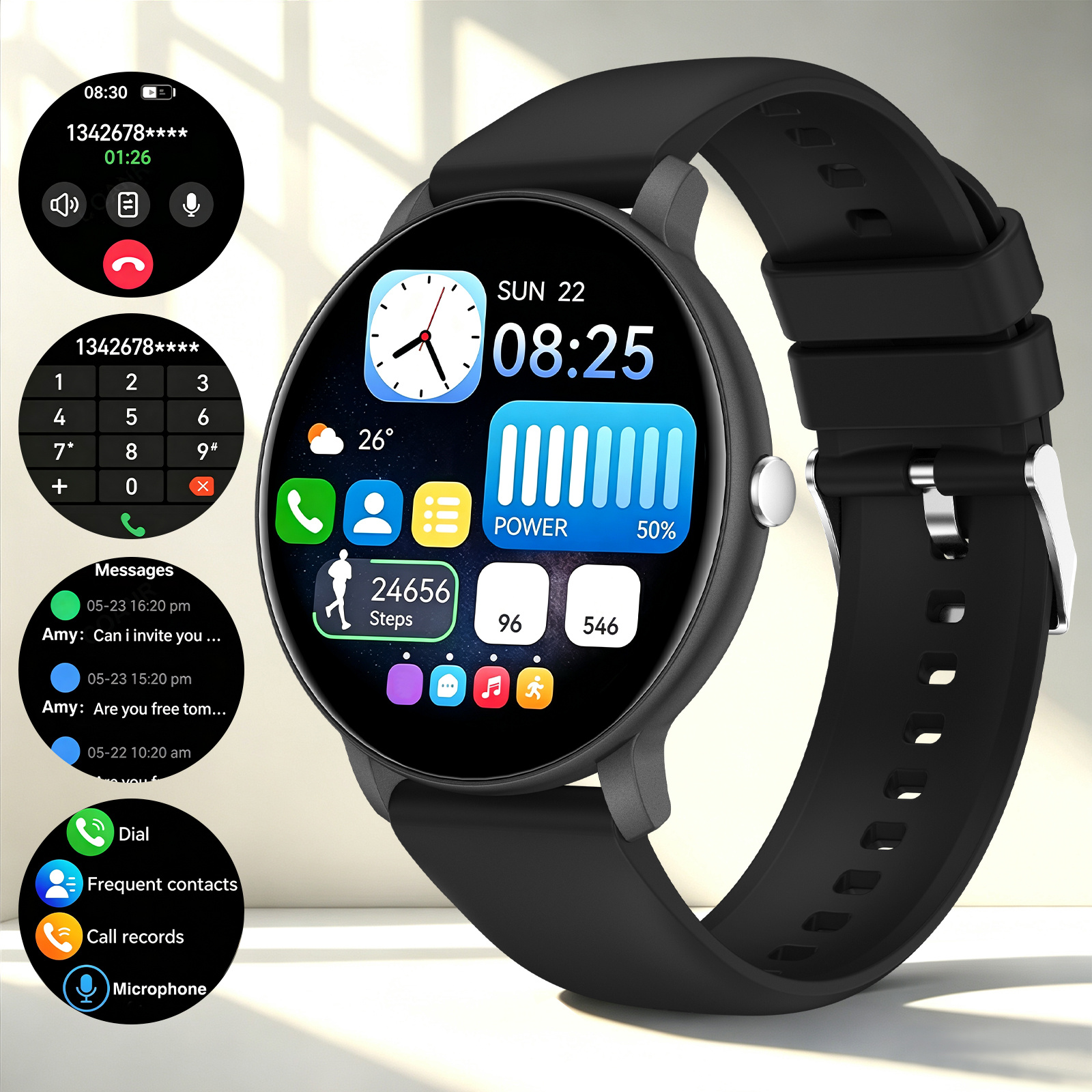
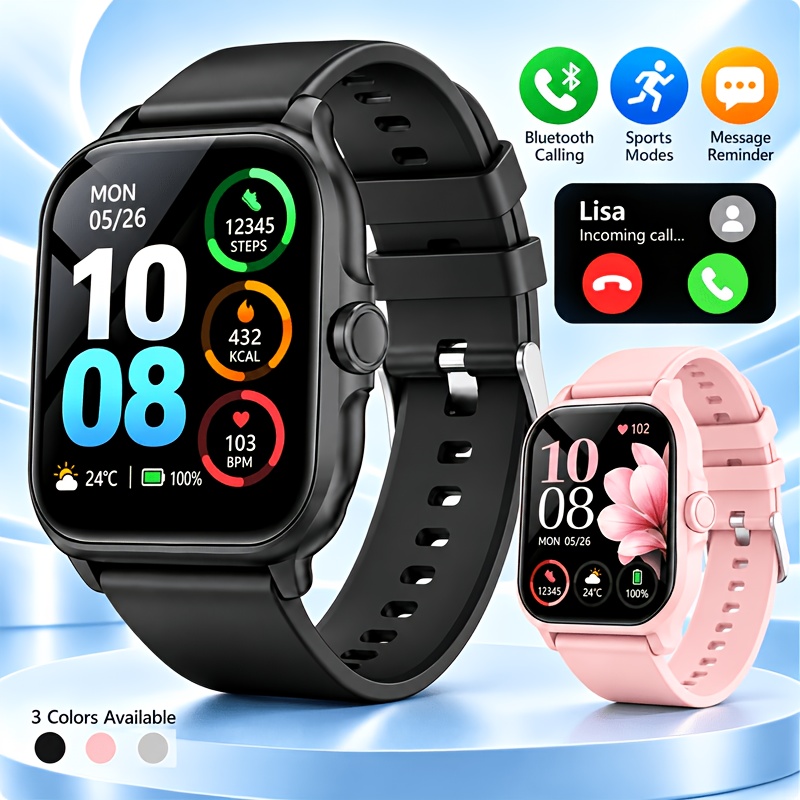
- A fitness tracker. If you like data, a tracker automates the logging. The 1.83-inch HD sports smartwatch records workouts, steps, heart rate, and sleep — useful when your goals involve any of those. For a wrist-friendly option with calling features, there's also a women's smartwatch with sports fitness tracking.
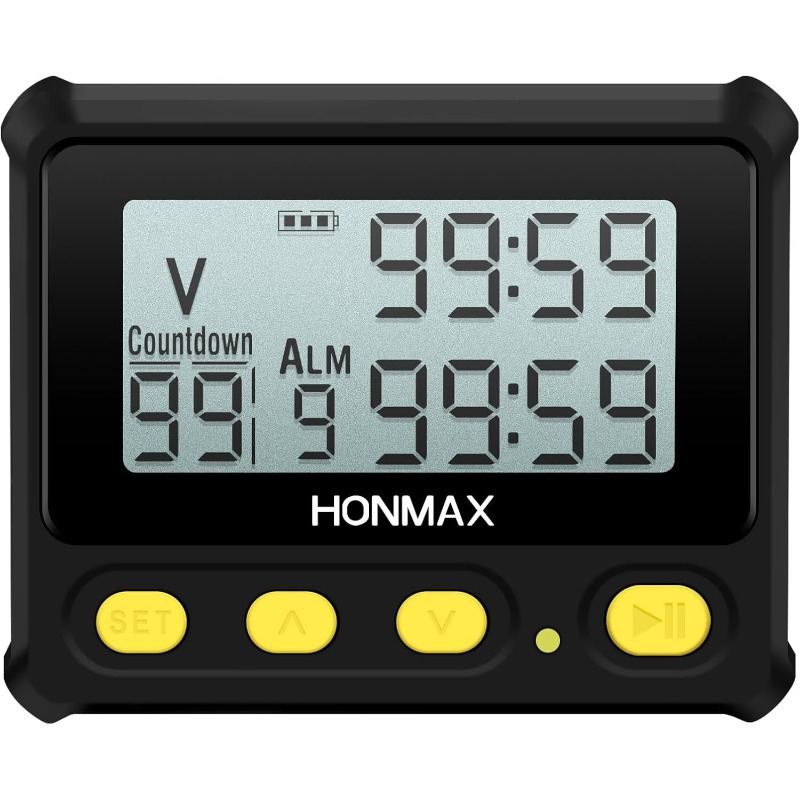
- Timed intervals. If your goal involves interval or circuit training, a dedicated 8200 interval timer with USB-C charging keeps your work/rest periods honest without staring at your phone.
- Monthly photos or measurements (optional). If your goal is physique-related, monthly check-ins beat daily scale-watching. Same lighting, same time of day, no judgment.
Track the process daily (sessions done) and review the outcome monthly. Daily scale-checking or constant measuring feeds anxiety, not progress.
Example Goals for Beginners (Use These as Templates)
Pick one, adapt the numbers to your life, and start there:
- The walker: "Walk briskly for 20–30 minutes, 4 days a week, for 6 weeks." Add 5 minutes per week if it starts feeling easy.
- The strength starter: "Do a 25-minute full-body dumbbell session twice a week for 8 weeks." Start with light weights; progress when 10–12 reps feel comfortable.
- The habit builder: "Move for at least 15 minutes every day for 30 days — walk, stretch, dance, anything." The point is the streak, not the workout.
- The sleep improver: "Finish all vigorous exercise at least 3 hours before bed, 5 nights a week."
- The consistency project: "Complete 10 workouts per month for 3 months." Monthly framing absorbs bad weeks without breaking the goal.
Each of these is specific, measurable, achievable, relevant, and reviewable. Each fits a busy life. Each is adjustable.
Adjusting Goals: The Skill Nobody Teaches
Here's the part most goal advice skips: a good goal gets adjusted. Life changes — work gets busy, kids get sick, motivation dips. Adjusting isn't quitting; it's maintenance.
- Scale the goal, don't abandon it. Can't do 4 sessions this week? Do 2 shorter ones. The habit survives; the streak continues.
- Review on schedule. Every 4–6 weeks, ask: Is this working? Is it still enjoyable? What's getting in the way? Then adjust the goal, not your self-worth.
- Expect bad weeks. Plan for them. A goal that breaks after one missed week was too rigid. Build in the reality that some weeks are 50%.
- Upgrade gradually. When the current goal feels easy for 2–3 weeks running, level up: add a session, add minutes, add weight. Progress should feel like a gentle ramp, not a cliff.
For more on making the routine stick long-term, see our guide on building a sustainable workout habit — it covers the psychology of consistency in depth.
Structuring the Workouts Behind Your Goals
A goal without a plan is just a hope. Once your goal is set, give each session a simple structure: warm-up, main work, cool-down. Our guide on how to structure a workout walks through exactly that.
And if you're starting from zero, the beginner weekly activity plan gives you a ready-made week of movement to build your goals around.
Common Goal-Setting Mistakes
- Setting only outcome goals. "Lose 10 kg" with no process plan is a wish. Attach behaviors to every outcome.
- Starting at an athlete's level. The goal should match your week one, not an influencer's week 400. You can always level up.
- Too many goals at once. One fitness goal, done well, beats five abandoned ones. Master one habit, then add the next.
- All-or-nothing thinking. Missing a week doesn't erase three good ones. Resume at a slightly easier level and keep going.
- Copying someone else's goal. Your schedule, body, and preferences are yours. Borrow the method, customize the target.
FAQ
Q: How many fitness goals should I set at once?
One primary goal. Seriously. You can have a secondary "background" habit (like daily steps), but your focused energy should go to a single, clear target. Once it feels automatic — usually after 6–8 weeks — add the next one.
Q: How long should I give a fitness goal before judging it?
At least 6–8 weeks of genuine consistency. The first 2–3 weeks are mostly adaptation and logistics (soreness, scheduling, figuring out the routine). Judging at week 2 is like judging a book by its cover page. Set a review date in advance and stick to it.
Q: What if I keep failing to meet my goals?
The goal is wrong, not you. Make it smaller until it's almost embarrassingly easy — then build from there. "Exercise 3x a week" failing repeatedly becomes "walk 10 minutes daily," and that succeeding becomes the foundation for everything else. Shrinking a goal is strategy, not surrender.
Q: Should my goals be about weight loss?
They can include weight-related outcomes, but process goals ("train 3x a week, walk daily") sustain motivation far better than scale goals, which fluctuate for reasons outside your control (water, hormones, digestion). Many people find that focusing on strength, energy, and consistency leads to better long-term results than chasing the scale.
Q: Do I need a fitness tracker to reach my goals?
No — a notebook and a calendar work perfectly. A tracker just automates the logging and adds data (heart rate, sleep, workout history) that helps you spot patterns. Use one if you enjoy data; skip it if numbers stress you out. The tracking method that you'll actually maintain beats the "best" one you abandon.
Conclusion
Reachable fitness goals aren't about dreaming bigger — they're about designing smaller. One clear outcome, one or two process goals feeding it, honest timelines, simple tracking, and scheduled reviews. Adjust without guilt, scale without shame, and let consistency do the heavy lifting. Start with a single goal this week, write it down in concrete terms, and give it eight honest weeks. That's how "get in shape" finally becomes something you actually reach.