Breathing is a skill you can train. Learn bracing for heavier lifts, rhythm for cardio, and simple drills that make every workout feel easier and safer.
How to Breathe During Exercise: Bracing, Rhythm and Technique

Most of us breathe on autopilot — until a workout makes us notice. The hill that leaves you gasping, the heavy set where you realise you've been holding your breath, the run where your breathing feels ragged by minute five. Breathing is a skill, and like any skill, it responds to practice. This guide covers the fundamentals: diaphragmatic breathing, the strength-training rule, bracing for heavier lifts, breathing rhythms for cardio, and the common mistakes that trip almost everyone up.
This guide contains affiliate links. If you buy through them, VÉLORA may earn a commission at no extra cost to you.
Breathing Basics: The Diaphragm Does the Work
Deep, effective breathing starts with the diaphragm — the dome-shaped muscle under your lungs. When it contracts, it drops down, your belly expands, and your lungs fill from the bottom up. When you breathe shallowly into your chest instead, you use a smaller fraction of your lung capacity and your breathing stays quick and inefficient.
Most adults default to shallow chest breathing during the day, especially when stressed. So the first drill is simply to re-learn belly breathing:
The lying-down drill (5 minutes daily for a week or two)
- Lie on your back with knees bent, one hand on your chest and one on your belly.
- Breathe in slowly through your nose for about 4 counts, feeling your belly rise while your chest stays fairly still.
- Breathe out slowly through your mouth (or nose) for about 4–6 counts, feeling your belly fall.
- Aim for 4–6 full breaths per minute — slow, unhurried, quiet.
That's it. There's nothing advanced here, and that's the point. Two weeks of five minutes a day builds a breathing pattern your body starts using automatically — during workouts, during stressful moments, during everything. This slow nasal breathing is also a staple of yoga and Pilates practice, where breath awareness is treated as part of the exercise itself, not an afterthought.
The Strength Rule: Exhale on Effort
For general resistance training — dumbbells, machines, bodyweight work — the rule is simple and it covers the vast majority of training:
Exhale during the hard part (the effort), inhale on the way back.
- Squat: inhale as you lower, exhale as you stand up.
- Bench press or push-up: inhale as you lower, exhale as you push.
- Row: exhale as you pull, inhale as you extend.
- Overhead press: exhale as you press up, inhale as you lower.
- Bicep curl: exhale as you curl up, inhale as you lower.
The exhale doesn't need to be dramatic — a steady, controlled breath out works well. What matters is that you're not holding your breath through the rep or gasping randomly. This rhythm keeps oxygen flowing and gives your sets a steady, sustainable cadence.
For beginners, this one rule is enough. Practice it with light weights until it feels automatic, then stop thinking about it.
Bracing for Heavier Lifts
When loads get heavier — think challenging squats, deadlifts, or overhead presses — a brief, controlled brace adds real stability. Bracing means taking a breath in, tightening your core as if someone were about to press on your stomach, and holding that tension through the hardest part of the rep before exhaling.
A few honest caveats, because bracing is often taught recklessly:
- Keep loads moderate. Bracing is a technique for controlled heavy-ish training, not an excuse to attempt weights beyond your level. Never strain, grunt through dizziness, or push to the point of seeing stars.
- The hold is brief. You're bracing for one rep — a few seconds — not holding your breath through a whole set. Exhale at the top, take a fresh breath, and brace again.
- It's optional, not mandatory. Many women train very effectively for years with the simple exhale-on-effort rule. Bracing is a tool for when you're intentionally working with challenging loads.
- If you have high blood pressure or have been advised to avoid straining, skip bracing and stick with continuous breathing — and check with your doctor about heavier lifting.
Done properly, a brace feels like your whole midsection turns into a solid cylinder for a moment. Done improperly — holding your breath while straining maximally — it spikes blood pressure and risks light-headedness. Respect the difference.
Cardio Breathing: Find Your Rhythm
Cardio breathing works best when it settles into a rhythm matched to your movement. Instead of breathing randomly, runners and cyclists often count breaths against steps or pedal strokes:
- Easy pace: 3:3 rhythm. Inhale for three footstrikes, exhale for three footstrikes. Relaxed, sustainable, conversational.
- Moderate pace: 2:2 rhythm. Inhale for two steps, exhale for two. This is the workhorse rhythm for steady runs and brisk cardio sessions.
- Hard effort: 2:1 or 1:2. Shorter, quicker breathing as intensity climbs — inhale for two steps, exhale for one, or simply let the rhythm quicken naturally.
You don't need to count obsessively. Try matching your breath to your stride for a few minutes until the pattern clicks, then let it run in the background. The goal is even, rhythmic breathing — not the shallow panting that leaves you feeling out of control by the second kilometre.
Nose or mouth? For easy efforts, nasal breathing is fine and calming. As intensity rises, mouth breathing takes over naturally — that's normal and correct. Don't force nose-only breathing during hard efforts; you'll just feel starved of air. Let the effort level decide.
A heart rate monitor helps you connect breathing to effort objectively — when your breathing rhythm shifts from 3:3 to 2:2, you'll usually see your heart rate sitting in a higher zone too. The COROS heart rate monitor with orange band gives you live heart-rate feedback during runs and gym sessions, so you can learn what each breathing rhythm actually feels like at different intensities. If you're building your cardio base at home, our cardio workout at home guide has session structures to practice with.
Breathing for Intervals and HIIT
Interval training compresses the breathing challenge: short hard efforts where breathing spikes, followed by recovery periods where you deliberately slow it down. The skill here is the transition.
- During the work interval: let breathing run fast and rhythmic — don't try to control it into slowness. Match it to the effort.
- During the rest interval: this is where training happens. Consciously slow your breathing — long exhales, 4–6 breaths per minute if you can manage it. Active recovery brings your heart rate down faster and teaches your body to recover on demand.
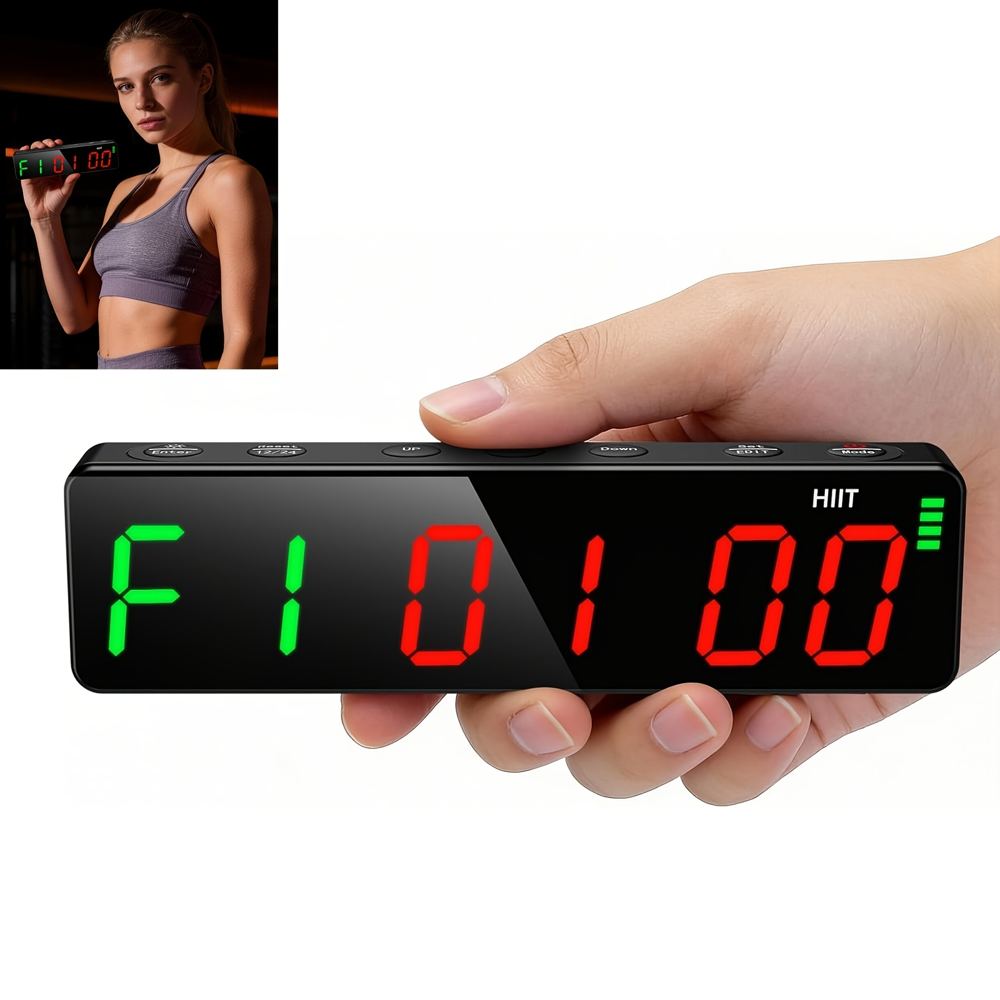
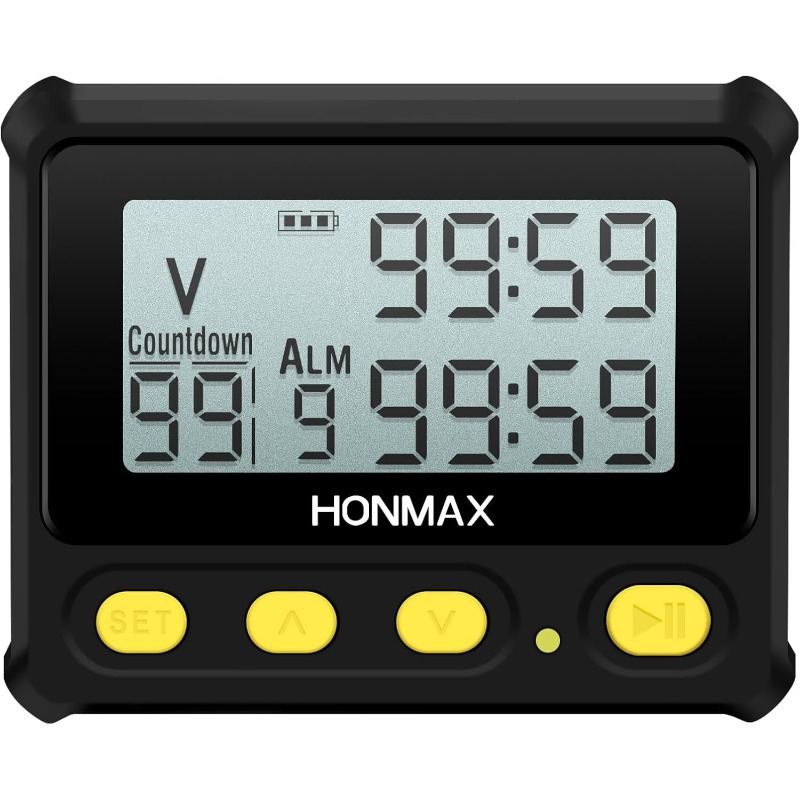
- Use a timer. Guessing rest periods usually means cutting them short. An interval timer stopwatch keeps work and rest honest — follow the beeps and focus on breathing instead of watching the clock. A magnetic portable gym timer stuck to a rack or fridge does the same job for home sessions.
New to intervals? Start with our HIIT for beginners guide, and plan your sessions with how to structure a workout — good session design makes breathing practice much easier because the effort levels are clear.
Activity-by-Activity Breathing Cheat Sheet
| Activity | Breathing pattern | Key notes | |---|---|---| | Light strength training | Exhale on effort, inhale on return | The default rule; practice until automatic | | Heavier compound lifts | Brief brace (inhale, tighten core, exhale after the rep) | Keep loads moderate; never strain to dizziness | | Easy running / cycling | 3:3 rhythm, nose or mouth | Relaxed and conversational; slow nasal breathing works here | | Moderate cardio | 2:2 rhythm | The sustainable workhorse for steady sessions | | Hard intervals | Fast rhythmic breathing in work, slow 4–6/min exhales in rest | Train the recovery, not just the effort | | Yoga | Slow nasal breathing coordinated with movement | Breath leads, movement follows; never force it | | Pilates | Exhale on exertion, lateral rib breathing | Breath supports core engagement | | Walking / hiking | Natural rhythm, deepen as hills demand | No special technique needed; just avoid breath-holding on climbs | | Stretching / cool-down | Slow exhales, 4–6 breaths per minute | Use the exhale to ease gently deeper into stretches |
Common Mistakes
- Holding your breath on every set. The most common error in the gym. It happens unconsciously, especially as weights get challenging. If you catch yourself doing it, lighten the load and re-establish the exhale-on-effort rhythm.
- Shallow chest breathing. Quick, high breaths that barely move the belly deliver less air and keep your heart rate higher than needed. The lying-down drill fixes this over a couple of weeks.
- Breathing too fast during easy cardio. Panting through a conversational-pace jog wastes energy. Slow the breath to match the effort — 3:3 at easy pace.
- Forcing nose-only breathing at high intensity. Your body needs the airflow; mouth breathing during hard efforts is physiologically normal, not a failure.
- Ignoring the recovery interval. In HIIT, most people focus on surviving the work and coast through the rest. Deliberately slowing your breath during rest is where the real adaptation happens.
- Bracing like a powerlifter on light weights. Bracing is for challenging loads. Using a full valsalva-style hold for 5 lb dumbbell curls is unnecessary strain — just breathe normally.
FAQ
Q: Why do I get side stitches when I run?
Side stitches — that sharp ache under the ribs — are common, especially in beginners, and the exact cause is still debated. Shallow, rapid breathing and a bouncing stride are often implicated. Practical fixes that help many runners: slow down, deepen your breathing into a steady 2:2 rhythm, and try exhaling when your left foot strikes (which changes which side takes the impact of the exhale). Warming up properly and avoiding a big meal right before running also help. Stitches usually fade as your fitness improves.
Q: Should I breathe through my nose or mouth during exercise?
Both, depending on intensity. Nose breathing is fine and often calming at easy efforts — walking, gentle cycling, yoga. As intensity rises, your body's demand for air increases and mouth breathing naturally takes over; fighting that just leaves you short of breath. There's no moral hierarchy here: match the breathing route to the effort level and you'll be right.
Q: Is holding my breath on heavy lifts dangerous?
A brief, controlled brace on a heavy rep is a standard technique, but prolonged breath-holding while straining hard spikes blood pressure and can cause dizziness or fainting — genuinely risky with a loaded barbell. Keep the hold to a single rep, keep loads within your ability, exhale at the top, and never push to the point of light-headedness. If you have cardiovascular concerns, skip breath-holding entirely and use continuous breathing, after checking with your doctor.
Q: How do I actually practice better breathing?
Start with the lying-down diaphragmatic drill: five minutes a day, 4–6 slow breaths per minute, for two weeks. Then take the exhale-on-effort rule into your strength sessions with light weights until it's automatic. For cardio, practice matching breath to stride (3:3 easy, 2:2 moderate) during a few easy sessions. Small, consistent practice beats any complicated protocol.
Conclusion
Breathing well during exercise comes down to three habits: breathe from the diaphragm, exhale on the effort during strength work (with a brief brace only for challenging lifts), and find a rhythm for cardio. Practice the lying-down drill for two weeks, take the strength rule into your next session, and notice how quickly it starts feeling natural.