Cardio at home for every energy level: low-impact options, jump rope and mini-trampoline ideas, timing formats, and a sample week mixing it all.
Cardio Workout at Home: Low-Impact and High-Energy Options
Cardio has a marketing problem. Somewhere along the way it became synonymous with pounding a treadmill for an hour while staring at a gym TV — which is why so many women quietly decide it is not for them. But cardio is simply sustained movement that raises your heart rate and breathing: dancing in your kitchen, marching in place, bouncing on a mini-trampoline, pedaling a quiet bike while you watch a show. Done at home, it is flexible, private, and genuinely enjoyable once you find your format.
This guide covers both ends of the energy spectrum. Whether your joints ask for low-impact kindness or you want a full sweat session, you will find options, timing formats, and a sample week that mixes it all — no gym, no commute, no special fitness level required.
This guide contains affiliate links. If you buy through them, VÉLORA may earn a commission at no extra cost to you.
What Counts as Cardio?
Any rhythmic activity that raises your heart rate and keeps it elevated counts: brisk marching, step-touches, jumping jacks, jump rope, cycling, dancing, stair climbing, shadowboxing. The "best" cardio is the one you will actually repeat several times a week — enjoyment beats optimization every time.
A useful intensity guide is the talk test: at moderate intensity you can speak in full sentences but singing would be hard; at vigorous intensity you can only get out a few words at a time. Beginners should spend most of their time at moderate intensity and build from there.
Low-Impact Options: Kind to Your Joints
Low-impact means one foot is always on the ground (or you are seated) — no jumping, no pounding. These are ideal if you are returning to exercise, managing joint sensitivity, training in an apartment, or simply prefer a gentler session.
Marching in place with arm swings — Lift your knees toward hip height and pump your arms. To raise intensity, march faster or add a small bounce without leaving the ground. Aim for 2–5 minute blocks to start.
Step-touch with reaches — Step side to side, reaching the opposite arm overhead each time. Simple, rhythmic, and easy to sustain for 10–20 minutes with music or a podcast.
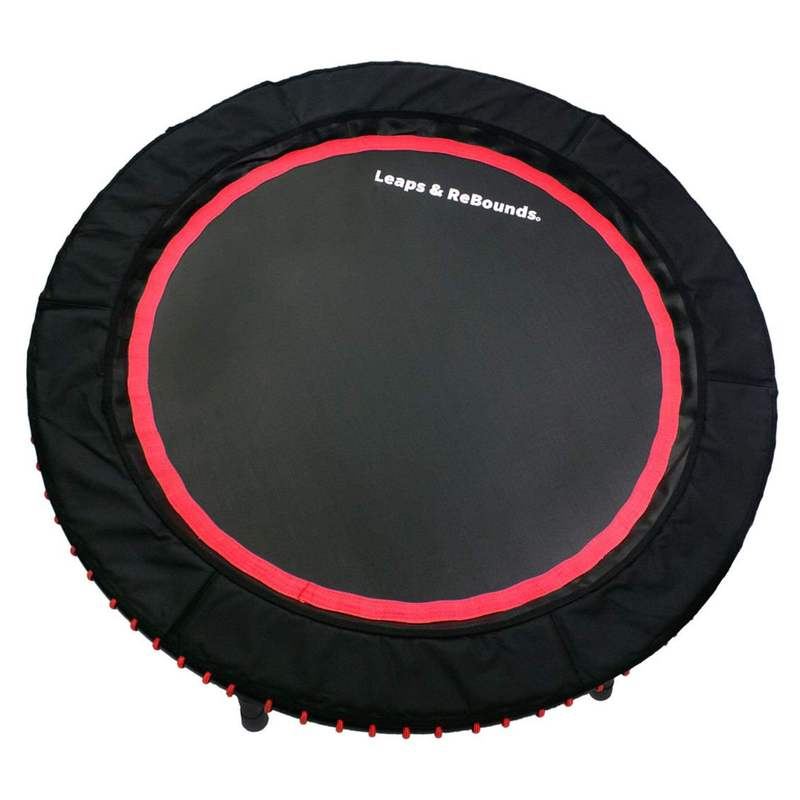
Mini-trampoline bouncing — A rebounder like the 48-Inch Mini Trampoline turns bouncing into genuine cardio with a fraction of the joint stress of jumping on hard ground. Start with gentle health-bounces (feet barely leave the mat) for 5–10 minutes and build toward 15–20 minutes. Hold a wall or sturdy chair at first if balance feels shaky.
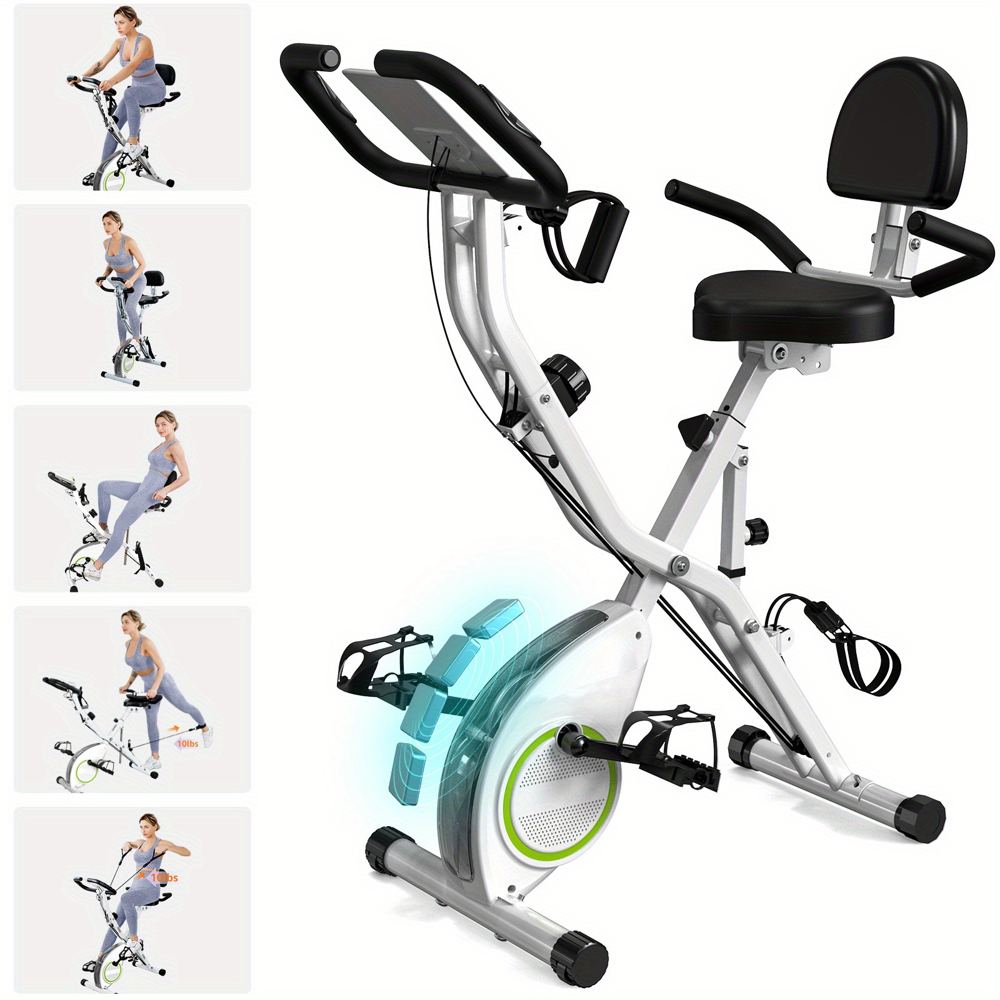
Stationary cycling — A folding bike such as the Foldable 5-in-1 Exercise Bike gives you quiet, seated cardio you can do while watching TV — the easiest habit in this entire guide to stick with. Pedal at a conversational pace for 15–30 minutes.
Low-impact dance — Put on music and move: side steps, grapevines, gentle kicks, arm waves. It counts, it is joyful, and nobody is watching.
For more joint-friendly ideas, our Low-Impact Workouts for Women goes deeper.
High-Energy Options: When You Want to Sweat
When your body is ready for more intensity, these options raise your heart rate fast in very little space.
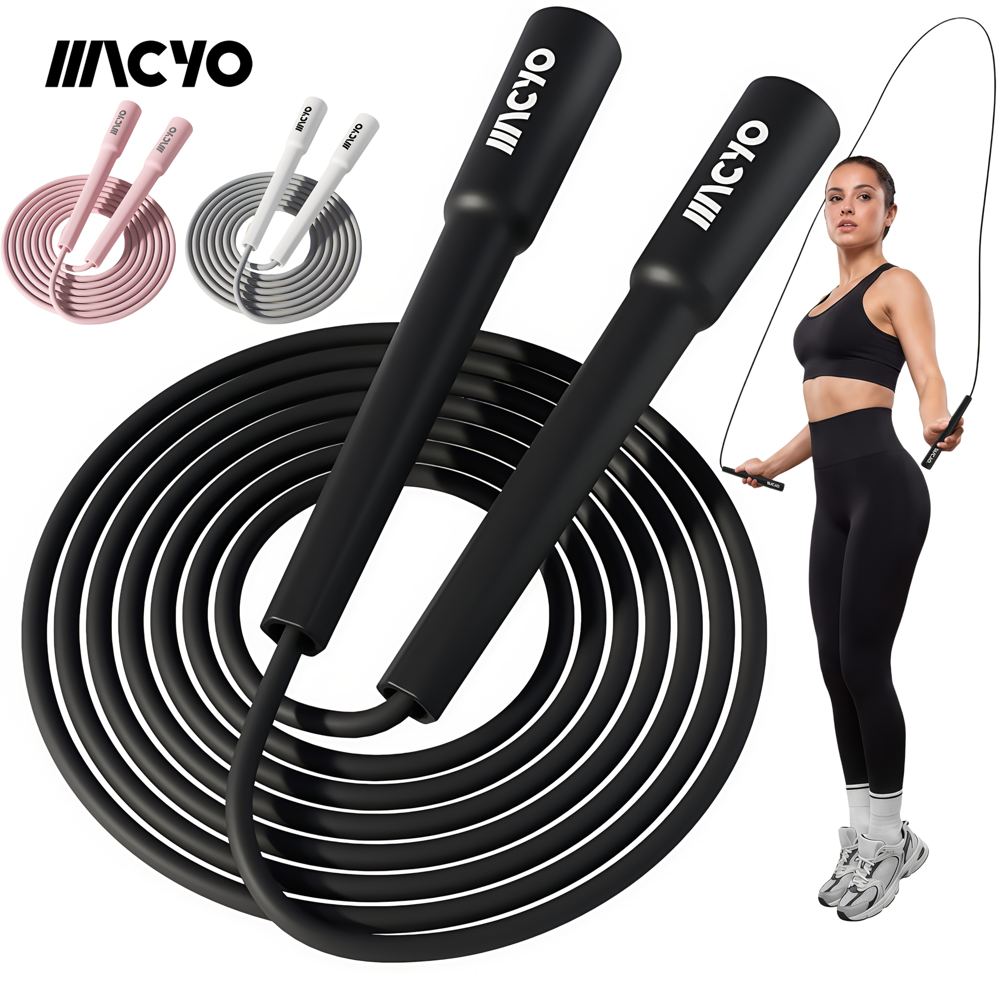
Jump rope — The most efficient cardio tool ever made for home use. A tangle-free speed jump rope costs little, stores anywhere, and delivers serious conditioning in short bursts. Beginners: start with 30 seconds of basic bounces followed by 30–60 seconds of rest, repeating for 5–10 minutes. Land softly on the balls of your feet with knees slightly bent, and keep the jumps small — an inch off the ground is plenty.
Jumping jacks and star jacks — Classic for a reason. Keep landings soft and your core braced. Try 20–40 second bursts with equal rest.
High knees and butt kicks — Drive knees up (high knees) or kick heels toward your glutes (butt kicks) in place. Excellent for 20–30 second interval blocks; pump your arms to raise the effort.
Burpee walkouts — The joint-friendly cousin of the burpee: hinge down, walk your hands out to a plank, walk back, and stand. No jump, no push-up unless you want them. Surprisingly taxing in 30-second rounds.
Stair or step climbs — If you have stairs, climbing them briskly for 5–10 minutes is outstanding cardio. No stairs? A sturdy step or low bench works just as well.
Three Formats: Steady, Intervals, and Circuits
Steady-state — One activity at a steady, conversational pace for 15–40 minutes. Best for: building the habit, active recovery days, multitasking cardio (bike plus a show). Example: 25 minutes of easy cycling.
Intervals — Alternate work and rest. Beginner-friendly ratios: 20 seconds of effort with 40 seconds of rest, or 30 seconds on with 30 seconds off, repeated for 8–15 rounds. Best for: short sessions and efficient fitness gains. Example: 10 rounds of 30 seconds of jump rope plus 30 seconds of marching rest.
Circuits — String 4–6 moves together (for example, 40 seconds of step-touches, 40 seconds of high knees, 40 seconds of burpee walkouts, 40 seconds of rest), and repeat for 2–4 rounds. Best for: variety lovers and full-body conditioning. Rest 1–2 minutes between rounds.
All three formats work. Rotating them across the week keeps things interesting and trains different aspects of fitness.
Cardio Method Comparison
| Method | Impact | Space Needed | Noise Level | Best For | |---|---|---|---|---| | Marching / step-touch | Very low | Tiny | Silent | Absolute beginners, warm-ups | | Stationary bike | Very low | Small (folds away) | Very quiet | TV-time cardio, sensitive knees | | Mini-trampoline | Low | Small | Low thump | Fun factor, gentle bouncing | | Dance | Low–moderate | Small | Low | People who dislike "exercise" | | Jump rope | Moderate–high | Tiny | Light tapping | Maximum results per minute | | Stair climbing | Moderate | A staircase | Low | Strong legs, zero equipment |
A Sample Week Mixing It All
- Monday: 20 minutes of steady cycling or marching (moderate intensity)
- Tuesday: Rest or gentle stretching
- Wednesday: Intervals — 10 rounds of 30 seconds work / 30 seconds rest (jump rope or high knees, with step-touch recovery)
- Thursday: Rest or an easy walk
- Friday: 15 minutes of mini-trampoline bouncing or dance
- Saturday: Circuit — 3 rounds of 5 moves, 40 seconds each
- Sunday: Rest
That totals roughly 75–90 minutes across the week. Adjust up or down — consistency at a level you enjoy beats heroic weeks followed by burnout. If running is not your thing (or not an option), our Cardio Exercises at Home for Women has even more no-running ideas.
Common Mistakes
- Going too hard on day one. Cardio fitness builds over weeks. A sustainable starting intensity is what lets you still be doing this in month three.
- Skipping the warm-up. Three to five minutes of easy marching or gentle bouncing prepares your heart, lungs, and joints — and makes the session feel dramatically easier.
- Holding your breath during intense bursts. Keep breathing rhythmically; breath-holding during cardio spikes discomfort fast.
- Only doing one format. Your body adapts to repetition. Mixing steady sessions, intervals, and circuits keeps progress — and interest — alive.
- Ignoring pain signals. Muscle fatigue and breathlessness are normal; sharp joint pain, chest pain, or dizziness are stop signals, not challenges.
Safety Notes
- Check with a clinician before starting if you have a heart condition, high blood pressure, asthma, or any condition that affects exercise tolerance.
- Keep water nearby and sip regularly, especially for sessions over 20 minutes.
- Exercise on a non-slip surface with supportive footwear (or barefoot only on a mat you trust).
- Stop and seek medical advice if you experience chest pain, severe dizziness, or unusual shortness of breath.
- If you are pregnant, favor low-impact options and get provider clearance before vigorous cardio.
FAQ
Q: How much cardio do I actually need per week?
General guidance for adults is 150 minutes of moderate activity or 75 minutes of vigorous activity per week, plus muscle-strengthening work. Beginners can start with far less — even 60–90 minutes total — and build up gradually. Something beats nothing, every time.
Q: Will cardio alone help me lose weight?
Cardio burns calories and supports heart health, but lasting weight change depends mostly on nutrition, sleep, and overall activity — not on any single workout type. Think of cardio as one valuable piece of a bigger picture, not a tool that melts fat from specific areas (spot reduction does not work).
Q: Is jumping rope bad for your knees?
For healthy knees, rope jumping with soft landings — balls of the feet, slight knee bend, forgiving surface — is generally fine and even strengthens the structures around the joint. If you have a diagnosed knee condition, stick to low-impact options and check with a clinician first.
Q: Morning or evening cardio — does it matter?
The best time is the time you will do consistently. Energy levels, schedule, and enjoyment matter far more than the clock. Experiment for two weeks and keep what sticks.
Q: Can I do cardio every day?
Light-to-moderate cardio most days is fine. Vigorous intervals or hard circuits need rest days between them — about 48 hours for the same muscle groups is a good rule. Alternate hard and easy days rather than stacking hard sessions back to back.
Q: Do I need a heart rate monitor?
No. The talk test described earlier is a reliable, free intensity guide. A monitor can be motivating, but it is never required.
The Bottom Line
Home cardio works because it removes every excuse the gym commute ever gave you: pick a low-impact option on tired days, a high-energy one when you feel strong, rotate steady sessions, intervals, and circuits, and build a week that fits your life instead of fighting it. Results vary from person to person, but the benefits of regular movement — more energy, better sleep, a stronger heart — are among the most reliable in all of exercise. Start with ten minutes today. That is a real workout.