No treadmill, no problem. These effective cardio exercises at home for women need little space and no big equipment — with a simple weekly plan.
Cardio Exercises at Home for Women (No Treadmill Needed)
You do not need a treadmill, a spin bike, or a gym membership to get genuinely effective cardio — your body, a small patch of floor, and twenty to thirty minutes are enough. Home cardio is one of the most practical fitness habits a woman can build: no commute, no waiting for machines, no workout clothes beyond what is comfortable, and sessions short enough to fit between real-life commitments.
This guide covers the best cardio exercises you can do at home with no treadmill, explains how to structure them into a week (including interval formats that save time), and gives honest guidance on how much cardio you actually need. No exaggerated promises — cardio supports your heart, stamina, mood, and sleep, and its effects build over months of consistency. Results vary, and the best cardio program is the one you will actually repeat.
This guide contains affiliate links. If you buy through them, VÉLORA may earn a commission at no extra cost to you.
How Much Cardio Do You Need?
For general health, a widely used target is about 150 minutes of moderate cardio per week, or 75 minutes of vigorous cardio, or a mix — broken into sessions however you like. "Moderate" means you can talk but not sing; "vigorous" means you can only get out short phrases. A practical weekly shape for a home routine:
- 3–4 cardio sessions of 20–30 minutes, mixing one or two longer steady sessions with one shorter interval session.
- Two strength sessions, because cardio alone does not maintain muscle. Our strength training starter guide pairs well with this routine.
- Daily movement on top — walking counts, and it counts a lot.
You can build up to these numbers over a month or two. Starting with two 15-minute sessions and adding five minutes a week is a perfectly respectable progression.
The Exercises: A Home Cardio Menu
Mix and match from this menu. Every exercise includes a low-impact modification — jumping is never required.
1. Marching and High-Knee Marching (warm-up and base)
Starting position: stand tall in a clear space. Technique: march in place, lifting your knees toward hip height and swinging your arms. To raise the intensity, march faster or lift the knees higher; to keep it gentle, keep the knees low and the pace easy. Breathe steadily — in through the nose, out through the mouth. Time: 2–5 minutes as a warm-up, or as an active recovery between harder moves. Low-impact: this is the low-impact option — no jumping involved.
2. Step-Ups (legs and heart together)
Starting position: face a sturdy low step, bench, or the bottom stair of your staircase. Hold a wall or rail for balance if needed. Technique: step up with your right foot, bring the left foot up, then step back down. Alternate the leading leg each set. Keep your chest up and push through the heel of the stepping foot. Sets/time: 3 sets of 1 minute per leading leg, or 8–12 step-ups per leg for 2–3 sets. Make it harder: hold light dumbbells, or step a little higher. Our dumbbell guide helps you choose a sensible weight.
3. Jump Rope (the classic for a reason)
Few home cardio tools match a jump rope for intensity per minute and per dollar. It trains coordination and calf endurance alongside your heart.
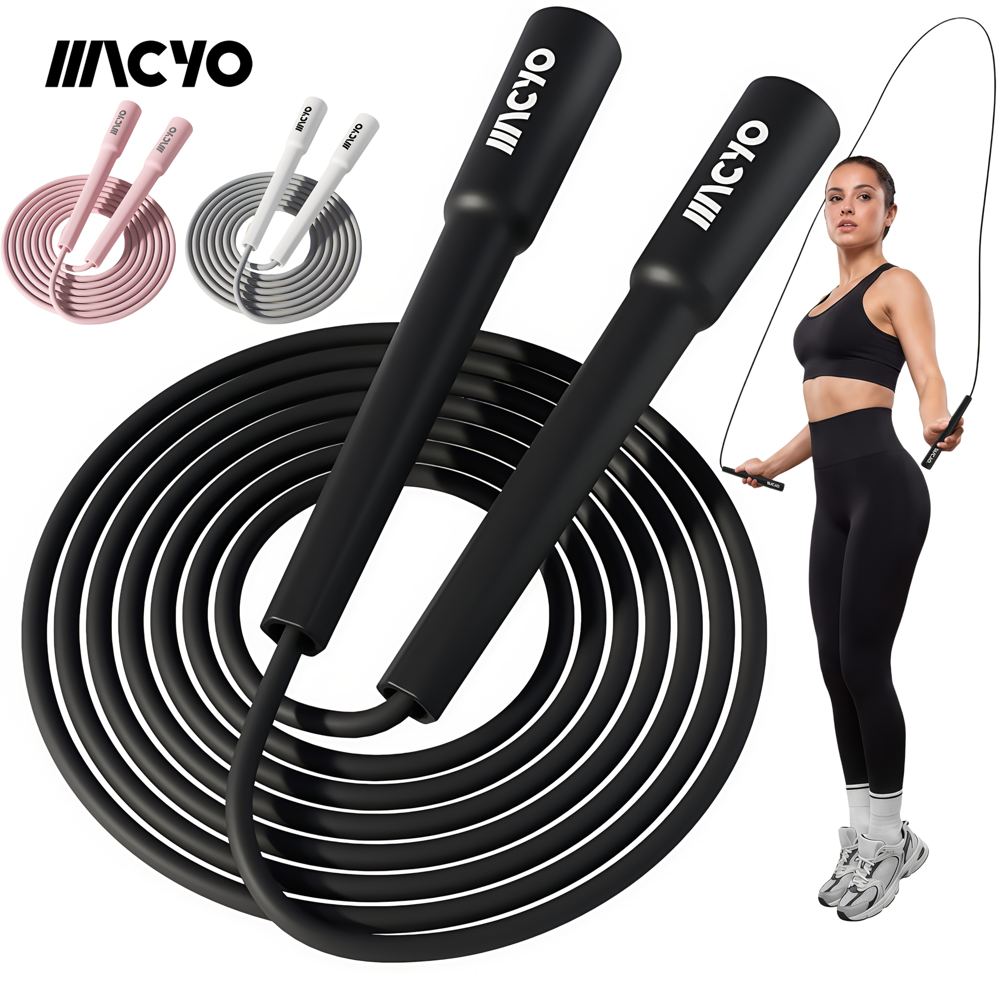
Technique: hold the handles lightly, elbows close to your body, and turn the rope with small wrist circles — not big arm swings. Jump just high enough to clear the rope, landing softly on the balls of your feet with slightly bent knees. Breathe in rhythm. Time: beginners: 30 seconds of jumping followed by 30 seconds of rest, repeated 6–10 times. As you improve, lengthen the work and shorten the rest. Low-impact: march in place swinging the rope at your sides, or try a cordless weighted jump rope — it spins without a rope, so it works in small rooms and low ceilings. The MACYO Tangle-Free Speed Rope is a smooth, adjustable option for standard skipping. Common mistakes: jumping too high (wastes energy and pounds the joints), holding the breath, and death-gripping the handles.
4. Burpee Variations (full-body intensity)
The burpee has a reputation for being brutal — but the beginner versions are very manageable.
Standard technique: from standing, bend down, place hands on the floor, step or jump your feet back to a plank, then step or jump them forward and stand up. Add a small jump at the top only when you are ready. Sets/reps: 3–5 sets of 5–8 repetitions, resting 30–60 seconds between sets. Beginner modification: walk the feet back and forward instead of jumping, and skip the jump at the top entirely. Elevate your hands on a sturdy chair to reduce the load further. Safety note: keep your back flat in the plank phase — no sagging hips. If your wrists complain, use push-up bars or fists on a mat.
5. Mountain Climbers (core plus cardio)
Starting position: plank position, hands under shoulders, body in a straight line. Technique: drive one knee toward your chest, then switch legs in a running motion. Keep your hips level — resist the urge to pike them upward as you tire. Time: 3–4 rounds of 30 seconds, resting 30 seconds between rounds. Beginner modification: slow the pace to a controlled "climb" rather than a run, or do them with hands elevated on a sturdy chair.
6. Shadow Boxing (fun, and surprisingly demanding)
Starting position: stand with feet staggered, hands up. Technique: throw alternating straight punches (jab-cross) while shifting your weight, add light footwork — step side to side between combinations. Keep your core braced and breathe out with each punch. Time: 2–3 minute rounds with 1 minute of rest, 3–5 rounds. Why it works: constant arm movement plus footwork raises the heart rate fast, and it is one of the few cardio options that genuinely feels like play rather than punishment.
7. Dance Cardio and Stair Climbing
Do not underestimate either. Twenty minutes of dancing in your living room — following a video or just moving to music you love — is legitimate moderate-to-vigorous cardio. And if your home has stairs, brisk stair climbing in 2–3 minute bouts with rest between is one of the most efficient home cardio workouts there is. Hold the rail, watch your step, and keep it controlled.
Interval Formats That Save Time
Steady cardio is great, but intervals — alternating harder efforts with easier recovery — deliver comparable fitness benefits in less time, which is exactly what busy schedules need.
| Format | Structure | Best for | | --- | --- | --- | | Beginner intervals | 30 sec work / 30 sec rest, 10–15 min | New exercisers, jump rope, step-ups | | Tabata-style | 20 sec work / 10 sec rest × 8 rounds | Short, intense sessions when time is tight | | Steady state | 20–40 min at a conversational pace | Dancing, marching, stair climbing | | Circuit | 5–6 exercises, 40 sec each, 2–3 rounds | Full-body mix of cardio and strength |
A sample 20-minute interval session: warm up 3 minutes of marching, then alternate 40 seconds of step-ups with 20 seconds of marching, 40 seconds of shadow boxing with 20 seconds of marching, 40 seconds of mountain climbers with 20 seconds of marching — repeat the block three times, then cool down with 2 minutes of easy marching and gentle stretches.
A Tool Worth Considering: The Balance Trainer
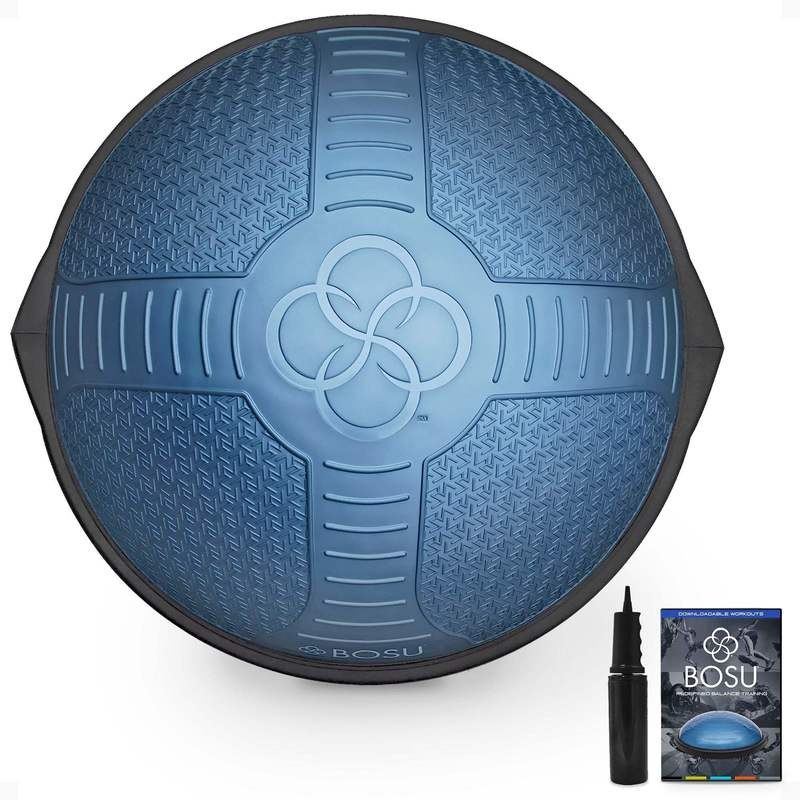
If you enjoy variety, a balance trainer adds a wobble challenge to cardio-adjacent moves — step-ups, squats, and planks all become more demanding when the surface is unstable, and it doubles as a core and balance tool. The BOSU Home Balance Trainer is the classic option and stores easily in a corner.
A Sample Week
| Day | Session | Time | | --- | --- | --- | | Monday | Interval session (step-ups, shadow boxing, mountain climbers) | 20 min | | Tuesday | Rest or gentle walk | — | | Wednesday | Steady dance or marching session | 25–30 min | | Thursday | Rest | — | | Friday | Jump rope intervals + burpees | 20 min | | Saturday | Stair climbing or longer steady session | 25–30 min | | Sunday | Rest | — |
Add two short strength sessions (for example Tuesday and Sunday) and you have a complete, balanced week. Our resistance band workout guide is a good companion resource for the strength side.
Safety Notes
- Warm up and cool down. Three to five minutes of easy marching before, and gentle walking plus light stretching after. Skipping the warm-up is the most common cause of pulled muscles in home workouts.
- Floors and footwear matter. Wear supportive shoes on hard floors; a mat helps for floor-based moves. Clear enough space that you will not hit furniture mid-burpee.
- Listen to your body. Muscle fatigue and breathlessness are normal; chest pain, dizziness, or sharp joint pain are not. Stop and rest if anything feels wrong, and check with your doctor if you have a heart condition, uncontrolled blood pressure, or are returning to exercise after illness or injury.
- Pregnant or postpartum? Follow your provider's guidance on exercise intensity and positions.
FAQ
Q: Is home cardio as effective as running on a treadmill?
It can be — what matters for cardiovascular fitness is sustained elevated heart rate, not the machine. Interval step-ups, jump rope, and burpees can match or exceed the intensity of a steady treadmill jog. The treadmill's only real advantage is convenience of measurement; your body cannot tell the difference.
Q: Can I do cardio every day?
You can do gentle cardio most days — walking and easy dancing recover quickly. Hard intervals need rest days between them (your joints and nervous system adapt during recovery). A mix — 3–4 harder sessions plus daily easy movement — beats going hard every day and burning out.
Q: Will cardio alone help me lose weight?
Cardio burns calories and supports heart health, but body weight depends on many factors — overall activity, food, sleep, stress, and genetics — and no exercise can promise a specific result or timeline. Many women find that combining cardio with strength training and consistent daily movement works better than cardio alone for long-term body composition.
Q: I hate jumping — can I still do cardio at home?
Absolutely. Marching, step-ups, shadow boxing, dance, and stair climbing are all effective without a single jump. Every exercise in this guide includes a low-impact version; low-impact is not low-quality.
Q: What is the best time of day for cardio?
The time you will actually do it — morning, lunch, or evening all work. Some women find morning sessions energizing and easier to protect from schedule creep; others do their best work after the day's stress has burned off. Consistency beats timing.
The Bottom Line
Cardio at home needs no treadmill, no expensive equipment, and no hour-long sessions. A jump rope, a staircase or sturdy step, your own bodyweight, and twenty to thirty minutes a few times a week are enough to build a stronger heart and better stamina. Pick the exercises you dislike least, start with two short sessions a week, and let the habit grow from there — the best cardio program is simply the one that becomes part of your week.
