Do hand grip strengtheners actually work? This guide covers which type fits your goals, the safest way to build grip strength, and how to choose one.
Hand Grip Strengtheners: Do They Work and How to Choose
Your grip is the handshake between you and the weight — and for many people, it's the weak link. Barbells slip from tired hands on the last deadlift rep; grocery bags feel heavier than they should. Hand grip strengtheners promise a simple fix: squeeze a few minutes a day and your hands get stronger.
So do they actually work? The short answer is yes — for exactly what they train. The longer answer is worth your time, because grip training has real benefits, real limits, and a few traps that leave people with sore elbows instead of stronger hands. This guide gives you the honest version: what grip strengtheners do, which type fits your goals, and how to choose and use one safely.
This guide contains affiliate links. If you buy through them, VÉLORA may earn a commission at no extra cost to you.
What "Grip Strength" Actually Means
"Grip" isn't one thing. Coaches break it into three types, and knowing the difference keeps your expectations honest:
- Crush grip — closing your hand against resistance, like squeezing a gripper or a firm handshake. This is what spring grip strengtheners train.
- Support grip — holding onto something heavy over time, like a deadlift bar, a pull-up bar, or a loaded suitcase. Trained by carries and hangs.
- Pinch grip — gripping with the thumb against the fingers, like holding a weight plate by its edge. Trained by plate pinches and thick-handle holds.
A spring gripper builds crush grip well, improves support grip somewhat, and does little for pinch grip. If your goal is holding onto a deadlift, crush-grip training plus loaded carries covers you. Climbers and grip-sport athletes will want pinch work too — our grip strength exercises guide covers the full picture.
Do Hand Grip Strengtheners Work? The Honest Answer
Yes — grip strengtheners reliably build the specific strength they train, when you use them progressively and consistently. Stronger crush grip is one of the most transferable small strengths you can build: it carries over to deadlifts, pull-ups, rows, farmers carries, and everyday tasks from jars to luggage. Results vary from person to person, but most people notice daily tasks feeling easier within a few weeks, and measurable grip gains over a few months of steady work.
Here's what they won't do, so nobody sells you a fantasy:
- They won't melt arm fat. No exercise spot-reduces fat — gripper reps won't slim your wrists or forearms. Visible changes come from overall activity, nutrition, and time, and results vary.
- They won't replace real training. Grippers are an accessory, not a program. A few minutes of squeezing complements lifting; it doesn't substitute for it.
- They build modest forearm muscle, not dramatic size. Squeezing works your forearm flexors hard, and progressive overload can add some size. But for bigger forearms, heavy pulling plus direct forearm work does more.
- A too-easy gripper stalls fast. Squeezing the same light resistance forever maintains what you have. To keep gaining, the resistance has to rise — which is why adjustability matters so much.
The 3 Main Types of Hand Grip Strengtheners
Not all grippers are the same tool. Here's the lineup:
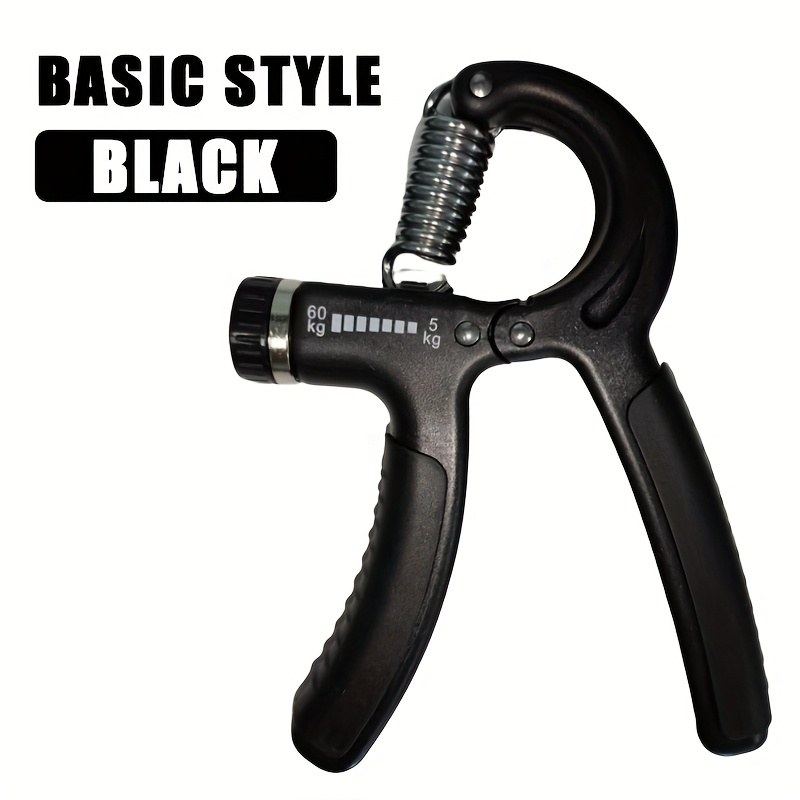
1. Classic fixed-resistance coil grippers. The old-school torsion-spring gripper with two handles. Simple, durable, inexpensive. The catch: each gripper is exactly one resistance, so outgrowing it means buying another one. A heavy-duty 60kg adjustable model is a serious challenge — far too much for a beginner's first gripper.
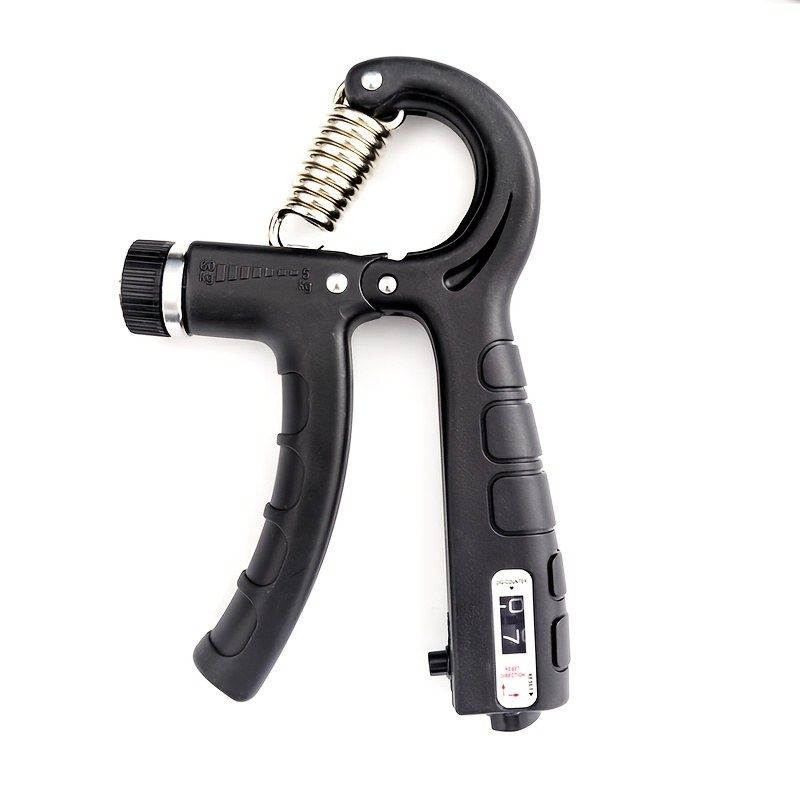
2. Adjustable spring grippers. A dial changes resistance — typically ~5kg up to 60–100kg. One tool covers beginner to advanced, making this the smartest first purchase. A built-in rep counter, like the 5-100kg Counting Hand Grip Strengthener, makes progressive overload easy to track.
3. Pocket grippers and hand rings. Compact and quiet — a portable pocket hand gripper fits in a bag or jacket pocket. Resistance is usually lighter, so treat these as maintenance tools rather than primary strength builders.
| Type | Resistance | Best for | Portability | Good first buy? | |---|---|---|---|---| | Adjustable spring gripper | ~5–100kg (dial) | Growing strength over months | Good | Yes — best all-rounder | | Heavy-duty fixed/adjustable coil | Fixed high, e.g. 60kg | Experienced lifters, specific goals | Good | Only if it matches your level | | Pocket gripper / rings | Light–medium | Desk, travel, warm-ups | Excellent | As a second tool |
How to Choose the Right Grip Strengthener
Start adjustable. Unless you already know your grip level from fixed grippers, an adjustable model removes the guessing — set it light, learn the movement, and turn the dial up as you improve. It's the only gripper most people ever need.
Check the bottom of the range, not the top. A 100kg maximum sounds impressive, but the minimum is what matters: a 5kg starting point lets true beginners train safely. If the lightest setting is still a struggle, you need an easier tool.
Mind handle comfort. Aggressive knurling tears up skin during higher-rep sets; smoother, wider handles are kinder for daily use. If you train at a desk, a quieter mechanism matters too.
A rep counter is genuinely useful. Grip training lives on progressive overload — a few more reps or one notch more resistance each week — and a counter removes the bookkeeping friction that kills consistency.
Match it to your hands. Smaller hands can struggle with wide-spread handles. If that's you, look for compact designs and don't be shy about starting light — the dial exists to be turned up later.
How to Use a Grip Strengthener: Technique That Works
Good reps build grip; sloppy reps build elbow pain. Here's the form:
- Seat the handle deep in your palm, across the base of your fingers — not up in your fingertips.
- Wrap your fingers evenly and close your hand in one smooth squeeze. No jerking, no slamming shut.
- Squeeze fully until the handles touch (or as close as your current strength allows), with a brief one-second pause at the close.
- Release under control — a slow two-to-three-second opening. The negative builds strength too, and rushing it is how people aggravate tendons.
- Keep your wrist straight and neutral. Squeezing hard with a bent wrist loads the joint badly.
Breathing: exhale as you squeeze, inhale as you release. Don't hold your breath — breath-holding spikes blood pressure unnecessarily for what is, after all, an accessory exercise.
A Sensible Training Plan (Sets, Reps, and Ranges)
Grip runs on small muscles and tendons that recover slower than big muscles. Train it like an accessory — consistently, not brutally.
Beginners (weeks 1–4): 3 sets of 10–15 reps per hand, at a resistance you can close with effort but clean form. Two to three sessions per week, never on back-to-back days.
Intermediate (months 2–4): 4 sets of 8–12 reps, adding a rep or a small resistance notch each week — or heavier days of 5 sets of 5 hard closes with 2–3 minutes rest between sets.
Advanced: cycle heavy low-rep days (5×5) with lighter volume days (3×15), optionally adding static holds of 10–20 seconds.
The crucial balance move: each grip session, add 2–3 sets of 15–20 finger extensions (a thick rubber band looped around your fingertips, opened against its resistance). Training only the closers while ignoring the extensors is the classic route to elbow imbalance.
Rest: allow at least 48 hours between hard sessions. Tendons adapt on a slower timeline than muscles — patience here is what separates people who keep gaining from people who end up in a wrist brace.
Common Mistakes That Stall (or Hurt) People
- Starting too heavy. The number-one grip-training error. If you can't close it cleanly for at least 8 reps, it's too heavy. Drop the resistance and build up.
- Daily maxing. Squeezing your hardest every single day fries the small forearm tendons. Light daily movement is fine; hard efforts need recovery days.
- Training only the dominant hand. Imbalances show up fast in grip work. Always train both sides, and let the weaker hand set the volume.
- Holding your breath through every rep. Unnecessary pressure spikes for an accessory lift — keep breathing.
- Expecting overnight transformation. Grip strength responds beautifully to steady work, but think in weeks and months, not days — and results vary from person to person.
Safety Notes
- Stop for sharp wrist, elbow, or finger-joint pain. Forearm muscle burn is normal; joint pain, clicking, or next-day soreness is a full stop.
- If you have arthritis, carpal tunnel symptoms, tendonitis, or a recent hand or wrist injury, get your provider's clearance first. A therapy putty or hand-therapy ball may be the right starting point instead of a spring gripper.
- Never squeeze with a bent or cocked wrist under heavy resistance.
- Warm up with one to two minutes of light, easy squeezes before heavy sets — the same way you'd warm up for any lift.
Programming Grip Work Into Your Week
Grip training slots neatly into an existing routine — it pairs naturally with upper-body strength work like our upper-body dumbbell workout:
- After deadlift or back day: 3–4 sets of gripper work while your hands are already warm.
- Standalone mini-session: 10 minutes, both hands, extensors included — perfect for a rest day when you want to move but not train hard.
- Desk option: keep a pocket gripper at your desk for light sets through the day. Light only — save the hard work for real sessions.
If you're building out a training space, our home gym setup guide covers how small accessories like grippers fit alongside the bigger equipment.
FAQ
Q: Do hand grip strengtheners build bigger forearms?
Somewhat. They work the forearm flexors hard, and progressive overload can add modest size. But they're not the fastest route to bigger forearms — heavy rows, deadlifts, and direct wrist work build more mass. Grippers are a strength tool first, a size tool second.
Q: How long does it take to build grip strength?
Most people feel everyday tasks getting easier within three to four weeks of consistent training (two to three sessions per week). Noticeable, measurable grip gains typically take two to four months. Tendons adapt slowly, so the people who progress patiently end up the strongest — and uninjured.
Q: Will grip strengtheners help my deadlift?
Often, yes — if grip is your limiting factor. If the bar slips from your hands before your back and legs are done, stronger crush grip plus some loaded carries usually fixes it. If your legs give out first, grip training won't change the lift.
Q: Adjustable or fixed gripper — which should I buy first?
Adjustable, almost always. A heavy-duty fixed gripper is a fine tool at the right level, but guessing your level wrong means owning a paperweight. An adjustable 5–100kg model grows with you from day one to genuinely strong.
Q: Can I use a grip strengthener every day?
Light, easy squeezes daily are fine and can even promote blood flow and recovery. Hard, near-maximal sessions need about 48 hours between them. The people who get hurt are the ones who go maximal every day — respect the difference between easy movement and hard training.
Conclusion
Hand grip strengtheners work — not as magic, but as honest progressive-resistance training for muscles you probably never train. Pick an adjustable model that starts light, squeeze with clean form, balance your extensors, and give your tendons time. A few focused minutes a few times a week, and the jars, the barbells, and the grocery bags all start feeling lighter. That's not marketing. That's just strength, doing its job.
