Build real grip strength with crush, support, and pinch training: practical grip exercises for men, smart programming, and honest progress expectations.
Grip Strength Exercises for Men: Forearms and Holding Power
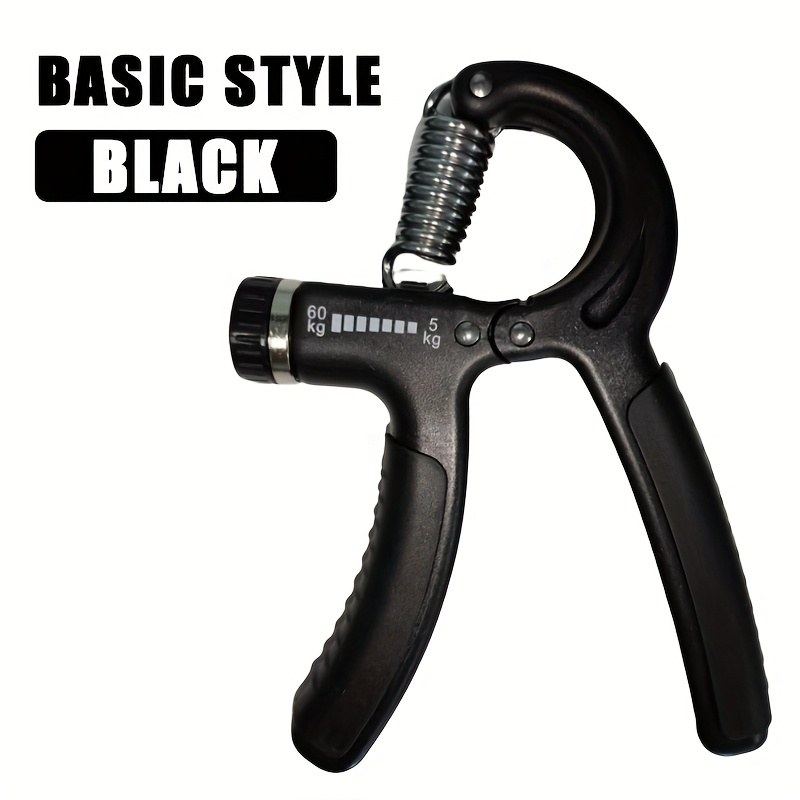
Grip is the quiet limiter in men's training. Your back is strong enough for the deadlift, but the bar slips out of your hands. Your pull-ups would be fine if your fingers would just hold on. And outside the gym, grip is the strength you actually use: carrying groceries, opening jars, working with tools, shaking hands. Training it directly pays off faster than most men expect — and it takes less time than almost any other kind of training.
This guide covers the three kinds of grip strength that matter, the exercises that build each one, and how to program grip work without frying your hands before your main lifts. You will not find promises about specific timelines or forearm measurements here; bodies adapt at their own pace and results vary. What you will find is a practical system that works. If you are new to structured lifting in general, our guide on how to start strength training covers the foundations this guide builds on.
This guide contains affiliate links. If you buy through them, VÉLORA may earn a commission at no extra cost to you.
The Three Types of Grip Strength
Grip is not one thing. Training all three types is what builds hands that are strong in every situation:
- Crush grip. Closing your hand against resistance — the classic handshake strength. This is what grippers and hand exercisers train.
- Support grip. Holding onto something for time — a heavy barbell, a pull-up bar, a loaded suitcase. This is the most directly useful type for lifters and everyday life.
- Pinch grip. Holding smooth, wide objects between thumb and fingers — plates, jars, thick books. Often the weakest link.
Most men overtrain crush and ignore the other two. A balanced grip program hits all three.
Crush Grip Exercises
Hand Gripper Training
Purpose: Build raw closing strength in the fingers and thumb.
Starting position: Hold the gripper in one hand, handle resting diagonally across your palm, fingers wrapped around the front handle.
Technique: Squeeze the handles together in a controlled motion over 1–2 seconds until they touch (or as close as your strength allows). Pause briefly, then open your hand fully over 2–3 seconds. Do not just mash the handles — the slow opening phase builds just as much strength.
Breathing: Exhale as you squeeze, inhale as you open.
Sets/reps: 3–5 sets of 5–15 reps per hand, resting 60–90 seconds between sets. Beginners should start with a light resistance and higher reps (10–15); experienced trainees can use heavier resistance for lower reps (5–8).
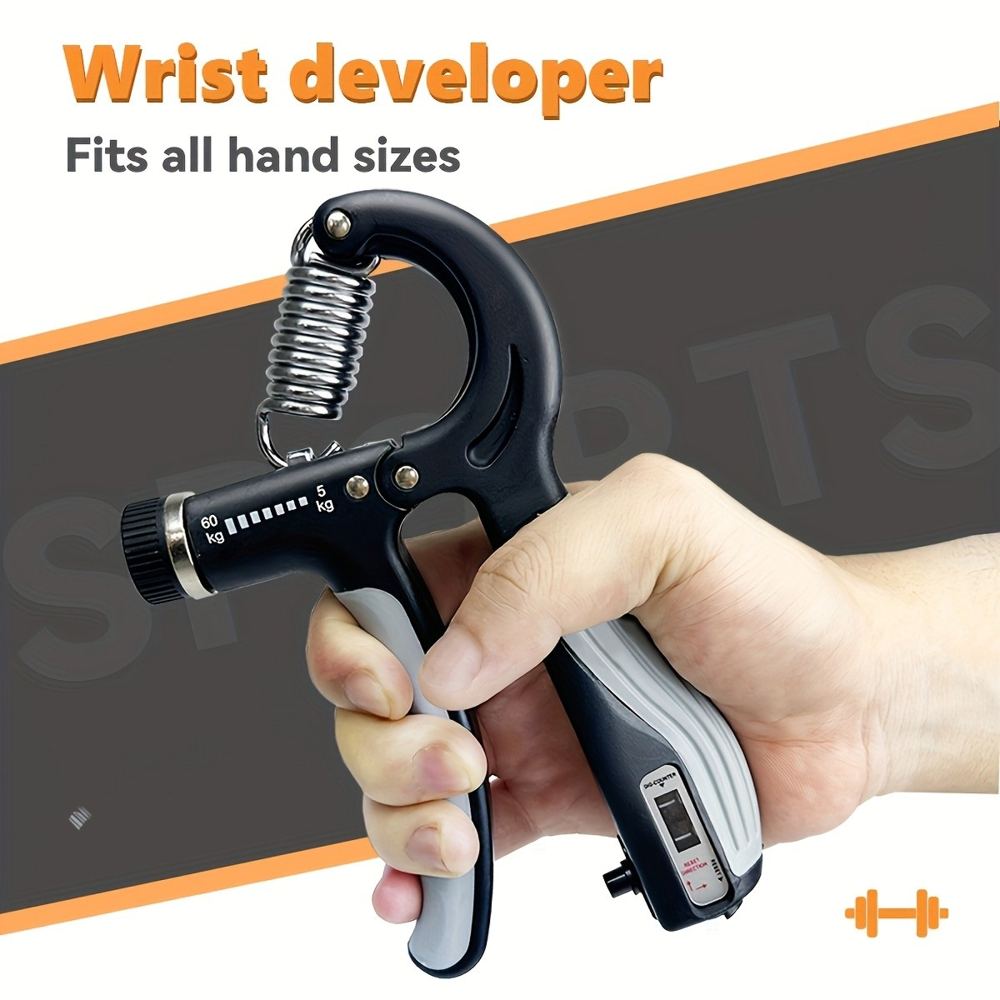
Beginner modifications: If you cannot close a standard gripper, start with a rubber band opened with your fingers (extensor work) and a soft stress ball, or use an adjustable gripper at its lightest setting. The 5–100kg Counting Hand Grip Strengthener adjusts across a wide range and counts your reps, which makes progressive tracking simple.
Common mistakes: Training to failure every session (grip recovers slowly — 2–3 hard sessions per week is plenty), never training the finger extensors (opening muscles), and using momentum instead of a controlled squeeze.
Adjustable Hand Exerciser Squeezes
Purpose: Higher-volume crush and endurance work, plus warm-ups before heavy grip sessions.
Technique: Similar to the gripper, but the Adjustable Hand Exerciser Grip Strength Trainer allows finer resistance steps. Use it for warm-up sets (1–2 sets of 15–20 easy reps) before gripper work, or for high-rep endurance sets (2–3 sets of 20–30 reps) on lighter days.
Beginner modifications: Start at the lowest resistance and focus on full range of motion — closing fully and opening fully. Half-squeezes build half strength.
Support Grip Exercises
Dead Hangs
Purpose: The single best support-grip exercise, and it also decompresses the shoulders and builds calluses where you need them.
Starting position: Hang from a pull-up bar with an overhand grip, arms straight, shoulders pulled slightly down away from your ears (do not just dangle from the joints).
Technique: Hang for time. Start with 3–4 hangs of 15–30 seconds, resting 60 seconds between. Progress by adding 5–10 seconds per hang, then adding sets. When 4 × 60 seconds feels manageable, try single-arm hangs for 10–20 seconds per side, or add weight with a dip belt.
Breathing: Breathe normally and steadily — never hold your breath during a hang.
Common mistakes: Swinging, shrugging the shoulders up to the ears, and gripping so hard in the first ten seconds that the rest of the hang is a survival contest. Aim for a firm, sustainable squeeze.
Farmer's Carries
Purpose: Support grip under load, plus core, traps, and conditioning — the most functional grip exercise there is.
Starting position: Pick up a heavy dumbbell or kettlebell in each hand, stand tall, shoulders back and down.
Technique: Walk in a straight line for a set distance (20–40 meters) or time (30–60 seconds). Keep your torso upright — no leaning or shrugging. Set the weights down with control.
Sets/reps: 3–4 carries, resting 90–120 seconds between. Choose a weight that challenges your grip by the final 10 seconds without forcing you to drop the weights.
Beginner modifications: Start with lighter dumbbells and shorter distances; single-arm (suitcase) carries with a light weight build anti-rotation core strength with less grip demand.
Barbell or Dumbbell Holds
Purpose: Pure support-grip overload when you do not have room to walk.
Technique: Hold a loaded barbell at lockout (or heavy dumbbells at your sides) for time — 3 sets of 20–40 seconds. Use a double-overhand grip to train grip; a mixed grip trains the deadlift but shortchanges grip development.
Pinch Grip Exercises
Plate Pinches
Purpose: Thumb strength and pinch power — the type of grip most men never train.
Starting position: Pinch two smooth-side-out weight plates together (start with two 5-lb plates) between your thumb and fingers, and lift them off the ground or a rack.
Technique: Hold for time: 3 sets of 15–30 seconds per hand. When that is easy, add a plate or move to heavier plates.
Beginner modifications: Start with books, a block of wood, or a single plate held vertically. The smoothness matters more than the weight — texture gives your fingers something to cheat with.
Towel Hangs and Towel Pull-Ups
Purpose: Pinch and crush grip combined, with a thick, awkward implement that builds real-world holding strength.
Technique: Drape two towels over a pull-up bar and hang or do pull-ups gripping the towels. Even 2–3 hangs of 10–20 seconds is demanding. Towel work also complements bodyweight pulling progressions like those in our push-up progression guide.
Choosing Your Grip Tools: A Comparison
| Method | Best for | Cost | Portability | When to choose it | | --- | --- | --- | --- | --- | | Adjustable hand gripper | Crush strength, tracking progress | Low | Excellent — fits in a pocket | Daily or near-daily crush training; beginners to advanced | | Dead hangs (pull-up bar) | Support grip, shoulder health | None if you own a bar | None | Every lifter — the highest-value grip exercise | | Farmer's carries | Support grip + full-body strength | None with existing weights | Gym/home only | Strength athletes and anyone who lifts | | Plate pinches | Pinch/thumb strength | None with plates | Gym/home only | Lifters whose grip fails on smooth objects | | Wrist roller | Forearm size and endurance | Low | Moderate | Supplementing for forearm development |
The Portable Pocket Hand Gripper with Adjustable Resistance earns its place for one reason: consistency. A gripper that lives in your jacket pocket or desk drawer gets used; one buried in a gym bag does not. Grip responds to frequency, so the tool you will actually use beats the "better" tool you will not.
How to Program Grip Work
Grip is a small muscle group with slow recovery. Treat it with the respect it deserves:
- Frequency: 2–3 dedicated grip sessions per week, or short grip finishers (5–10 minutes) after 2–3 regular workouts.
- Placement: Do grip work AFTER your main lifts, not before. Fatigued hands will sabotage your deadlifts, rows, and pull-ups.
- Volume: 6–12 total hard sets per week across all grip types is plenty for most men. More is not better — tendons adapt slower than muscles.
- Progression: Add reps first, then resistance. When you can do 3 sets of 15 clean gripper reps, increase the resistance. For hangs, add time before adding weight.
- Deload: Every 6–8 weeks, cut grip volume in half for a week. Your elbows and finger joints will thank you.
Safety Notes
- Stop immediately if you feel sharp pain in the fingers, wrist, or elbow — tendon irritation in the forearm (often called climber's elbow or tennis elbow) comes from too much grip volume too fast. Back off for a week rather than training through it.
- Warm up the hands with 1–2 minutes of easy squeezes and wrist circles before hard grip work, especially in cold weather.
- Train the extensors too: loop a rubber band around your fingertips and open your hand against it for 2–3 sets of 15–20 reps. Balanced hands stay healthy hands.
- If you have arthritis, carpal tunnel symptoms, or a hand/wrist injury, check with your doctor or a physical therapist before starting grip training.
FAQ
Q: How long does it take to build grip strength?
Support grip (hangs, carries) often improves noticeably within 4–6 weeks because much of the early gain is neurological — your nervous system learning to recruit what you already have. Crush and pinch strength build more slowly, over months. Results vary widely with age, training history, and consistency. No honest program can promise a specific timeline.
Q: Will grip training make my forearms bigger?
It can add some size, especially higher-volume work like wrist rollers and high-rep gripper sets, but forearms are a small muscle group — do not expect dramatic growth. Most men train grip for strength and function (holding the deadlift, carrying loads), and treat any size gain as a bonus.
Q: Should I use lifting straps for deadlifts?
Straps have their place for heavy pulling when your back is the target and your grip is the limiter — but if you always strap up, your grip never gets trained. A practical rule: do your warm-up sets and first work sets strapless, and add straps only for top sets if needed. Then train grip directly, as this guide describes.
Q: Can I train grip every day?
Light, easy gripper work (well below failure) can be done frequently, but hard grip sessions need 48–72 hours of recovery. Tendons and finger joints recover more slowly than muscles. Men who hammer grippers daily almost always end up with elbow or finger pain within a few weeks.
Q: Do I need special equipment to start?
No. Dead hangs need only a pull-up bar, and farmer's carries need only heavy dumbbells you already own. A gripper is a cheap, genuinely useful addition — start with an adjustable one so you are not guessing at resistance. For complementary upper-body pulling strength, see our resistance bands vs. dumbbells comparison.
The Bottom Line
Train all three grip types — crush with a gripper, support with hangs and carries, pinch with plates or towels — two to three times a week, after your main lifts, and progress patiently. Grip strength is one of the fastest-payoff investments in men's training: a few minutes a session, no gym required, and the strength shows up everywhere from the deadlift platform to the grocery store parking lot.
