The honest, no-hype guide to building a home gym for men: what to buy first, second, and third at three budget tiers, with space and flooring covered.
Home Gym Setup for Men: What to Buy First on Any Budget
Every man who has ever browsed fitness equipment online knows the feeling: ten minutes in, you are staring at a cart full of gear that costs more than your rent. Here is the truth nobody in the equipment industry volunteers — a home gym for men does not need to start with a power rack, a full dumbbell set, and a specialty barbell. It needs to start with the two or three pieces that let you train the big movement patterns safely, and grow from there as your strength does.
This buying guide walks you through exactly that: what to buy first, what to buy second, and what to buy third — at three realistic budget tiers. No brand hype, no "essential" items that are actually luxuries, and an honest note on what to skip entirely. For a breakdown of what a smaller-budget home setup can look like, our guide to home gym equipment under $100 is a good companion read, and if you are still weighing the membership question, see our home gym vs. gym membership cost comparison.
This guide contains affiliate links. If you buy through them, VÉLORA may earn a commission at no extra cost to you.
Before You Spend a Dollar: Space, Flooring, and Ceiling
Equipment fails when the room fails it. Before buying anything, measure your space honestly.
- Footprint. A functional training area needs roughly 6 × 8 feet (about 2 × 2.5 meters) of clear floor for most dumbbell and bodyweight work. A power rack needs about 4 × 6 feet of floor space plus room to walk around it and load plates — budget closer to 8 × 10 feet. Measure twice; equipment in a hallway is equipment you will not use.
- Ceiling height. Overhead pressing with a loaded barbell needs roughly 8-foot (2.4 m) ceilings, and pull-up bars mounted high can surprise you. If your ceiling is low, prioritize floor-based pressing (dumbbell bench press) and skip ceiling-mounted pull-up setups.
- Flooring. Bare concrete or tile will chip, crack, and annoy your downstairs neighbors. Horse-stall rubber mats (3/4-inch, interlocking) are the standard recommendation for a reason: they protect floors, deaden noise, and cost a fraction of branded gym flooring. Cover at least your main lifting area before anything else — flooring is purchase number zero.
- Neighbors. If you live in an apartment, deadlifts dropped from knee height are a fast way to meet your downstairs neighbors. Our guide to quiet home gym equipment for apartments covers noise-friendly choices.
Tier 1: The Under-$100 Starter — Strength Without the Showroom
Budget: under $100. Goal: full-body training, zero excuses.
At this tier you are buying capability, not capacity. The honest priority list:
- A pair of adjustable dumbbells or one heavy kettlebell. If you can only afford one piece of equipment, this is it. Adjustable dumbbells let you scale load across squats, presses, rows, and carries. A kettlebell covers swings, goblet squats, and presses — choose based on which movements appeal to you more.
- A pull-up bar (doorway-mounted). The cheapest upper-body pulling strength money can buy. Check your door frame first — older frames and rental agreements may rule this out.
- Resistance bands. A set with handles covers warm-ups, assistance work (pull-up assistance), and pressing or rowing variations when dumbbell weight runs out.
Trade-offs: You will outgrow fixed light weights; pressing movements are limited to what you can get into position; there is no safe way to barbell squat heavy. What to skip at this tier: ab wheels gimmicks marketed as "full-body," cheap adjustable benches that wobble under 150 lbs, and anything sold as a "total gym system" for $49 — it is not.
Tier 2: The ~$300 Solid Setup — The Sweet Spot
Budget: around $300. Goal: barbell-free but serious.
This is where most men should aim to land. Add these in order:
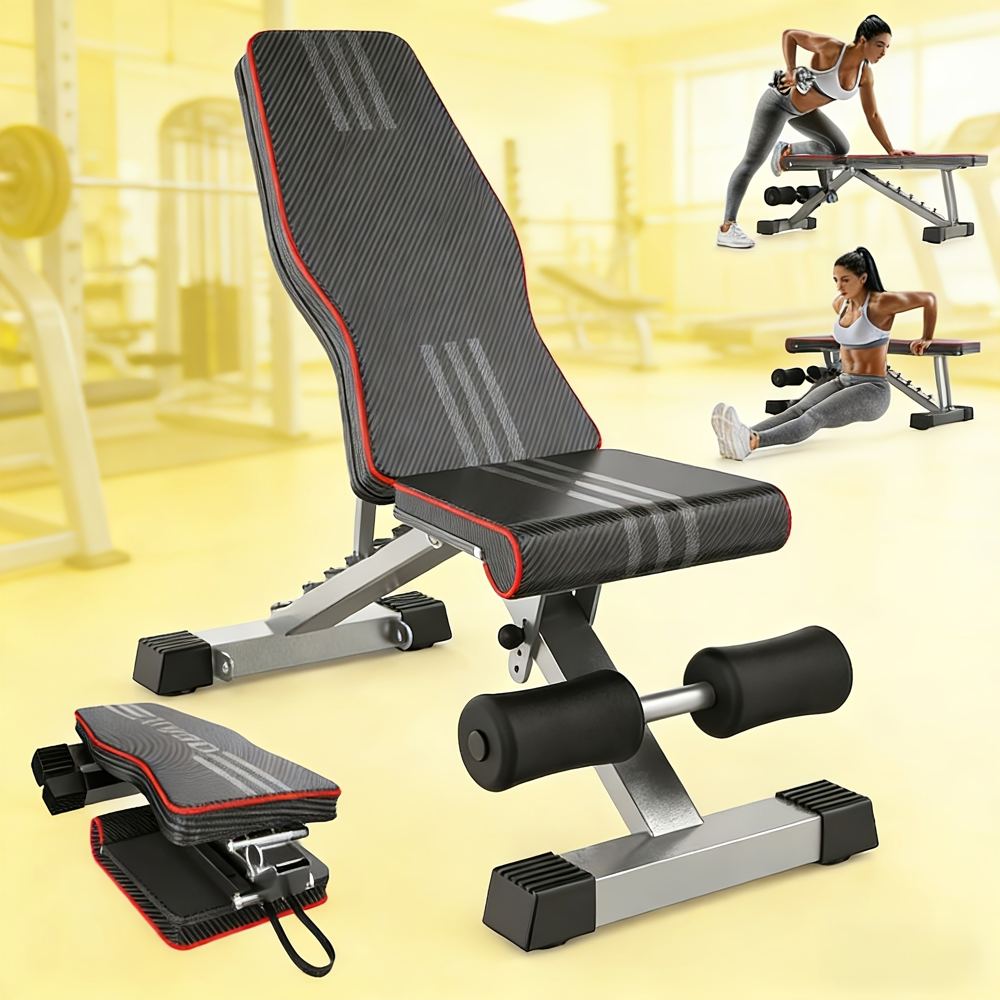
- An adjustable weight bench (flat/incline). A bench unlocks chest pressing, supported rows, step-ups, and Bulgarian split squats. Look for a rated capacity well above your body weight plus the dumbbells you will use — 600+ lb ratings are common and cheap insurance. The Adjustable Weight Bench 660LBS Foldable Multi-Angle is exactly this kind of workhorse: multiple angles, folds away, and rated far beyond what most home lifters will ever load.
- Heavier adjustable dumbbells or a dumbbell set. More plates or heavier handles extend your progression runway by a year or more.
- A dip station or dip-capable setup. Dips are one of the best upper-body pressing movements you can do at home, and a standalone station costs far less than a rack.
Trade-offs: Heavy barbell squats and deadlifts still are not on the menu, and very strong lifters will eventually need a rack. But for most men in their first 2–3 years of training, this tier covers everything that builds a strong, athletic body.
Tier 3: The ~$600+ Fuller Gym — The Home Powerhouse
Budget: $600 and up. Goal: everything a commercial gym's free-weight area offers.
Now the big pieces earn their place:
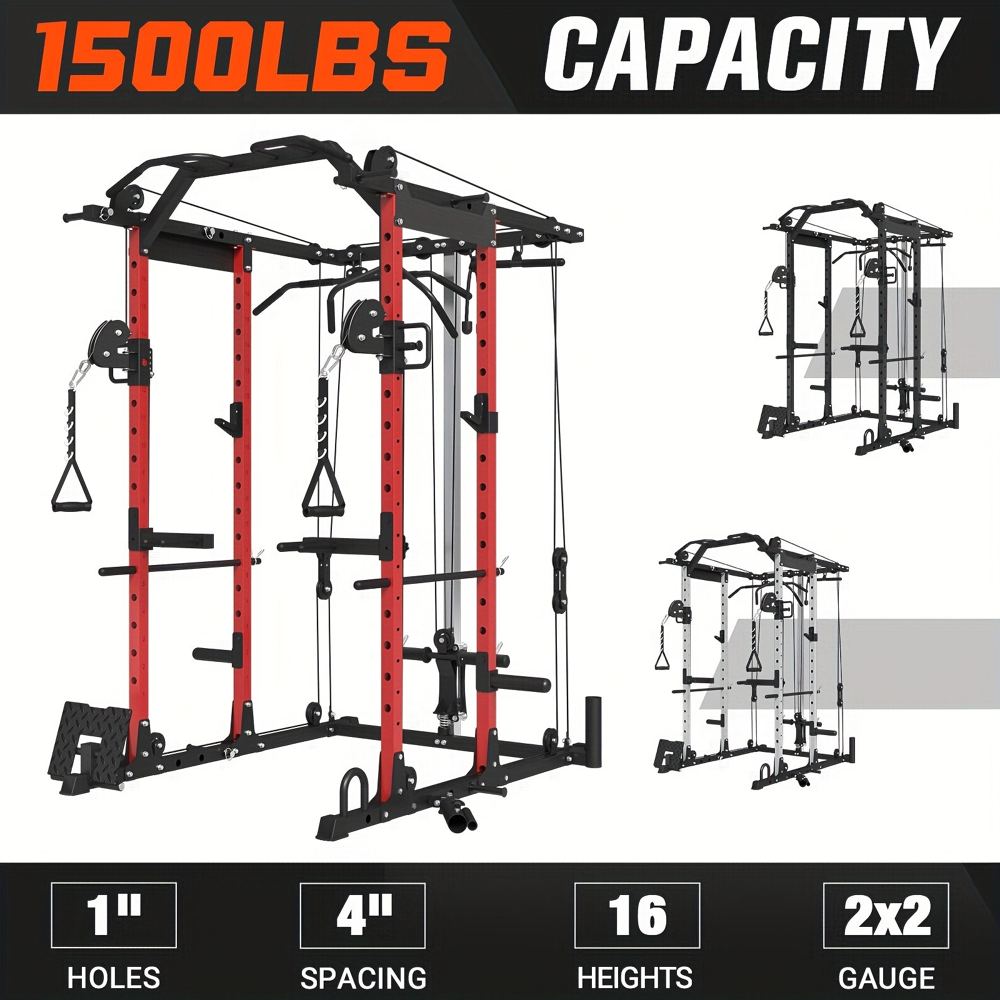
- A power rack with safety arms. This is the centerpiece — and the most misunderstood purchase in home gyms. A rack does not exist to make you strong; it exists to keep you safe when you train heavy alone. Safety pins or straps must be set so a failed squat or bench rep lands on steel, not on you. The 8-In-1 Power Rack Cage 1500Lb with Cable Crossover bundles the cage, cable crossover, and attachments in one footprint — a sensible all-in-one if your budget allows one large purchase.
- An Olympic barbell and plates. Buy a standard 45-lb bar with a 700-lb+ capacity and bumper plates if you train on a floor you care about. Bumper plates can be set down firmly; iron plates demand more floor respect.
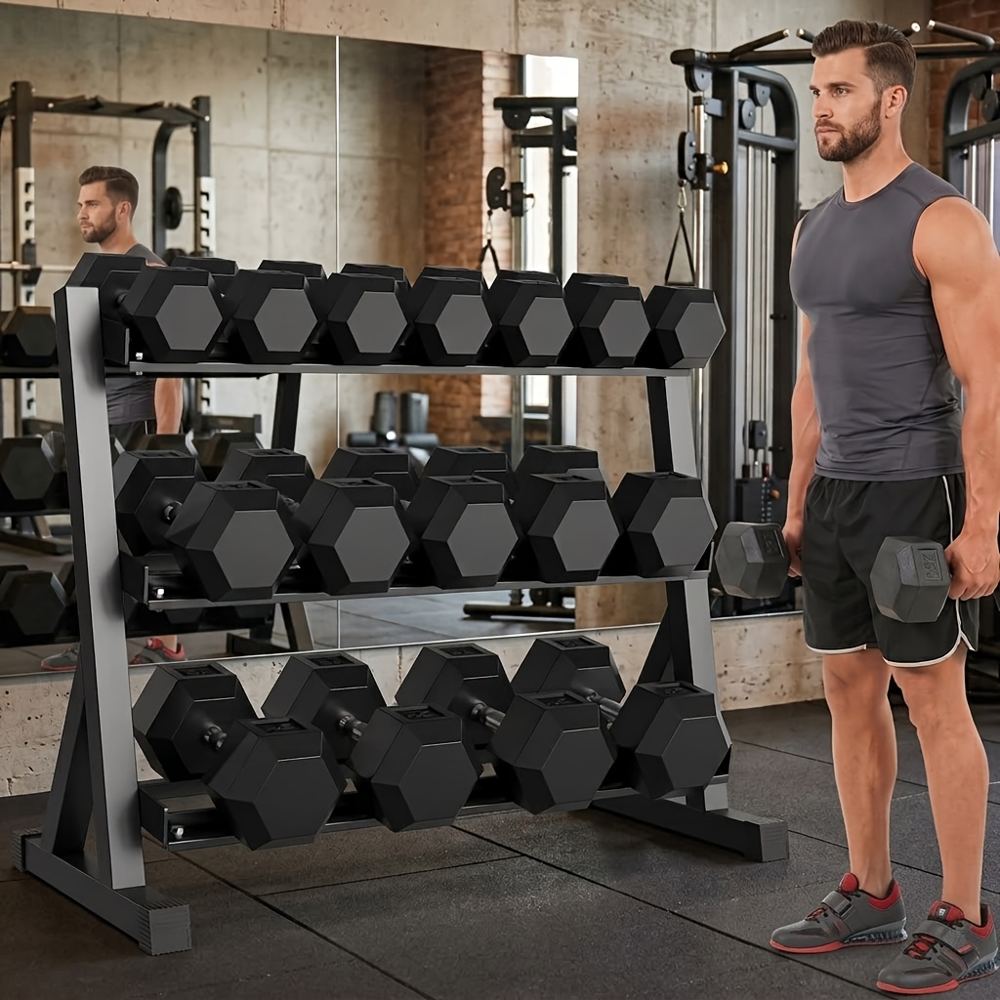
- A full hex dumbbell set with rack. Hex dumbbells do not roll, and a set on a rack is the fastest way to train — no plate changes between sets. The Hex Dumbbell Set Rubber Coated with Rack 450 is the classic version of this: rubber coating protects floors, and the rack keeps a small gym organized.
Trade-offs: This tier demands space (see the measurements above), weighs a lot on upper floors, and costs real money. Buy it when you are consistently training 3+ days a week and have outgrown Tier 2 — not before.
What to Buy First, Second, and Third — The Short Version
| Priority | Under-$100 starter | ~$300 solid setup | ~$600+ fuller gym | | --- | --- | --- | --- | | Buy FIRST | Adjustable dumbbells or a kettlebell | Adjustable weight bench | Power rack with safeties | | Buy SECOND | Doorway pull-up bar | Heavier dumbbells/plates | Olympic barbell + bumper plates | | Buy THIRD | Resistance band set | Dip station | Full hex dumbbell set with rack | | Best for | Beginners; renters; testing the habit | Consistent lifters; most home athletes | Committed lifters with dedicated space | | Honest trade-off | No heavy barbell work | No barbell squat/deadlift | Needs space, budget, and commitment |
What to Skip (Regardless of Budget)
- Smith machines. They lock the bar into a fixed path, which changes the mechanics of squats and presses and teaches movement patterns that do not transfer well to free weights. A power rack with safeties is safer and better.
- All-in-one "home gym" cable stations with no reviews. Cables are only as good as their pulleys and weight stacks; cheap ones bind, wobble, and break. One good rack with a cable attachment beats a flimsy dedicated station.
- Wrist, ankle, and gimmick "toning" gadgets. If it promises results in a specific body part without progressive overload, it is marketing, not equipment.
- A treadmill or bike as your first purchase. Cardio is valuable, but a home gym starts with strength. Walk, run, or cycle outside first; buy the machine later if the habit sticks.
Safety Notes
- Never bench press or squat heavy alone without safety arms, spotter arms, or a spotter. This is non-negotiable.
- Anchor racks and tall cable units to the wall or floor if the manufacturer provides anchoring hardware.
- Check equipment before every session: bolts tight, bench pads intact, cables fray-free.
- Train on a clear, dry floor with at least a body's length of clearance in every direction you might move or drop a weight.
- If you have a medical condition, prior injury, or are returning after a long break, get cleared by your doctor before heavy training.
FAQ
Q: What is the single best first purchase for a men's home gym?
Adjustable dumbbells. One purchase covers squats, lunges, presses, rows, carries, and core work, and you can scale the load as you get stronger. Add a doorway pull-up bar second. Together they cost less than a few months of most gym memberships and train the whole body.
Q: How much space do I really need for a home gym?
For dumbbell and bodyweight training, about 6 × 8 feet of clear floor is enough. A power rack setup needs roughly 8 × 10 feet including loading and walk-around space, plus ~8-foot ceilings for overhead work. Measure your room and your ceiling before buying anything large.
Q: Is a home gym cheaper than a gym membership?
Usually, yes — if you actually train. Our cost comparison breaks down the numbers, but the short version is: a solid Tier 2 setup costs less than a year of most commercial memberships, and equipment holds resale value while membership fees vanish. Results vary with consistency, which is the real variable.
Q: Can I build muscle with just dumbbells at home?
Yes — muscle growth comes from progressive overload (gradually more weight, reps, or sets) applied to sound movement patterns, not from any specific machine. Dumbbells, a bench, and a pull-up bar can drive progress for years for most men. No program can guarantee a specific result or timeline; consistency and nutrition decide how far it goes.
Q: What flooring should I use for a home gym?
3/4-inch rubber stall mats are the default recommendation: cheap, durable, floor-protecting, and noise-dampening. Cover at least your lifting zone. Avoid thin foam puzzle mats under heavy weights — they compress and destabilize.
The Bottom Line
Buy in this order: a way to load your body (dumbbells or kettlebell), a way to pull (pull-up bar), a way to press properly (bench), then the heavy infrastructure (rack, barbell, plates) — and only when your training has earned it. Floor the room first, measure the space, skip the gimmicks, and never lift heavy alone without safeties. A home gym built this way is not a compromise: it is a training environment designed around one person — you — and it will still be paying you back long after any membership would have expired.
