New to fitness trackers? Skip the feature overload. This buying guide covers the features that matter for beginners — and the gimmicks you can ignore.
Fitness Trackers for Beginners: Features That Actually Matter
Step into any electronics aisle — or scroll any online store — and fitness trackers all scream the same thing: more. More sensors, more sport modes, more scores, more graphs. For a beginner, it's paralyzing. Do you need blood-oxygen monitoring? What's a "body battery"? Is the cheap one useless, or is the expensive one a waste?
Here's the liberating truth: beginners need about seven things from a tracker, and everything else is decoration. This buying guide cuts through the spec-sheet noise — the features that actually matter, the gimmicks you can safely ignore, how three beginner-friendly options compare, and how to use the data without letting it run your life.
This guide contains affiliate links. If you buy through them, VÉLORA may earn a commission at no extra cost to you.
What a Fitness Tracker Actually Does for a Beginner
Strip away the marketing and a tracker does a few simple jobs: it counts your steps, estimates your activity and calorie burn, monitors your heart rate, logs workouts, and shows you trends over time. That's it. That's the whole job.
And here's the most important sentence in this guide: a tracker doesn't get you fit — it shows you what you're doing. It's a mirror, not a coach. The people who benefit most aren't the ones with the fanciest device; they're the ones who glance at honest data and adjust. A basic tracker worn daily beats a premium one sitting in a drawer.
The 7 Features That Actually Matter
1. Step counting. The core habit metric. Steps are simple, motivating, and surprisingly powerful — most beginners' first real fitness win is just moving more during the day. Every tracker does this; accuracy varies, but trends matter more than exact numbers.
2. Heart-rate monitoring. Useful for two things: seeing your effort level during workouts, and watching your resting heart rate trend over weeks (a gentle, long-term fitness signal). Wrist-based HR is fine for daily tracking.
3. Battery life. This one is underrated and decisive. A tracker that dies every day gets abandoned; one that lasts several days to a week becomes invisible infrastructure. For beginners, longer battery beats more sensors.
4. Water resistance. At minimum, it should survive sweat and rain without a second thought. If you swim, check the actual rating — "splash resistant" and "swim-proof" are very different promises.
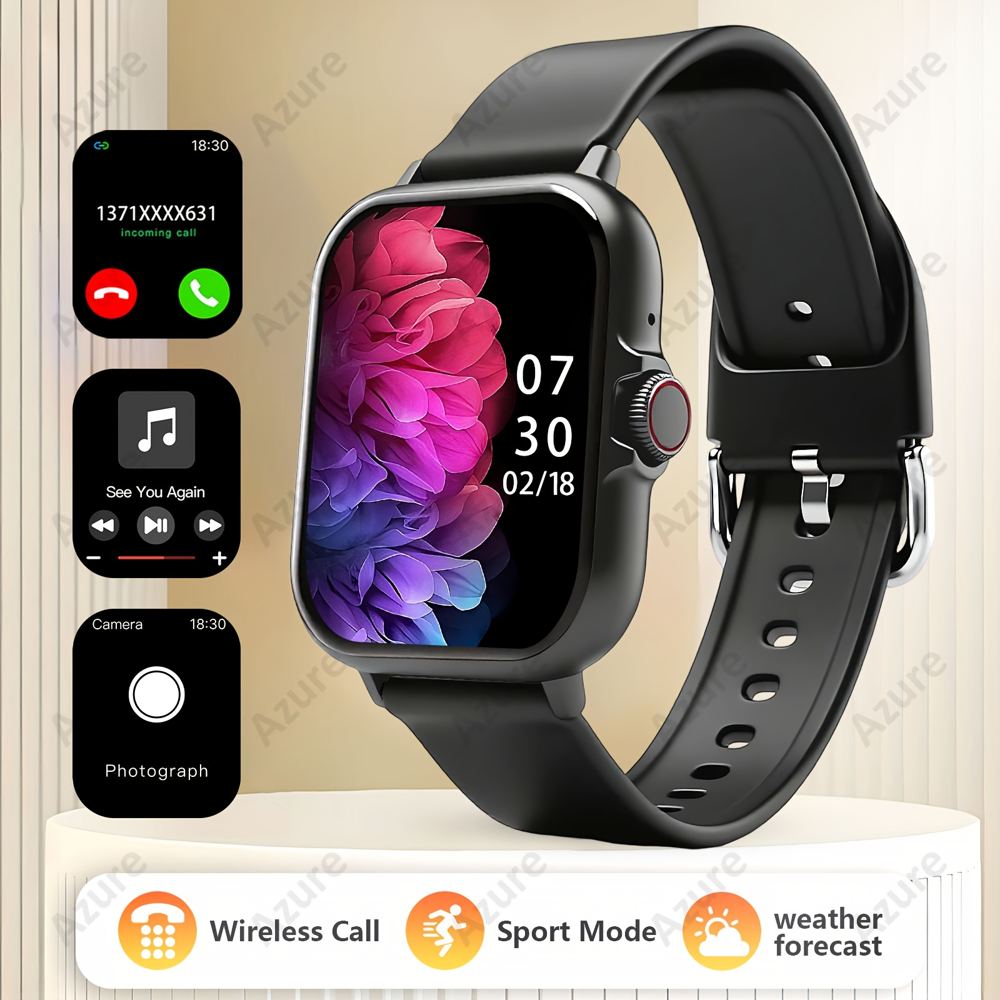
5. A readable display. If you can't read it at a glance mid-walk, it's decoration. Bigger, brighter screens — like the 1.83-inch HD touchscreen on the sports smartwatch pictured above — genuinely help, especially if your eyesight isn't perfect.
6. Phone compatibility. It must work with your phone — iPhone or Android — and its companion app must be one you'll actually open. A great device with an app you hate is a bad purchase.
7. Comfort and fit. You'll wear this 12–16 hours a day. Bulky, irritating, or ugly-to-you means it lives in a drawer. Try the band style, check adjustability, and be honest about what you'll tolerate.
Honorable mention: sleep tracking. The data is approximate, not medical — but trends in sleep duration and consistency are genuinely useful context for energy and recovery.
The Gimmicks You Can Safely Ignore
Manufacturers differentiate on sensors beginners will never meaningfully use. Treat these as bonuses, not buying reasons:
- Blood-oxygen (SpO2) readings on budget watches. Interesting to glance at; not actionable for a healthy beginner.
- "Stress scores" and "body battery" metrics. Fun, vague, and easy to over-interpret. Your own sense of how you feel remains the better signal.
- 100+ sport modes. You'll use three — walking, running or cycling, and maybe one more. The rest is list-padding.
- ECG and advanced health sensors on budget devices. These are not medical diagnoses. If you have heart concerns, see a provider — don't shop for reassurance in a spec sheet.
- Calorie-burn precision. Every tracker estimates; estimates can be significantly off. Use the numbers for trends, never as gospel.
Three Beginner-Friendly Options Compared
To make this concrete, here's how three affordable, beginner-appropriate smartwatches stack up on the features that matter:
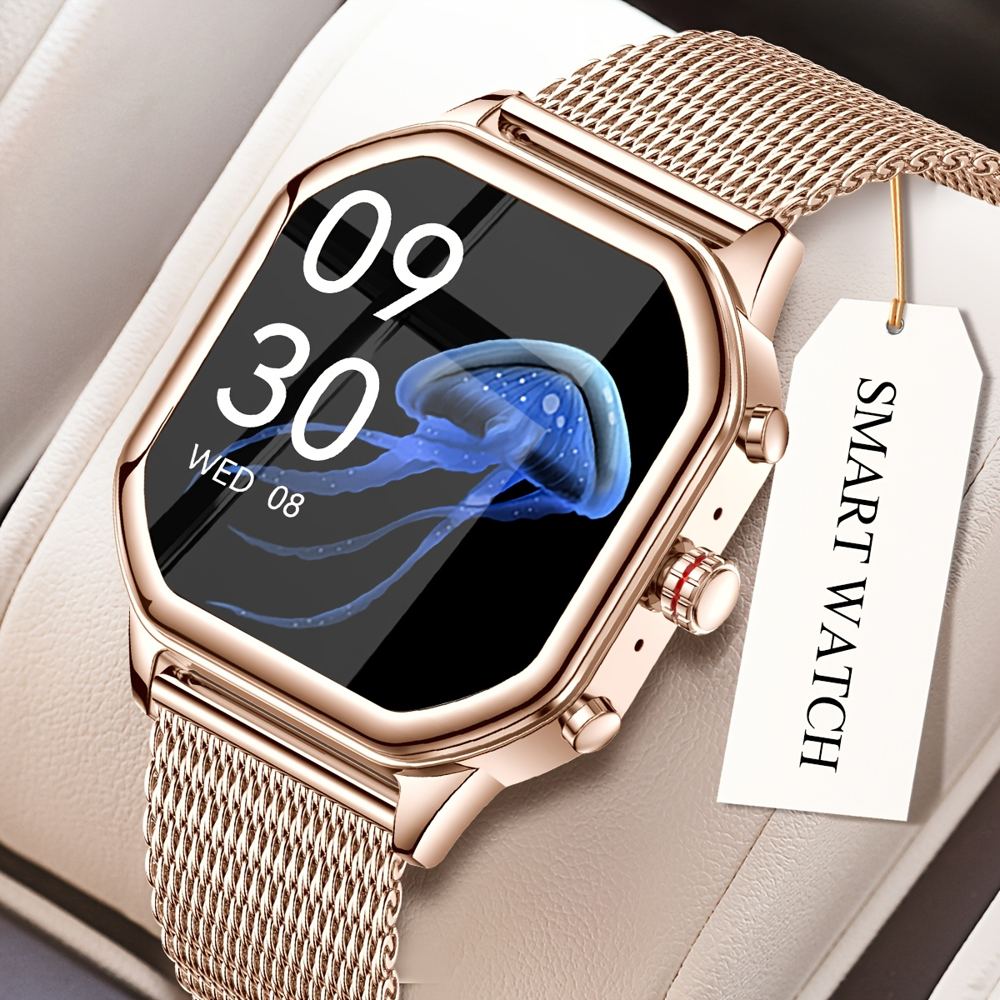
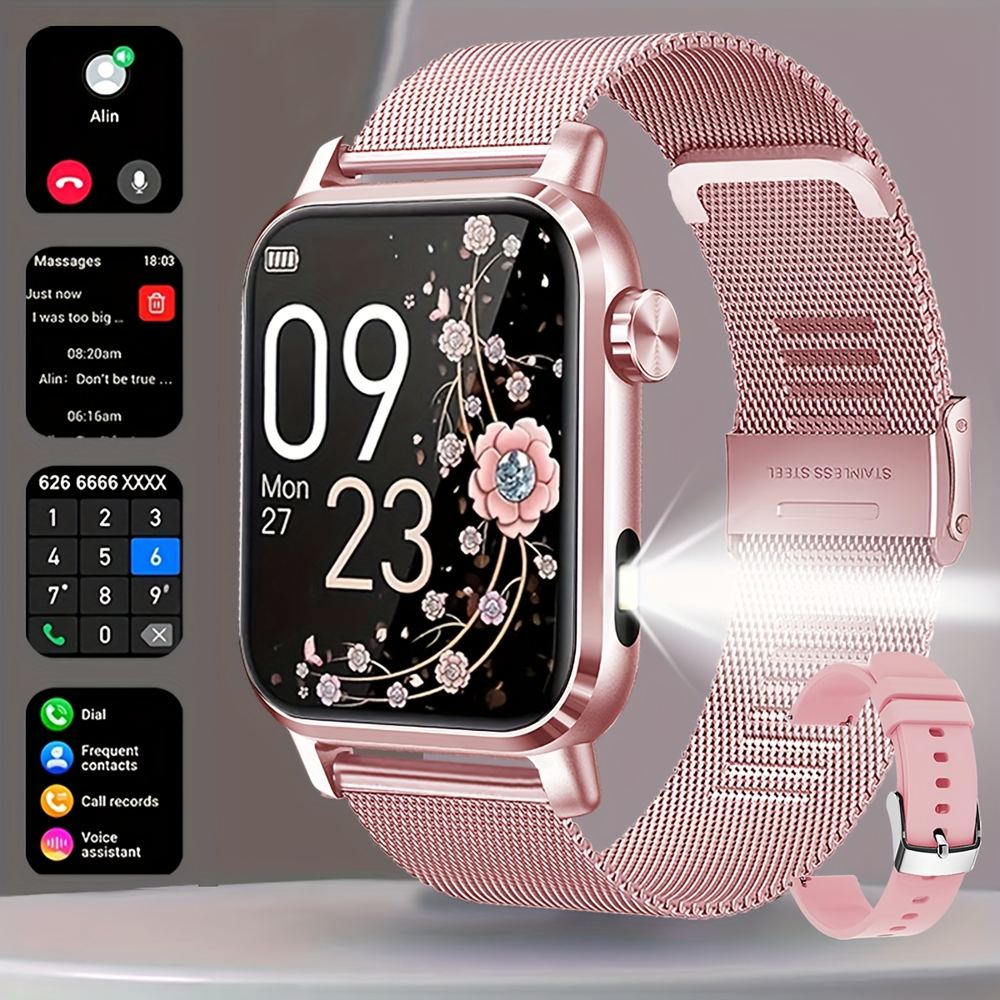
| | 1.83" Full Touchscreen HD Sports Smartwatch | Women's Smart Watch (Wireless Call) | 1.85" IP68 Fashionable Sports Smartwatch | |---|---|---|---| | Display | 1.83" HD full touchscreen — big and readable | Touchscreen with wireless calling | 1.85" display, slim fashionable design | | Standout feature | Clarity: easy to read mid-activity, multiple sport modes | Take calls from your wrist — phone stays in the bag | IP68 water resistance in a style-first design | | Water resistance | Daily splash/sweat friendly | Daily splash/sweat friendly | IP68 rated | | Best for | Beginners who want maximum readability | Multitaskers who hate digging out their phone | Style-conscious daily tracking | | Keep in mind | Charge routine matters like any smartwatch | Call quality varies by environment | Fashion-first; check sport-mode list meets your needs |
None of these is "medical grade," and none needs to be — they cover the seven features that matter at a beginner-friendly price.
How to Choose: A 5-Minute Decision Framework
- Start with wrist and comfort. If it won't be comfortable for 14 hours, nothing else matters. Check band adjustability and case size against your wrist.
- iPhone or Android? Confirm the companion app works well with your phone before falling in love with the hardware.
- Battery over sensors. For most beginners, a week of battery with basic sensors beats two days with exotic ones. Charging friction kills consistency.
- Spend on display and comfort, not premium sensors. The sensors that matter (steps, HR) are commodities now. Pay for what you'll notice daily: screen, band, battery.
- Set a budget and stop there. A beginner doesn't need flagship pricing. Buy the affordable one, wear it for six months, and you'll know exactly what you'd want next — if anything.
Setting It Up Right (So the Data Actually Helps)
Pick a realistic step goal. If you're currently sedentary, 6,000–8,000 steps a day is a fine starting range — challenging but reachable. Raise it gradually as it becomes easy. The famous 10,000 is a fine long-term landmark, not a day-one requirement.
Establish your resting heart rate baseline. Wear the tracker for a week, note the morning resting trend. Over months, a gradual downward drift is a nice quiet signal of improving fitness — but it's a trend tool, not a daily report card.
Tame the notifications on day one. A wrist that buzzes for every message is a distraction device, not a fitness tool. Keep fitness alerts; mute almost everything else.
Log the workouts you actually do. Don't scroll past your real activities hunting for perfect labels — close enough is fine. Consistency of logging beats precision of labels.
For building the tracking habit into a real routine, our how to track your workouts guide goes deeper.
Using the Data Without Becoming Obsessed
Trackers are wonderful servants and terrible masters. A few rules keep the relationship healthy:
- Trends over weeks beat any single day. One low-step day means nothing; the weekly average is the truth.
- One metric at a time. Start with steps. When that's automatic, add heart-rate awareness. Piling on five metrics in week one is how people burn out.
- Missed goals aren't failures. Travel, illness, busy weeks — life happens. The tracker is information, not judgment.
- If tracking spikes anxiety, simplify. Turn off a metric, take a break, or go back to just steps. The tool serves you, not the other way around.
Pair your tracker with movement you enjoy — our walking workout for women and at-home cardio guide are natural companions.
Common Beginner Mistakes
- Chasing 10,000 steps on an injured or sick day. Rest is training too. The streak is not worth the setback.
- Treating calorie-burn numbers as exact. They're estimates — sometimes rough ones. Don't "eat back" every burned calorie the watch reports.
- Wearing it too loose (garbage heart-rate readings) or too tight (skin irritation). Snug but comfortable, about a finger's width of give.
- Comparing your data to someone else's. Different bodies, different baselines, different lives. Compare yourself to last month's you.
- Buying the most expensive model "to get serious later." Seriousness comes from the habit, not the hardware. Start affordable; upgrade when you know what you're missing.
A Quick Health Note
Fitness trackers are wellness tools, not medical devices. Heart-rate alerts, sleep scores, and oxygen readings are approximations — they are not diagnoses, and they don't replace professional care. If you have a heart condition or any health concern, talk to your provider about safe exercise intensity rather than relying on watch zones, and see a professional promptly for anything that worries you.
FAQ
Q: Do I need a fitness tracker to get fit?
No. People got fit for decades with a pair of shoes and consistency. A tracker is a nice-to-have that makes progress visible and habits stickier — worth it for many beginners, essential for none.
Q: Which is more accurate for heart rate — wrist or chest strap?
Chest straps are generally more accurate, especially during intense exercise with lots of arm movement. Wrist sensors are fine for daily tracking, resting trends, and steady-state workouts. Most beginners will never need a chest strap.
Q: Are budget smartwatches worth it?
For the features beginners actually use — steps, heart rate, workout logging, notifications — yes, absolutely. What you give up versus premium models is mostly sensor exoticism, build materials, and brand polish. Don't expect medical-grade precision from any wrist device, at any price.
Q: How accurate is step counting?
Approximate. Wrist movement, pushing a stroller, or carrying groceries can all nudge the count up or down. But it's consistent enough to show trends and support goals — which is what actually matters.
Q: Can I swim with my fitness tracker?
Only if it's rated for it. Check the actual water-resistance spec — IP68 or a stated swim rating — rather than assuming. "Splash resistant" is not "swim-proof," and warranties rarely cover water damage from overconfident swimming.
Conclusion
The best fitness tracker for a beginner isn't the one with the longest spec sheet — it's the comfortable, readable, long-battery one you'll actually wear every day. Cover the seven features that matter, ignore the gimmicks, set one realistic goal, and let the trends do the motivating. Six months from now, the data will tell a story about what you did — and the story will be yours, not the device's. That's the whole point.
