Strength training for men over 40: safe, effective exercises with form cues, joint-friendly modifications, a weekly plan, and recovery advice for aging joints.
Best Exercises for Men Over 40 to Build Strength Safely
Turning 40 does not mean your strong years are behind you. Men routinely build impressive strength in their 40s, 50s, and beyond — but the approach has to change. Recovery is slower, joints are less forgiving of sloppy form, and the "go hard every day" mindset of your twenties becomes a fast track to injury.
This guide covers the best strength exercises for men over 40, chosen for joint-friendliness and real-world usefulness. Every exercise includes form cues, sensible sets and reps ranges, and beginner modifications. Important: if you have a heart condition, joint issues, high blood pressure, diabetes, or any other medical concern — or you have been inactive for a long time — get medical clearance before starting. Stop exercising and seek medical advice if you experience chest pain or pressure, severe dizziness, unusual shortness of breath, or sharp joint pain. Mild muscle effort and next-day soreness are normal; those warning signs are not.
Results vary — no program can promise specific outcomes or timelines. What strength training after 40 reliably offers is better function, bone density support, posture, balance, and the ability to keep doing what you enjoy.
This guide contains affiliate links. If you buy through them, VÉLORA may earn a commission at no extra cost to you.
What's Different After 40 (and What Isn't)
- Recovery takes longer. Tendons and connective tissue adapt more slowly than muscles. More rest days and slower progression — not less training.
- Warm-ups become non-negotiable. Ten minutes of preparation prevents months of rehab.
- Form matters more than load. A perfect goblet squat with a moderate weight builds more usable strength — and far fewer injuries — than an ugly heavy one.
- Consistency beats intensity. Two to three moderate sessions every week for a year will transform you. One brutal month followed by an injury will not.
What hasn't changed: your muscles still respond to progressive resistance at any age. The machinery works — you just operate it with more respect. Our low-impact workout principles cover the same joint-friendly philosophy in more detail.
The 7 Best Exercises for Men Over 40
Warm up for 10 minutes first: walk or cycle gently for 3–4 minutes, then 10 bodyweight squats, 10 hip hinges, 10 arm circles each direction, and 10 band pull-aparts. Rest 60–120 seconds between sets.
1. Goblet Squat
Purpose: Trains the quads, glutes, and core with an upright torso that is kinder to the back than barbell squats.
Starting position: Hold a dumbbell vertically at chest height, elbows tucked, feet shoulder-width apart. An adjustable dumbbell with wear-resistant grips covers your whole progression in one handle.
Technique: Push your hips back and bend your knees, chest up, weight close. Lower until thighs reach parallel, then drive up through your whole foot.
Breathing: Inhale as you lower, exhale as you stand.
Sets and reps: 2–4 sets of 8–15 reps.
Beginner modification: Squat to a chair — touch down lightly and stand.
Common mistake: Knees caving inward or heels lifting — push the knees out, keep the full foot planted.
2. Dumbbell Floor Press
Purpose: Builds the chest, shoulders, and triceps without the shoulder strain some men feel from full-range bench pressing.
Starting position: Lie on the floor, knees bent, dumbbells at chest level.
Technique: Press up until your arms are extended, then lower until your upper arms touch the floor — the floor safely limits the range. Keep shoulder blades pinched.
Breathing: Exhale on the press, inhale on the lowering.
Sets and reps: 2–4 sets of 8–12 reps.
Beginner modification: Start with one dumbbell at a time, or do incline push-ups from a sturdy surface.
Common mistake: Flaring the elbows wide — keep them at about 45 degrees.
3. One-Arm Dumbbell Row
Purpose: Strengthens the lats and upper back — the muscles that keep shoulders healthy and posture upright.
Starting position: One hand and knee on a bench, back flat, dumbbell hanging in the free hand.
Technique: Pull the dumbbell to your ribcage, driving the elbow back and squeezing the shoulder blade toward the spine. Lower over 2–3 seconds.
Breathing: Exhale as you pull, inhale as you lower.
Sets and reps: 2–3 sets of 8–12 reps per side.
Beginner modification: Use a lighter weight and a shorter range of motion.
Common mistake: Rotating the torso to heave the weight — if your trunk twists, it is too heavy.
4. Dumbbell Romanian Deadlift
Purpose: Builds the hamstrings, glutes, and lower back — the posterior chain that powers walking, climbing, and lifting in real life.
Starting position: Stand tall, dumbbells in front of your thighs, feet hip-width apart.
Technique: With soft knees, hinge at the hips and slide the weights down your thighs, back flat. Stop at a deep hamstring stretch, then drive the hips forward and squeeze the glutes.
Breathing: Inhale on the way down, exhale as you drive the hips forward.
Sets and reps: 2–3 sets of 8–12 reps.
Beginner modification: Use very light dumbbells and hinge only to mid-shin.
Common mistake: Rounding the lower back to go deeper — stop where your back stays flat.
5. Standing Dumbbell Overhead Press
Purpose: Develops shoulder strength and stability for overhead reaching in daily life.
Starting position: Stand with dumbbells at shoulder height, palms forward, feet hip-width apart.
Technique: Press overhead, bracing your core and keeping ribs down — no leaning back. Lower under control.
Breathing: Exhale as you press, inhale as you lower.
Sets and reps: 2–3 sets of 6–10 reps.
Beginner modification: Press seated with back support, or one arm at a time.
Common mistake: Arching the lower back — if you must lean, the weight is too heavy.
6. Band Pull-Apart
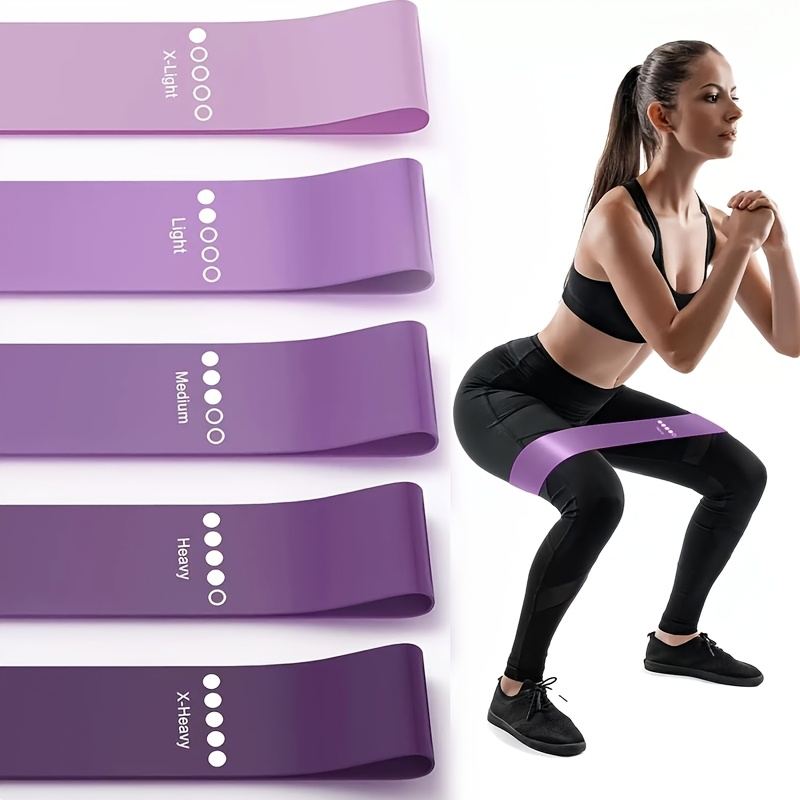
Purpose: Strengthens the rear deltoids and mid-back, counteracting decades of desk posture. Bands are exceptionally joint-friendly here.
Starting position: Stand tall holding a light circular resistance band at shoulder height, arms extended.
Technique: Pull the band apart until it touches your chest, squeezing the shoulder blades together. Pause one second, return slowly.
Breathing: Exhale as you pull apart, inhale as you return.
Sets and reps: 2–3 sets of 12–20 reps.
Beginner modification: Use the lightest band available and a narrower grip.
Common mistake: Shrugging toward the ears — keep shoulders down, let the mid-back work.
7. Farmer's Carry
Purpose: Builds grip strength, core stability, and total-body resilience — the most functional exercise on this list.
Starting position: Hold a heavy dumbbell in each hand at your sides. Stand tall.
Technique: Walk with short, controlled steps, chest up, shoulders back, core braced.
Breathing: Short, controlled breaths behind the brace.
Sets and reps: 3–4 carries of 30–60 seconds.
Beginner modification: Carry lighter weights for shorter distances; build weekly.
Common mistake: Going so heavy posture collapses — the carry should look athletic, not desperate.
Equipment Comparison for the Over-40 Home Gym
| Equipment | Joint stress | Balance demand | Cost | Progression | Space | | --- | --- | --- | --- | --- | --- | | Adjustable dumbbells | Low–moderate | Moderate | Moderate, one-time | Excellent | One corner | | Resistance bands | Very low | Low–moderate | Very low | Good | A drawer | | Machines | Low (guided path) | Low | High / gym needed | Excellent | A room / gym | | Bodyweight | Low | Moderate–high | Free | Limited at top end | Anywhere |
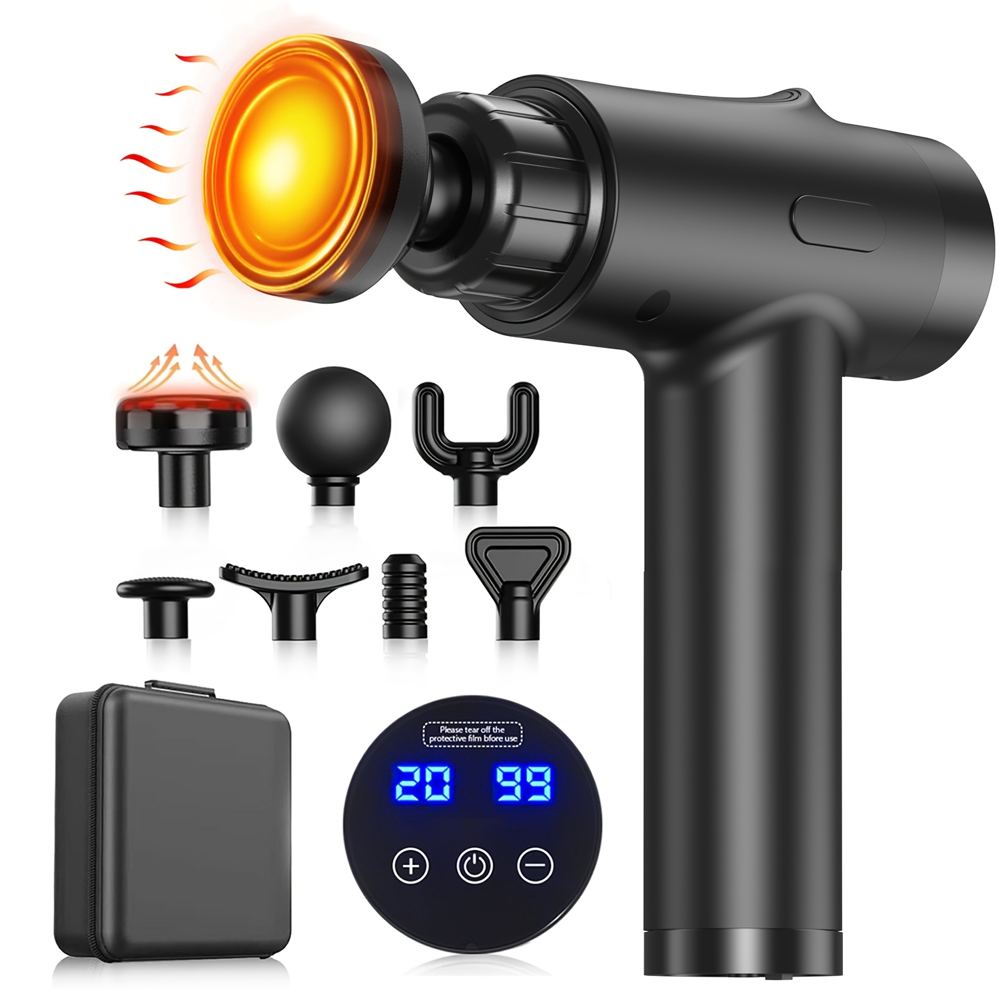
For most men over 40 training at home, adjustable dumbbells plus bands cover nearly everything here. If aches are already part of your life, an athlete massage gun on sore muscles after training can make the difference between dreading and looking forward to the next session — see our massage gun guide for how to choose one.
A Simple Weekly Plan
| Day | Session | | --- | --- | | Monday | Full routine (exercises 1–7), 2–3 sets each | | Tuesday | Rest or 20–30 min easy walk | | Wednesday | Full routine, lighter, technique focus | | Thursday | Rest | | Friday | Full routine, 3 sets of the big four (squat, press, row, deadlift) + carries | | Weekend | Walk, gentle stretching, or full rest |
Two sessions per week is a fine starting point. Add the third day after 4–6 weeks. The over-50 exercise guide shares the same joint-friendly principles, which apply at any age.
Progressing Safely After 40
- Progress one variable at a time. Add a rep or two before adding weight — never both at once.
- Use the 10% rule. Increase total weekly training load by no more than about 10% at a time.
- Schedule deload weeks. Every 4–6 weeks, train at half volume for one week — maintenance for your joints, not laziness.
- Prioritize sleep and protein. Aim for 7–9 hours of sleep and adequate protein across the day.
Safety Notes
- Get medical clearance before starting if you have a heart condition, joint problems, high blood pressure, diabetes, or any medical concern — or if you have been sedentary for a long time.
- Stop exercising and seek medical advice promptly if you experience: chest pain, pressure, or tightness; severe dizziness or faintness; unusual shortness of breath; or sharp, sudden joint pain. These are warning signs, not things to push through.
- Warm up at least 10 minutes before every session. Never train through joint pain — muscle burn fades; joint damage accumulates.
FAQ
Q: Is it too late to build muscle after 40?
No. Men build meaningful strength and muscle well into their 50s, 60s, and beyond with progressive, consistent training. Progress may be slower than at 25 and recovery needs more respect, but "too late" is a myth. Results vary with training history, nutrition, sleep, and health.
Q: How many days a week should a man over 40 lift weights?
Two to three full-body strength sessions per week is the sweet spot, with at least one rest day between sessions. More is not better at this stage — recovery is where the progress happens.
Q: Are squats and deadlifts safe after 40?
The movement patterns are safe and enormously useful; the loading needs respect. Goblet squats and dumbbell Romanian deadlifts give the benefits with far less spinal loading than heavy barbell versions. Start light, master the patterns, progress slowly — and swap any variation that bothers a joint.
Q: Should I do cardio too, or just strength training?
Both. Strength is the priority for muscle and bone, but 2–3 easy cardio sessions per week (brisk walking, cycling, swimming) support heart health and aid recovery. Walking on rest days is one of the best recovery tools available, and it is free.
Q: How long until I see results?
Strength, energy, sleep quality, and everyday function often improve within the first month or two. Visible body-composition changes take longer and vary widely. No honest program can promise a timeline — judge by consistency and how you feel and function.
The Bottom Line
Strength training after 40 is not a diminished version of young man's training — it is a smarter version. Seven well-chosen exercises, two to three sessions a week, honest form, patient progression, and real respect for recovery will build a stronger, more capable body than most 25-year-olds have. Get cleared if you need to, warm up every time, never push through warning signs, and give it six months of steady work. Your future self will thank you for starting now.
