Short on time? Use the minimum-effective-dose approach: 10, 15, and 20-minute session templates, exercise snacks, and habit stacking that fits real life.
How to Exercise Consistently When You Have No Time
"I don't have time to exercise" is the most common reason people give for not training — and it's usually not an excuse. Between work, family, and commuting, a free hour genuinely doesn't exist for many people. But here's the reframe: you don't need an hour. You need a minimum you can actually repeat, week after week.
This guide covers the minimum effective dose of exercise — the smallest amount of training that still moves you forward — with 10, 15, and 20-minute session templates, a concrete 15-minute full-body routine, "exercise snacks" for your day, and honest talk about consistency. No gym required, no hour-long commitment, no guilt.
This guide contains affiliate links. If you buy through them, VÉLORA may earn a commission at no extra cost to you.
The Minimum Effective Dose Mindset
Most people treat exercise as all-or-nothing: a full workout or nothing. That mindset is the real enemy, because "nothing" is what happens on most busy days. Flip it: the best workout is the one you'll actually do, and a short session done consistently beats a perfect session done twice a month.
Ten focused minutes, five days a week, is a genuinely effective training program for a beginner — it builds the habit, the strength base, and the identity of someone who exercises, which is what makes longer sessions possible later.
The practical rule: decide your minimum before the week starts. For most busy beginners, that's 10–15 minutes, 4–5 days a week. On days you have more time, do more. On days you don't, do the minimum. Never zero.
Your Time-Available Cheat Sheet
| Time available | Best session type | What it looks like | |---|---|---| | 5 minutes | Exercise snack | One round of bodyweight moves between tasks | | 10 minutes | Micro strength or cardio | One focused circuit, minimal rest | | 15 minutes | Full-body circuit | Warm-up + 2 rounds of 5–6 moves | | 20 minutes | Strength + finisher | Dumbbell/band strength work + short cardio burst | | 30+ minutes | Full session | A complete 20-minute home workout with proper warm-up and cool-down |
Match the session to the day you actually have, not the day you wish you had.
The 10-Minute Micro Session
Ten minutes is enough for one solid circuit. Do each move for 40 seconds with 20 seconds rest, and repeat the round once:
- Bodyweight squats — 40 seconds
- Push-ups (knees or incline as needed) — 40 seconds
- Glute bridges — 40 seconds
- Standing marches or step-touches — 40 seconds
- Dead bugs or a plank hold — 40 seconds
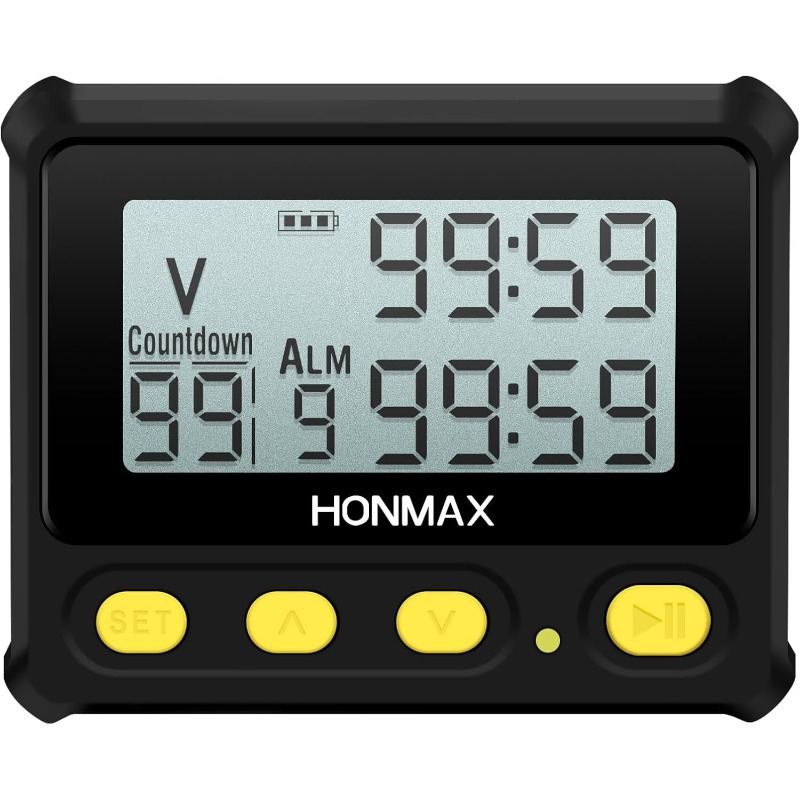
That's 5 minutes per round; two rounds is 10. An interval timer keeps you honest here — when every second counts, a timer that beeps your work/rest intervals means you spend the time training instead of clock-watching.
The 15-Minute Full-Body Fix (Your Core Routine)
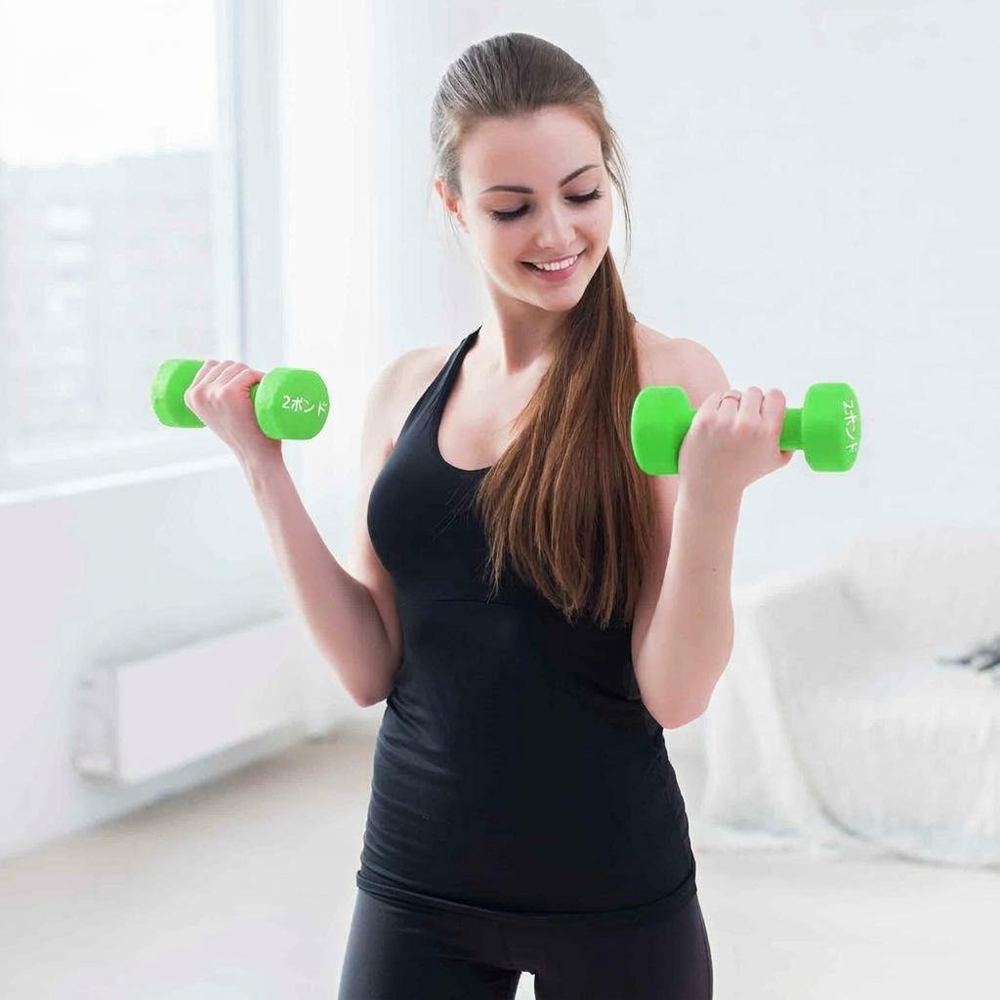
This is the workhorse routine — memorize it and repeat 3–4 times a week. It hits every major muscle group with just your body and, optionally, light dumbbells like this compact 3-pair dumbbell set with case that stores neatly in a corner.
Warm-up (2 minutes): march in place 30 seconds, arm circles 30 seconds, bodyweight squats 30 seconds, gentle torso twists 30 seconds.
Main circuit — 2 rounds, 40 seconds work / 20 seconds rest:
- Goblet squats (or bodyweight squats) — 8–15 reps. Modification: hold a chair for balance, or do half-range squats.
- Push-ups — 5–12 reps. Modification: knees on the floor, or hands on a sturdy table.
- Bent-over rows (dumbbells, bands, or water bottles) — 8–15 reps per side. Modification: lighter weight, slower tempo.
- Reverse lunges — 6–10 reps per leg. Modification: stationary split squat, or step back only halfway.
- Glute bridges — 10–20 reps. Modification: single-leg version when the basic feels easy.
- Dead bugs — 6–10 reps per side. Modification: keep feet on the floor and just practice the arm movement.
Cool-down (1 minute): standing quad stretch, chest opener, and three slow breaths.
Progression: when all reps feel comfortable with good form, add a third round, use slightly heavier weights, or slow each rep down. Don't add time you don't have — add challenge within the time you do.
The 20-Minute Strength + Finisher
When you have 20 minutes, split it: 14 minutes of strength, 4 minutes of cardio, 2 minutes of stretching. Do the 15-minute routine above but add a third round of the circuit (that's your strength block), then finish with 4 minutes of alternating 30-second efforts — fast marching, step-ups, or shadow boxing — with 30 seconds easy between. This format builds both strength and conditioning in one short block.
Exercise Snacks: Movement Across the Day
"Exercise snacks" are 2–5 minute bursts of activity scattered through your day — one of the most practical tools a busy person has:
- 20 squats while the kettle boils
- A 3-minute walk around the block between meetings
- 10 push-ups against the kitchen counter before lunch
- Stair climbs instead of waiting for the elevator — take two flights
- A 2-minute stretch break every hour at your desk
Three or four snacks a day add up to 10–15 minutes of real activity — roughly one short session, with the bonus of breaking up sedentary time. If jumping or loud exercise isn't practical where you live, our apartment-friendly no-jumping workout guide has quiet options that work as snacks too.
Habit Stacking: Attach Exercise to What Exists
Habit stacking means attaching your short workout to something you already do daily, so it triggers automatically:
- After morning coffee → 10-minute circuit. The coffee brews, you train.
- Right after work, before sitting down → 15-minute routine. The key: don't sit first. Sitting is where workouts go to die.
- During the kids' screen time → exercise snacks. They're occupied for 20 minutes; that's your window.
- Lunch break walk → 10 minutes around the block. Non-negotiable, like the lunch itself.
Pick ONE stack to start and do it for two weeks before adding a second. Our guide on building a sustainable workout habit goes deeper — the short version: make it obvious, make it easy, and never miss twice.
The Weekend Catch-Up Myth
The temptation: skip weekdays, do one big session Saturday. It rarely works — one weekly session can't build the habit or the steady stimulus your body responds to best, and cramming a week's exercise into one day is how injuries happen. Consistency beats cramming, every time. A longer weekend session is a great bonus on top of short weekday sessions, but five 10-minute weekday sessions plus a weekend walk will outperform one heroic Saturday workout in every way that matters.
A Sample Busy-Week Schedule
Here's what a realistic week looks like for someone with genuinely no free hour:
| Day | Plan | Time | |---|---|---| | Monday | 15-min full-body routine | 15 min | | Tuesday | Exercise snacks (3 × 4 min) | 12 min | | Wednesday | 10-min micro session | 10 min | | Thursday | Rest or gentle walk | 0–10 min | | Friday | 15-min full-body routine | 15 min | | Saturday | Optional longer walk or 20-min session | 20–30 min | | Sunday | Full rest | 0 min |
Weekly total: about 70–100 minutes. That's a legitimate, effective training week — built from scraps of time, not from hours you don't have.
Gear That Makes Short Sessions Easier
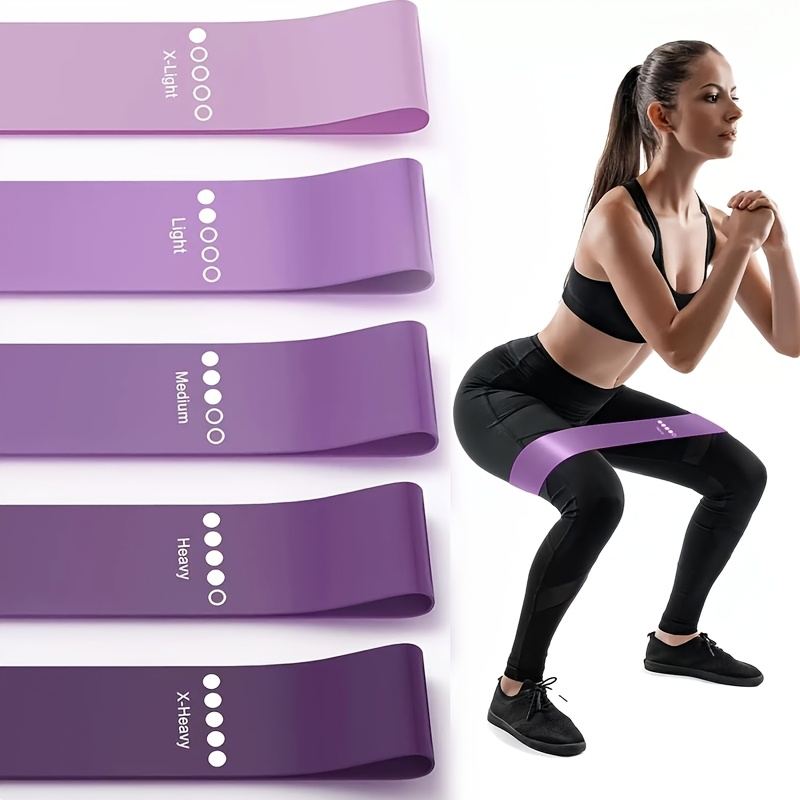
You don't need equipment to start — bodyweight works. But two small investments remove friction: resistance bands that store in a drawer and turn bodyweight moves into real strength work, and an interval timer that runs your work/rest intervals so short sessions stay dense. The principle: equipment should reduce excuses, not create a setup ritual. If it takes 10 minutes to get ready, a 10-minute workout never happens.
Common Beginner Mistakes
- Waiting for a free hour. It won't come. Start with 10 minutes this week.
- Going too hard on day one. A brutal first session that leaves you wrecked for four days kills momentum. Start easier than you think you need to.
- Skipping the warm-up. Even 90 seconds of marching and arm circles matters — cold muscles and short sessions are a bad combination.
- All-or-nothing thinking. A 7-minute session you actually did beats the 30-minute one you skipped. Log it and move on.
- Training through sharp pain. Muscle burn is fine; joint pain, stabbing sensations, or dizziness are stop signals. See a professional if they persist.
FAQ
Q: Is 10 minutes of exercise really enough to make a difference?
For a beginner, yes — genuinely. Ten focused minutes of strength work, 4–5 times a week, builds strength, improves fitness, and establishes the habit everything else grows from. It won't prepare you for a marathon, but that's not the goal. Results vary, but consistency at this dose reliably beats sporadic longer efforts.
Q: Do I need equipment for short workouts?
No. Bodyweight exercises — squats, push-ups, lunges, planks, glute bridges — are a complete starter program. Equipment like resistance bands or light dumbbells becomes useful after a few weeks when bodyweight alone stops challenging you, or if you want more variety. Start with nothing; add tools when you hit a wall.
Q: Can I split my workout across the day?
Yes — that's exactly what exercise snacks are. Two 7-minute sessions or three 5-minute bursts give you essentially the same benefit as one 15-minute block for general fitness. The one exception: if you're working toward a specific performance goal (like a faster 5K), some continuous sessions help. For health, strength, and habit-building, split sessions work fine.
Q: What about rest days? Do I need them with such short sessions?
Short, moderate sessions are easy to recover from, so most people can do them 4–6 days a week. Still take 1–2 easier days — your body adapts during rest, not during the workout. If you feel constantly sore, tired, or dreading sessions, add another rest day rather than pushing through.
Q: How do I stay consistent when work gets crazy?
Lower the bar instead of skipping. Your minimum on a brutal week might be one 5-minute snack per day — that's still a win, and it keeps the "I move daily" identity intact. The people who quit decide that anything less than the full routine doesn't count. It all counts.
Conclusion
You don't have a time problem — you have a minimum problem, and it's solvable. Ten to fifteen minutes most days: a simple full-body routine, scattered exercise snacks, one habit stack. That's a real training program, not a compromise. Start with the 15-minute routine three times this week, add snacks on the other days, and give it a month. You'll be stronger, have more energy — and be someone who exercises, even with no time.