Train hard without a single jump: quiet, floor-friendly routines for apartments — low-noise equipment picks, landlord-friendly scheduling, and two sample sessions.
Apartment-Friendly Workouts: Quiet Training, No Jumping
You want to train hard at home, but your downstairs neighbor has opinions — and those opinions arrive through the floor every time you jump. Burpees feel like a complaint waiting to happen, jump squats are out, and even stepping around in trainers can sound like a stampede in a second-floor apartment. It is enough to make a woman feel like real training simply is not available to her unless she joins a gym.
Good news: jumping was never the engine of a good workout. Plenty of the strongest, fittest women in apartment buildings never leave the ground at all. With the right exercise selection, some simple noise-proofing, and two ready-made sessions, you can train seriously at home without a single jump — and without anyone beneath you knowing you are there.
This guide contains affiliate links. If you buy through them, VÉLORA may earn a commission at no extra cost to you.
Why Jumping Was Never Essential
Jumping is one tool for raising heart rate and building power, not a requirement for fitness. Strength comes from resistance — your body weight, bands, or dumbbells — and cardio comes from keeping your muscles working with limited rest. None of that needs you to leave the floor.
In fact, no-jump training suits many women better than plyometrics do. It is easier on knees, ankles, and pelvic floors; it lets you focus on control and form rather than impact; and it works in any living room, at any hour, in socks. If you have ever skipped a workout because the plan called for box jumps at 7am upstairs, that is exactly the friction this approach removes.
Noise-Proofing Your Setup
Before the exercises, sort the environment. A few cheap changes make more difference than any exercise swap.
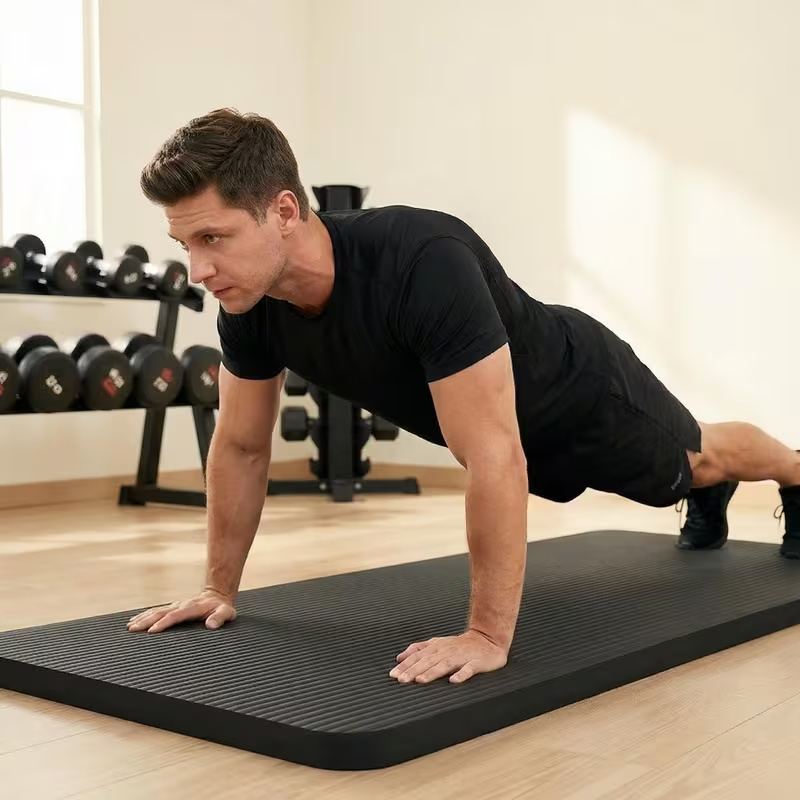
Get a thick mat. The single most effective noise purchase: a 10mm-plus mat absorbs the thud of knees, elbows, and hands hitting the floor. The Thickened Extended Fitness Yoga Mat gives you 10mm of cushioning across an extended surface — generous, quiet coverage for floor work.
Train in socks or soft indoor shoes. Hard-soled trainers clack on wood and laminate; socks or minimalist indoor shoes are nearly silent and give you better floor feel for balance work.
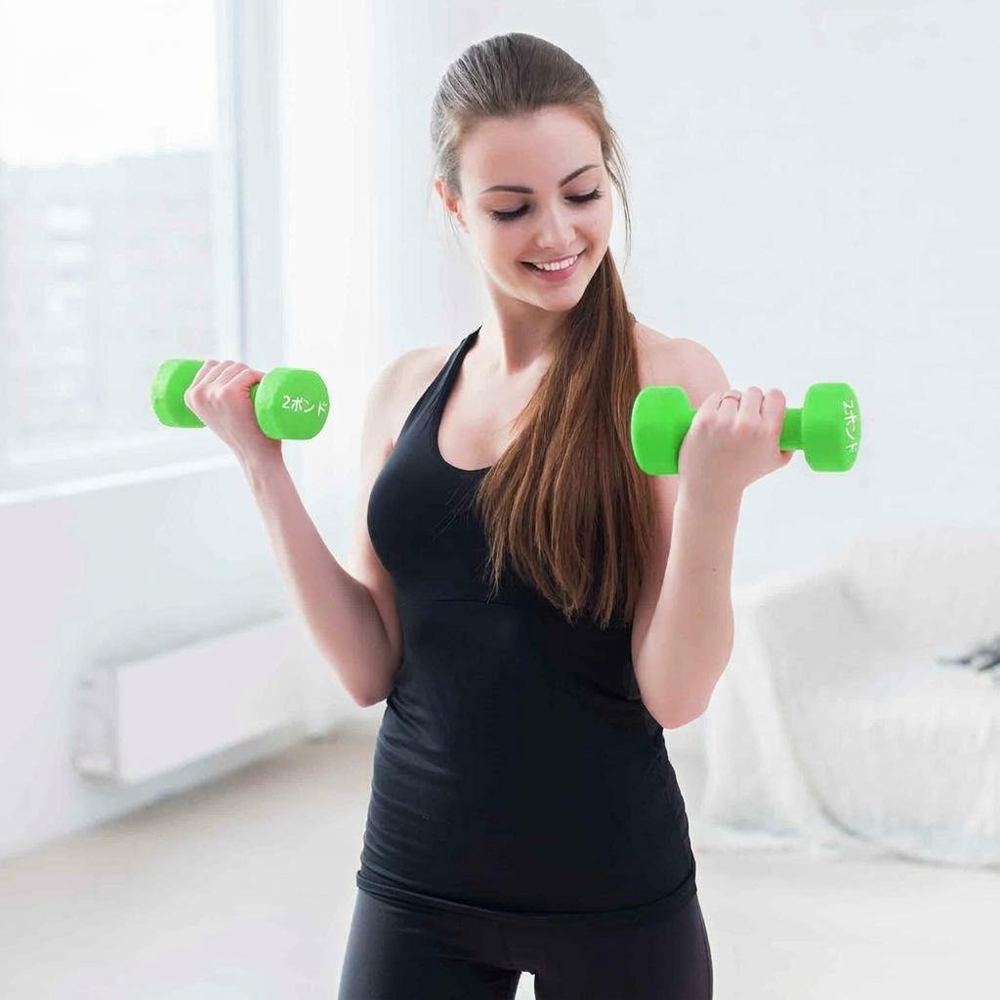
Dumbbells over drop-friendly weights. Choose dumbbells you can set down gently — a PVC or hex dumbbell set rests quietly on a mat. Avoid kettlebells on hard floors unless you have thick rubber tiles, because even careful sets end with a knock.
Choose your hour. If you have thin floors, strength work at any hour is fine, but avoid the 5am-before-work version of anything remotely dynamic. Midday or early evening sessions draw the fewest complaints. If your building has a quiet-hours rule (many run 10pm–8am), plan accordingly — a 25-minute session fits easily inside daytime windows.
For more ideas on setting up a home gym that respects shared walls, see our guide to quiet home gym equipment for apartments.
The No-Jump Exercise Toolkit
Replace every jump in a standard program with a quieter equivalent that trains the same quality:
- Instead of jump squats: bodyweight squats done slowly — 3 seconds down, 1-second pause, 2 seconds up — or goblet squats with a dumbbell. The tempo makes them brutally effective without leaving the floor.
- Instead of burpees: the walkout-to-plank — walk your hands out to a plank, do a push-up or hold, walk back, stand. Same full-body demand, zero impact.
- Instead of jumping lunges: reverse lunges or split squats, which are arguably better for most women anyway because they are easier on the knees.
- Instead of high knees / jumping jacks: step-touch side steps, standing marches with a knee lift, or slow mountain climbers on a mat. Heart rate climbs just fine when rest periods shrink.
- Instead of box jumps: step-ups onto a low, sturdy surface (a coffee table substitute like a solid step), or Bulgarian split squats — all the leg demand, none of the landing.
The principle: when you remove impact, you add control. Slower tempos, shorter rests, and harder variations keep the challenge high while the noise stays low.
Quiet Cardio Options (No Treadmill, No Jumping)
Strength is easy to keep quiet. Cardio needs a little more creativity, but it is absolutely doable:
- Circuit strength: 4–6 exercises back to back with 15–30 seconds of rest. Your heart rate will not know you never jumped.
- Step-ups and carries: walking lunges, farmer's walks around the apartment with dumbbells, step-ups — locomotion is cardio.
- Mat-based cardio: slow mountain climbers, plank shoulder taps at speed, bird dogs with reach, bear crawls across the mat. All silent, all sweaty.
- Rhythmic repeats: 30 seconds of air squats, 30 seconds of glute bridges, 30 seconds of push-ups, repeat. Simple beats complicated.
Sample Session 1: Silent Strength (30 Minutes)
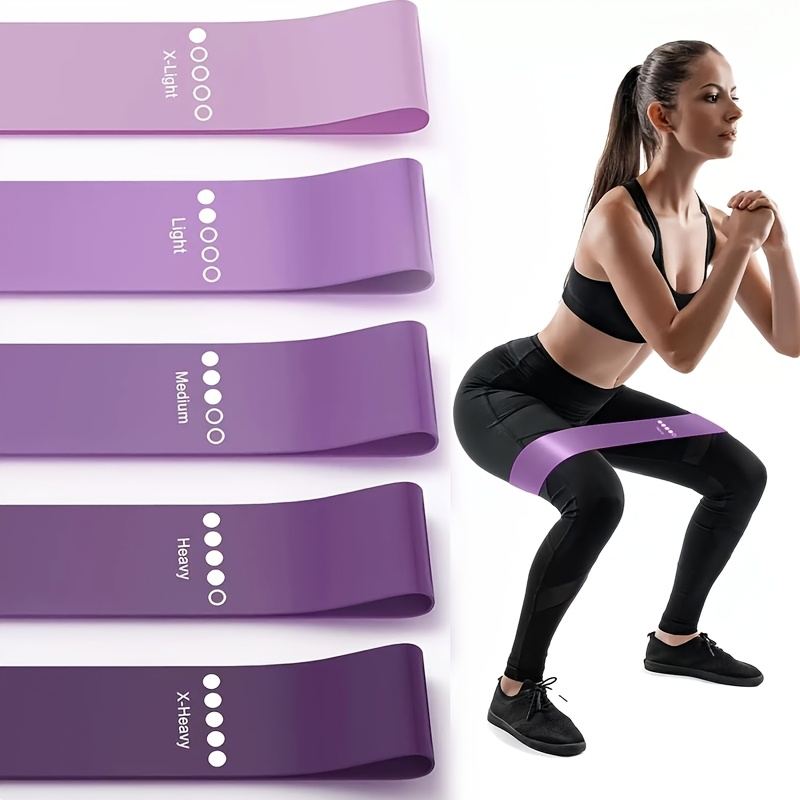
A full-body strength session that makes no noise at all. Equipment: mat, light dumbbell set or a pair of household dumbbells, and optionally a loop resistance band for extra lower-body work.
Warm-up (5 minutes):
- Arm circles and shoulder rolls — 30 seconds each direction
- Hip circles — 30 seconds each side
- Bodyweight squats — 10 slow reps
- Cat-cow stretches on the mat — 8 slow rounds
Main block — circuit, 3 rounds, 40 seconds work / 20 seconds rest:
- Goblet squat — dumbbell held at chest, sit back and down, knees tracking over toes. Aim 8–12 reps per round.
- Push-up (knees or full) — 6–10 reps, chest to a fist's height above the mat, full plank line.
- Single-leg glute bridge — back on the mat, one foot planted, lift hips until knees-hips-shoulders align. 8–10 per side.
- Bent-over dumbbell row — hinge at hips, flat back, pull both weights to your ribs. 8–12 reps.
- Dead bug — slow and controlled, lower back pressed into the mat. 6–8 per side.
- Reverse lunge — step back, drop the back knee toward the mat, drive up through the front heel. 8–10 per side.
Cool-down (5 minutes): child's pose, figure-four hip stretch, standing quad stretch, deep breathing.
Total: about 30 minutes. Do this 2–3 times a week, adding reps, weight, or a round as you get stronger.
Sample Session 2: Quiet Cardio Circuit (20 Minutes)
For the days you want your heart pumping without a peep. Equipment: just your mat — and socks.
Warm-up (3 minutes): marching in place, gradually lifting knees higher; arm swings; 10 slow air squats.
Main block — 5 rounds, 30 seconds work / 15 seconds rest:
- Fast bodyweight squats — quick but controlled, never jumping, chest tall.
- Slow mountain climbers — plank position, drive knees in alternately. Faster = harder, keep hips level.
- Step-back lunges — alternate legs, brisk rhythm, torso upright.
- Plank shoulder taps — in plank, tap opposite shoulder; minimize hip sway.
- Glute bridge pulses — back on the mat, short strong pulses at the top.
Rest 1 minute between rounds. That is 5 rounds in about 17 minutes — finish with a 3-minute cool-down of walking around the apartment and gentle stretching.
Beginners: start with 3 rounds and longer rests (20 seconds work / 20 seconds rest). As your fitness builds over a few weeks, extend the work intervals before adding rounds.
Beginner Modifications
- New to squats: hold a doorframe or sturdy chair for balance and reduce depth — quarter squats count.
- Push-ups feel impossible: start with incline push-ups, hands on a sturdy table or the couch arm, then move to knees on the mat.
- Plank shakes at 10 seconds: drop to knees, or plank from an elevated surface (hands on a bench). A 20-second solid plank beats a 60-second saggy one.
- Lunges hurt the knees: shorten the stride, keep the step small, or swap in step-ups to a low step. If any move causes sharp joint pain (not muscle effort), stop and substitute — a thicker mat under the knee and a shorter stride usually help.
Common Mistakes
Rushing to be quiet instead of being controlled. Silent training rewards slowness — embrace it. Fast reps are how form breaks and how floors get thumped.
Going too light because it is "just home." Bands and small dumbbells only work if they challenge you in the last few reps. Progressive overload applies at home exactly as it does in a gym: add reps, slow the tempo, or add weight every 1–2 weeks.
Holding your breath on the effort. Exhale on the hard part (the stand, the push, the lift), inhale on the return. Quiet training is not breathless training.
Skipping warm-ups because the session is short. Five minutes of joint prep matters more in a small space, where every exercise starts from a cold body in a tight corner.
Safety Notes
- Clear your floor space before starting — push furniture aside, roll up rug edges, and make sure nothing slides. Most apartment workout injuries come from tripping, not from the exercises.
- Never exercise on a mat placed over a slick floor without checking it stays put; a non-slip mat on hard flooring should grip, but test it first.
- If you have a diagnosed joint condition, balance disorder, or are pregnant or recently postpartum, clear new routines with your clinician or midwife first. Many of these exercises are safe in pregnancy with modifications, but get individual guidance rather than guessing.
- Stop for sharp pain, dizziness, or chest discomfort. Muscle burn and fatigue are normal; pain is a signal.
FAQ
Q: Can I really get a good workout without any jumping or cardio equipment?
Yes. Strength training with progressive resistance is the core of most women's fitness programs, and circuit-style sessions raise your heart rate plenty. Jump-free conditioning circuits, step-ups, and walking lunges cover the cardio side. What you lose is maximal plyometric power — a niche quality most recreational exercisers do not need.
Q: What is the quietest equipment I can buy for an apartment?
A thick mat, a set of loop resistance bands, and a pair of light dumbbells. Bands are completely silent, dumbbells make almost no noise when set down on a mat, and the mat itself absorbs floor impact. That trio covers 90% of home training.
Q: How do I know I am working hard enough if nothing feels "explosive"?
Watch your last reps: if the final 2–3 reps of each set feel genuinely challenging while your form stays clean, the intensity is right. Progress shows up as more reps, heavier weights, or shorter rests over the weeks — track one of those and you will know.
Q: Will my downstairs neighbors really not hear a strength workout?
A strength session on a thick mat, done in socks, with weights set down gently, is quieter than normal walking. The noise complaints come from jumping, dropping weights, and loud music — remove those and most neighbors will never know you train.
Q: How often should I do these sessions?
Two to three strength sessions and one to two cardio sessions per week is a solid, sustainable rhythm for most women, with at least one full rest day. If you are just starting, two total sessions a week is plenty — add a third when recovery feels easy.
The Bottom Line
Apartment training is not a compromise — it is a discipline. No jumping means no impact on your joints or your neighbors, and the quiet forces you into the slow, controlled training that builds real strength anyway. Get a thick mat, pick your quiet tools, follow the two sessions above, and progress them week by week. Your results will vary like anyone's, and they will come from consistency, not from noise. For a broader starting framework, pair this with our beginner home workout plan for women and build from there.