Stressed? Low? Movement really does change how you feel. Here is what research supports on exercise for stress and mood — what helps most, how much you need.
Exercise for Stress and Mood: What the Research Supports
You've heard it a hundred times: "just go for a walk, you'll feel better." It's annoying advice, mostly because it's true. The connection between movement and mood is one of the most consistently observed patterns in health research — people who exercise regularly tend to report lower everyday stress and steadier moods than people who don't.
But "exercise helps your mood" is vague, and vague advice rarely survives a bad day. This guide gets specific: how movement actually affects stress and mood, which types of exercise help most, how much is enough, what the honest limits are, and when movement alone isn't the answer.
This guide contains affiliate links. If you buy through them, VÉLORA may earn a commission at no extra cost to you.
How Movement Affects Mood: The Mechanisms
There isn't a single magic mechanism — it's a stack of small, real effects working together:
- Neurochemistry shifts. Exercise prompts the release of endorphins and other neurochemicals associated with feelings of well-being. This is the famous "runner's high," but you don't need to run to get a milder version — a brisk walk or a strength session produces it too.
- Stress hormone regulation. Physical activity uses up the adrenaline and cortisol your body produces under stress. This is why a tense afternoon often feels lighter after even 20 minutes of movement — you've given those stress chemicals somewhere to go.
- The temperature-and-sleep loop. Exercise raises core body temperature; the drop afterward supports drowsiness and better sleep. Better sleep then improves next-day mood and stress tolerance. It's a genuine virtuous cycle, and it's one of the strongest links researchers keep finding. (We break this down fully in our exercise and sleep guide.)
- Routine and mastery. Having a workout you show up for creates structure — something many anxious minds are hungry for. Finishing a session, especially on a hard day, is also concrete proof you can do difficult things. That sense of mastery is quietly powerful.
- Getting outside. Outdoor movement adds sunlight, fresh air, and a change of scenery to the mix. A 20-minute walk outside often outperforms 20 minutes indoors for mood, not because the movement is different but because the environment is.
- Social connection. Group classes, walking with a friend, or even a friendly gym environment add a social layer that supports mood independently of the workout itself.
None of this means exercise is a cure. It means it's a reliable contributor — one tool in a bigger picture.
Which Types of Exercise Help Most?
The honest answer: the best exercise for your mood is the one you'll actually do regularly. That said, different types of movement offer slightly different benefits:
| Activity type | Mood benefit | Effort level | Best for | |---|---|---|---| | Brisk walking (outdoors) | Calms rumination, lifts low mood, adds daylight | Low | Beginners, rest days, high-stress days | | Gentle yoga / stretching | Eases tension, slows breathing, quietens mental noise | Low | Evenings, anxiety-heavy days | | Strength training | Builds confidence and mastery, improves sleep quality | Moderate | People who like structure and visible progress | | Moderate cardio (cycling, swimming, dance) | Strong mood lift, burns off adrenaline | Moderate | Shaking off frustration or restlessness | | Vigorous intervals / hard running | Biggest endorphin effect, but can add fatigue | High | Experienced exercisers on high-energy days | | Group classes or team sports | Mood lift plus social connection | Varies | Loneliness alongside stress |
A few notes on reading this table:
- Walking is underrated. For stress specifically, walking — especially outdoors — is one of the most reliable mood movers there is. It requires no equipment, no changing, no motivation reserves.
- Strength training's benefit is underappreciated. The confidence that comes from progressive strength work ("I lifted more than last month") supports mood in a different, steadier way than the temporary lift of cardio.
- Intensity isn't everything. Very hard workouts can temporarily raise stress hormones. On days you're already wound tight, gentle movement usually helps more than punishing yourself.
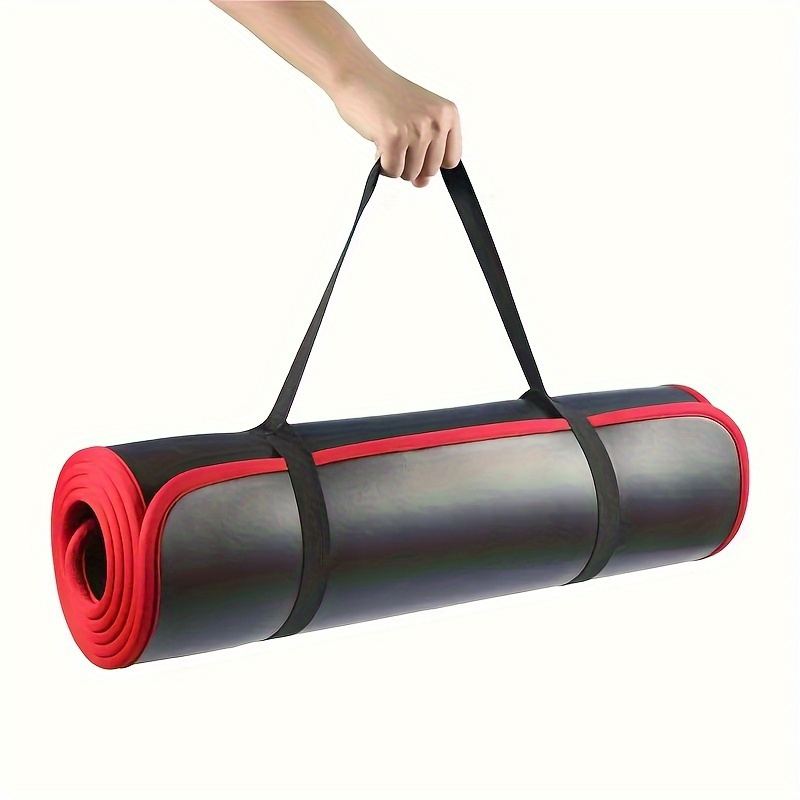
If evenings are your wind-down window, pair movement with our evening stretching routine — gentle stretching on a comfortable surface works wonders after a tense day. An extra-thick 10mm non-slip yoga mat gives you the cushioning that makes floor work genuinely relaxing rather than a test of endurance for your knees.
How Much Exercise Is Enough for Mood Benefits?
More isn't automatically better here. The useful pattern looks like this:
- Some is far better than none. Even a single 10-minute walk can shift your state. On the worst days, lower the bar — don't skip, just shrink the session.
- The sweet spot for most people: about 20–45 minutes of moderate activity, 3–5 days per week. That's walking, cycling, swimming, strength sessions, yoga — pick the mix you enjoy.
- Beyond ~60 minutes of vigorous exercise daily, mood benefits flatten out and fatigue can undo the gains, especially if sleep and recovery aren't keeping up. If you're training hard and feeling worse, not better, you're probably past the point of benefit.
- Consistency beats intensity. Three easy walks a week, done every week, will do more for your mood over time than one heroic workout followed by ten days on the couch.
Results vary from person to person — some people feel the shift after one session, others notice it after two to three weeks of regular movement. Give any new routine at least a fortnight of consistency before judging it.
The Recovery Ritual: Letting Your Body Downshift

Mood benefits don't stop when the workout ends — the recovery period matters too. A calm post-exercise routine signals to your nervous system that the effort is over and it's safe to relax:
- Cool down gently — 5 minutes of easy walking or slow stretching after anything vigorous.
- Ease out muscle tension — tight muscles keep the body in a low-grade alert state. Gentle work with a mini massage gun with heating function on worked muscles can loosen things up — keep it to a low setting, 30–60 seconds per muscle group, as part of winding down rather than an aggressive session.
- Breathe deliberately — five minutes of slow nasal breathing (roughly 4 counts in, 6 counts out) after your session extends the calming effect.
- Pair it with stillness — a warm shower, a few minutes of quiet, or the stretching sequence in our yoga for stress relief guide.
The principle: recovery should feel like turning the volume down, not up. Gentle, unhurried, warm.
Tracking the Pattern: Notice What Works for You

Mood effects are personal, and the fastest way to learn your own pattern is simple tracking. For two to four weeks, note:
- What you did (type, duration, rough intensity)
- When you did it (morning, lunch, evening)
- How you felt before and after (a quick 1–5 rating is enough)
- How you slept that night
After a few weeks, patterns emerge. You might find morning walks lift your whole day, or that evening strength sessions leave you too wired, or that yoga is the only thing that touches your Sunday-night anxiety. A fitness tracker makes this effortless — the 1.83-inch HD sports smartwatch logs your activity, heart rate, and sleep in one place, so you can match your movement to your mood and rest instead of guessing.
This data also protects you on bad days: when motivation is zero, you can look back and see, in your own records, that movement helped last time.
What Exercise Can't Fix (An Honest Section)
Movement is powerful, but it has limits, and pretending otherwise does real harm:
- Exercise is not treatment for anxiety disorders or depression. It can be a genuinely helpful complement to professional care, but persistent low mood, panic, or depression deserve professional support — not just more workouts. If low mood or anxiety is interfering with your daily life, please talk to a healthcare professional or counselor.
- Exercise can't fix what it's masking. If you're training compulsively to avoid dealing with stress, grief, or burnout, the workouts become part of the problem. Rest, honest reflection, and sometimes professional guidance are the right tools there.
- More exercise during genuine burnout usually backfires. If you're exhausted, sleeping poorly, and dreading every session, the answer is probably rest and recovery, not pushing harder.
- No timelines, no guarantees. Anyone promising that X weeks of exercise will "cure" your stress is selling something. Responses vary — genetics, life circumstances, sleep, and a dozen other factors all play a role.
Think of exercise the way you'd think of sleep or nutrition: a foundation that makes everything else easier, not a replacement for the other supports you might need.
Common Mistakes
- Using only punishing workouts as stress relief. Hard training adds stress to a stressed system. Match the session to your state: hard days get hard workouts, hard life days get gentle movement.
- Skipping rest days. Rest days are when adaptation happens. Training every day to "stay calm" often backfires into fatigue and irritability.
- Expecting instant transformation. The mood lift from a single session is real but temporary. The deeper benefits — resilience, steadier sleep, baseline calm — build over weeks of consistency.
- Ignoring the basics. Exercise can't compensate for chronic sleep deprivation or a life with no downtime. Sometimes the most effective "workout" for your mood is going to bed on time.
FAQ
Q: How quickly does exercise improve mood?
Many people feel a noticeable lift within 10–30 minutes of moderate activity — that's the acute effect. The more durable changes (steadier baseline mood, better stress tolerance) typically build over 2–4 weeks of regular movement. Results vary, so track your own pattern rather than chasing someone else's timeline.
Q: What's the best exercise for anxiety?
Gentle, rhythmic movement tends to suit anxiety best: walking (especially outdoors), easy cycling, swimming, and yoga. Slow, deliberate breathing paired with movement — as in yoga or a mindful walk — adds a calming layer. On anxious days, avoid very intense sessions late in the day, which can leave a wired feeling.
Q: Can exercise make stress worse?
Yes, temporarily — intense exercise is itself a stressor. That's fine when your overall stress load is manageable, because your body adapts and grows more resilient. But stacking hard workouts on top of life stress, poor sleep, and no rest days can leave you more depleted, not less. If training is making you feel worse, scale back intensity and prioritize sleep.
Q: Is walking enough, or do I need intense workouts?
For mood and everyday stress, walking is genuinely enough — especially brisk outdoor walks of 20–30 minutes. Intense workouts add extra benefits (bigger endorphin response, fitness gains), but they're optional for mental well-being. The best exercise for your mood is the one you'll do consistently.
Q: Should I exercise when I'm feeling depressed?
Gentle movement can help, and many people find even a short walk shifts a heavy day slightly. But be kind to yourself about the bar: on hard days, "put on shoes and walk around the block" counts. If low mood persists for weeks or interferes with daily life, please reach out to a healthcare professional — you deserve support beyond exercise.
Conclusion
Exercise reliably supports stress and mood — through neurochemistry, stress-hormone regulation, better sleep, routine, and time outdoors — but it works best as part of a broader picture, not a solo act. Walk often, lift sometimes, stretch in the evenings, track what helps you, and rest without guilt. And when life's weight needs more than movement, reaching for professional support is strength, not failure. Start small, stay consistent, and let the habit compound quietly in your favor.