A 5-10 minute cool-down of gentle stretching and slow breathing helps your body shift from workout mode to recovery. Includes a concrete routine.
Cool-Down Routine After a Workout: 5-10 Minutes Well Spent
You crushed the workout. Your heart is pounding, your muscles are warm, and all you want to do is grab your water bottle and get on with your day. Skipping the cool-down feels harmless — after all, you already did the "real" work, right?
Here's the thing: the cool-down isn't an optional bonus. It's the bridge between effort and recovery — a few minutes that help your body shift gears gradually instead of slamming on the brakes. You don't need anything fancy, and you certainly don't need to add twenty minutes to your session. Five to ten minutes, done well, is genuinely time well spent. This guide explains what a cool-down actually does, gives you a concrete routine you can follow today, and shows you how to adjust it for upper-body versus lower-body days.
This guide contains affiliate links. If you buy through them, VÉLORA may earn a commission at no extra cost to you.
What a Cool-Down Actually Does (in Plain Language)
Your body doesn't come with an instant off-switch. When you finish a hard set, a run, or a sweaty circuit, your heart rate is elevated, your breathing is fast, and your blood is flowing hard toward working muscles. A cool-down gives all of that a gradual runway back to baseline — instead of going from 100 to 0 in a single step.
In practical terms, a good cool-down does three simple things:
- Eases your heart rate and breathing down. A couple of minutes of easy movement lets your cardiovascular system settle gradually.
- Introduces gentle mobility while muscles are warm. Your muscles are at their most pliable right after exercise — the ideal window for easy stretching.
- Signals the shift from effort to recovery. Deliberately slowing down, with unhurried breathing, tells your nervous system the work is over.
That's it — no dramatic claims, no magic recovery multipliers. A cool-down won't guarantee you'll be sore-free tomorrow (results vary from person to person), but it is the most comfortable, sensible way to finish a session.
The 5-10 Minute Cool-Down Routine
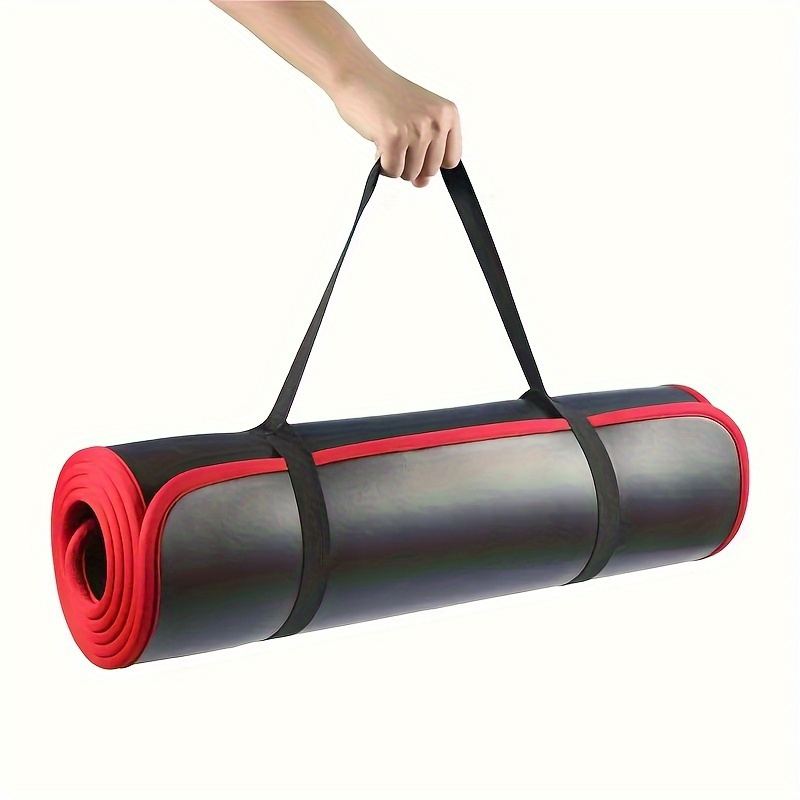
You'll need nothing but a comfortable surface. An extra-thick 10mm non-slip yoga mat makes floor stretches genuinely comfortable instead of a negotiation with hard flooring.
Follow the sequence in order. For each stretch, ease in gently and breathe slowly throughout — nasal in, unhurried out.
Minutes 0–2: Walk it down
- Easy walking or marching in place — 2 minutes. Keep moving, but let the intensity drop to something that feels like a stroll. Let your breathing slow naturally. Swing your arms loosely. This is the transition phase — don't stand still yet.
Minutes 2–8: Full-body gentle stretches
Hold each stretch for 20–30 seconds per side, at a comfortable intensity — you should feel a mild pull, never sharpness or pain.
- Standing quad stretch. Hold a wall or chair for balance. Pull one heel gently toward your glute. Keep knees close together and stand tall — don't arch your lower back.
- Standing hamstring fold. Feet hip-width apart, soften the knees, and fold forward. Let your head and arms hang heavy. Sway slightly side to side.
- Chest and shoulder opener. Clasp your hands behind your back and gently lift them away from your body while opening your chest. Breathe into the front of your shoulders.
- Neck and upper-trap release. Tilt your right ear toward your right shoulder and hold. Repeat on the left. Keep shoulders relaxed and low — this stretch is easy to overdo, so stay gentle.
- Cat-cow (on all fours). Alternate slowly between arching your back (cow) and rounding it (cat) for about 60 seconds. Move with your breath — this is as much a breathing exercise as a stretch.
- Child's pose — 60 seconds. Knees wide, arms reaching forward, forehead down. Let your whole body soften.
Minutes 8–10: Slow breathing finish
- Seated or lying breathing — 2 minutes. Sit comfortably or lie back. Inhale for 4 counts, exhale for 6. Longer exhales help your body settle. When the two minutes are up, you're done.
Upper-Body Day vs. Lower-Body Day Variations
The routine above covers the whole body, which is perfect for full-body sessions. But on split days, spend extra time where you actually worked — those muscles are the ones that appreciate the attention. Give your worked muscles 30–45 seconds per stretch instead of 20–30.
After upper-body day (chest, back, shoulders, arms)
Add or extend these:
- Doorway chest stretch — 30 seconds each side. Forearm against a doorframe, step gently forward. This hits the pecs that tightened during pressing work.
- Overhead triceps stretch — 30 seconds each side. One arm overhead, bend the elbow so your hand drops between your shoulder blades; gently press the elbow with the other hand.
- Cross-body shoulder stretch — 30 seconds each side. Pull one arm across your chest at shoulder height.
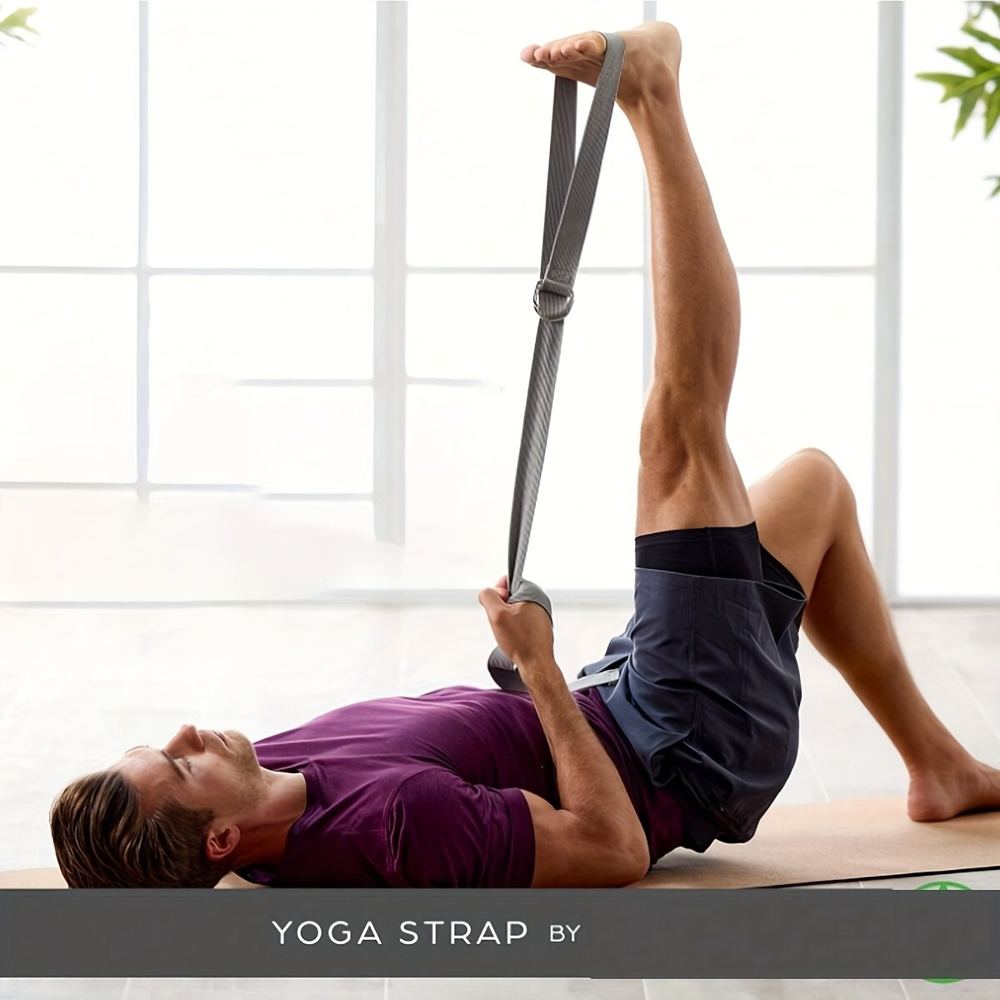
- Assisted hamstring or shoulder stretch with a strap. A yoga stretch belt with an adjustable metal D-ring buckle lets you reach deeper stretches without straining — loop it around your foot for seated hamstring work, or hold it behind your back with both hands for a chest opener. It's especially useful if your flexibility is still a work in progress.
After lower-body day (legs, glutes, cardio)
Add or extend these:
- Half-kneeling hip-flexor stretch — 30–45 seconds each side. One knee down, other foot forward; tuck your pelvis slightly and shift forward. Runners and squatters: this one's for you.
- Seated or standing figure-four (glute) stretch — 30–45 seconds each side. Cross one ankle over the opposite knee and sit back gently.
- Calf stretch against a wall — 30 seconds each side. Straight back leg, heel pressed to the floor. If you ran or jumped, your calves earned this.
- Supine hamstring stretch with the strap. Lying on your back, loop the stretch belt around your foot and gently straighten the leg upward. No forcing.
Foam-Roller-Free Options (and When You Don't Need Equipment)
You don't need a foam roller, a massage gun, or any gear to cool down well. Your bodyweight and a bit of floor space are enough. But if you like tools, here's how they fit honestly into a cool-down:
- A yoga mat — the one piece that genuinely matters for comfort. Hard floors make people rush through floor stretches; a thick mat makes you want to stay in them.
- A stretch strap — helpful if tight muscles limit your range; it lets you stretch effectively without yanking or bouncing.
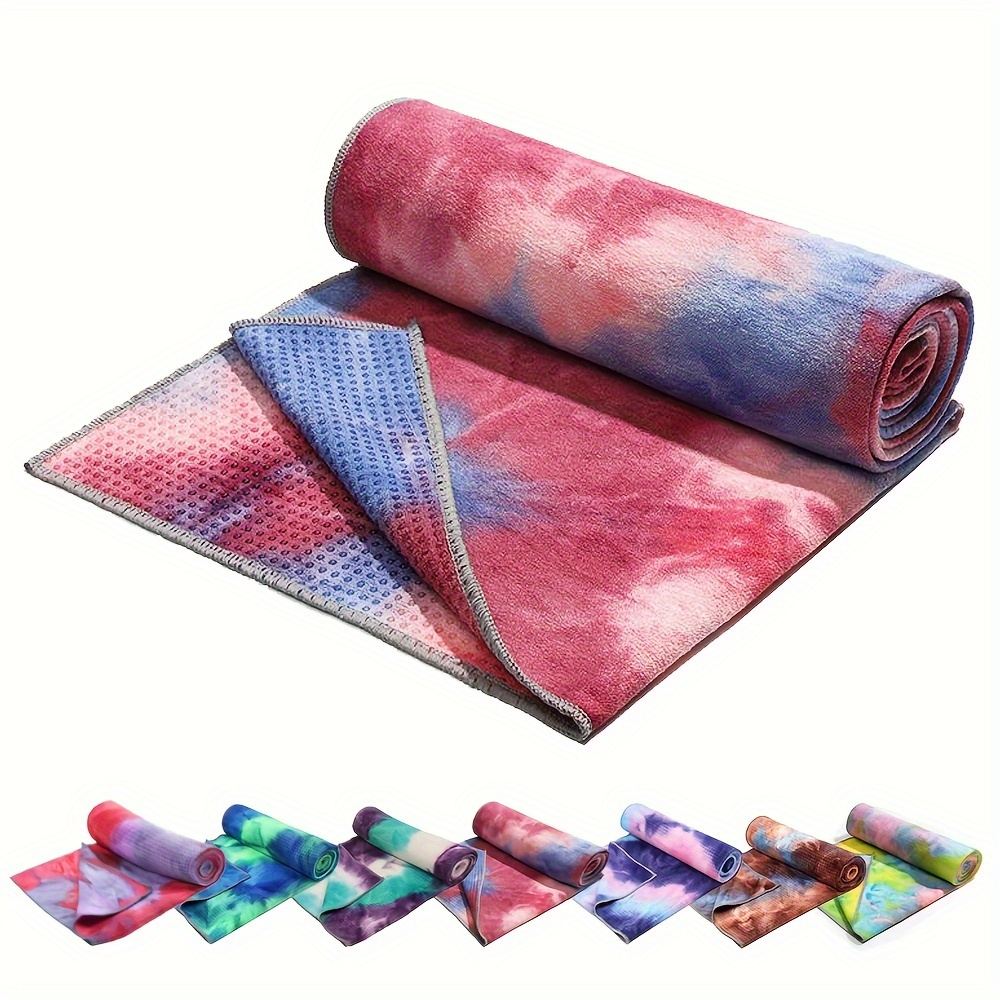
- A yoga towel — lay a non-slip yoga towel with storage bag over your mat if you're sweaty. It absorbs moisture and keeps your surface grippy, so you're not sliding around during stretches.
For guidance on structuring the workout that comes before the cool-down, see our workout structure guide. And if you're training late in the day, pair your cool-down with an evening stretching routine — or check how training timing affects your rest in our exercise and sleep guide.
Cool-Down Versions by Time Available
| Time available | Cool-down version | What to do | |---|---|---| | 2–3 minutes | The essentials | 2 min easy walking + standing quad stretch + hamstring fold (30s each) | | 5 minutes | Short and complete | Walking (1 min) + 4 key stretches (30s each side): quads, hamstrings, chest opener, child's pose (1 min) | | 8–10 minutes | The full routine | Walk-down + all 6 stretches above + 2-min breathing finish | | 10–15 minutes | Full routine + extras | Full routine + targeted extra stretches for the muscles you trained hardest |
Even the 2–3 minute version is far better than nothing. The goal is consistency, not perfection.
Common Mistakes to Avoid
- Skipping the cool-down entirely. The most common mistake, full stop. It only takes five minutes — treat it as the last set of your workout, not an optional add-on.
- Aggressive stretching when exhausted. After a brutal session, your muscles are fatigued and less coordinated. Stretch gently. Forcing a deep stretch on tired muscles is how strains happen — mild pull, never pain.
- Bouncing in stretches. Ballistic bouncing was popular decades ago; it's not the way now. Ease in, hold still, breathe.
- Holding your breath. If you're straining to hold a stretch, you're going too deep. Back off until you can breathe normally through it.
- Only stretching what feels sore. Soreness tells you what hurt, not what needs length. Your hip flexors after leg day or your chest after push day matter even if they don't ache yet.
- Rushing through in 60 seconds. A cool-down you speed-run isn't a cool-down. If you genuinely have no time, do the 2–3 minute version properly rather than the full routine badly.
Safety Notes
- Stretch to mild tension, never pain. Sharp, shooting, or joint pain is a signal to stop that stretch immediately.
- If you feel dizzy or lightheaded after exercise, sit down and sip water before doing any floor work. Cool-downs should be calming — if standing stretches feel unsteady, do everything seated or lying down.
- People with injuries, joint replacements, or conditions like herniated discs should follow their physiotherapist's guidance on which stretches are safe rather than a general routine.
- Pregnancy changes what's comfortable and safe — stick with gentle movements, avoid lying flat on your back for long stretches after the first trimester, and check with your provider about any new routine.
FAQ
Q: Is cooling down really necessary, or can I skip it?
It's not life-or-death, but it's genuinely worthwhile. A cool-down gives your heart rate, breathing, and nervous system a gradual transition instead of an abrupt stop, and it's the best window for gentle stretching because your muscles are warm.
Q: What's the difference between a cool-down and stretching?
A cool-down is the whole transition process: easy movement to bring your heart rate down, then gentle stretching, then slow breathing. Stretching alone on cold muscles isn't a cool-down — the walking phase at the start is what makes it one.
Q: How long should I hold each cool-down stretch?
Twenty to thirty seconds per side is the standard range for general cool-downs. If you trained those muscles hard that day, 30–45 seconds is reasonable. Going beyond a minute per stretch in a cool-down isn't necessary — save long holds for dedicated flexibility sessions.
Q: Can I cool down with just walking?
Walking is an excellent first phase, but a complete cool-down adds gentle stretching while muscles are warm. If you truly only have two minutes, walk it out and do two standing stretches (quads and hamstrings) — that covers the essentials.
Q: Should I stretch before or after my workout?
After — for static stretching, at least. Before a workout, use dynamic movements (leg swings, arm circles, bodyweight squats) to warm up. Save the hold-and-breathe static stretches for the cool-down, when muscles are warm and receptive.
Q: Will cooling down prevent muscle soreness?
Not entirely — some soreness after new or intense training is normal. What a cool-down does is help you finish comfortably and keep you moving well afterward.
Conclusion
The cool-down is the final rep of every workout — five to ten minutes of easy movement, gentle stretching, and slow breathing that closes your session the right way. Keep it simple: walk it down, stretch the muscles you used, breathe slowly, and done. Do it consistently and it stops feeling like an add-on; it becomes the part of the workout where you get to enjoy being warm, loose, and finished. Your future self — the one getting out of bed comfortably tomorrow — will thank you.