Balance can be trained at any age. A safe, chair-supported starter guide to steadier footing — with gentle exercises, gear, and smart precautions.
Balance Training for Older Adults: A Safe Starter Guide
Balance is one of those abilities you never think about until it starts to fade — a small wobble on a step, a hesitation at a curb. The encouraging truth: balance is trainable at any age. The systems that keep you steady — your inner ear, your vision, the stabilizing muscles around your ankles and hips — all respond to gentle, regular practice. This guide is a safe, dignified starting point, built around support you can trust and exercises you can do at home.
This guide contains affiliate links. If you buy through them, VÉLORA may earn a commission at no extra cost to you.
Why Balance Changes With Age
Balance is a team effort between your inner ear, your vision, and proprioception — the body's sense of where it is in space. With age, all three can get a little less sharp, and muscle around the ankles, hips, and core tends to decrease. The result: a slower response when the ground shifts under you.
The good news: these are use-it-or-lose-it systems. Regular practice sharpens the reflexes that catch a stumble, and gentle strengthening gives the body more to correct with. You are not "too old" to improve — consistency beats intensity every time. No program can guarantee you'll never fall; training simply gives you more margin, more confidence, and a faster-responding body when it matters.
Safety First: Set Up Before You Start
Every exercise in this guide assumes the same non-negotiable setup. Please don't skip this section.
- A sturdy chair or countertop within reach. Every standing exercise is done with one hand hovering near — or resting on — a solid support: a kitchen counter, or a heavy dining chair pushed against a wall so it can't slide. Never a wheeled chair or flimsy side table.
- Clear, non-slip space. Move rugs, cords, and clutter away from a small area with a firm floor. Wear supportive, closed-toe shoes or grippy socks — not smooth slippers.
- Good lighting. Many balance wobbles happen in dim rooms. Practice somewhere well-lit.
- Medical clearance first if you have a heart condition, high or low blood pressure, dizziness or vertigo, recent joint surgery, osteoporosis with fracture risk, or any condition affecting your legs or feet — so your start fits your body.
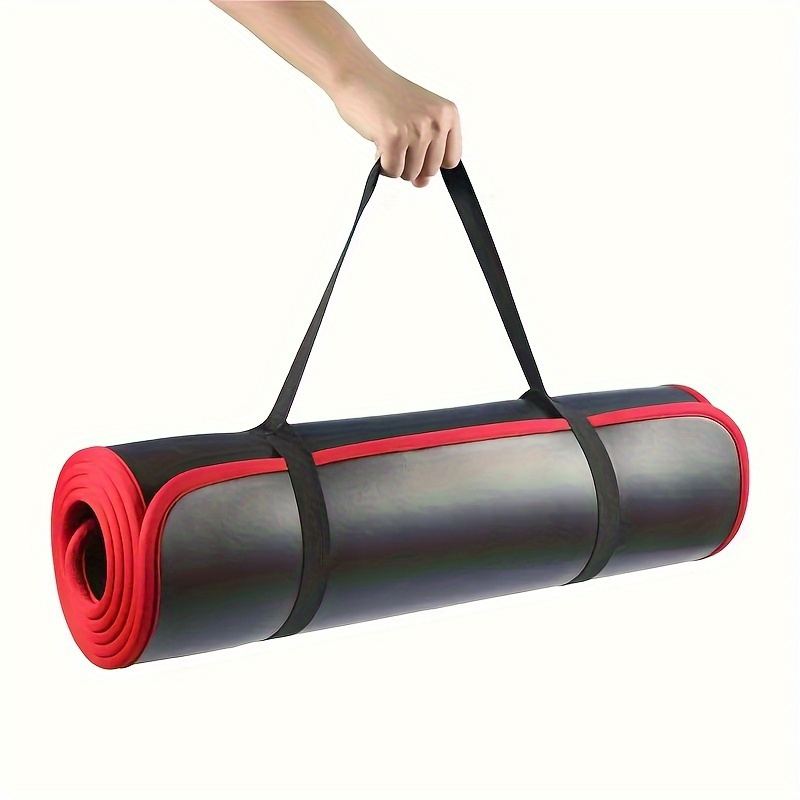
- A comfortable floor option. For seated or floor work, an extra-thick 10mm non-slip yoga mat cushions knees and hips and stays put on hard floors.
If you're also exploring gentle seated movement, our guide to chair exercises for beginners pairs well with this one.
Starter Exercise 1: Seated Marching
Seated marching builds hip and core coordination with zero fall risk.
Starting position: Sit tall in a sturdy chair, feet flat, hands on your thighs, gaze forward.
Technique: Slowly lift your right knee toward the ceiling — only as high as comfortable — then lower with control. Alternate sides like a slow march in place, keeping your torso upright. Resisting the side-to-side rock is the balance training.
Range: Start with 5–8 marches per leg, then 2–3 sets if comfortable. Breathe slowly and evenly — exhale on the lift, inhale on the lower.
Progression: March a little slower (slower = harder), or pause 2–3 seconds with each knee lifted. When seated marching feels completely easy, you're ready to stand.
Starter Exercise 2: Standing Heel Raises (Holding a Chair)
This strengthens the calves and ankles — the muscles that make the tiny corrections that keep you upright — with full support.
Starting position: Stand behind a sturdy chair, both hands resting lightly on the chair back, feet hip-width apart.
Technique: Slowly rise onto the balls of your feet — straight up, not forward. Pause 1–2 seconds, then lower slowly over a full 2–3 seconds. Keep weight centered.
Range: 8–12 slow repetitions, 1–2 sets.
Beginner modification: Lift just halfway if a full rise feels too much — even small lifts train the same muscles. The full lift will come.
Progression: Reduce to one hand on the chair, then fingertips, then one finger hovering near it. Each reduction is a genuine milestone — take your time.
Starter Exercise 3: Supported Single-Leg Stand
The classic balance builder, done the safe way — the single most useful exercise in this guide.
Starting position: Stand beside or behind your sturdy chair, one hand resting on it, feet together.
Technique: Shift weight onto your right foot and lift your left foot a few inches — just enough that the toes clear the ground. Standing knee soft, gaze on one steady point, posture tall. Lower with control and switch sides.
Range: 5–30 seconds per side, 2–3 rounds each. Five honest seconds counts.
Beginner modification: Keep one hand firmly on the chair and lift your foot just an inch — or shift most weight onto one foot without lifting. Standing up from a chair without using your hands is also balance training.
Progression: Lighter grip, then a hovering hand.
Women looking for the next level of this work will find our balance exercises for women guide a natural follow-up.
Starter Exercise 4: Tandem Stance
Tandem stance narrows your base of support — a controlled, chair-supported challenge for the balance systems.
Starting position: Stand beside your chair or along a clear wall, one hand on the support. Place one foot directly in front of the other, heel to toe, like standing on a tightrope.
Technique: Keep your gaze forward on a fixed point. Breathe normally, stay tall, and don't grip with your toes.
Range: 10–30 seconds, 2–3 rounds, switching which foot is in front.
Beginner modification: Start semi-tandem — the front foot's heel just beside the back foot's toes, not fully heel-to-toe. The partial version still trains the systems effectively.
Progression: Lighter hand support over time, then slow head turns — keep that hand on the chair.
Starter Exercise 5: Heel-to-Toe Walking Along a Wall
When the static holds feel solid, walking heel-to-toe turns balance into movement — where it matters most.
Starting position: Stand with one shoulder near a clear wall (not a curtain, not furniture that moves), arm extended so fingertips can trail along the wall.
Technique: Walk slowly forward placing each foot directly in front of the other, heel touching toe, in a straight line. Keep your gaze ahead, not down at your feet — looking down actually makes balance worse.
Range: 10–20 steps, then rest and turn around. 2–4 lengths total.
Beginner modification: Allow a small gap between heel and toe rather than full contact, or walk with feet slightly wider. Take it at whatever speed feels calm.
Progression: Slower walking (deliberately slow movement is harder and builds more control), then practice turning around smoothly — turns are a common wobble point in daily life.
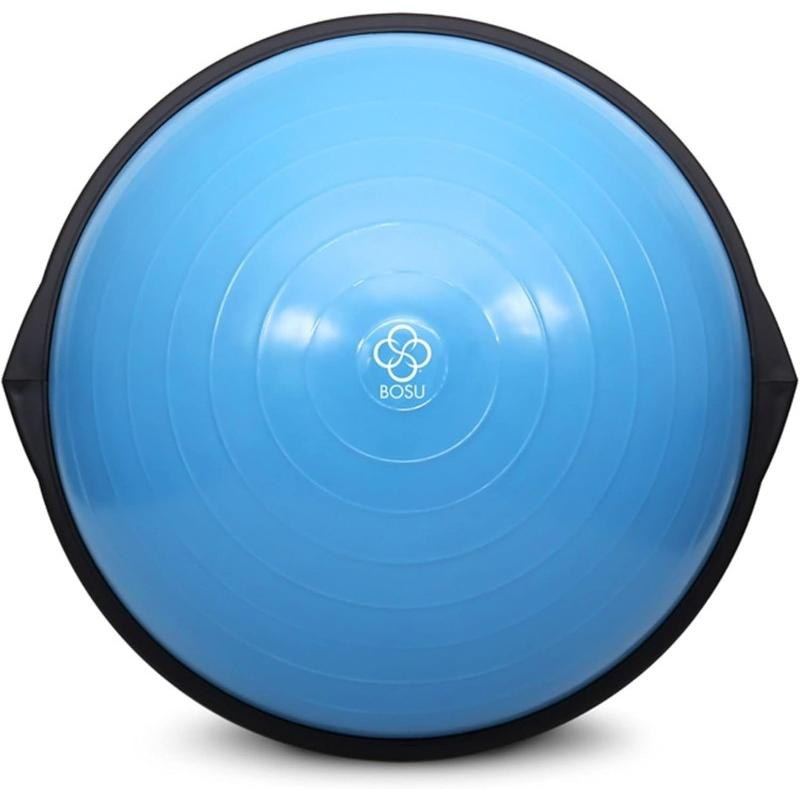
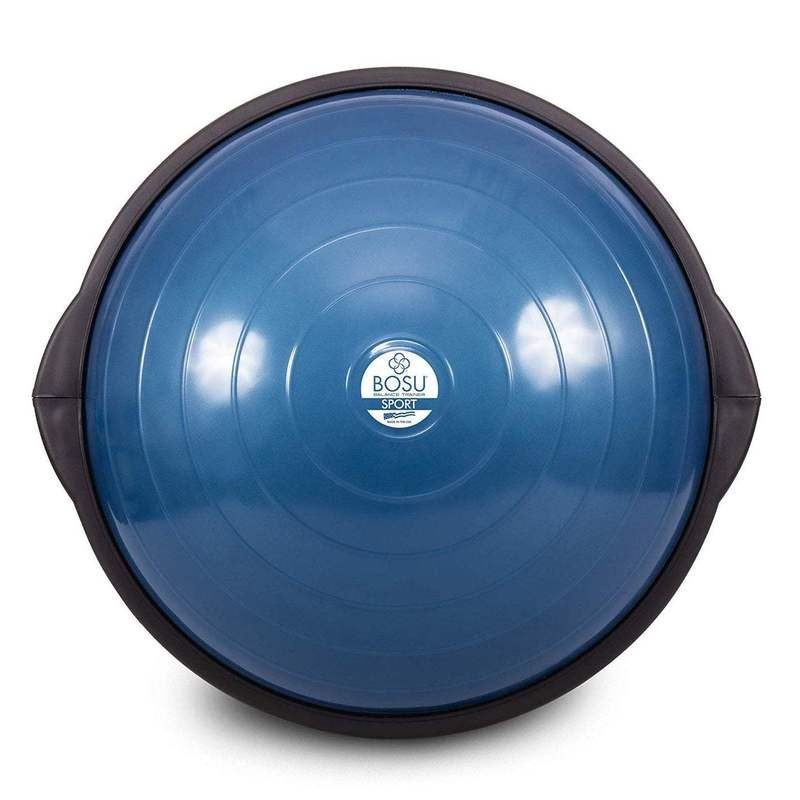
A note on gear: once chair-supported work feels easy, a small dome trainer is a natural next step. The blue 50cm travel-size BOSU balance trainer is compact — standing on the dome side (flat side down, chair in reach) deepens the single-leg stand. The larger 65cm blue-green BOSU home balance trainer offers a roomier platform. Either way: keep the chair. Support first, challenge second, always.
The Starter Program: Exercise → Setup → Progression
| Exercise | Setup | Progression | |---|---|---| | Seated marching | Sturdy chair, feet flat, hands on thighs | Slower march; 2–3 sec pause per lift; more sets | | Standing heel raises | Both hands on chair back, feet hip-width | One hand → fingertips → hovering hand; slower lowering | | Supported single-leg stand | One hand on chair, gaze on fixed point | 5→30 sec holds; lighter grip; eyes-closed only with firm grip | | Tandem stance | Hand on chair or wall, heel-to-toe line | Semi-tandem → full; add slow head turns | | Heel-to-toe walking | Fingertips trailing along a wall | Smaller gap → full heel-to-toe; slower pace; smooth turns |
For a gentler movement tradition that pairs beautifully with this work, see our balance yoga poses guide.
Two to three sessions per week is a good range — a full session of all five exercises takes about 15–25 minutes including rests. New or easily fatigued? Ten minutes is a perfectly good session: do two or three exercises well rather than all five tired. Gentle daily practice (five minutes of single-leg stands while waiting for the kettle, hand on the counter) is fine too. Progress is usually quiet — steadier on stairs, less hesitation at curbs — and results vary.
Red Flags: Stop and See a Doctor
Balance training should feel like mild, controlled challenge — never alarming. Stop and seek medical advice for faintness, chest discomfort or unusual breathlessness, sharp (not muscular) joint pain, sudden dizziness, or a fall that shakes your confidence. These are signals, not failures — get checked and return with a plan that fits.
Common Mistakes
- Practicing without support nearby. The number-one safety error: keep a chair within reach during standing work, even when you feel confident.
- Holding your breath. Breath-holding raises blood pressure and destabilizes you — breathe slowly throughout.
- Rushing progressions. Dropping hand support before you're ready doesn't build balance faster — it just adds fall risk. Earn each step.
- Looking at your feet. Looking down shifts weight forward and destabilizes you — fix your eyes on a steady point ahead.
- Skipping sessions because they feel "too easy." Easy and consistent is exactly the dose that works — the boring-feeling exercises often do the most good.
FAQ
Q: Is balance training safe if I have arthritis?
Often yes, with adjustments — these are low-impact, supported exercises. But arthritis varies by joint and severity, so get your doctor's or physiotherapist's okay first, work through pain-free ranges only, and prefer the seated versions. Stop if a joint feels sharp or hot rather than just stiff.
Q: What if I can't stand on one leg at all?
Start where you are — that is completely fine. Begin with seated marching and heel raises, chair held with both hands, then try the single-leg stand with a firm grip, lifting your foot an inch for 3–5 seconds. The only wrong move is not starting.
Q: How long should each session be?
About 15–25 minutes for the full sequence. New or easily fatigued? Ten minutes is a fine session — do two or three exercises well rather than all five tired. You can also sprinkle balance moments through the day: single-leg stands while brushing your teeth (hand on the counter), tandem stance while waiting for the microwave.
Q: Do I need equipment to start?
The starting kit is a sturdy chair, a clear patch of floor, good lighting, and supportive footwear. A non-slip mat adds comfort, and a small balance dome becomes useful later when you want more challenge — but nothing here requires a purchase to begin.
Q: Will this actually help me avoid falls?
Balance and strength training are widely recognized as supportive for steadiness, and many people find their confidence on stairs, curbs, and uneven ground improves with consistent practice. But no program can guarantee you'll never fall — results vary, and vision, medications, and home hazards matter too. Training, plus good lighting, clear floors, proper footwear, and regular check-ups, together make the biggest difference.
Conclusion
Balance is not a gift you either have or lose — it's a skill your body can rebuild at any age, one supported, unhurried session at a time. Start with the chair, respect the red flags, and let consistency do the heavy lifting. Weeks from now, you may notice the changes in the smallest moments: steadier on the stairs, calmer at the curb. Those small moments are what this is all for.